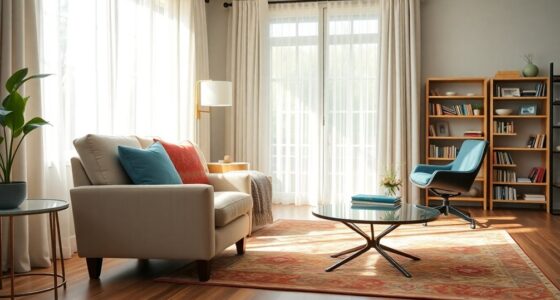

To work comfortably at home, choose ergonomic furniture designed for older adults. Look for adjustable chairs with proper lumbar support and customizable height to keep your feet flat and your back supported. Use height-adjustable desks to switch between sitting and standing, and consider accessories like monitor stands and footrests to improve posture. With the right setup, you’ll promote better health and comfort—keep exploring to discover tips for creating your ideal workspace.
Key Takeaways
- Choose ergonomic chairs with adjustable height, lumbar support, and armrests to promote proper posture and reduce back strain.
- Use height-adjustable desks to alternate between sitting and standing, minimizing fatigue and improving circulation.
- Incorporate ergonomic accessories like monitor stands, footrests, and keyboard trays to customize comfort and support.
- Select furniture that accommodates specific body needs, ensuring feet rest flat and elbows stay at a comfortable 90-degree angle.
- Prioritize ergonomic design to prevent musculoskeletal issues, enhance productivity, and create a comfortable home office environment.
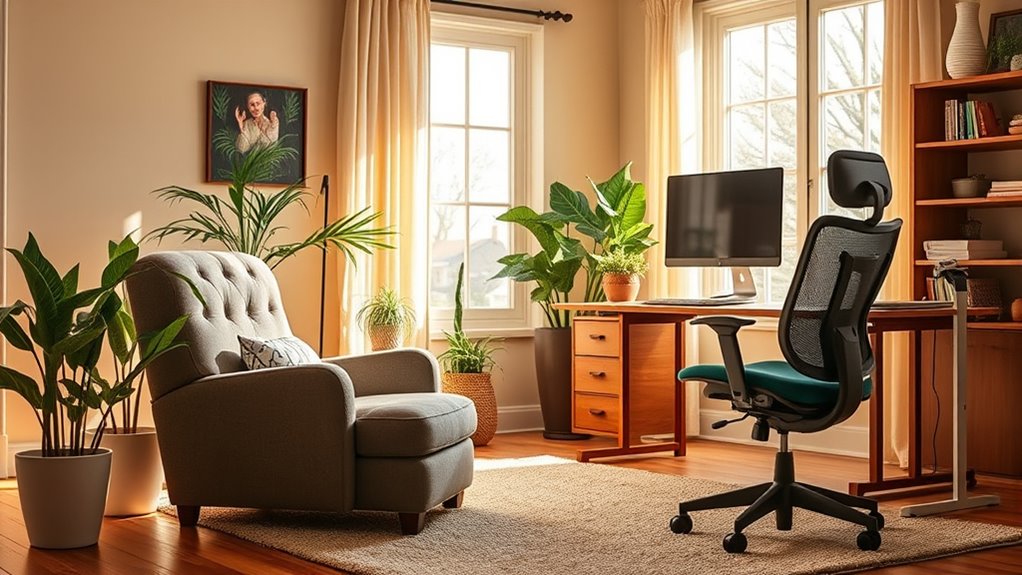
Creating a comfortable and ergonomic home office is essential for older adults who work or study from home. When designing your space, prioritize ergonomic design, which guarantees that your furniture supports your body properly and reduces strain. The right setup can make a significant difference in your comfort levels and overall productivity, especially if you spend many hours seated each day. One of the key aspects of ergonomic design is selecting furniture with adjustable features. Adjustable chairs, desks, and accessories allow you to customize your workspace to fit your unique body shape and size, helping you maintain good posture and prevent discomfort.
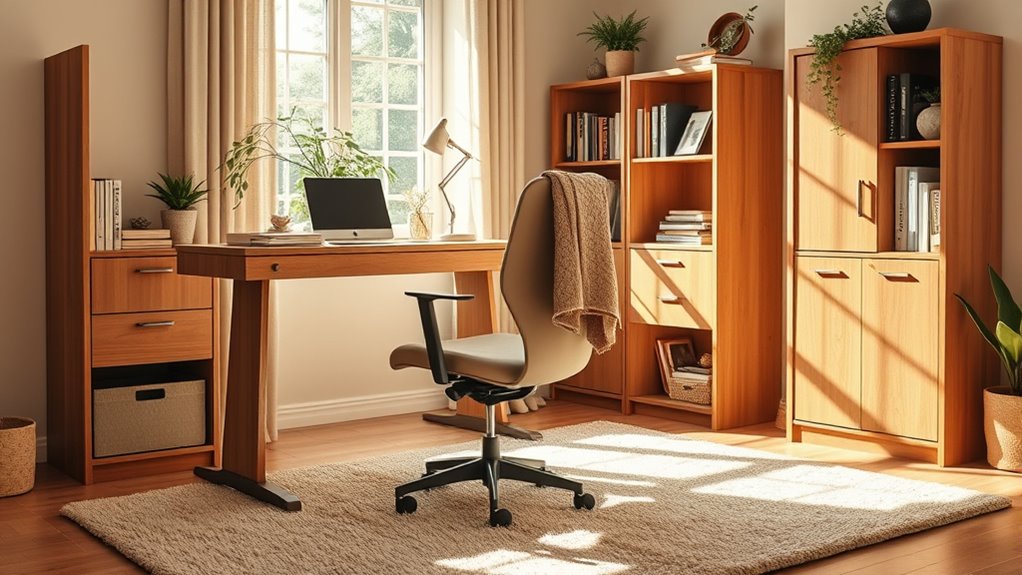
An adjustable chair is a cornerstone of an ergonomic home office. Look for one that allows you to modify the seat height, backrest angle, and lumbar support. When your chair height is correct, your feet should rest flat on the floor, and your knees should form a 90-degree angle. The lumbar support should fit snugly into the curve of your lower back, providing stability and reducing strain on your spine. The ability to adjust the backrest angle helps you find a comfortable position for long periods, preventing slouching or leaning forward. Many ergonomic chairs also feature armrests that can be raised or lowered, supporting your arms and reducing shoulder tension.
Your desk should also have adjustable features if possible. An adjustable height desk allows you to switch between sitting and standing positions, promoting movement and reducing the risks associated with prolonged sitting. When the desk height is correct, your elbows should rest comfortably at a 90-degree angle, with your wrists straight while typing or writing. This flexibility helps prevent repetitive strain injuries and keeps you energized throughout your work sessions. Incorporating ergonomic furniture is vital for promoting proper posture and reducing discomfort during long hours of work or study.
In addition to adjustable furniture, incorporate accessories like footrests, monitor stands, and ergonomic keyboard trays. A footrest helps maintain proper leg positioning if your chair height isn’t perfect, and monitor stands lift your screen to eye level, reducing neck strain. Ergonomic keyboard trays position your hands comfortably, decreasing the risk of wrist discomfort. All these adjustable features work together to create a personalized workspace that adapts to your needs.
Investing in ergonomic design and adjustable features isn’t just about comfort; it’s about safeguarding your health. By customizing your home office furniture, you can work more efficiently and avoid common musculoskeletal issues. Remember, a well-designed workspace that accounts for your specific needs encourages better posture, less fatigue, and an overall more enjoyable work or study experience. Prioritize these features, and you’ll foster a healthier, more comfortable environment for your home office.
Frequently Asked Questions
What Safety Features Should I Look for in Home Office Furniture?
You should look for home office furniture with safety features like adjustable height to fit your needs and prevent strain. Anti-tip features are essential to keep furniture stable and avoid accidents, especially if you lean on desks or shelves. Make sure chairs have sturdy bases and non-slip feet. Prioritize ergonomic designs that support good posture, and always verify for secure locking mechanisms to ensure safety while working comfortably at home.
How Can I Customize Furniture for Better Ergonomic Support?
You can customize furniture for better ergonomic support by choosing pieces with adjustable features that suit your height, posture, and work habits. Adjust the chair height so your feet rest flat on the floor, modify the lumbar support for comfort, and set the monitor at eye level to reduce neck strain. Personalized ergonomics make sure your workspace adapts to your needs, promoting comfort and reducing fatigue during long work hours.
Are There Specific Brands Known for Quality Office Furniture for Seniors?
You should look into brands like Steelcase, HON, and Herman Miller, as they have a strong reputation for quality office furniture tailored for seniors. Check customer reviews to guarantee their products meet your ergonomic needs. These brands focus on durability, comfort, and adjustable features, helping you work comfortably at home. Trusting reputable brands with positive reviews gives you confidence in their support for your ergonomic and comfort needs.
What Is the Average Cost of Ergonomic Home Office Furniture?
You can expect to spend anywhere from $200 to $1,000 or more on ergonomic home office furniture. Budget options typically start around $200 to $400 and offer basic comfort and support. If you want luxury features like adjustable heights, memory foam cushions, and premium materials, be prepared to invest $700 to $1,000 or higher. Your choice depends on your needs and how much comfort you prioritize for your workspace.
How Do I Maintain and Clean Furniture to Ensure Longevity?
To keep your furniture lasting, follow simple cleaning tips and maintenance routines regularly. Wipe surfaces with a damp cloth to prevent dust buildup, and avoid harsh chemicals that could damage finishes. Check for loose screws or wobbling parts and tighten them as needed. Protect upholstery with fabric protectors, and keep furniture away from direct sunlight to prevent fading. Consistent care guarantees your home office furniture stays comfortable and durable for years.
Conclusion
Creating a comfortable home office tailored for older adults means you’re setting yourself up for success. With the right furniture, you’ll find work becomes easier and more enjoyable, proving that a little planning goes a long way. Remember, it’s all about making your space work for you, so don’t wait until things get tough—nip problems in the bud early. When you invest in comfort, you’ll find work feels less like a chore and more like a breeze.