TL;DR

Get furniture and decor delivered free with Prime
- Fast, free delivery on millions of items
- Prime Video, Amazon Music and more included
- Member-only deals all year
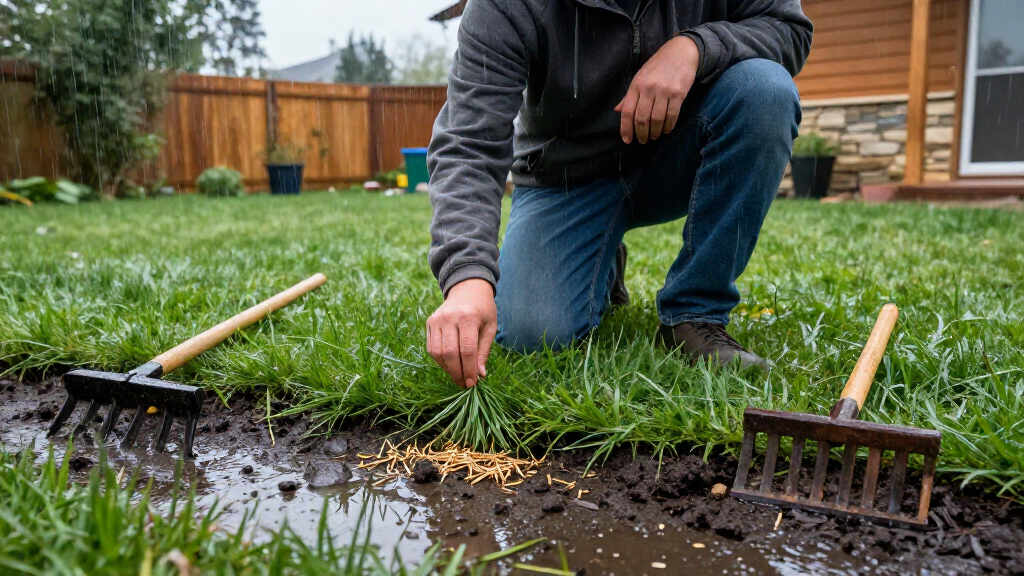
Grass seed can still grow after heavy rain when the soil is moist but not waterlogged. Standing water can reduce germination, while runoff can move seed and leave bare patches; experts recommend redistributing displaced seed, lightly aerating saturated areas and adding a thin cover.
Grass seed can still germinate after heavy rain if water drains away and the soil remains moist rather than saturated, according to lawn-care experts cited by Ideal Home. For people who have recently sown a lawn, the main risks are standing water and seed washed out of place, which can lead to failed or uneven growth.
Guy Jenkins, consumer manager at Johnson’s Lawn Seed, told Ideal Home that moisture is needed for germination, but fully saturated or waterlogged ground can interfere with it. Jonathan Davis, a lawn-care expert at Lawnsmith, said seed should germinate normally if rain has drained or soaked into soil that is still moist. Seed sitting in pooled water may rot or lack oxygen.
Heavy rain can also shift seed across the lawn or gather it into clumps. Davis said that can leave bare areas alongside dense tufts. The report says to check the lawn after the ground becomes workable, rather than trying to rake or otherwise disturb saturated soil.
The three suggested responses are to rake displaced seed back across bare patches once the ground is workable, lightly aerate waterlogged areas to create drainage channels, and apply a thin layer of topsoil or compost to help hold seed in place. Davis cautioned that aeration should be light at this time of year to avoid disturbing seed or stressing existing grass.
Why Drainage Shapes Germination
The practical difference is not simply how much rain fell, but whether water remains pooled where the seed was sown. Moist soil supports germination; prolonged saturation can leave seed exposed to rotting or oxygen deprivation. Runoff creates a separate problem by moving seed, so even surviving seed may produce an uneven lawn.
Checking drainage and seed placement can help gardeners decide whether to wait, redistribute seed or overseed later. Jenkins said germination typically starts within seven to 21 days. If the lawn remains noticeably patchy after that period, he advised overseeding affected areas. That timeframe is guidance from the expert quoted in the report, not a guarantee for every lawn or weather condition.
Products Worth Considering

Dyson Cyclone V10 Origin Cordless Vacuum

eufy Security Essential Alarm System, 7-Piece, No Monthly Fee

Philips Hue Festavia 130-Foot Indoor/Outdoor Smart String Lights, 500 LEDs
As an affiliate, we earn on qualifying purchases.
Autumn Sowing After Storms
The report frames the issue around autumn, which it describes as one of the best seasons for sowing grass seed. Freshly sown lawns can face particular challenges when strong winds and heavy rain arrive soon after planting: water is useful for germination, but intense rainfall may saturate the ground or carry seed away.
Ideal Home’s advice is based on comments from Jenkins of Johnson’s Lawn Seed and Davis of Lawnsmith. It does not provide measured results from a controlled trial or identify a single rainfall amount that would damage seed. The condition of the soil and how effectively the lawn drains are the main factors cited by the experts.
How Much Seed Will Recover
The report does not establish how much seed will survive in any particular lawn, how long standing water must remain before damage occurs, or how rainfall intensity affects outcomes. Results depend on drainage, soil conditions and whether seed has moved. The experts’ guidance is general; gardeners may not be able to tell immediately whether seed has rotted or simply needs more time to germinate.
The seven-to-21-day germination window is not a firm deadline for every seed mix or lawn. The report does not specify a universal reseeding date, and conditions such as temperature and the condition of the soil may affect growth. It advises checking for persistent bare patches after the stated period.
Check the Lawn as It Drains
Once the ground is workable, check for pooled water, bare areas and seed gathered in clumps. If seed has shifted, rake it back across affected spots. Where waterlogging remains a problem, Davis recommends light aeration, concentrating on saturated areas and avoiding unnecessary disturbance to seed and existing grass.
A thin layer of topsoil or compost can help hold seed in place, according to Davis. Watch for germination over the following seven to 21 days, as Jenkins advises. If growth is still noticeably uneven after that period, overseed the bare areas; the report does not specify a single treatment for every lawn.
Key Questions
Will grass seed grow after heavy rain?
Often, yes, if rain drains away and leaves soil moist rather than waterlogged, according to the lawn-care experts cited by Ideal Home. Seed sitting in standing water may rot or lack oxygen.
What should I do if rain has moved the seed?
Wait until the ground is workable, then use a rake to redistribute seed over bare areas. Jenkins advised checking for patchiness and overseeding affected spots if the lawn remains noticeably uneven after the usual seven-to-21-day germination period.
Can I aerate a lawn after heavy rain?
The report recommends light aeration in waterlogged areas to create channels for drainage. Davis cautioned against heavy aeration at this time of year because it can disturb seed or stress the existing lawn. Avoid working soil while it is too saturated to be workable.
Should I cover grass seed after rain?
A thin layer of topsoil or compost may help keep seed in place and support drainage, Davis told Ideal Home. The report also suggests a light, natural covering as a way to reduce seed movement and discourage birds from eating it.
Source: idealhome.co.uk