
To install grab bars and other senior-friendly home modifications, focus on secure placement near toilets, showers, and bathtubs. Use a stud finder to locate wall studs and attach the bars firmly with heavy-duty screws, ensuring they’re at a comfortable height—usually 33-36 inches. Test stability after installation and periodically check for looseness or corrosion. If you want to learn step-by-step techniques and safety tips, continue exploring for detailed guidance to create a safer home.
Key Takeaways
- Choose sturdy, accessible locations near toilets, showers, or bathtubs, and mark precise installation spots at 33-36 inches height.
- Use a stud finder to locate wall studs and secure grab bars with heavy-duty, corrosion-resistant screws.
- Ensure proper alignment and level placement before drilling, and avoid drywall-only mounting for safety.
- Test installed grab bars by applying firm pressure to confirm stability and make adjustments if needed.
- Regularly inspect for looseness or corrosion, tightening hardware and maintaining safety features over time.

Upgrading your home safety doesn’t have to be complicated or expensive. When it comes to installing grab bars and other senior-friendly modifications, taking a few simple steps can make a significant difference in safety and confidence. The key is to focus on proper installation tips and safety considerations to guarantee these upgrades serve their purpose effectively.
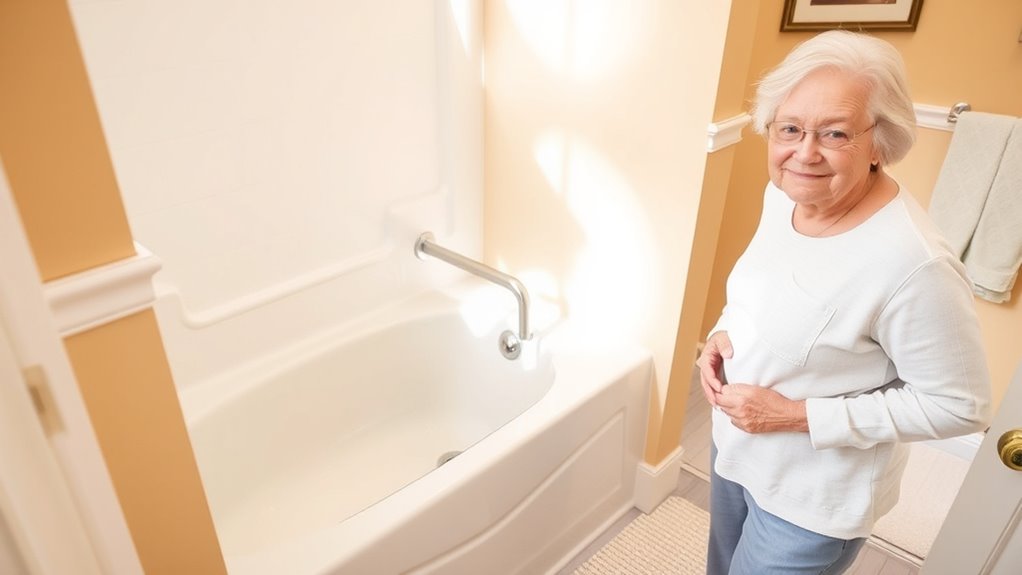
First, choose the right location for your grab bars. Typically, bathrooms are the most common areas where these fixtures are essential, especially near toilets, showers, and bathtubs. Before starting, measure and mark the exact spots where you’ll install the bars, ensuring they’re within easy reach and at a comfortable height. Think about the user’s needs and mobility; a good rule of thumb is to position grab bars about 33 to 36 inches above the floor.
Choose bathroom locations carefully; install grab bars 33-36 inches above the floor for optimal safety and accessibility.
When it comes to installation tips, always locate wall studs using a stud finder. This is vital because grab bars need a sturdy anchoring point to support weight safely. Avoid mounting into drywall alone, as it won’t provide the strength needed during a fall or sudden pull. Once you’ve identified the studs, mark the drill points through the mounting brackets, making sure they’re level and aligned properly. Use a drill with an appropriate bit to create holes, then insert wall anchors if you’re not attaching directly into studs. Secure the grab bars with heavy-duty screws, tightening them firmly but avoiding overtightening, which could damage the wall or strip the anchors.
Safety considerations should guide every step of the installation process. Always double-check that the grab bars are firmly anchored and don’t wobble when pulled. Use stainless steel or corrosion-resistant materials to prevent rust over time, especially in humid environments like bathrooms. Additionally, consider textured or rubberized grips, which provide better traction and reduce the risk of slipping. Keep in mind that installing grab bars at the right height and location is just part of safety; ensure there are no sharp edges, and that the bars are securely fastened to prevent accidents. Properly anchored grab bars are especially important because toilet function and maintenance depend on their stability to prevent falls.
Finally, after installation, test the stability of each grab bar by applying firm pressure in various directions. Make adjustments if needed to guarantee they can handle weight safely. Remember, safety considerations aren’t just about the installation process but also about ongoing maintenance—check periodically for looseness or corrosion. By following these installation tips and prioritizing safety considerations, you’ll create a safer environment that’s easier to navigate and reduces the risk of falls. With a little effort and attention to detail, you can confidently upgrade your home to better support your or your loved ones’ independence and well-being.
Frequently Asked Questions
Can I Install Grab Bars Without Professional Help?
You can install grab bars yourself if you’re comfortable with DIY plumbing and home lighting upgrades. Just make certain you understand the proper placement and use sturdy anchors to support weight. Follow clear instructions and double-check your work for safety. If you’re unsure about the process, especially involving plumbing or electrical aspects, it’s wise to seek professional help. Your safety and the stability of the grab bars are the top priorities.
What Tools Are Necessary for Home Safety Modifications?
When planning home safety modifications, you need to consider hand tool selection carefully. Choose a drill, screwdriver, level, and stud finder for accurate installation. Safety gear requirements are essential; wear gloves, eye protection, and a dust mask to prevent injury. Using the right tools and safety equipment makes your project safer and more efficient. Always follow manufacturer instructions and double-check measurements before drilling or securing grab bars and other home mods.
Are There Specific Materials Recommended for Durability?
Think of your home as a fortress, where durability matters most. For safety upgrades, choose materials like stainless steel or reinforced plastic, known for their material sturdiness. These resist rust, wear, and tear over time. Remember, maintenance tips like regular cleaning and inspections keep your mods in top shape. Prioritizing sturdy, long-lasting materials ensures your safety features serve you well, providing peace of mind for years to come.
How Do I Ensure the Installation Supports Weight Safely?
To guarantee your installation supports weight safely, you should perform weight testing by gradually applying force to the grab bars and checking for stability. Support verification is essential; make sure the mounting hardware is securely anchored into wall studs or solid surfaces. Use a level to confirm proper alignment, and double-check all fixtures after installation. This proactive approach helps prevent accidents and ensures your home upgrades are both safe and reliable.
What Are Common Mistakes to Avoid During Installation?
When tackling installation mistakes, you should avoid rushing or skipping safety tips. Keep in mind, improper placement or not anchoring grab bars securely can compromise safety. Make sure you follow manufacturer instructions carefully, double-check weight support, and use the right tools. Also, avoid drilling into unseen electrical wiring or pipes. Taking your time and paying attention to detail guarantees a safe, effective upgrade that truly benefits your home’s safety.
Conclusion
By installing grab bars and other senior-friendly modifications yourself, you’re taking proactive steps to guarantee safety at home. Not only do these upgrades help prevent falls—one of the leading causes of injury among seniors—but they also boost confidence and independence. Did you know that falls account for nearly 30% of all injury-related hospitalizations in older adults? Making simple improvements can make a big difference, creating a safer, more comfortable space for your loved ones to thrive.