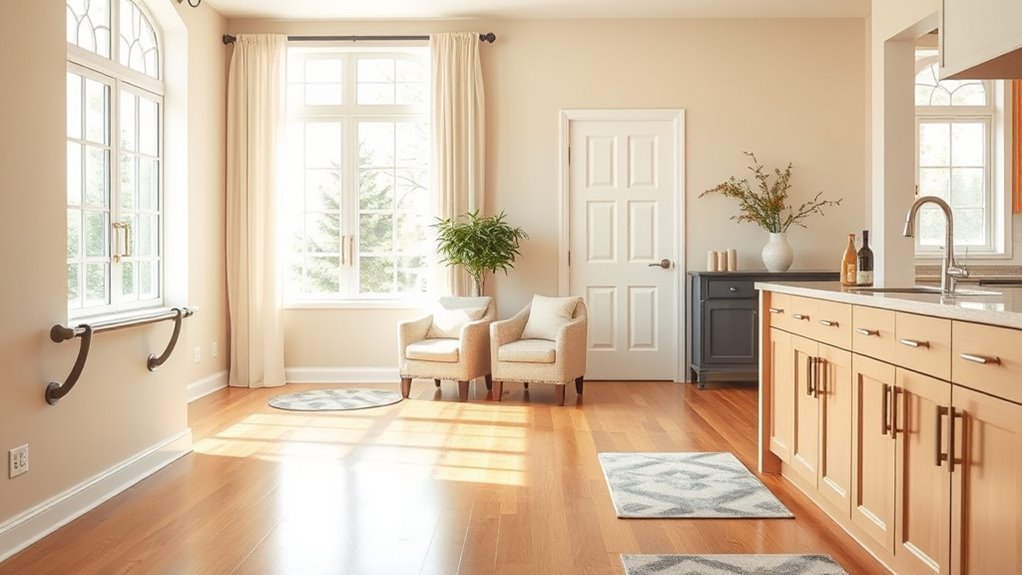

To help seniors age in place comfortably, focus on safety upgrades like non-slip flooring, grab bars, and wider doorways for easier access. Incorporate smart home technology to control lighting, thermostats, and locks easily, reducing hazards and promoting independence. Open floor plans and improved lighting make navigation safer and more comfortable. Planning these improvements now can create a secure, accessible home that adapts to future needs, opening more tips for a smooth shift.

Get furniture and decor delivered free — and shop member deals
- Fast, free delivery on millions of items
- Access to Prime Big Deal Days deals on October 6–7
- Prime Video, Amazon Music and more included
Key Takeaways
- Install wider doorways and lever-style handles to improve mobility and ease of access throughout the home.
- Incorporate non-slip flooring and grab bars in bathrooms to enhance safety and prevent falls.
- Use smart lighting with automatic or remote controls to ensure adequate illumination in key areas.
- Create open floor plans and eliminate thresholds to facilitate navigation for mobility aids.
- Prioritize home automation and safety features that support independent living and easy routine management.

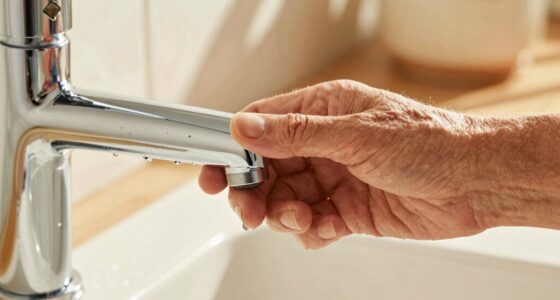
Planning renovations for retirement is a smart way to create a comfortable, accessible home that meets your changing needs. As you age, making thoughtful improvements can help you stay independent longer, ensuring your home adapts to your lifestyle. One of the most effective ways to do this is by integrating a smart home system, which allows you to control lighting, thermostats, locks, and even appliances with your voice or smartphone. These technologies not only enhance convenience but also improve safety, giving you peace of mind knowing you can manage your environment easily. When considering a smart home setup, look for options that are user-friendly and compatible with your existing devices, so you won’t feel overwhelmed by complex technology.
Smart home systems make retirement living safer and more convenient by simplifying control of lighting, thermostats, and locks.
Another vital aspect is embracing universal design principles. This design philosophy emphasizes creating spaces that are accessible and functional for everyone, regardless of age or ability. Simple modifications like installing lever-style door handles, opting for wider doorways, and choosing low-threshold showers can profoundly reduce the risk of falls and make everyday tasks easier. Universal design encourages you to think ahead, planning for mobility challenges before they arise, which saves you time and money down the line. It also means your home will remain comfortable and usable if your needs change unexpectedly. Additionally, integrating business insights can help you make informed decisions about home investments that add value and safety.
When renovating with these concepts in mind, focus on open floor plans that eliminate unnecessary barriers, making navigation simpler. Consider adding non-slip flooring and improved lighting to enhance safety, especially in high-traffic areas like hallways and bathrooms. Incorporate smart lighting that can be programmed to turn on automatically at night or activated remotely, reducing the need for you to fumble with switches in the dark. For bathrooms, walk-in showers with seating and grab bars provide safety without sacrificing style or comfort. These small yet impactful modifications can make a huge difference in your daily life, boosting your confidence and independence.
Investing in a smart home and universal design isn’t just about safety—it’s about creating a living space that truly feels like your own sanctuary. These updates help you maintain your routines, reduce potential hazards, and adapt to changes seamlessly. When planning your renovations, prioritize these features to make your home a haven that supports your well-being now and into the future. By doing so, you’ll enjoy a more comfortable, accessible space that empowers you to age in place gracefully and confidently.
non-slip bathroom flooring for seniors
As an affiliate, we earn on qualifying purchases.
As an affiliate, we earn on qualifying purchases.
Frequently Asked Questions
How Can I Finance Home Modifications for Aging in Place?
When you’re looking to finance home modifications for aging in place, explore insurance options like long-term care or home improvement coverage. You can also consider financing strategies such as personal loans, home equity lines of credit, or grants from local programs. These options help make necessary renovations affordable, ensuring you can adapt your home for safety and accessibility without financial stress. Always compare the benefits and costs before choosing the best option for your needs.
Are There Government Grants or Incentives Available for Senior Home Upgrades?
Think of government programs as a guiding lighthouse, illuminating your way to better senior housing options. Yes, there are grants and incentives available for senior home upgrades, helping you make essential modifications. These programs, like the HUD Title I or the USDA Single Family Housing Repair Loans, provide financial aid to make certain your home remains safe and accessible. Check with local agencies to discover the specific government programs that can support your aging-in-place journey.
What Safety Features Are Essential for Elderly-Friendly Bathrooms?
You should prioritize safety features like grab bars near the toilet and shower to prevent falls. Installing slip-resistant flooring reduces the risk of slipping, especially when surfaces are wet. Consider a walk-in shower with a bench and handheld showerhead for easier access. These updates create a safer bathroom environment, helping seniors maintain independence and lowering their risk of accidents.
How Do I Choose a Reliable Contractor for Home Renovations?
Think of hiring a contractor like choosing a trusted guide on a journey. You want someone with a strong reputation, proven experience, and proper licensing requirements, ensuring they’re reliable and skilled. Research their past projects, ask for references, and verify credentials. By doing so, you’ll find a dependable partner who can transform your home safely and efficiently, making your renovation smooth and stress-free.
What Are Cost-Effective Ways to Make a Home More Accessible?
You can make your home more accessible cost-effectively by incorporating smart technology like voice-activated controls and motion sensors. These upgrades improve safety and ease of use without extensive remodeling. Additionally, adopting universal design principles—such as wider doorways, lever handles, and non-slip flooring—ensures your home remains functional and safe as needs change, all while keeping costs manageable and enhancing overall comfort.
Conclusion
By making thoughtful renovations, you can create a safe, comfortable space that allows you to age in place with confidence. Imagine Sarah, who installed grab bars and widened doorways—she now navigates her home easily and safely, avoiding costly moves. Small changes like these can make a big difference, giving you peace of mind and independence for years to come. Start planning today, and turn your home into a secure haven for your retirement years.
Fall Picks
fall essentials
As an affiliate, we earn on qualifying purchases.