To protect seniors at home, upgrade your fire safety with interconnected smoke detectors, easy-to-reach alarms, and regular maintenance. Develop and practice a clear evacuation plan, keeping escape routes clutter-free. Install fire-resistant doors and keep fire extinguishers nearby. Ensure electrical wiring is safe to prevent fires. Incorporate glow-in-the-dark markers and safety features tailored for mobility and hearing needs. For a safer home, consider these essential updates—they can make all the difference in an emergency.
Key Takeaways
- Install interconnected smoke detectors throughout the home for quick alerting, especially for hearing-impaired seniors.
- Develop and regularly practice a clear evacuation plan, including accessible exits and a designated safe meeting spot.
- Maintain home electrical systems, avoid circuit overloads, and keep flammable objects away from heat sources to prevent fires.
- Place fire extinguishers in key areas and ensure they are easily accessible and regularly maintained.
- Incorporate safety features like glow-in-the-dark markers and barriers to enhance visibility and mobility during emergencies.
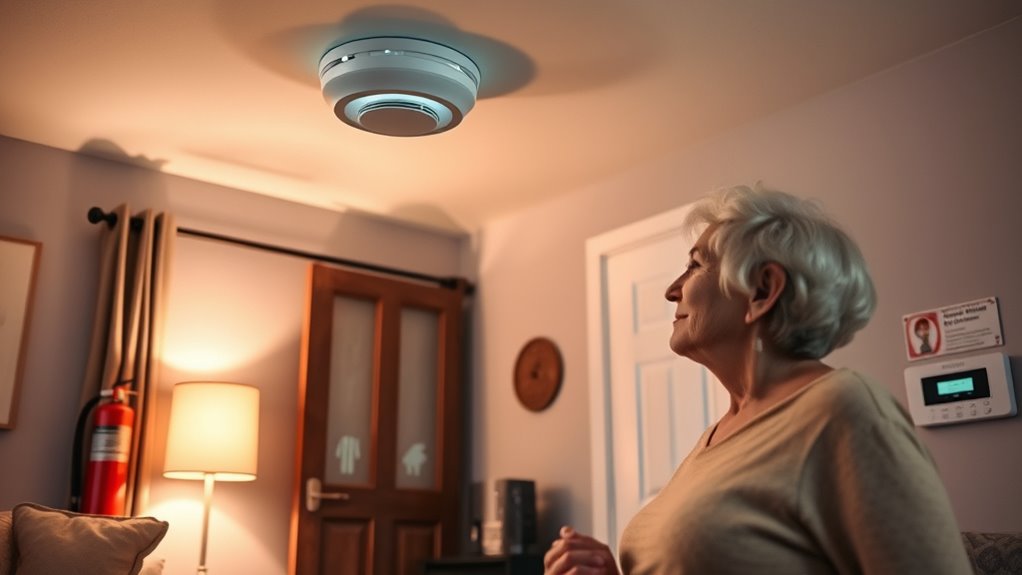
Are your fire safety measures up to date? If you’re caring for seniors at home, guaranteeing their safety starts with proper fire precautions. One of the most critical steps is smoke detector installation. If your home isn’t equipped with enough smoke detectors or if they aren’t functioning correctly, you risk missing early signs of a fire. Make sure every bedroom, hallway, and main living area has a working smoke detector. Test them monthly and change the batteries at least twice a year. Consider installing interconnected smoke detectors so that when one detects smoke, all alarms sound, alerting everyone immediately. This setup is especially crucial for seniors who might have hearing impairments or mobility issues, as quick alerts can save lives.
Ensure all smoke detectors are installed, tested monthly, and interconnected for optimal senior safety during emergencies.
Beyond alarm systems, emergency exit planning is equally essential. You need a clear, practiced plan for evacuating your loved ones safely if a fire occurs. Walk through your home and identify all possible exits, including windows if doors are blocked. Keep escape routes free of clutter and ensure they’re easily accessible, especially for seniors who may have mobility challenges. Practice the plan regularly so everyone knows what to do, where to go, and how to get out quickly. It’s also wise to designate a safe meeting spot outside your home, so you can quickly confirm everyone is safe. Make sure that all family members, caregivers, and even visitors are familiar with this plan. In addition, consider installing emergency exit signage or glow-in-the-dark markers to guide you during low visibility caused by smoke or power outages.
Proper fire safety upgrades involve more than just alarms and exits. You should review your home’s electrical wiring, avoid overloading circuits, and keep flammable objects away from heat sources. Installing fire-resistant doors or barriers between your living areas and potential fire hazards can buy you precious extra minutes during an emergency. Regularly check your heating devices, and never leave cooking or candles unattended. Installing fire extinguishers in accessible locations is also a wise step, especially in the kitchen and garage.
Ultimately, protecting seniors at home requires a proactive approach. Guaranteeing your smoke detector installation is thorough and your emergency exit planning is well-practiced can markedly reduce fire risks. These upgrades not only provide peace of mind but also create a safer environment where your loved ones can live more confidently. Remember, quick detection and swift evacuation are your best defenses against fire disasters, so prioritize these safety measures today.
Frequently Asked Questions
How Often Should Fire Safety Equipment Be Inspected?
You should inspect your fire safety equipment monthly, including fire extinguishers, to guarantee they’re in working order through fire extinguisher maintenance. Test smoke alarms weekly and replace batteries annually. It’s also crucial to rehearse your escape plan regularly with your loved ones. These practices help keep everyone safe and prepared in case of a fire emergency, especially for seniors who might need extra assistance.
Are There Specific Fire Alarm Systems Recommended for Seniors?
Think of fire alarm systems as your home’s vigilant watchdogs. For seniors, smart alarms with voice alerts are ideal—they’re loud, clear, and easy to understand, ensuring quick responses. These systems can automatically notify emergency services and family members, providing peace of mind. Choose alarms that are simple to operate and have features tailored for seniors, like flashing lights or adjustable volume, to keep everyone safe and aware in case of fire.
What Are the Costs Associated With Fire Safety Upgrades?
The costs for fire safety upgrades vary depending on the needed improvements and your home’s size. You might find fire safety grants that help cover installation costs, making upgrades more affordable. Typical expenses include purchasing smoke alarms, carbon monoxide detectors, and safety lighting, plus installation fees. By exploring grants and prioritizing essential devices, you can protect your loved ones without overspending, ensuring their safety while managing costs effectively.
Can Fire Safety Upgrades Be Customized for Different Homes?
Like a tailor fits a suit, fire safety upgrades can be customized for your home design. You can choose personalized solutions that suit your home’s layout and your senior’s needs, ensuring maximum safety. Whether it’s adding extra smoke detectors, installing accessible escape routes, or strengthening fire-resistant features, these upgrades adapt to different homes. This personalized approach helps create a safer environment, giving you peace of mind knowing your loved ones are protected.
How Do I Train Seniors to Respond in Case of a Fire?
You can train seniors to respond to a fire by practicing evacuation drills regularly, ensuring they know all escape routes and safe spots. Remind them to stay calm, help others if possible, and avoid elevators. Keep emergency contacts accessible and updated, and review fire safety procedures during each drill. Reinforcing these routines helps seniors react quickly and confidently, keeping everyone safer during an emergency.
Conclusion
By upgrading your home’s fire safety, you’re planting a sturdy shield around your loved ones, turning your space into a fortress of protection. Think of these improvements as a lighthouse guiding seniors safely through the stormy night, preventing tragedy before it strikes. Remember, a little preparation today can be the steady anchor that keeps your family safe when every second counts. Guard your home with care—it’s the anchor in their peace of mind.