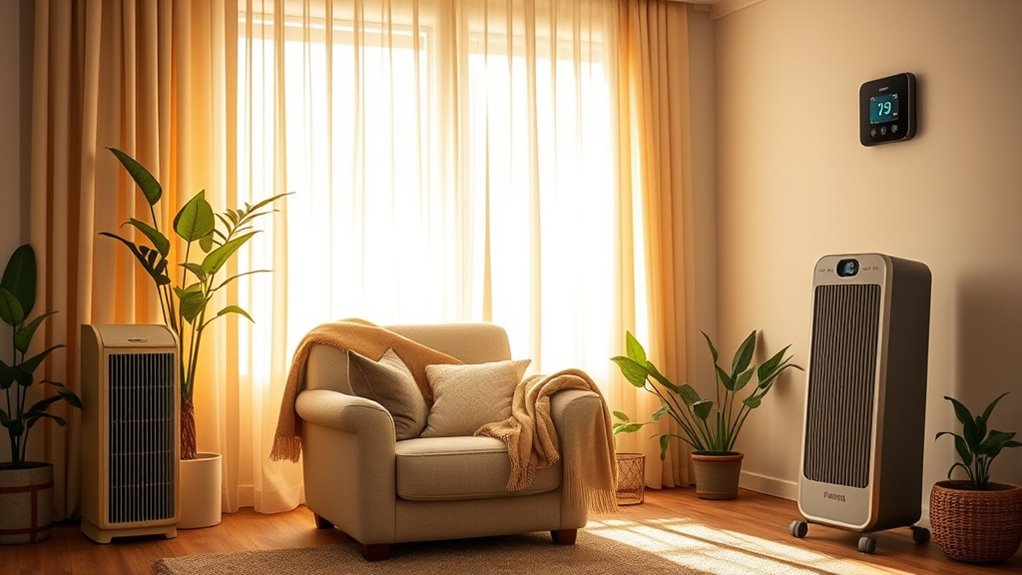

To keep your senior home comfortable and energy-efficient, consider installing a smart thermostat that learns your routines and allows remote control. Improve insulation, seal drafts, and perform regular system maintenance to maintain consistent temperatures. Using self-watering pots can boost indoor humidity and air quality. These simple upgrades help you save on utility bills while ensuring a cozy environment year-round. Keep exploring these tips to create a safe, comfortable space tailored to your needs.
Key Takeaways
- Install smart thermostats to automatically adjust temperature settings based on routines for consistent comfort.
- Enhance insulation and seal drafts to maintain stable indoor temperatures and reduce energy waste.
- Use remote access features to easily monitor and modify climate settings from anywhere, ensuring safety and convenience.
- Perform regular HVAC maintenance, including filter changes and system checks, to ensure efficient operation.
- Incorporate indoor humidity controls, like self-watering plant pots, to improve air quality and comfort.
Keeping your home comfortable year-round is essential for seniors, especially as temperature regulation becomes more important with age. When it comes to maintaining the perfect climate, energy efficiency plays a key role. Not only does it help reduce utility bills, but it also makes managing your home’s heating and cooling systems easier and more effective. One of the best ways to improve energy efficiency is by investing in smart thermostats. These devices allow you to control your home’s temperature precisely, often through your smartphone or voice commands, ensuring your living space remains comfortable without wasting energy.
Smart thermostats are particularly beneficial because they learn your routines and adjust the temperature accordingly. For example, if you tend to wake up at a specific time, the thermostat can heat or cool the house in advance, so it’s just right when you get up. This eliminates the need to manually change settings, which can be challenging or inconvenient. Plus, many models come with remote access, so you can make adjustments from anywhere—whether you’re at the grocery store or visiting family—ensuring your home’s climate is always optimized.
Smart thermostats learn your routines, adjust temperatures, and offer remote access for convenient climate control.
Additionally, smart thermostats often include energy-saving features that monitor your usage and provide insights on how to reduce waste. This can lead to lower energy bills and a more sustainable home. When installing a smart thermostat, make sure it’s compatible with your current heating and cooling systems. Some older systems may require additional equipment or upgrades, but many models are designed for easy installation. Once set up, you’ll appreciate the convenience of precise temperature control and the peace of mind knowing your home is always at a comfortable and energy-efficient setting.
Alongside smart thermostats, consider improving your home’s insulation and sealing any drafts. These simple steps help maintain a consistent indoor temperature, reducing the workload on your heating and cooling systems. Regular maintenance, like cleaning filters and scheduling professional checkups, also supports energy efficiency and ensures your systems operate smoothly. Using self-watering plant pots to keep indoor plants healthy can also contribute to a more comfortable environment by increasing humidity levels and improving air quality.
In the end, creating a comfortable climate for yourself doesn’t have to be complicated or expensive. With a focus on energy efficiency and the smart technology available today, you can enjoy a cozy home that adapts to your needs while saving energy and money. Prioritizing these upgrades makes it easier to stay comfortable and safe throughout the year, regardless of outside weather conditions.
Frequently Asked Questions
How Can I Improve Air Quality in My Senior Home’s Climate Control System?
To improve air quality in your senior home’s climate control system, you should incorporate air purification devices and guarantee regular filter changes. Implement effective ventilation strategies like opening windows when possible and using exhaust fans to circulate fresh air. These steps help remove pollutants and allergens, creating a healthier environment. Regular maintenance of your HVAC system also ensures ideal performance, making sure your residents breathe cleaner, safer air every day.
What Are Energy-Efficient Heating and Cooling Options Suitable for Seniors?
You can boost energy efficiency in your senior home by installing smart thermostats, which adapt to residents’ routines, saving energy while maintaining comfort. Zoned heating allows you to control temperatures in different areas, reducing waste and ensuring warmth where needed most. These options not only lower energy bills but also provide a safer, more comfortable environment for seniors, making daily living easier and more sustainable.
How Often Should HVAC Systems Be Maintained in Senior Living Environments?
You should schedule HVAC system maintenance at least twice a year, ideally in spring and fall, to guarantee peak performance and safety. Regular maintenance helps extend the HVAC system lifespan, prevents breakdowns, and maintains a comfortable climate. Keep a consistent maintenance scheduling routine, and don’t forget to check filters and ducts regularly. Proper upkeep is especially vital in senior living environments to support health and comfort for residents.
What Safety Precautions Are Essential for Elderly Individuals Using Climate Control Devices?
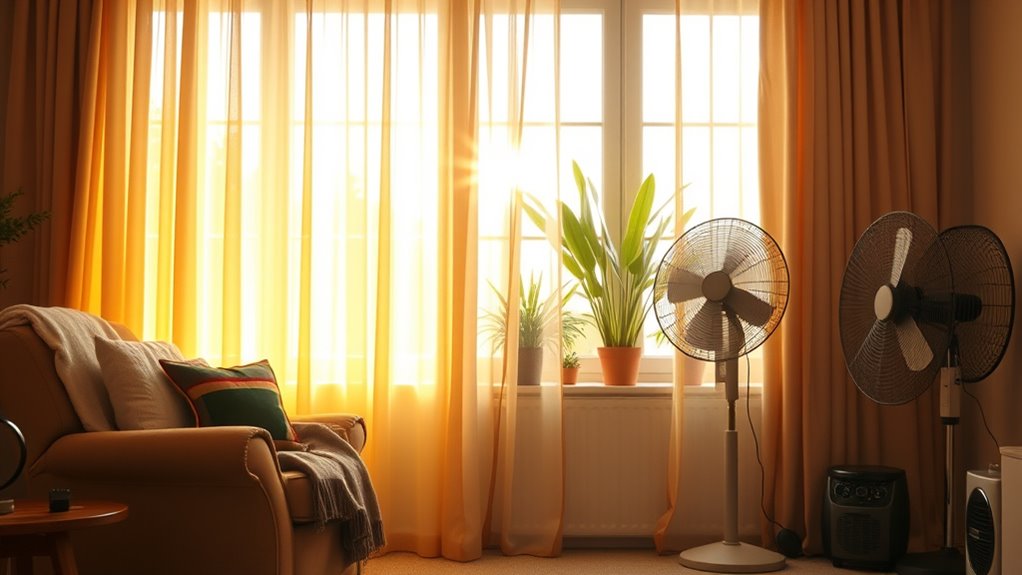
Think of safety as your guiding star. You should regularly check for fire hazards by guaranteeing climate control devices are properly maintained and away from flammable materials. Place heaters and fans on stable, level surfaces, and keep cords out of walkways to prevent tripping. Never leave devices unattended, and install smoke detectors nearby. These precautions help safeguard elderly individuals from accidents and ensure a safer, more comfortable environment.
Are There Specific Climate Control Features Recommended for Seniors With Health Conditions?
You should consider smart thermostats with easy-to-use interfaces, allowing you to maintain ideal temperatures effortlessly. Look for models with humidity control features, which help prevent dry air or excess moisture that can affect health. These features can be customized to your health needs, ensuring a comfortable environment that supports conditions like asthma or arthritis, and reduces risks associated with temperature fluctuations.
Conclusion
Just like a cozy hearth in a winter cabin, creating the perfect climate in your senior home ensures comfort and peace of mind. By following these simple heating and cooling tips, you can transform your space into a sanctuary where warmth and coolness are always just right. Remember, maintaining the right environment isn’t just about comfort—it’s about safeguarding health and happiness. Embrace these practices, and let your home be a haven, much like the timeless comfort of a familiar story’s ending.