
To create a distraction-free office, focus on soundproofing with soft materials like carpets, curtains, and acoustic panels that absorb sound. Use bookshelves and fabric furniture to diffuse noise, and seal gaps around windows and doors to block external sounds. Incorporate noise masking with gentle background sounds or white noise to help your brain tune out disruptions. Combining these techniques can markedly boost your focus—exploring more tips will help you perfect your workspace.
Key Takeaways
- Use soft materials like carpets, curtains, and acoustic panels to absorb sound and reduce echo.
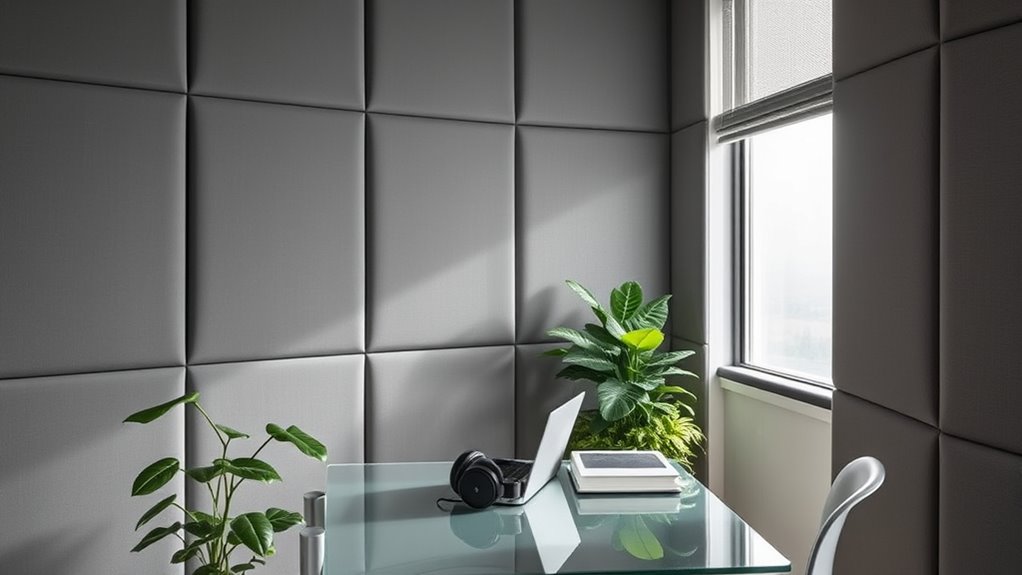
- Install wall-mounted acoustic panels and seal gaps around windows and doors for effective soundproofing.
- Incorporate noise masking devices or apps with white noise or nature sounds to mask distractions.
- Position bookshelves and fabric furniture strategically to diffuse sound waves and minimize ambient noise.
- Adjust the sound environment by combining physical barriers with gentle background sounds to enhance focus.
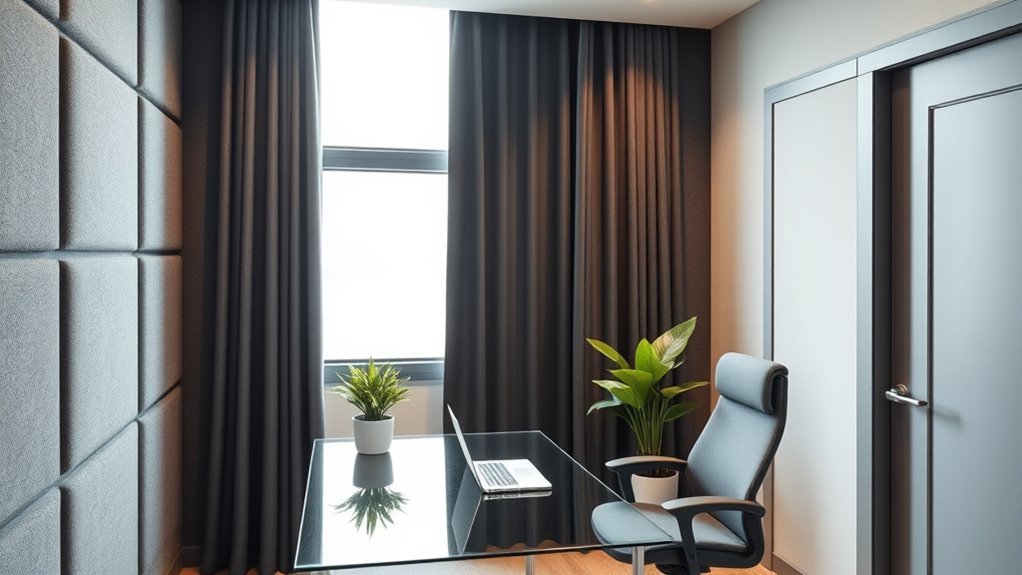
Creating a distraction-free office environment can markedly boost your productivity, especially if noise from surrounding areas constantly interrupts your focus. One of the most effective ways to achieve this is by optimizing your office acoustics. Good office acoustics help absorb, diffuse, or block sound waves, reducing echo and minimizing distractions caused by ambient noise. You can start by choosing soft materials like carpets, curtains, or acoustic panels that absorb sound rather than reflect it. Positioning bookshelves filled with books or fabric-covered furniture can also improve sound absorption. These adjustments make your space calmer and more conducive to concentration, cutting down on the mental fatigue that noise can cause.
Optimizing office acoustics with soft materials and furniture reduces noise and enhances concentration.
In addition to physical soundproofing, noise masking plays a essential role in creating a consistent, unobtrusive background sound that covers up distracting noises. Noise masking, which involves introducing a gentle, consistent sound like white noise or nature sounds, helps your brain tune out sudden or persistent disturbances. You can use dedicated noise masking devices or apps to generate these sounds at a comfortable volume. The key is to find a balance where the background noise is enough to mask distractions without becoming itself a source of annoyance. Proper noise masking not only improves focus but also reduces the stress caused by unpredictable sounds, allowing you to maintain steady concentration for longer periods.
Furthermore, incorporating soundproofing materials like specialized acoustic panels or window inserts can significantly block external noise from entering your workspace. Combining soundproofing techniques with thoughtful office acoustics design makes a significant difference. For instance, installing acoustic panels on walls can prevent sound from traveling between rooms, while sealing gaps around doors and windows stops external noise from seeping in. When you address these physical barriers and add noise masking, you create a layered approach that actively blocks and masks disruptive sounds. This synergy enhances your ability to concentrate and minimizes the mental effort needed to ignore distracting noises. You’ll notice a more consistent work rhythm and improved clarity of thought, especially during tasks that demand high focus.
Ultimately, improving office acoustics and implementing noise masking aren’t just about quiet; they’re about creating an environment where your brain can fully engage with your work without constant interruptions. These strategies help you regain control over your auditory environment, allowing for deeper focus and greater efficiency. By making deliberate adjustments to your office’s soundscape, you set yourself up for sustained productivity and a more comfortable workspace. This isn’t just about soundproofing; it’s about crafting a space that actively supports your concentration and helps you accomplish your goals more effectively.
Frequently Asked Questions
How Can I Soundproof a Shared Office Space Effectively?
To soundproof your shared office space effectively, start by installing acoustic panels on walls to absorb noise. Make sure your door has quality seals to prevent sound leaks, and consider adding a door sweep for extra insulation. You can also use rugs or fabric-covered furniture to dampen sound reflections. These steps help create a quieter environment, allowing you to focus without distractions.
What Are the Best Budget-Friendly Soundproofing Materials?
You don’t have to break the bank to soundproof your office. Look into decorative panels, which are both stylish and affordable, and seal gaps with acoustic seals to keep noise out. These materials act like a charm, turning your workspace into a quiet haven without spending a fortune. With some DIY effort, you’ll find that making your office more soundproof is easier and cheaper than you think.
How Do I Reduce Noise From Office Equipment?
To reduce office equipment noise, start by placing acoustic panels strategically around your equipment, especially behind and beside noisy devices. You can also use sound-absorbing mats or fabric covers on loud machines. Keep cables organized to minimize vibrations. Regular maintenance on equipment helps reduce noise too. By focusing on acoustic panel placement and soundproofing methods, you’ll create a quieter, more focused workspace.
Can Plants Help Improve Soundproofing?
Plants can definitely help improve soundproofing by promoting better noise absorption. Proper plant placement around your office creates a calming, clutter-free canopy that dampens distracting sounds. The lush leaves and textured foliage absorb ambient noise, making your workspace quieter and more focused. So, strategically placing plants not only boosts your office’s aesthetic appeal but also enhances the overall soundproofing, turning your workspace into a peaceful, productive zone.
How to Maintain Soundproofing Over Time?
To maintain soundproofing over time, you should regularly check your office’s acoustic performance through acoustic inspections. Conduct routine soundproof maintenance by inspecting seals, door sweeps, and panels for damage or wear. Keep surfaces clean and ensure insulation stays intact. Address any gaps or cracks promptly to prevent noise leaks. By staying proactive, you’ll preserve your distraction-free environment and enjoy consistent soundproofing effectiveness.
Conclusion
Imagine stepping into your office, where silence wraps around you like a cozy blanket, every distraction faded into the background. With these soundproofing tips, you create a sanctuary of focus amid the chaos. Feel the weight lift off your shoulders as noise becomes a distant hum, allowing your ideas to flow freely. This peaceful space isn’t just a dream—it’s your new reality, where productivity thrives and distractions stay outside your perfect, quiet zone.