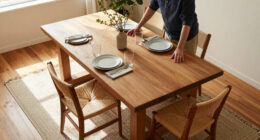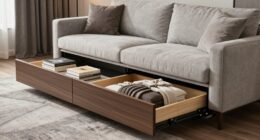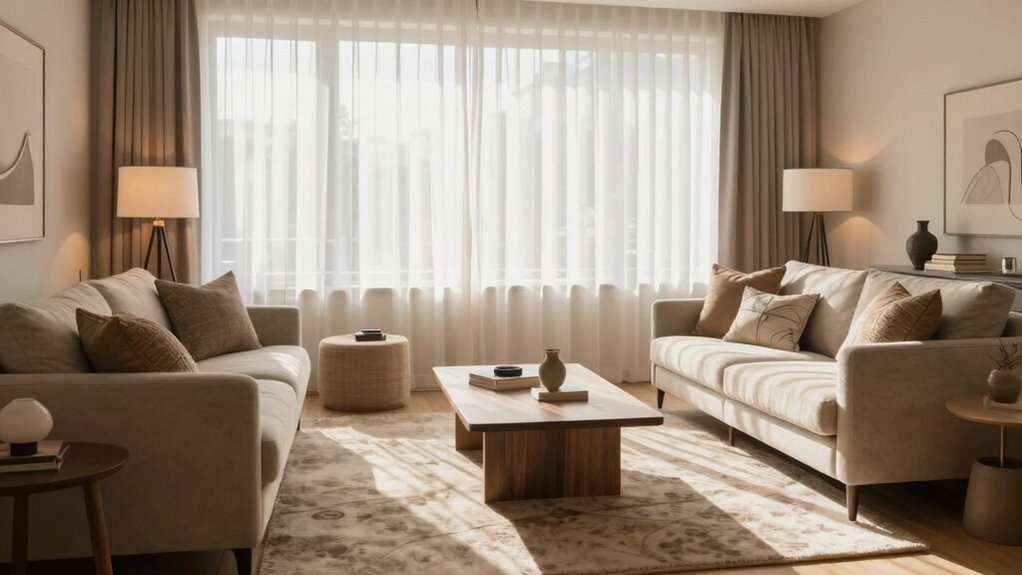

To balance furniture, light, and layout for home comfort, focus on creating a natural flow that promotes easy movement and conversation. Arrange furniture to highlight focal points and avoid blocking pathways, while layering lighting with ambient, task, and accent sources to add warmth and functionality. Use harmonious colors with neutral backgrounds and pops of personality, balancing darker and lighter tones. When these elements work together, your space feels cozy, inviting, and perfectly tailored to your needs—discover more secrets to perfecting this balance.

Get furniture and decor delivered free — and shop member deals
- Fast, free delivery on millions of items
- Access to Prime Big Deal Days deals on October 6–7
- Prime Video, Amazon Music and more included
Key Takeaways
- Arrange furniture to facilitate natural flow and conversation, avoiding blocking pathways or overcrowding.
- Layer lighting with ambient, task, and accent sources to create warmth and functional illumination.
- Use neutral tones as a base, adding colorful accents to enhance personality without overwhelming the space.
- Balance furniture placement, lighting, and color schemes to ensure the space is both functional and aesthetically pleasing.
- Incorporate ergonomic principles and thoughtful design to foster comfort, usability, and a welcoming atmosphere.
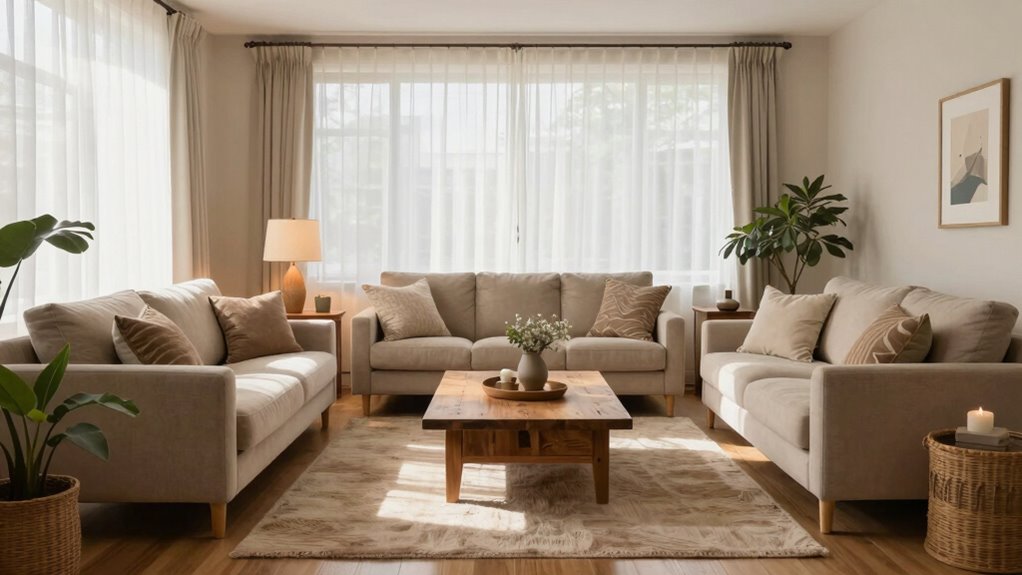
Ever wondered what truly makes a home feel comfortable? It’s not just about having nice furniture or a cozy rug; it’s about creating a space that feels balanced and inviting. At the heart of this balance lies a thoughtful mix of furniture layout, lighting placement, and color coordination. When these elements work together seamlessly, your home transforms into a sanctuary where you want to relax and unwind.
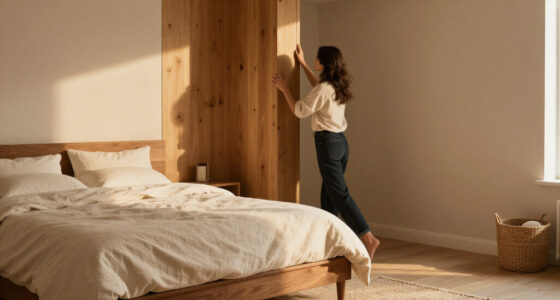
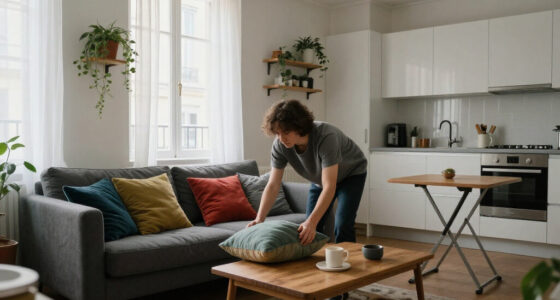
Start with furniture layout. You want your furniture arranged in a way that promotes easy movement and conversation. Avoid blocking pathways or overcrowding a room, which can make the space feel cramped and uncomfortable. Instead, position pieces to foster a natural flow, with enough space to move around freely. Think about focal points—perhaps a fireplace or a large window—and arrange your furniture to highlight these features. This not only enhances the room’s aesthetic but also makes it more functional. Understanding spatial arrangement principles can help you optimize your space effectively. Additionally, considering ergonomic principles can improve comfort and usability in your layout.
Arrange furniture to promote flow, highlight focal points, and ensure easy movement for a more functional, inviting space.
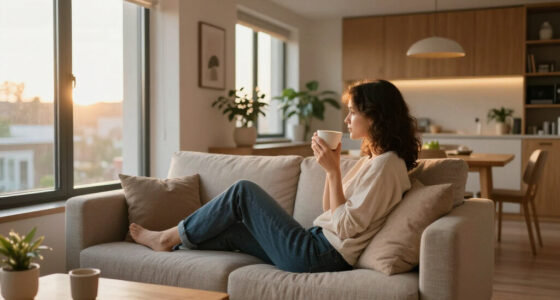
Lighting placement is equally essential. Proper lighting can make or break the ambiance of a room. You should combine different types of lighting—ambient, task, and accent—to create layers that add depth and warmth. For example, install overhead lights for general illumination, but supplement them with table lamps or floor lamps in seating areas. Position your lighting fixtures carefully to avoid glare and shadows, which can create discomfort. Soft, warm lights tend to foster a cozy atmosphere, while brighter lights are useful for tasks like reading or cooking. Remember, lighting should complement your furniture layout, highlighting your space’s best features without overwhelming it. Additionally, understanding how lighting technology works can help you choose energy-efficient options that still provide the desired ambiance. When thoughtfully integrated, lighting can also emphasize your home’s decorative elements.
Color coordination ties everything together. When choosing colors for walls, furniture, and accessories, aim for harmony. Neutral shades like beige, gray, or soft whites serve as versatile backgrounds that make your furniture and decor pop. Add pops of color through cushions, art, or rugs to bring personality into the space. Keep in mind that darker colors can make a room feel smaller, so balance them with lighter tones. Consistent color themes across different areas create a cohesive flow, making your home feel unified and calming.
When you combine thoughtful furniture placement, strategic lighting, and well-chosen color schemes, you craft a space that’s both functional and aesthetically pleasing. This balance is what truly makes a house feel like a home—comfortable, welcoming, and tailored to your lifestyle. With attention to these details, you’ll find your home naturally inviting, making every moment you spend there more enjoyable.
As an affiliate, we earn on qualifying purchases.
Frequently Asked Questions
How Do I Measure Natural Light in My Space Accurately?
To measure natural light accurately, start by observing window placement and how sunlight shifts throughout the day. Use light measurement tools like a light meter or a smartphone app designed for light measurement. Take readings at different times to understand the light levels in various areas. This helps you decide where to place furniture and how to optimize window placement, ensuring balanced lighting that enhances your space’s comfort and ambiance.
What Are the Best Furniture Colors for Different Lighting Conditions?
Think of furniture colors as your home’s mood rings. In bright, sunny spaces, opt for cool tones like blues and greens, which reflect light and create calm, using durable fabrics to withstand sun exposure. In low-light rooms, warm hues like reds and yellows bring warmth and energy. Color psychology guides your choices, and resilient furniture guarantees your style stays vibrant longer, no matter the lighting.
How Can I Create a Balanced Layout in Small Rooms?
To create a balanced layout in small rooms, focus on decorating tips that optimize space. Use multi-functional furniture to save space and keep the room uncluttered. Arrange furniture to maximize open pathways, placing larger pieces against walls. Incorporate mirrors to reflect light and create an illusion of space. Keep the color palette light and cohesive, and avoid overcrowding. These strategies guarantee your small room feels comfortable, open, and well-balanced.
Which Furniture Materials Enhance Comfort and Light Reflection?
You’ll find that furniture with reflective surfaces, like glass or polished metal, can increase natural light and make small rooms feel more spacious. Additionally, fabric textures like silk, satin, or smooth linen enhance comfort by adding softness and elegance. These materials bounce light around the space, creating a brighter, more inviting atmosphere. Notably, rooms with reflective surfaces and soft fabrics can appear up to 20% larger, boosting both comfort and visual openness.
How Often Should I Reassess My Home Layout for Optimal Comfort?
You should reassess your home layout at least once a year or whenever you switch decorating styles. Regularly reviewing your furniture placement helps guarantee your space remains comfortable and functional. Changes in furniture, lifestyle, or seasonal lighting can impact comfort, so staying attentive allows you to optimize light reflection and furniture arrangement. This proactive approach keeps your home inviting, balanced, and aligned with your evolving decorating preferences.
Conclusion
By applying this home comfort formula, you’ll create a space that feels just right—bright, inviting, and perfectly balanced. Remember, studies show that a well-lit room can boost your mood and productivity by up to 25%. So, tweak your furniture, lighting, and layout until they harmonize, and enjoy a home that truly feels like your sanctuary. With thoughtful adjustments, you’ll transform your space into a comforting haven you’ll love coming home to every day.
Fall Picks
fall essentials
As an affiliate, we earn on qualifying purchases.