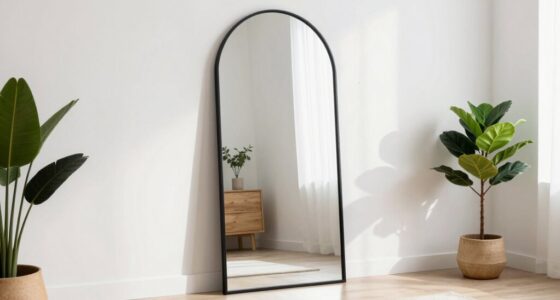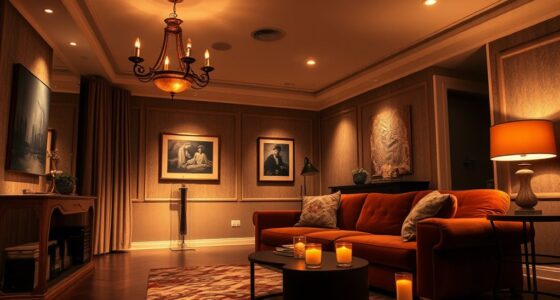
To create a stress-reducing home, focus on integrating natural elements like plants, organic textures, and plenty of natural light, which can boost your mood and lower stress. Choose ergonomic furniture that supports your posture and encourages movement, helping you stay comfortable throughout the day. Keep your space uncluttered and open to promote ease of movement and mental clarity. Exploring these design ideas can transform your home into a true sanctuary for your body and mind.
Key Takeaways
- Incorporate biophilic elements like plants, natural textures, and large windows to connect residents with nature and promote relaxation.
- Use ergonomic furniture such as adjustable chairs and sit-stand desks to support proper posture and reduce physical stress.
- Design open, clutter-free layouts that enhance ease of movement and create a calming, organized environment.
- Maximize natural light and include organic textures to boost mood and mental clarity throughout the home.
- Integrate thoughtful details and nurturing features to transform the space into a stress-reducing sanctuary for overall well-being.

Have you ever wondered how the spaces around you impact your health and well-being? The environment you live in influences your mood, energy levels, and overall stress. By intentionally designing your home with wellness in mind, you can create a sanctuary that promotes relaxation and mental clarity. One effective approach is incorporating biophilic design—integrating natural elements like plants, natural light, and organic textures into your living space. These features connect you to nature, which has been shown to lower cortisol levels and enhance feelings of calm. Picture large windows allowing sunlight to flood your rooms, lush greenery on shelves, or natural wood accents that evoke the outdoors. These elements don’t just beautify your space; they actively support your mental health by reducing stress and fostering a sense of peace.
Equally important is choosing ergonomic furniture that supports your body and reduces physical discomfort. When your furniture is designed with ergonomics in mind, it minimizes strain on your neck, back, and joints, preventing aches that can build up over time. Think about investing in an adjustable chair that supports proper posture during work or leisure, or a sit-stand desk that encourages movement throughout the day. Ergonomic furniture makes daily activities more comfortable, helping you stay relaxed and alert. This comfort can markedly decrease the physical stress that contributes to overall tension and fatigue.
Combining biophilic design with ergonomic furniture creates a holistic environment that nurtures both your body and mind. For instance, placing a comfortable, supportive reading chair near a window with a view of your garden merges physical comfort with natural inspiration. Using natural, breathable fabrics for your cushions and upholstery also reinforces the connection to nature, making your space feel more inviting and less confined. Additionally, thoughtful layout choices—such as creating open, clutter-free areas—support ease of movement and mental clarity. When your environment is visually calming and physically supportive, you’re more likely to unwind and recharge.
Furthermore, understanding the importance of secure and efficient payment processing solutions can help maintain peace of mind in your daily routines, reducing financial stress. Ultimately, designing for wellness isn’t about making your home look perfect; it’s about making it a functional, nurturing space that promotes your health. Incorporating biophilic design and ergonomic furniture makes a tangible difference, transforming your home into a refuge from daily stressors. By paying attention to these details, you empower yourself to create a space that not only looks good but also feels good—supporting your well-being every day.
Frequently Asked Questions
How Can I Incorporate Natural Elements Into Small Spaces?
You can incorporate natural elements into small spaces by integrating plants, which add greenery and improve air quality. Use natural textures like woven baskets, wooden furniture, or linen textiles to create a cozy, calming atmosphere. Place small potted plants on shelves or windowsills to maximize space while adding energy. These touches help you feel more connected to nature, reducing stress and making your home feel more inviting and serene.
What Are the Best Colors to Promote Relaxation at Home?
Imagine walking into a calm forest—green and blue hues surround you. That’s the power of color psychology. You should choose soothing palettes like soft blues, gentle greens, or warm neutrals to promote relaxation at home. These colors reduce stress and create a peaceful atmosphere. Incorporate them into your walls, decor, or textiles, and you’ll foster a calming environment that helps you unwind after a busy day.
How Does Lighting Affect Stress Levels in Home Design?
Lighting impacts your stress levels by shaping the overall lighting ambiance and guiding light placement to create a calming environment. Soft, warm lights help relax your mind, while strategic light placement reduces glare and shadows that can cause discomfort. You should aim for balanced lighting throughout your home, combining natural light with adjustable fixtures, to foster a peaceful atmosphere that promotes relaxation and minimizes stress.
Are There Specific Furniture Materials That Reduce Anxiety?
You should choose furniture made from eco-friendly fabrics and memory foam mattresses to reduce anxiety. These materials feel soft and natural against your skin, creating a calming atmosphere. Eco-friendly fabrics bring in a sense of sustainability and tranquility, while memory foam offers comfort and support, easing tension. Together, they promote relaxation, improve sleep, and help lower stress levels, making your home a peaceful sanctuary.
How Can I Create a Calming Outdoor Retreat at Home?
You can create a calming outdoor retreat by designing winding garden pathways that invite peaceful strolling. Incorporate comfortable outdoor seating where you can relax and unwind. Use natural materials like wood or stone to enhance tranquility. Plant lush greenery and calming flowers around the pathways and seating areas. Adding soft lighting and water features further promotes relaxation, making your outdoor space a serene escape from daily stress.
Conclusion
By transforming your home into a sanctuary of calm, you’re not just reducing stress—you’re opening a secret portal to endless peace and happiness. Imagine a space so soothing, it banishes worries forever, turning every day into a blissful retreat. Don’t settle for chaos; embrace these design tips and create a haven so perfect, it could make the world’s chaos seem like a distant memory. Your stress-free paradise is just a design away—seize it now!