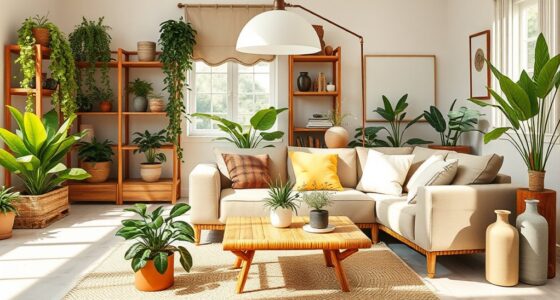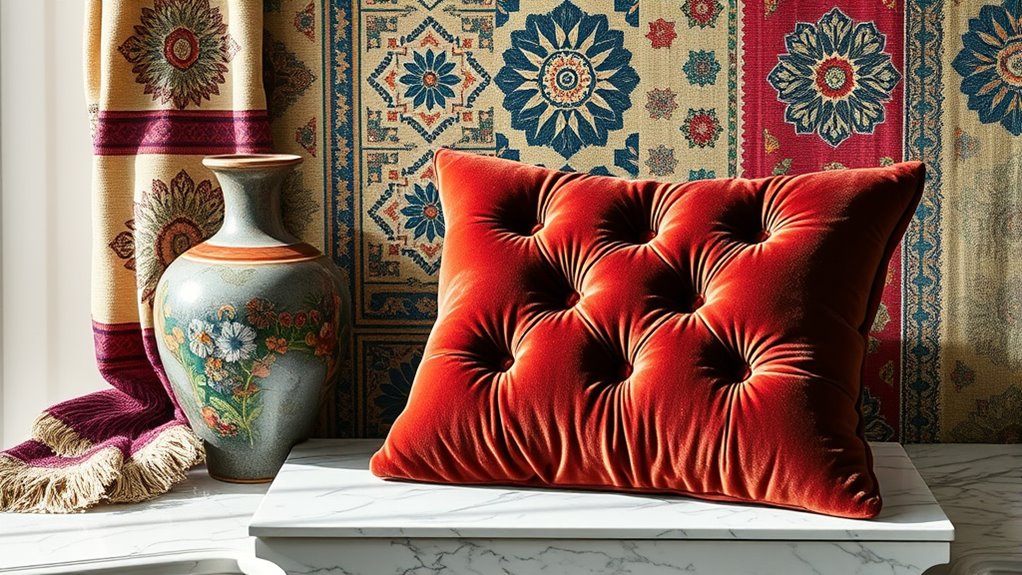

To mix patterns and textures like a pro, start with a neutral base to keep things balanced. layer in various fabrics—think plush velvets, crisp linens, and matte weaves—and vary their textures for depth. Combine large, bold patterns with smaller, subtle ones, repeating colors or motifs for cohesion. Trust your instincts and experiment; a curated mix creates a lively, personalized space. Keep exploring to discover even more ways to elevate your interior style.
Key Takeaways
- Start with a neutral base and layer patterns and textures gradually for balanced visual interest.
- Mix large, bold patterns with smaller, subtle ones to create harmony without overwhelming.
- Use a cohesive color palette, repeating colors or patterns across different fabrics for unity.
- Combine different textures, such as matte with shiny or coarse with smooth, for contrast and depth.
- Trust your instincts and experiment to develop an intuitive sense of what combinations work best.
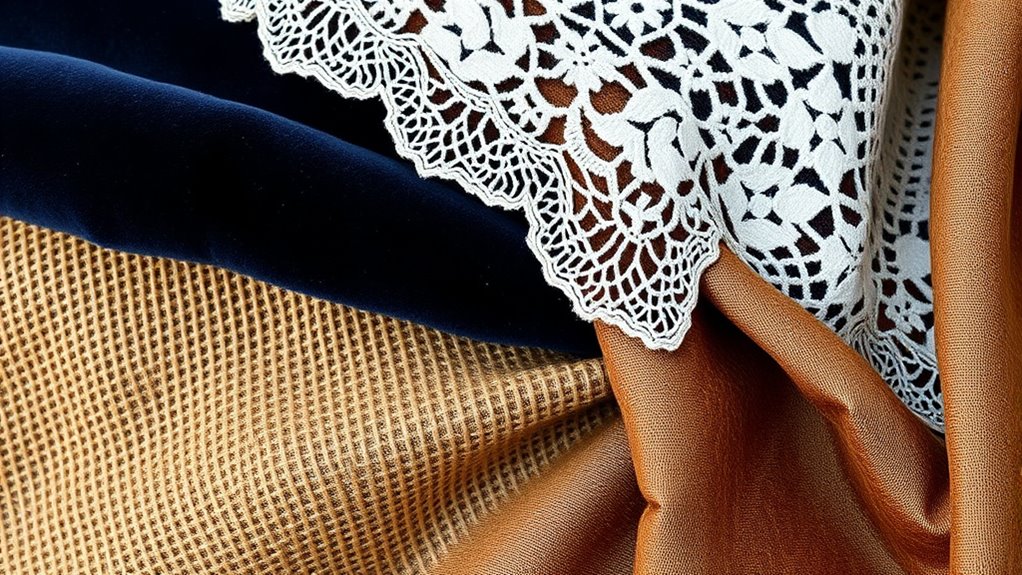
Mixing patterns and textures can transform a simple space into a dynamic, stylish environment. When you get it right, your room feels lively and curated, with a sense of depth that keeps the eye moving. The key is understanding how to balance the chaos of patterns with the harmony of textures. It all starts with color coordination—choosing a cohesive palette that ties diverse elements together. You want your patterns to complement, not clash, so stick to a color scheme that resonates throughout the room. For instance, if you select warm earth tones, incorporate patterns in shades of terracotta, rust, and beige, ensuring they work harmoniously. This creates a visual thread that guides the eye and prevents the space from feeling overwhelming.
Fabric layering plays a vital role in elevating your mix of patterns and textures. Think of it as adding depth to your design by layering different materials—think plush velvets, crisp linens, rugged weaves, and sleek silks. When you layer fabrics thoughtfully, you create an inviting tactile experience that invites touch and exploration. For example, place a patterned velvet cushion on a textured linen sofa, or layer a patterned silk throw over a chunky knit blanket. These combinations add richness and interest, making your space feel thoughtfully curated. The overlapping of fabrics in varying textures also helps to ground your patterns, giving them a sense of purpose rather than chaos. Additionally, incorporating clutter-free storage solutions can help maintain an organized environment that highlights your textured and patterned elements without feeling chaotic.
To make your pattern and texture mix work seamlessly, keep the scale in mind. Mix large, bold patterns with smaller, subtle ones to avoid visual overload. For example, a large floral print on an accent pillow paired with smaller geometric patterns on curtains can strike a perfect balance. Remember, repetition helps too—repeat a color or pattern element across different pieces to unify the look. When you’re layering fabrics, think about the weight and sheen of each material. Combining a matte, coarse fabric with a shiny, smooth one adds contrast that’s visually interesting but cohesive.
Finally, trust your instincts and don’t be afraid to experiment. Start with a neutral base, then add in patterns and textures gradually. Over time, you’ll develop an intuitive sense of what works best for your space. Keep in mind that mixing patterns and textures isn’t about perfection; it’s about creating a space that feels lively, personalized, and uniquely yours. With thoughtful color coordination and deliberate fabric layering, you’ll craft a room that’s both vibrant and harmonious—proof that a well-executed mix can truly elevate your home’s style.
Frequently Asked Questions
How Do I Balance Bold Patterns With Subtle Textures?
To balance bold patterns with subtle textures, start by choosing a pattern with a larger scale to make it stand out. Then, add subtle textures like soft fabrics or smooth surfaces to create texture contrast without overwhelming the space. Keep the pattern scale in mind, ensuring it doesn’t clash with the textures. This approach helps you achieve a harmonious look where bold patterns shine against understated textures.
What Color Schemes Work Best for Mixing Patterns?
Think of your room as a symphony, where color coordination sets the tone. Neutral tones like beige, gray, and whites create a harmonious backdrop, making bold patterns pop without overwhelming. For more contrast, mix complementary colors like blue and orange or green and red, ensuring pattern contrast remains lively yet balanced. Stick to a cohesive palette, and your patterns will dance together effortlessly, creating a visually stunning space.
How Many Different Patterns Should I Combine in One Space?
You should aim to combine 2-4 patterns in one space, balancing pattern scale and placement. Use larger patterns as focal points and smaller ones for contrast, ensuring they don’t compete. Strategically place patterns so they complement each other without overwhelming the room. By varying pattern scale and thoughtfully considering pattern placement, you create visual interest while maintaining harmony and cohesion in your space.
Can Mixing Patterns Make a Room Look Smaller?
Mixing patterns can sometimes make a room feel like a crowded dance floor, but with texture harmony, you avoid pattern clash and keep things balanced. If done right, it won’t make your space look smaller; instead, it adds depth and personality. Use subtle patterns alongside bold ones, and incorporate different textures for a cohesive look. This way, your room feels lively without shrinking the space visually.
What Are Common Mistakes to Avoid When Mixing Textures?
When mixing textures, avoid pattern clash by sticking to a cohesive color palette and varying textures thoughtfully. Don’t overmatch everything; blending different textures creates visual interest. Be cautious with too many busy patterns that can overwhelm the space, and balance bold textures with softer ones. Remember, mixing textures is about harmony. Stay intentional, and don’t let pattern clash or overmatching ruin the overall flow of your room.
Conclusion
Now that you know how to mix patterns and textures like a pro, you’ll elevate any space effortlessly. Did you know that homes with thoughtfully layered textures are 30% more inviting? By experimenting with different fabrics and patterns, you create a dynamic, personalized environment that reflects your style. So go ahead, mix, match, and have fun—your perfect, textured haven is just a pattern away!