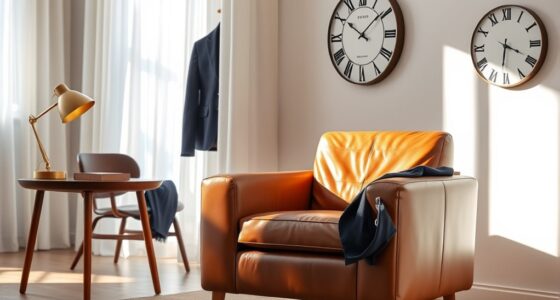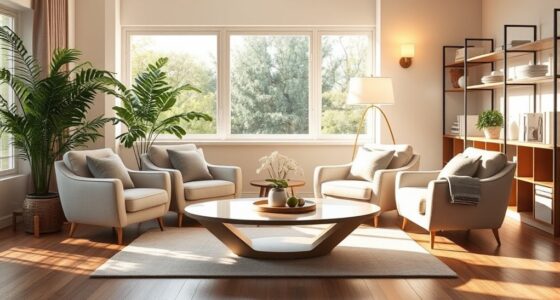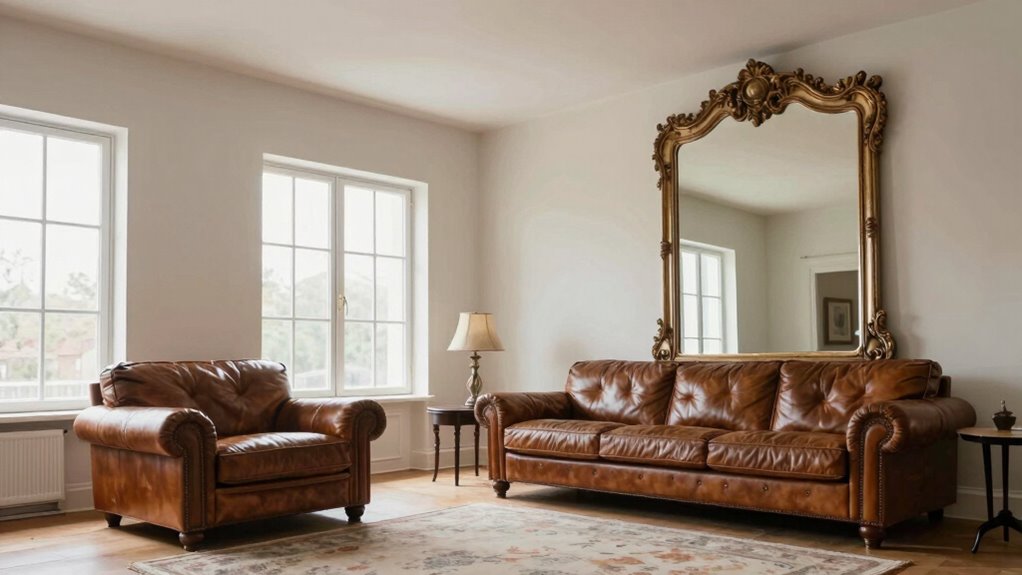
If a room feels off or unbalanced, it’s often due to issues with scale and proportion. When furniture, artwork, or accessories are too big or small for the space, they disrupt visual harmony. This imbalance can make your room feel cramped, awkward, or chaotic. To fix it, you need to adjust the sizes and placement of your elements so everything works together smoothly. Keep exploring to discover how to create a more balanced and inviting space.
Key Takeaways
- Imbalanced scale between furniture and room size makes spaces feel awkward or cluttered.
- Artwork hung too high or too low disrupts visual flow and harmony.
- Oversized or tiny furniture pieces clash, causing visual imbalance and discomfort.
- Mismatched proportions between accessories and furniture diminish room cohesion.
- Proper scale and proportion ensure a balanced, inviting, and visually harmonious environment.
What Are Scale and Proportion, and Why Do They Matter in Your Space?
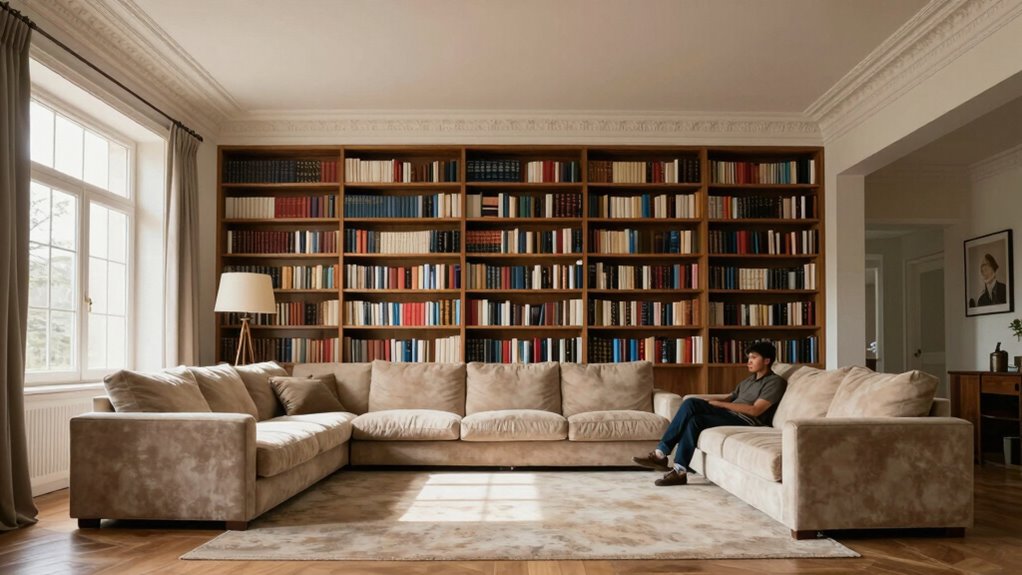
Have you ever felt overwhelmed or out of place in a room that just doesn’t seem right? That’s often because the furnishing ratios and proportions aren’t balanced, disrupting visual harmony. Scale refers to the size of individual pieces relative to the space, while proportion compares the sizes of different items to each other. When these elements are off, your room can feel awkward or cluttered. For example, a tiny coffee table in a vast living room feels out of scale, while an oversized sofa in a small room can dominate the space. Understanding and applying proper scale and proportion helps create visual harmony, making your room feel inviting and well-balanced. Proper furnishing ratios can enhance the overall aesthetic and comfort of your space. Recognizing visual balance is essential in achieving a cohesive interior design. Cultivating an awareness of spatial relationships can significantly enhance your interior design skills. Additionally, developing an eye for attention to detail ensures that each element contributes to the overall harmony rather than detracting from it.
Common Mistakes That Disrupt Room Balance: and How to Fix Them

One of the most common ways room balance gets disrupted is through sizing mistakes that throw off the harmony of your space. Furniture that’s too large or small can overwhelm or underwhelm, making the room feel awkward. Similarly, poor artwork placement—such as hanging pieces too high or too low—disrupts visual flow. To help, consider this guide:
| Furniture Sizing | Artwork Placement | Overall Balance |
|---|---|---|
| Match size to space | Hang art at eye level | Create focal points |
| Avoid oversized pieces | Use scale to complement furniture | Maintain symmetry |
| Balance heavy and light pieces | Group art for impact | Ensure visual flow |
Fix these issues by choosing appropriately scaled furniture and thoughtfully placing artwork to enhance harmony. Incorporating color temperature adjustments can also help set the mood and improve overall room balance.
How Imbalanced Scale and Proportion Affect Your Room’s Feel and Atmosphere
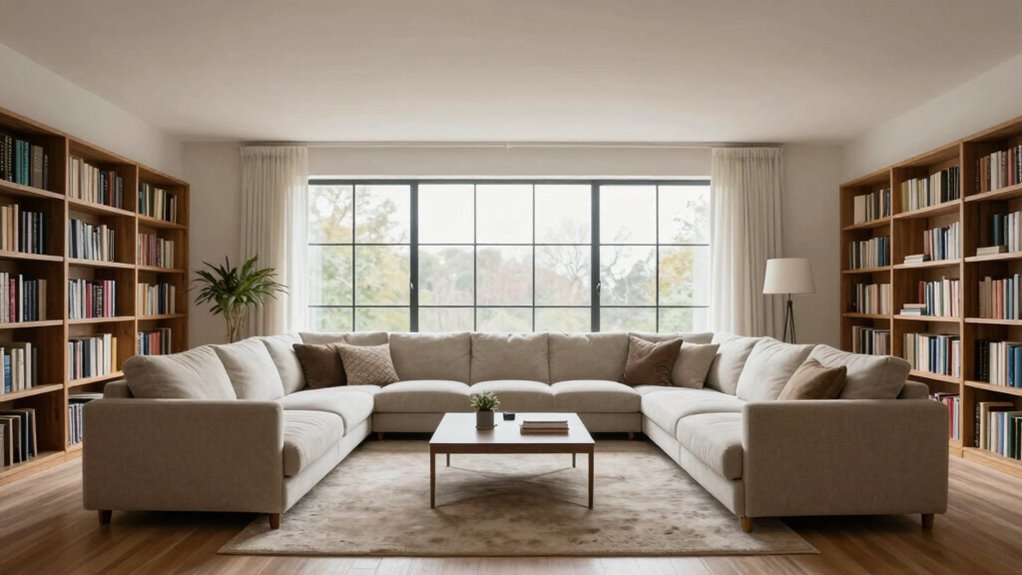
When scale and proportion are off, your room can feel unbalanced and uncomfortable, even if everything else is well-designed. This imbalance disrupts visual balance, making some elements seem out of place or overwhelming. Large furniture in a small space can dominate, while tiny accessories might get lost, causing a sense of chaos. Poor proportion also affects color harmony; mismatched sizes and shapes can clash visually, making the room feel disjointed. When scale isn’t right, your eyes struggle to find resting points, leading to a sense of unease. Achieving proper scale and proportion helps your space feel cohesive and inviting. It ensures that elements work together harmoniously, supporting a balanced visual flow that enhances the room’s overall atmosphere.
Simple Principles for Achieving Harmony Through Proper Scale and Proportion
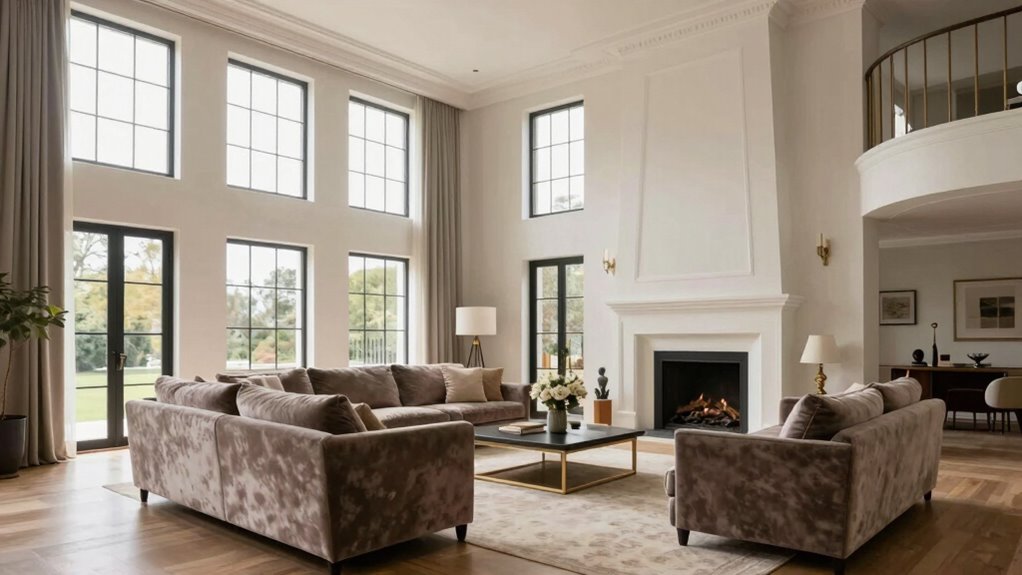
Achieving harmony through proper scale and proportion starts with understanding how to balance elements within your space. Focus on furniture sizing that complements the room’s dimensions—avoid oversized pieces in small rooms or tiny furniture in large areas. Proper artwork placement also plays a key role; hang pieces at eye level and choose sizes that match your wall space to create visual balance. Keep proportions consistent between furniture and accessories to prevent clutter or emptiness. When selecting furniture, consider both height and width to maintain harmony. Similarly, in artwork placement, avoid overwhelming a wall with too-large pieces or underwhelming smaller works. Understanding visual balance can help you create a more harmonious environment by distributing elements evenly throughout the room. Additionally, incorporating proper scale ensures that each element enhances the overall aesthetic rather than detracting from it.
Practical Tips to Adjust Scale and Proportion for a Cohesive, Inviting Space
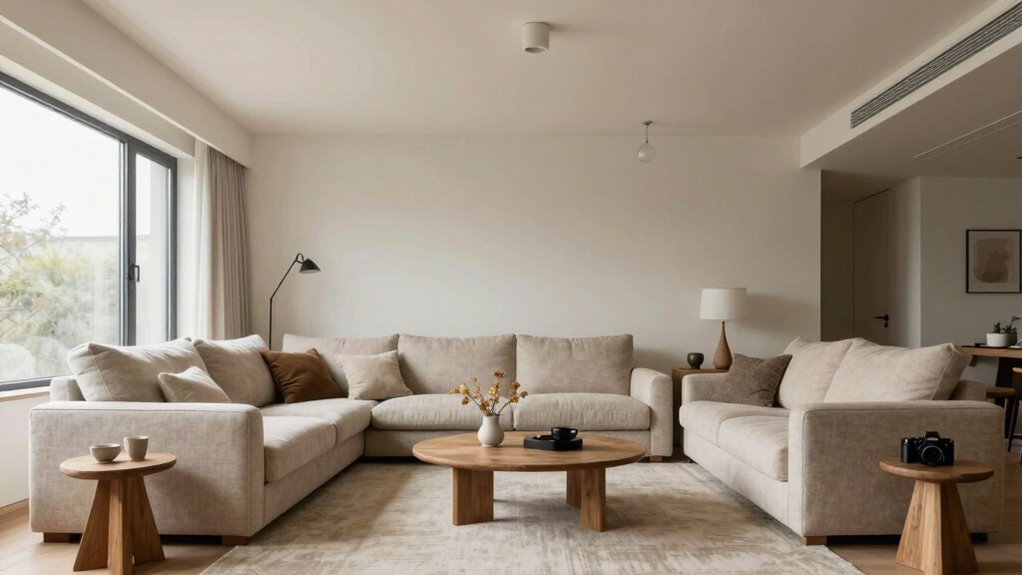
To create a cohesive and inviting space, you need to actively tweak the scale and proportion of your furnishings and accessories. Start by evaluating furniture sizing; choose pieces that fit your room’s dimensions. Avoid oversized furniture in small rooms or tiny furniture in large areas. For art placement, select artwork that complements the scale of your walls, neither overwhelming nor lost. Properly proportioned art enhances visual balance. Use this quick guide:
| Room Size | Furniture Sizing | Art Placement |
|---|---|---|
| Small | Compact furniture, multi-functional | Smaller art, centered or grouped |
| Medium | Appropriately scaled pieces | Medium-sized art, eye-level |
| Large | Oversized furniture, statement pieces | Large artwork, bold placement |
Adjusting these elements ensures your space feels balanced, inviting, and harmonious. Being mindful of scale and proportion is essential for achieving a well-designed environment.
Frequently Asked Questions
How Do Scale and Proportion Influence Room Functionality?
You influence room functionality through scale and proportion by creating visual balance and spatial harmony. When furniture and decor are proportionate to the room’s size, you guarantee easy movement and comfort. Oversized pieces can make a space feel cramped, while small items may seem out of place. Achieving the right scale and proportion helps your room feel balanced, functional, and inviting, making it easier to use and enjoy every area.
Can Scale and Proportion Be Adjusted After Furniture Is Purchased?
Yes, you can adjust scale and proportion after buying furniture. Think of it as giving your space a fresh coat of paint—furniture resizing and decorative adjustments can make a big difference. You might add risers to elevate a piece or swap out smaller accessories for larger, statement pieces. These tweaks help balance your room’s proportions, making everything feel more harmonious and tailored to your space’s unique rhythm.
What Role Does Natural Light Play in Perceived Scale?
Natural light considerably influences how you perceive a room’s scale. Proper lighting effects, created by strategic window placement, can make a space feel larger or cozier. When sunlight floods a room, it highlights proportions and creates shadows that enhance or diminish perceived size. Conversely, poor window placement limits light, making a space seem smaller or off-balance. Adjusting window size or positioning can improve the room’s overall sense of scale.
How Do Cultural Differences Affect Perceptions of Scale and Proportion?
Oh, the delightful dance of cultural aesthetics and spatial norms! You’ll find that perceptions of scale and proportion wildly differ across cultures—what feels spacious to one might seem cramped to another. For instance, Western design favors open, airy spaces, while Asian cultures value cozy, intimate settings. Your personal sense of scale is a product of cultural conditioning, making your interior choices a fascinating reflection of your cultural background.
Are There Specific Design Styles That Favor Exaggerated Scale?
Yes, certain design styles favor exaggerated scale, like artistic exaggeration and eclectic mixing. You’ll find bold, oversized furniture and accessories that create dramatic focal points. These styles embrace playful proportions, making spaces feel lively and unique. By intentionally enlarging elements or combining contrasting scales, you add visual interest and personality. So, if you love making a statement, these styles let you experiment with exaggerated scale to express your creativity.
Conclusion
So, next time your room feels a bit “off,” remember it’s probably just a scale or proportion hiccup. Ironically, the fix is often simpler than you think—just tweak a few pieces here and there. Don’t let imbalance steal your space’s charm. After all, achieving perfect harmony isn’t about perfection, but about knowing when to size up or down. Who knew that feeling “off” could be so easily fixed?