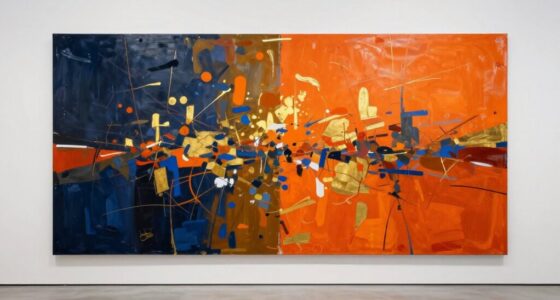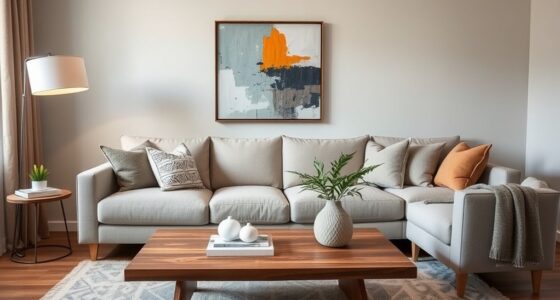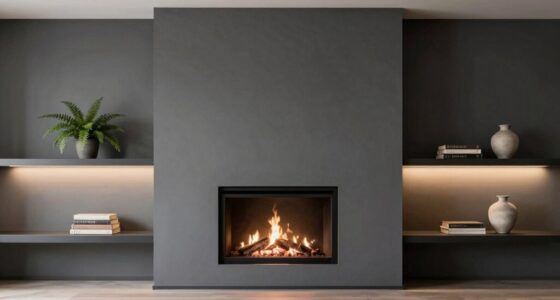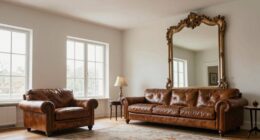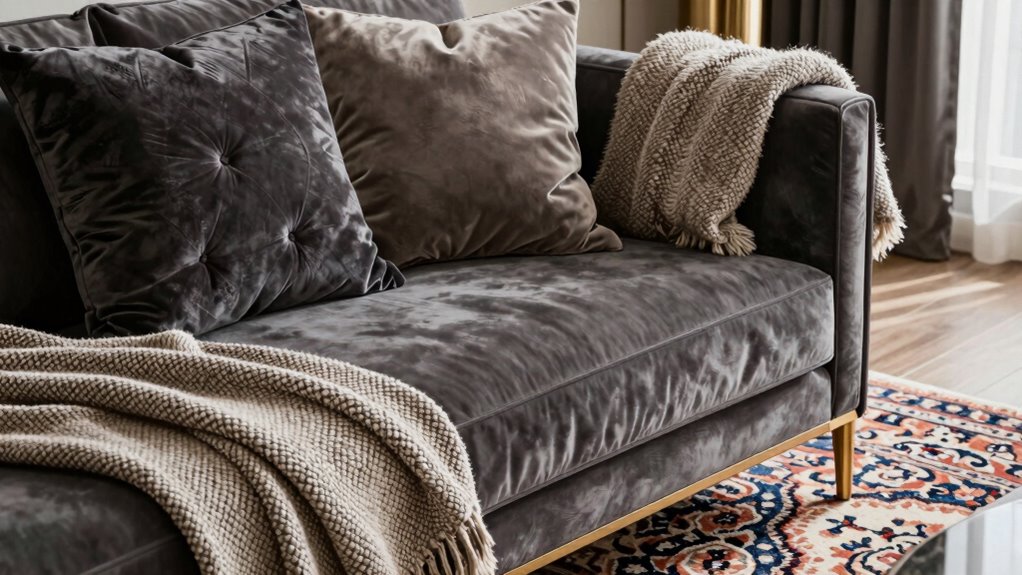
To make your room feel expensive without overspending, focus on layering different textures like plush rugs, soft throws, and sleek finishes. Mix soft and hard materials for contrast, such as velvet cushions with wooden furniture or textured wallpaper with matte paint. Add variety with natural elements like wood or stone and incorporate color and patterns thoughtfully. Carefully placing these elements creates depth and richness. Keep exploring for more tips to achieve a luxurious look on a budget.
Key Takeaways
- Combine soft and hard textures like velvet cushions with sleek furniture to create depth and visual interest.
- Layer affordable rugs, throws, and curtains with contrasting finishes and patterns for a luxurious feel.
- Use textured wall treatments such as peel-and-stick wallpaper or textured paint to add dimension inexpensively.
- Mix natural materials like wood or stone with plush fabrics to introduce organic richness without high costs.
- Incorporate key textured accessories like woven baskets, textured art, and tactile textiles to elevate the room’s sophistication affordably.
Why Texture Layering Is Key to a Luxurious Home

Texture layering is essential to creating a luxurious home because it adds depth and visual interest to your space. When you combine different textures thoughtfully, you craft luxury illusions that make your room feel more opulent without overspending. Tactile harmony plays a critical role here—by balancing smooth, rough, soft, and hard surfaces, you create a sensory experience that feels rich and curated. This layering invites the eye and touch to explore your space, elevating its sophistication. It’s about mixing materials like velvet, leather, wood, and metal with intention to produce a seamless, inviting environment. Paying attention to contrast ratio can further enhance the perception of depth and richness in your decor. When done correctly, texture layering transforms a simple room into a luxurious retreat that exudes elegance and comfort, all while emphasizing your personal style.
Find Affordable Textures to Make Your Space Feel Rich
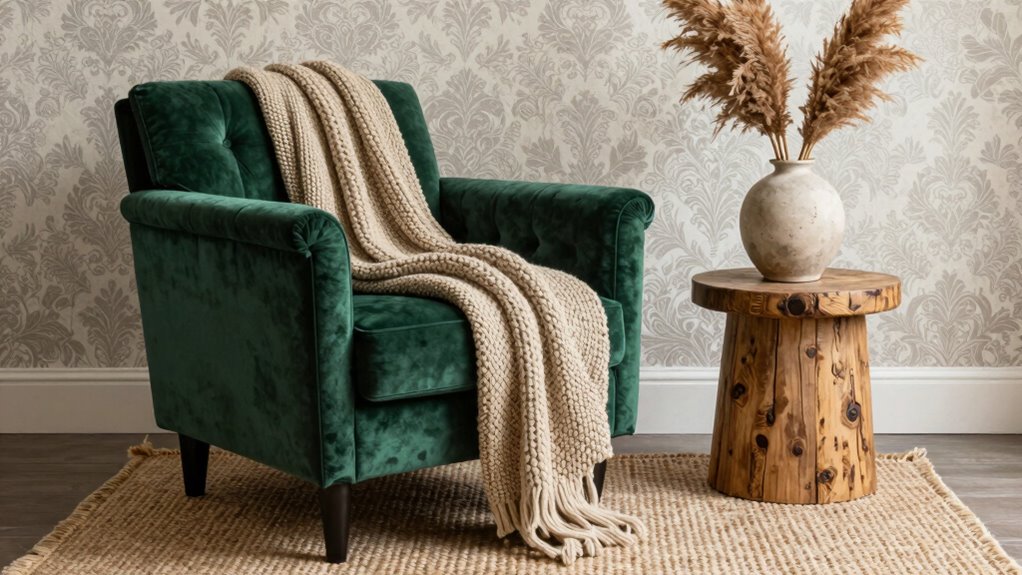
Creating a luxurious feel in your home doesn’t mean spending a fortune on high-end materials. You can achieve rich textures with affordable wall treatments like peel-and-stick wallpaper or textured paints, which add depth without breaking the bank. For textiles, opt for budget-friendly options like faux fur throws, linen cushions, or woven rugs that instantly elevate a room’s sophistication. These textiles add softness and visual interest without the cost of designer pieces. Incorporating affordable wall treatments can dramatically transform a space without overspending. Combining affordable wall treatments with versatile textiles allows you to layer textures effortlessly, creating a plush, expensive look on a budget. Focus on mixing different textures and finishes, and you’ll give your space a polished, high-end vibe without overspending.
Mix Soft and Hard Materials for Visual Depth
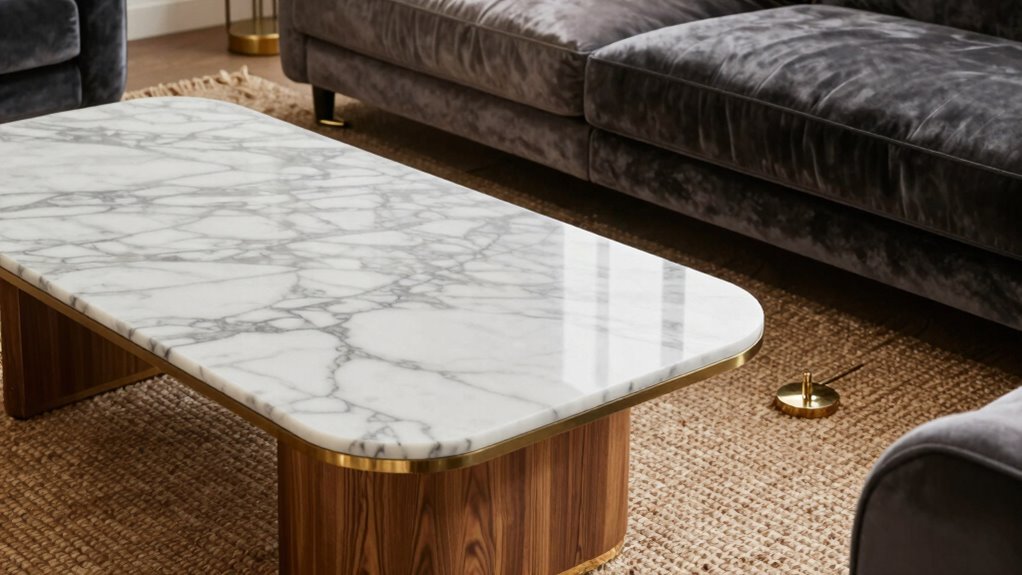
To add visual depth to your space, mixing soft and hard materials is a simple yet effective strategy. Combining different textures creates contrast that makes a room feel layered and sophisticated. Try experimenting with fabric combinations, such as plush cushions paired with sleek leather chairs. Incorporate wall coverings like textured wallpaper or matte paint to add dimension to flat surfaces. Think about pairing a soft, woven throw with a hard, glossy coffee table for balance. You can also add visual interest by mixing matte and shiny finishes, or soft textiles with smooth, hard surfaces. This contrast not only enhances depth but also makes your space feel curated and inviting. Remember, subtle differences in texture can markedly elevate the overall aesthetic without costly upgrades.
Layer Rugs and Fabrics to Add Warmth and Dimension
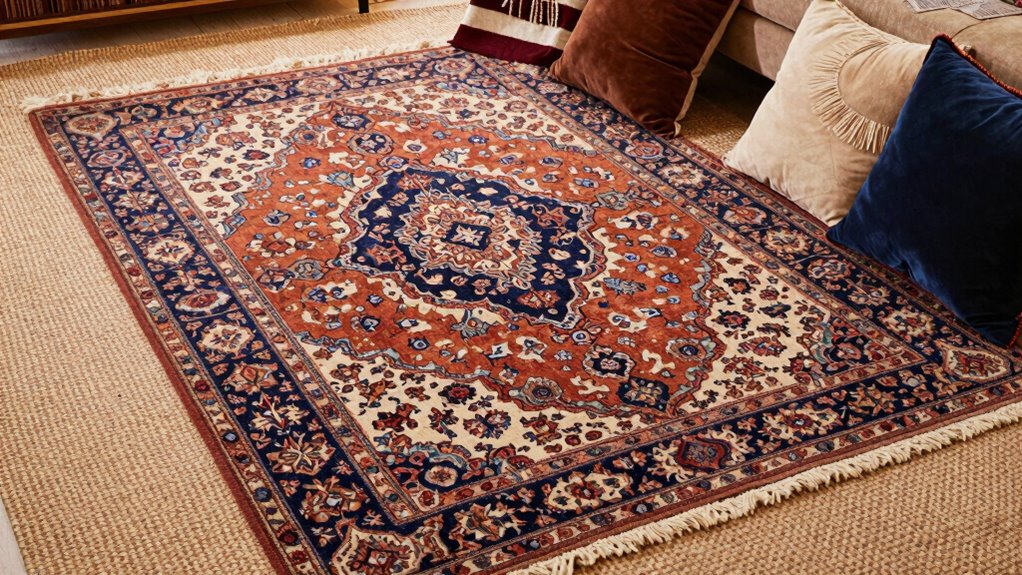
Layering rugs and fabrics instantly adds warmth and dimension to your space, making it feel more inviting and layered. Start with a foundation rug, then add smaller rugs or layered textiles for texture. Use decorative pillows on sofas and chairs to create visual interest and comfort. Window treatments like curtains or shades enhance the layered look while offering insulation and privacy. Mix different textures—think plush, nubby, or silky fabrics—to deepen the tactile experience. Incorporating sustainable materials can also elevate your design while supporting eco-friendly choices. Here’s a simple guide to help you balance your layers:
| Layering Element | Purpose |
|---|---|
| Area Rug | Defines the space and adds warmth |
| Decorative Pillows | Boosts comfort and visual texture |
| Window Treatments | Frames windows and insulates |
| Layered Fabrics | Adds depth and tactile richness |
Use Color and Pattern to Enhance Your Texture Layers
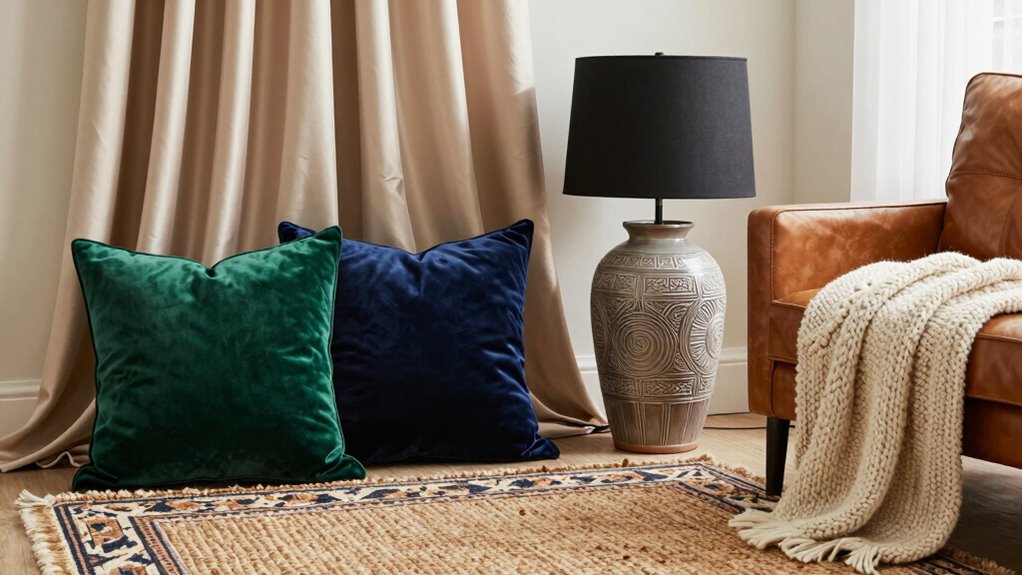
Adding color and pattern to your layered textures can dramatically elevate the visual interest of your space. When you choose colors that complement each other, achieving color harmony makes your room feel cohesive and polished. Don’t shy away from pattern mixing—combine subtle prints with bold ones to create dynamic contrasts. To keep everything balanced, stick to a unified color palette, which ties diverse textures together seamlessly. Consider these tips:
Layered textures come alive with vibrant colors and bold patterns for a cohesive, stylish space.
- Use a neutral base and add pops of color for vibrancy
- Mix patterns of different scales for visual interest
- Incorporate textured fabrics in similar hues for harmony
- Balance busy patterns with quieter, solid textures
Create Depth With Surface Finishes and Contrasts

You can add visual interest by mixing matte and glossy finishes, creating subtle contrasts that make textures pop. Incorporating natural materials like wood or stone introduces organic depth and warmth to your space. These surface finishes and contrasts work together to give your room a layered, dynamic feel.
Mix Matte and Glossy
Creating visual interest on a surface often involves balancing different finishes, and mixing matte and glossy textures is an effective way to achieve this. Matte finishes absorb light, providing a soft, understated backdrop, while glossy accents reflect light, adding pops of brightness and sophistication. To master this look, consider the surface finishes you select, as they play a crucial role in the overall effect. Use matte walls with glossy picture frames or hardware for contrast. Incorporate a matte-finish rug with glossy furniture pieces. Highlight architectural details with glossy trims against matte walls. Add accessories like vases or lamps with glossy surfaces for eye-catching accents. Proper maintenance of your surfaces and finishes ensures they remain attractive and durable over time. This mix creates depth and dimension, making your space feel more layered and expensive without extra cost. By thoughtfully combining matte finishes with glossy accents, you enhance visual interest and elevate your room’s style effortlessly.
Incorporate Natural Materials
Incorporating natural materials into your space instantly adds texture and authenticity, creating visual depth through surface finishes and contrasts. Using elements like wood, stone, and jute introduces warmth and organic appeal, enhancing sustainable design. These materials add subtle visual interest and tactile variety, making your room feel layered and refined. To create a balanced look, combine smooth and rough textures, shiny and matte surfaces, or light and dark tones. Here’s a visual guide:
| Material | Texture | Usage Ideas |
|---|---|---|
| Wood | Warm, smooth | Furniture, flooring |
| Stone | Rough, natural | Accent walls, countertops |
| Jute | Coarse, fibrous | Rugs, baskets |
Adding quality assessment techniques can help you select authentic and durable natural materials that elevate your design. Considering the material’s durability ensures your choices stand the test of time and maintain their aesthetic appeal. Being mindful of sustainable sourcing can further enhance the eco-friendly aspect of your space. Incorporating surface finishes can also add a refined touch, emphasizing the natural beauty of these materials.
Incorporate Natural Elements for Balance and Richness
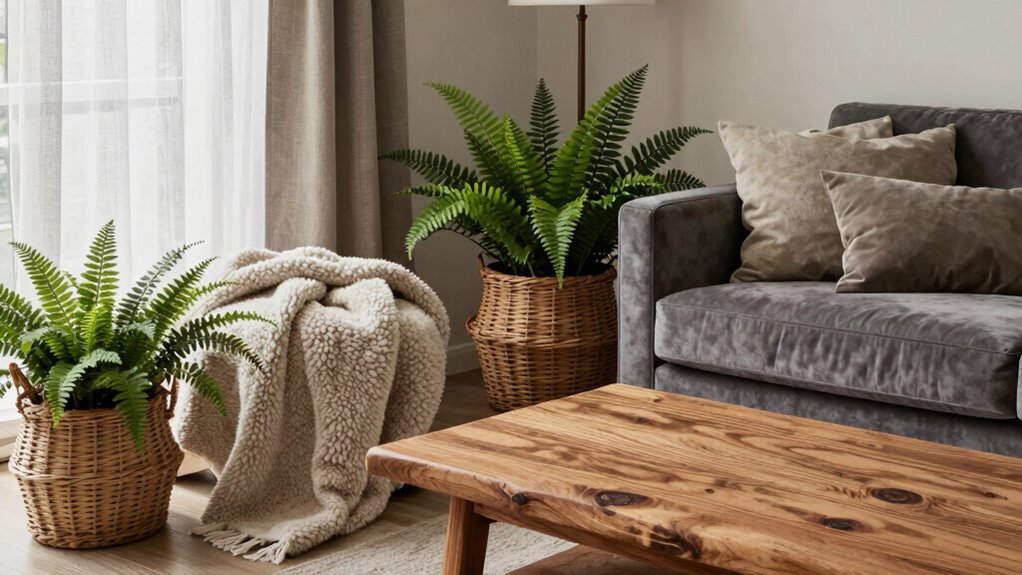
Natural elements bring a sense of balance and richness to texture layering, grounding your design with organic warmth. Adding natural elements creates visual interest while enhancing the room’s overall harmony. You can incorporate these simple touches:
- Fresh greenery in vases or hanging planters
- Wooden accents like bowls, frames, or furniture
- Stone or pebble accessories for subtle texture
- Woven baskets or rugs to introduce tactile variation
These elements not only boost the aesthetic appeal but also contribute to a layered, sophisticated look. They work beautifully with other textures and materials, making your space feel more inviting and well-rounded. Incorporating natural textures can further enhance the authentic character of your room, creating a balanced and richly textured environment that feels both stylish and comfortable.
Arrange Furniture and Decor to Highlight Texture Contrasts

To effectively showcase texture contrasts in your space, you need to carefully arrange your furniture and decor so that different materials and surfaces stand out. Start with fabric pairing—combine smooth, sleek fabrics like silk or leather with textured textiles like chenille or linen to create visual interest. Use color contrast strategically; place lighter fabrics against darker surfaces or vice versa to make textures pop. Position your furniture so that contrasting textures are adjacent, such as a velvet armchair next to a rough wooden table or a woven basket nearby a polished metal lamp. This deliberate arrangement draws the eye and emphasizes the tactile differences, making your room feel layered and sophisticated without adding clutter. The key is balancing variety with harmony to highlight each texture’s unique appeal.
Common Texture Layering Mistakes to Avoid for a High-End Look
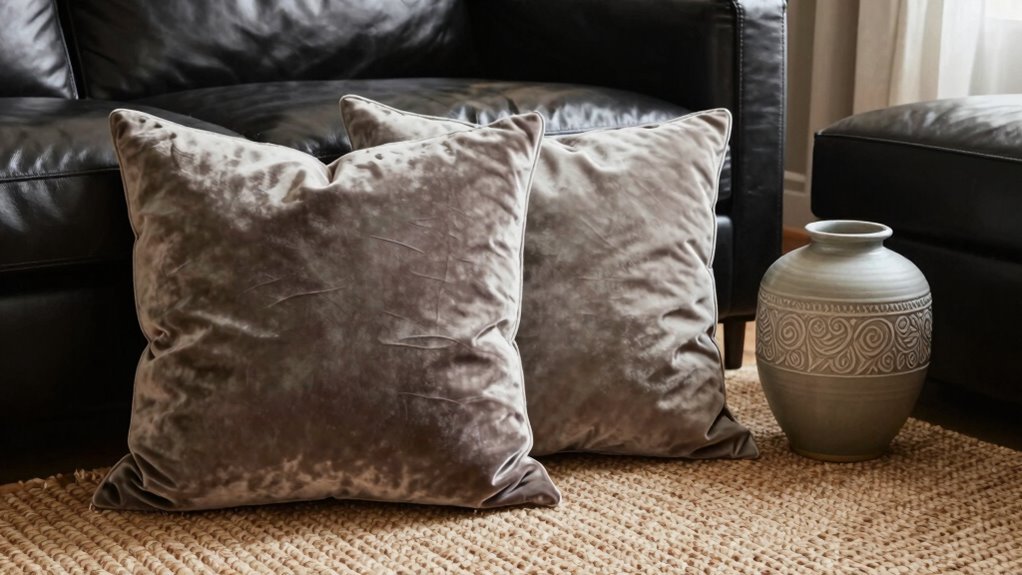
Avoid overusing similar textures, which can make your space look monotonous instead of layered. Pay attention to scale and proportion, so textures complement rather than overwhelm each other. By steering clear of these mistakes, you’ll achieve a sophisticated, high-end look.
Overusing Similar Textures
Using similar textures throughout a design might seem like a safe choice, but it can actually make your space feel flat and monotonous. Relying on repetitive patterns or identical materials creates monotonous surfaces that lack visual interest. To avoid this, mix up your textures to add depth and personality. For example, pair a plush velvet sofa with sleek metal accents or woven baskets with smooth glass surfaces. Introducing contrast keeps the eye engaged and prevents your room from feeling dull. Be cautious not to overdo it, though—too many similar textures can still lead to a bland look. Endeavor for a balanced combination that highlights different textures without overwhelming the space. This approach makes your room feel curated, sophisticated, and inviting. Additionally, understanding interior design basics can guide your choices in creating harmonious texture layering. Incorporating material variety helps achieve a layered look that feels both intentional and refined. Paying attention to visual and tactile cues ensures your textures work well together and elevate the overall aesthetic. Being aware of performance and durability can also help select textures that maintain their appeal over time.
Ignoring Scale and Proportion
Ignoring scale and proportion when layering textures can quickly undermine the sophistication of your design. Without attention to scale harmony, textures may clash or feel out of place, disrupting the room’s visual flow. Similarly, neglecting proportion balance causes elements to appear awkward or disproportionate, making the space look chaotic rather than curated. To achieve a high-end look, consider how different textures relate in size and dominance; a large, plush rug should be complemented by similarly substantial cushions or drapes. Mixing textures without regard for their scale can result in a design that feels unintentional. Focus on creating a cohesive balance by pairing textures of varying sizes that work together, ensuring each element enhances the overall visual harmony. Cultivating an awareness of scale and proportion can help you craft a space that feels both luxurious and thoughtfully curated.
Top Tips for Achieving a Luxurious Look With Texture on a Budget
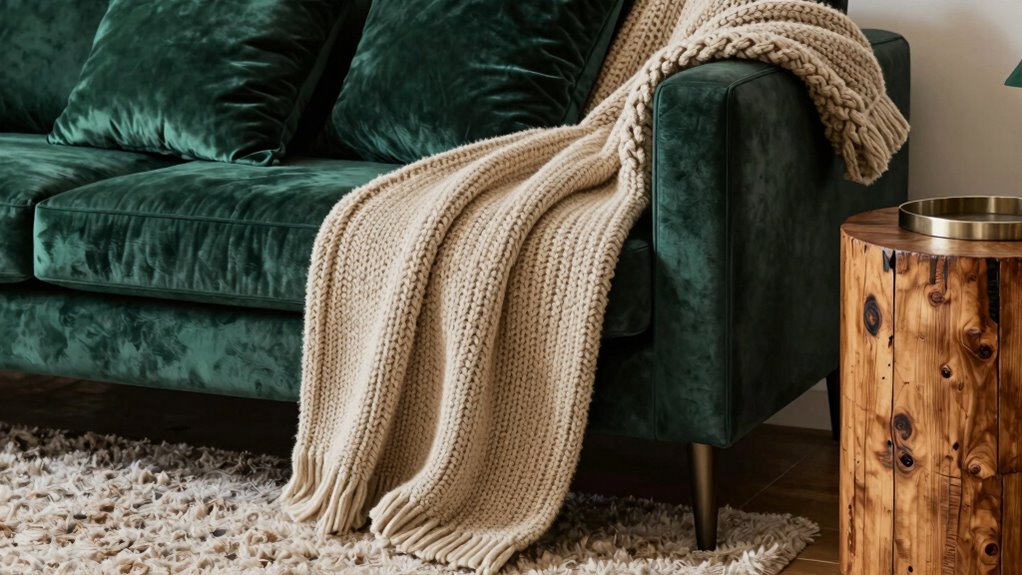
Achieving a luxurious look with texture doesn’t have to break the bank. Focus on creating striking textural contrast by combining different materials. Mixing textures like velvet, boucle, and leather adds depth without costly renovations. Layering inexpensive accessories, such as throw pillows or rugs, can elevate your space instantly. Use material mixing to bring variety and sophistication—pair a soft fabric with a sleek finish for visual interest. Remember, balance is key: don’t overload with too many textures, which can feel chaotic. Instead, select a few key pieces to highlight. Ultimately, swap out plain surfaces with textured alternatives like woven baskets or textured wall art to add richness and personality effortlessly. These simple tricks make your room feel expensive through clever use of texture and material mixing. Incorporating textural contrast can help create visual interest and a high-end feel without a hefty price tag.
Frequently Asked Questions
How Can I Incorporate Texture Layering in Small Spaces Effectively?
You can incorporate texture layering effectively in small spaces by using layering techniques like combining soft textiles with rougher surfaces to add depth. Focus on creating texture harmony, balancing smooth and textured elements so the room feels cohesive. Use small accent pieces, such as throw pillows, rugs, and wall art, to add visual interest without cluttering the space. This approach makes your room feel richer and more inviting without overwhelming it.
What Are Budget-Friendly Ways to Update Existing Textures?
To update existing textures on a budget, start by introducing new wall decor like framed art or textured wall hangings that add visual interest. Mix textiles such as throw pillows, blankets, or rugs with different fabrics and patterns to create depth. You can also swap out or layer existing pieces, ensuring they complement each other. These simple updates elevate your space’s texture without a big investment.
How Do I Balance Textures to Avoid Visual Clutter?
To avoid visual clutter, focus on achieving visual harmony and tactile balance. Limit the number of textures you introduce—combine smooth and rough finishes thoughtfully. Mix neutral tones with subtle patterns to keep the space calming. Use varying textures in different elements, like pillows or curtains, but don’t overdo it. Step back and assess your room regularly to make certain each texture complements the others, creating a cohesive, inviting environment.
Can DIY Projects Enhance Texture Layering Without High Costs?
Like a painter adding strokes to a masterpiece, your DIY projects can elevate texture layering with budget upgrades. You can craft custom wall art, paint furniture with textured finishes, or sew unique pillow covers. These DIY improvements add depth without overspending, making your space feel richer and more inviting. Get creative, repurpose items, and embrace imperfections — they add character, turning simple ideas into sophisticated, layered textures.
Which Textures Are Best for Creating a Luxurious Feel Naturally?
You should incorporate natural fibers like linen, wool, or jute for an authentic, luxurious feel. These textures add warmth and depth without high costs. Metallic finishes on accessories or fixtures further elevate your space, giving it a subtle elegance. Combining soft, tactile natural fibers with shiny metallic accents creates a balanced, opulent atmosphere that feels both authentic and sophisticated, all without breaking the bank.
Conclusion
Remember, Rome wasn’t built in a day, and creating a luxurious space with textures takes time and a keen eye. By layering different materials, mixing soft and hard elements, and paying attention to color and pattern, you can make any room feel expensive without breaking the bank. Stay patient, trust the process, and let your unique style shine through. With thoughtful layering, you’ll turn your home into a rich, inviting oasis that feels truly high-end.