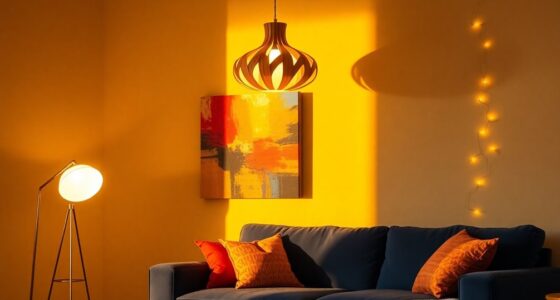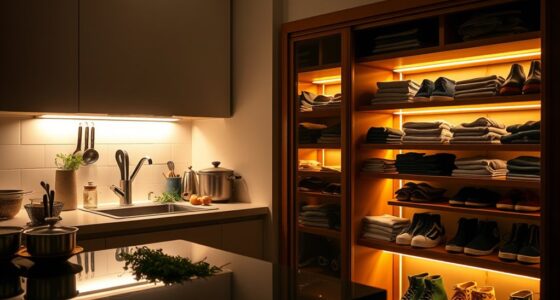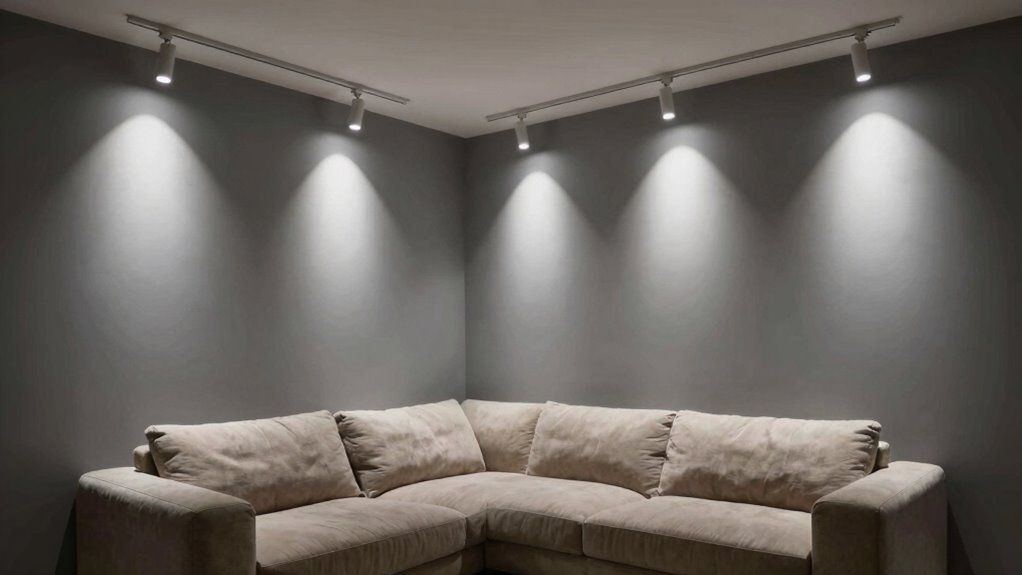
If your room feels like a spotlight show, you’re likely overloading the space with too many fixtures or placing them haphazardly. Over-spotlighting creates harsh shadows and uninviting glare, making the room uncomfortable. Instead, focus on proper fixture placement, spacing fixtures evenly, and choosing adjustable, diffused lights. Using the right bulbs and layering different types of lighting also softens the overall effect. Keep exploring to learn how to turn your lighting into a cozy, balanced ambiance.
Key Takeaways
- Overloading fixtures creates harsh contrasts and a theatrical effect, making the room feel like a spotlight show.
- Poor fixture placement causes uneven light distribution and unwanted shadows, disrupting ambiance.
- Using high-lumen spotlights without layering or dimming results in overpowering, sterile environments.
- Choosing fixtures with improper beam angles or styles can produce glare and intrusive lighting.
- Lack of warm bulbs, dimmers, or proper spacing leads to cold, uninviting spaces resembling a stage set.
Common Track Lighting Mistakes That Make Your Room Feel Like a Stage
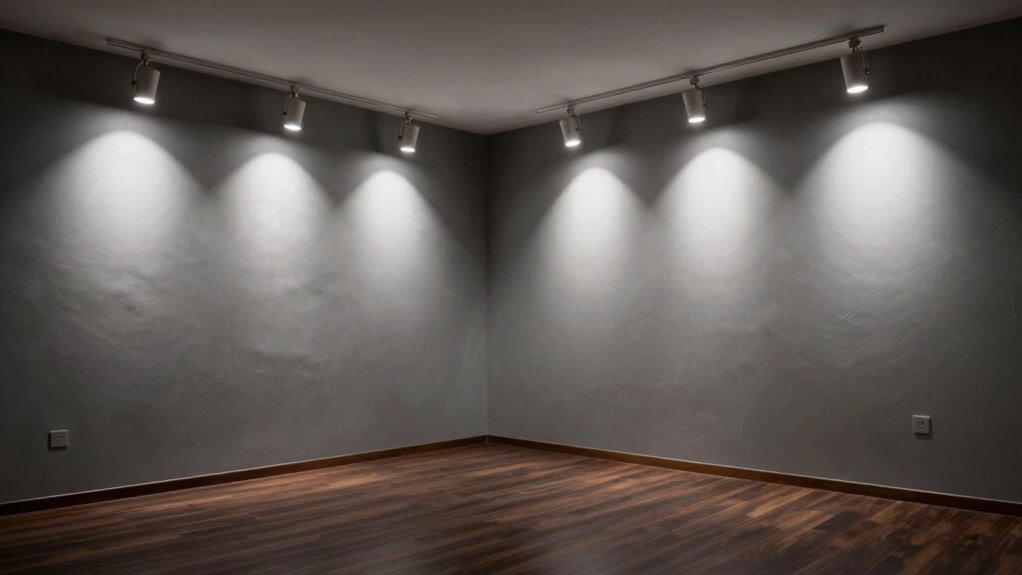
One of the biggest mistakes people make with track lighting is overloading the space with too many fixtures, which can turn a cozy room into a theatrical stage. Poor lamp placement often causes this, with fixtures pointing in random directions or clustering too closely. Instead, plan your fixture selection carefully, choosing lights that complement your space’s size and purpose. Avoid placing too many lights in one area, which creates harsh shadows and overwhelming brightness. Instead, spread out your fixtures evenly, focusing on key features or zones. Proper lamp placement ensures even, flattering illumination without overdoing it. Remember, less is often more—select the right fixtures and position them thoughtfully to achieve a balanced, inviting ambiance. Additionally, understanding lighting techniques such as layered lighting can help you design a more harmonious and effective setup.
How Over-Spotlighting Creates Harsh, Uninviting Spaces
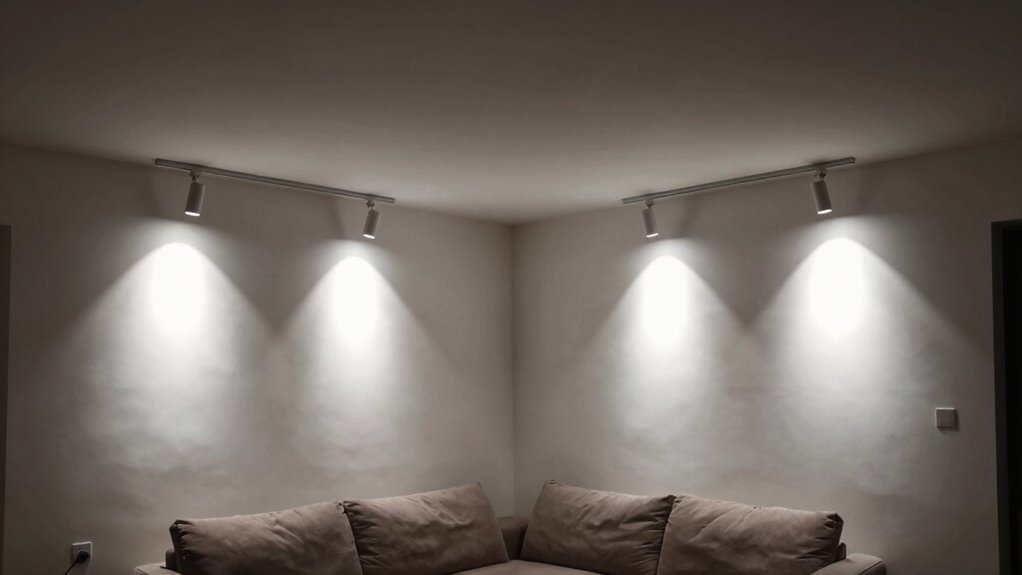
When you over-spotlight a room, harsh shadows and glare can make the space feel uncomfortable and unwelcoming. Instead of highlighting your favorite features, too much direct light creates an overwhelming visual focus that strains your eyes. As a result, the room loses its warmth, leaving it feeling cold and uninviting. To create a more balanced and inviting atmosphere, consider incorporating layered lighting and avoiding excessive spotlighting. Proper lighting design can help distribute light evenly, reducing harsh contrasts and creating a more comfortable environment. Additionally, selecting the right lighting fixtures tailored to your space can enhance both function and ambiance. Using different types of light sources, such as ambient and accent lighting, can further improve the overall lighting balance in your room, making it feel more welcoming and cozy. Understanding lighting techniques can also help you achieve a harmonious and visually appealing space.
Harsh Shadows and Glare
Over-spotlighting your space can lead to harsh shadows and glaring light that make the environment feel uninviting. When your fixtures are too intense or poorly placed, they create unflattering contrasts and discomfort. The wrong color temperature can wash out colors or produce a cold, sterile feel, while fixture design can contribute to uneven light distribution. You might notice bright spots that distract or cause eye strain, with shadows falling sharply on walls or furniture. To avoid this, consider the following:
- Use warm or adjustable color temperature bulbs for a cozy ambiance
- Choose fixtures with diffusers to soften the light
- Mix spotlight angles to reduce sharp shadows
- Incorporate dimmers for better control
- Opt for fixtures that distribute light evenly across surfaces
- Selecting the right lighting fixtures can significantly improve overall comfort and aesthetic balance in your room. Additionally, understanding lighting principles such as beam spread and lumen output can help you make more informed choices. This balance helps create a welcoming, visually comfortable space. Proper lighting design also involves considering energy efficiency and fixture placement to maximize both comfort and sustainability.
Overwhelming Visual Focus
Excessive focus from spotlighting can turn a well-lit space into an overwhelming environment that feels uninviting. When fixtures are too intense or use a harsh color temperature, they draw too much attention and create a sense of clutter. Opting for fixtures with softer, warmer tones helps diffuse the light and reduces the harshness. Additionally, choosing the right fixture style matters; sleek, minimal designs prevent the lighting from dominating the room. Instead of multiple high-intensity spotlights, consider combining ambient and accent lighting to create balance. This approach helps avoid overwhelming visual focus and makes the space feel more inviting and comfortable. Remember, the goal is to highlight without overpowering, so select fixtures and color temperatures that complement your room’s overall ambiance. It’s also important to understand how lighting design principles can influence the overall mood and balance of your space, and how air purifier maintenance can ensure a healthy environment with optimal air quality. Incorporating proper lighting placement techniques can further enhance the room’s atmosphere and prevent hotspots that cause visual discomfort.
Loss of Room Warmth
Too much spotlighting can strip a room of its natural warmth, making the space feel cold and uninviting. When you rely heavily on harsh, focused lights, you eliminate the soft glow that creates a cozy ambiance. Instead of a welcoming environment, your room feels sterile and uninviting. To restore room warmth, blend multiple lighting sources, like warm-colored bulbs or table lamps, with your track lighting. Use dimmers to control intensity and soften the light. Incorporate layered lighting to add depth and comfort. Avoid placing all lights in one area, which can create stark contrasts. Instead, aim for a balanced, inviting glow that encourages relaxation and makes your space feel genuinely cozy. layered lighting enhances the overall ambiance and can help soften harsh shadows. Additionally, choosing warm-colored bulbs can significantly contribute to a more inviting atmosphere by mimicking natural, cozy lighting. Incorporating proper lighting techniques can further improve the room’s warmth and ambiance, preventing the harshness caused by over-spotlighting. Paying attention to ambient lighting can make a substantial difference in creating a welcoming environment. Using lighting controls like dimmers and timers allows for flexible adjustment of light levels, helping to maintain a warm and inviting space at all times.
The Importance of Proper Fixture Placement for Balanced Lighting
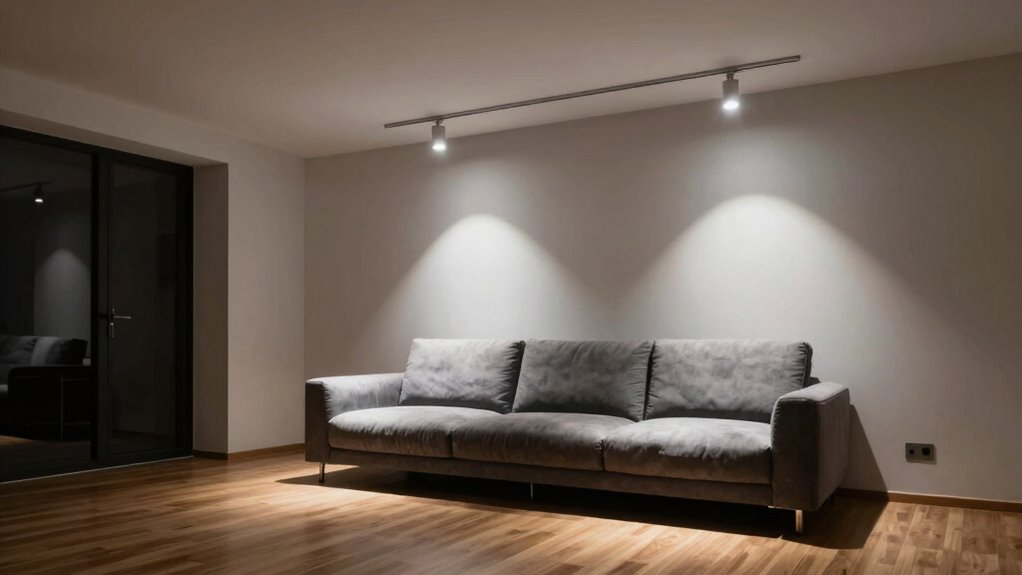
Proper fixture placement is essential for achieving balanced lighting in any space. You should pay attention to fixture spacing to prevent uneven light distribution and harsh shadows. A good rule of thumb is to space fixtures evenly, roughly 3 to 4 feet apart, depending on the room size and ceiling height. Higher ceilings require fixtures to be spaced further apart to avoid creating dark spots or overly concentrated light. Keep in mind that too close fixture spacing can cause overlapping pools of light, making the room feel cluttered or too bright in some areas. Conversely, fixtures spaced too far apart can leave gaps of darkness. By carefully considering fixture placement relative to ceiling height, you’ll create a harmonious, well-lit environment that feels natural and inviting. Proper fixture spacing ensures even illumination and prevents common lighting pitfalls. Additionally, understanding the room’s dimensions and purpose can help tailor the lighting plan for optimal results. Paying attention to lighting zones allows for more flexible and functional lighting arrangements tailored to different activities within the space. Incorporating lighting control systems can further enhance the versatility and energy efficiency of your lighting setup. Taking into account light layering techniques can further enhance the overall ambiance and practicality of your lighting setup.
Choosing the Right Track Lighting Fixtures to Avoid Glaring Effects
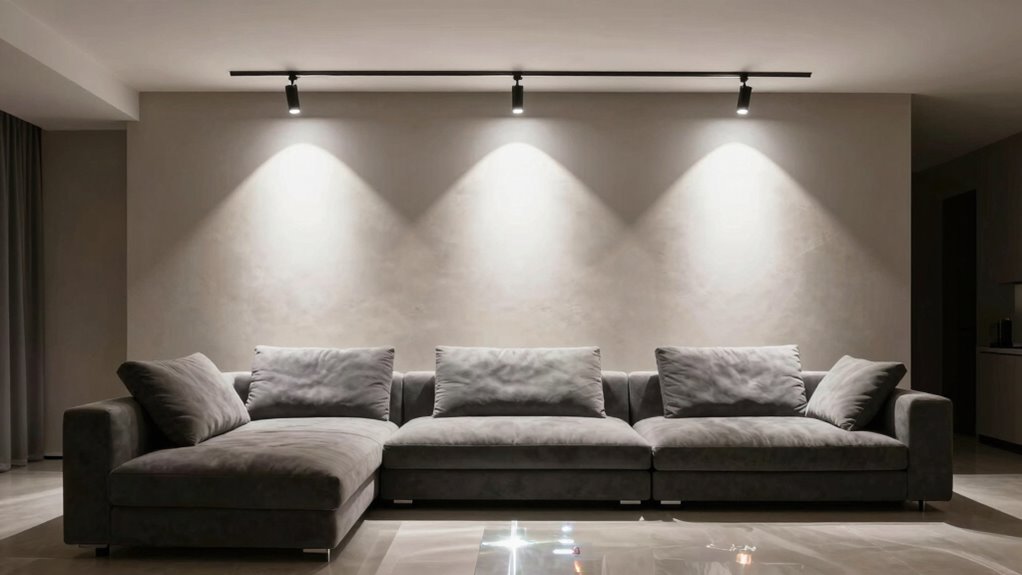
Choosing the right track lighting fixtures is essential to prevent glare and guarantee comfortable, functional illumination. The fixture styles you select can influence how light is dispersed and how comfortable it feels. Opt for fixtures with adjustable heads or diffusers to minimize harshness. Consider bulb types—LEDs with warm color temperatures reduce glare and create a cozy atmosphere. Use fixtures that direct light downward or sideways to avoid direct eye contact with bulbs. Matte finishes can help diffuse light further, preventing hotspots. Additionally, selecting fixtures with proper beam angles ensures the light coverage is both effective and comfortable for the space. Finally, choose fixtures that blend seamlessly with your decor, so the lighting feels natural and balanced. Paying attention to fixture styles and bulb types ensures your space is well-lit without uncomfortable glare, making your room inviting and functional.
Why Using Too Many Fixtures Can Make Your Room Feel Overwhelmed
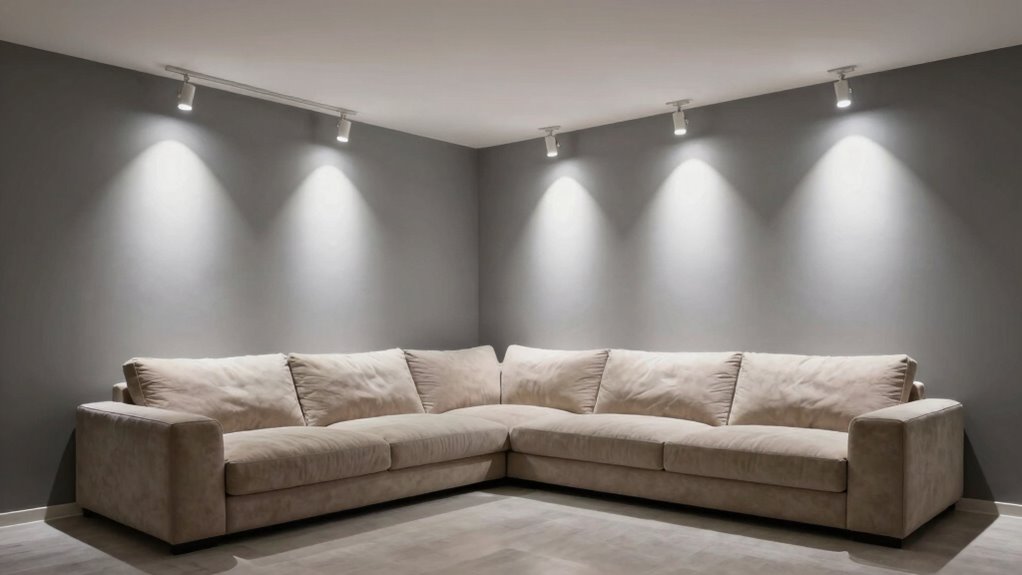
When you install numerous track lighting fixtures in a single room, it can quickly become visually overwhelming and detract from the space’s overall harmony. Fixture overuse creates visual clutter, making the room feel chaotic instead of inviting. Too many fixtures draw attention away from your decor and can cast uneven or harsh light. This overload not only strains your eyes but also diminishes the room’s aesthetic appeal. Instead of highlighting specific areas, excessive fixtures compete for attention, resulting in a cluttered look. To avoid this, limit the number of fixtures and focus on strategic placement. Use fewer, well-placed lights to create a balanced, cohesive ambiance that enhances your space without overwhelming it. Less truly is more when it comes to effective track lighting.
How to Adjust Track Lighting for Softer, More Even Illumination
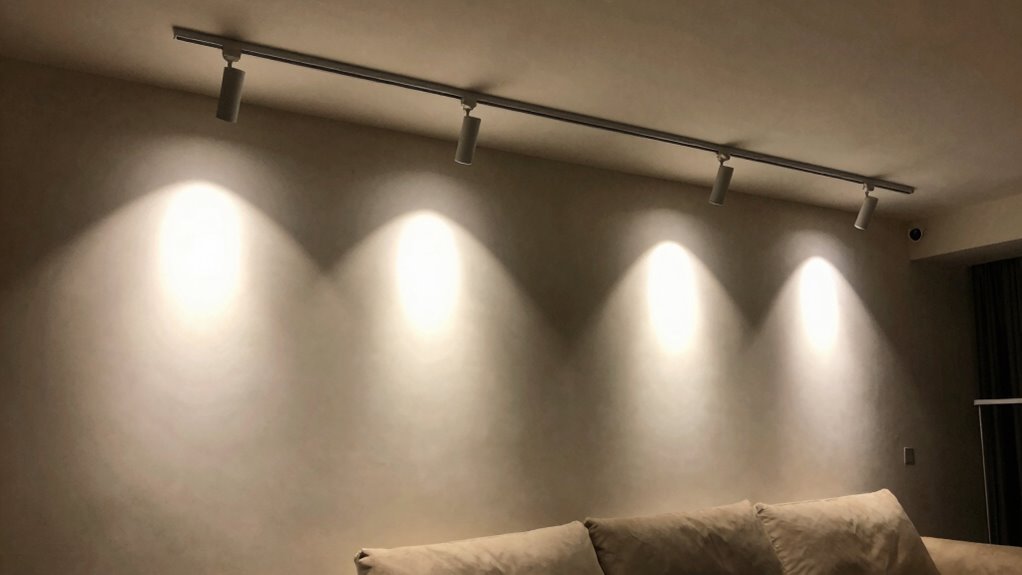
Adjusting your track lighting can considerably improve the room’s overall ambiance by softening harsh shadows and creating a more inviting glow. To achieve this, focus on fixture positioning and bulb selection. Move fixtures closer to walls or ceilings to diffuse light and avoid direct glare. Use bulbs with a lower wattage or warmer color temperature for a softer effect. Consider angling fixtures downward or away from focal points to prevent hotspots. Opt for dimmable bulbs to fine-tune brightness easily. Additionally, spacing fixtures evenly helps distribute light more uniformly. You might also swap out narrow-beam bulbs for wider ones to spread illumination across the space. These adjustments will help you create a cozy, balanced environment without the harsh, spotlight feel.
Tips for Highlighting Artwork Without Creating Hot Spots
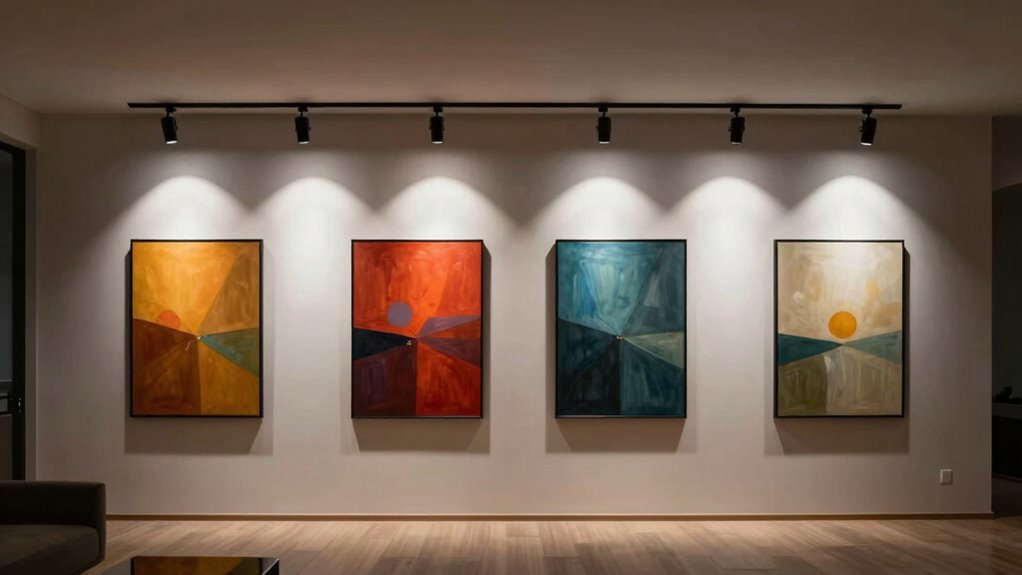
To highlight artwork effectively without creating hot spots, you need to carefully position your lighting fixtures so that the light distribution is even and controlled. Start by considering the artwork’s framing, ensuring the lighting targets the entire piece rather than just one section. Use adjustable track lights to direct the beam precisely and avoid glare. Pay attention to lighting color temperature; a warm or neutral tone enhances artwork without overwhelming it or creating harsh shadows. Avoid placing lights too close or at steep angles, which can cause uneven illumination and hot spots. Instead, aim for a soft, even wash that highlights the artwork’s details and colors uniformly. Proper positioning and choosing the right color temperature help your artwork stand out beautifully without distracting hot spots.
Best Practices for Layering Ambient, Task, and Accent Lighting
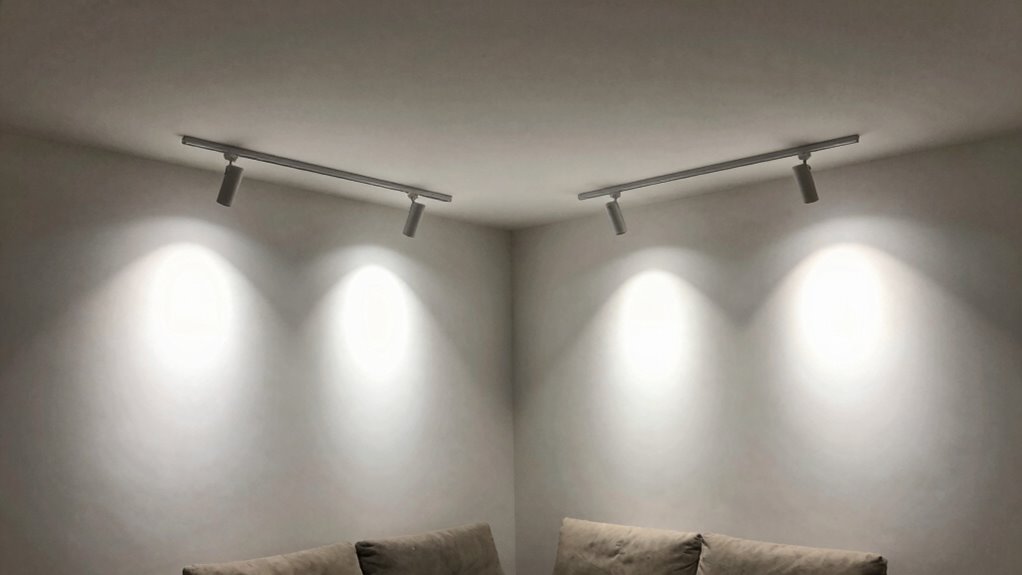
To create a balanced lighting scheme, you need to focus on balancing brightness levels so no area feels too harsh or dim. Strategic placement of lights guarantees each layer—ambient, task, and accent—works together seamlessly. When you get these points right, your space will feel both functional and inviting.
Balancing Brightness Levels
Have you ever wondered why some rooms feel perfectly inviting while others seem off? Achieving balanced brightness levels is key. You want your ambient, task, and accent lighting to work together seamlessly. Start by choosing fixtures with a consistent color temperature to create harmony. Proper fixture spacing guarantees even light distribution without harsh spots. Layer your lighting so that no area feels too bright or too dim. Use dimmers to fine-tune brightness and create mood. Avoid overwhelming one layer with another—balance is everything. Think of your space as a visual symphony, where each layer complements the others. When you get this right, your room feels warm, inviting, and thoughtfully lit, instead of spotlighted or flat.
Strategic Lighting Placement
Effective lighting placement guarantees that your layered lighting functions harmoniously. To achieve this, carefully consider where you position ambient, task, and accent lights. Use lighting color thoughtfully; warmer tones create cozy atmospheres, while cooler hues enhance focus. Place ambient fixtures centrally to evenly distribute light, and use task lighting where you need clarity, like reading or cooking areas. Accent lights highlight artwork or architectural features, adding depth. Pay attention to fixture aesthetics, ensuring they complement your room’s style and don’t clash visually. Proper placement avoids overly bright spots or dark corners, creating a balanced glow. When layering lighting strategically, your room feels inviting and functional, avoiding the spotlight effect and encouraging a natural, comfortable ambiance.
Common Electrical and Installation Errors That Disrupt Your Lighting Design
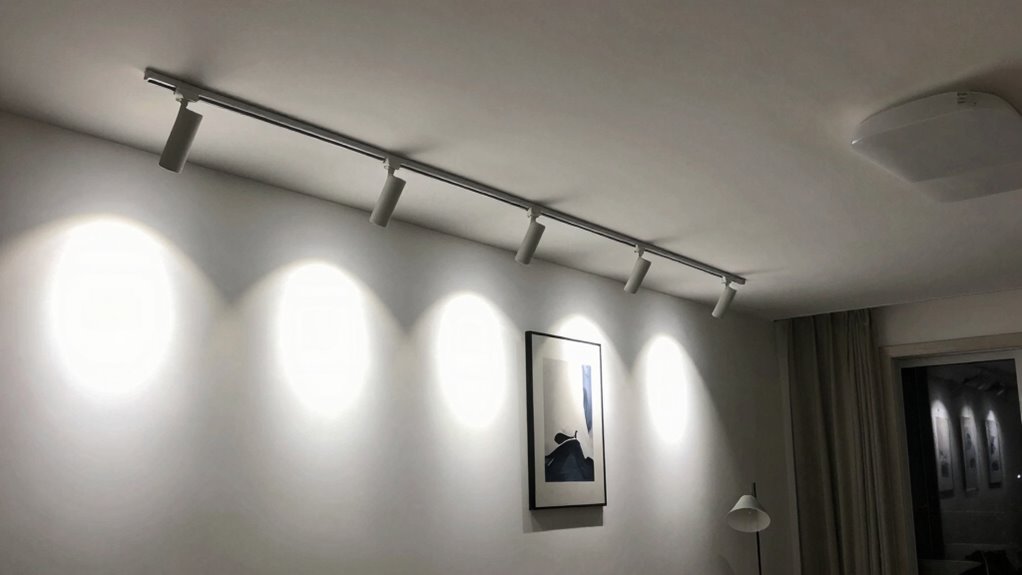
Incorrect electrical wiring and installation practices can quickly undermine your lighting design, leading to flickering, uneven illumination, or even safety hazards. Poor wiring can cause fixtures to malfunction or create fire risks if the electrical wiring safety is compromised. Additionally, neglecting lighting fixture compatibility can result in fixtures that don’t fit or operate correctly, diminishing your desired effect. Common errors include overloading circuits, using incompatible dimmers, incorrect bulb wattages, loose connections, and improper mounting. These mistakes can cause flickering, damage fixtures, or create dangerous electrical conditions. To avoid these issues, verify proper wiring techniques, adhere to electrical codes, and double-check lighting fixture compatibility before installation. Proper installation guarantees both safety and the aesthetic success of your lighting design.
Expert Tricks to Transform Your Track Lighting Into a Cozy, Welcoming Atmosphere
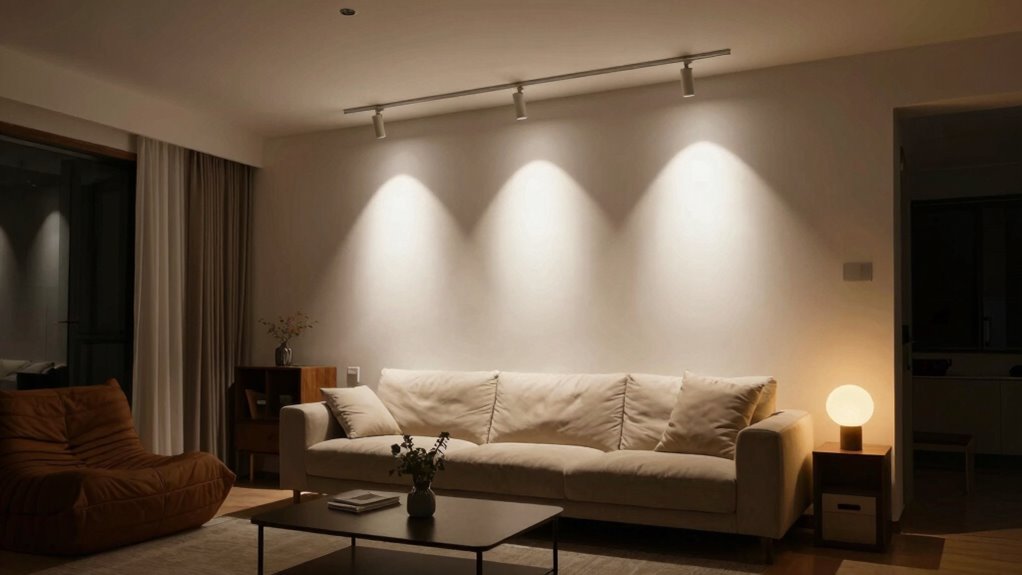
To create a warm, inviting space with your track lighting, start by choosing bulbs that emit a soft, warm glow. Incorporating dimmers allows you to easily adjust the lighting level for different moods and occasions. These simple tricks make your lighting both functional and cozy, transforming your home’s atmosphere effortlessly.
Use Warm Light Bulbs
Choosing warm light bulbs for your track lighting instantly creates a cozy, inviting atmosphere in any room. The key is selecting bulbs with a lower color temperature, around 2700K to 3000K, to emit a soft, amber glow. This warmth enhances comfort and makes your space feel more welcoming. Additionally, consider bulbs with a longer lifespan to reduce maintenance and ensure consistent lighting.
Imagine:
- Gentle, golden illumination highlighting your favorite artwork
- Soft pools of light creating an intimate setting
- A warm glow encouraging relaxation and conversation
- Subtle hues that complement your decor
- Brightness that adjusts without harshness
Using the right warm light bulbs transforms your space from sterile to inviting, making every moment feel like a cozy retreat.
Incorporate Dimmers Effectively
Incorporating dimmers into your track lighting allows you to easily adjust the mood of your space, creating a warm, inviting atmosphere whenever you want. Proper dimmers installation is key to achieving effective mood lighting, giving you control over brightness levels without flickering or buzzing. When selecting dimmers, ensure compatibility with your light bulbs and fixtures for smooth operation. Use dimmers to soften lighting during relaxing evenings or brighten it for tasks and gatherings. This flexibility helps prevent your room from feeling overly spotlighted or sterile. By customizing light intensity, you create a cozy environment that adapts to your needs and enhances your space’s ambiance. Incorporating dimmers effectively transforms your track lighting from harsh and uninviting to warm and welcoming.
Frequently Asked Questions
How Can I Prevent Track Lighting From Creating Glare?
To prevent track lighting from creating glare, you should adjust the lighting angles so the bulbs direct light away from your eyes and furniture. Use diffusers or frosted covers to soften harsh light and enhance glare reduction. Position the fixtures at appropriate heights and angles, avoiding direct lines of sight. Regularly check and tweak the placement to guarantee even lighting without uncomfortable glare, creating a cozy, well-lit space.
What Are the Best Practices for Spacing Track Fixtures?
Imagine your room as a canvas—spread your lights evenly for a masterpiece. You should follow fixture placement and spacing guidelines by placing fixtures 3 to 6 feet apart, depending on ceiling height and room size. Keep the spacing consistent, avoiding clustering or gaps, to make certain of even illumination. Proper fixture placement enhances ambiance and prevents harsh shadows, creating a balanced, inviting space that feels thoughtfully lit rather than spotlighted.
How Do I Choose Dimmable Track Lighting Options?
When choosing dimmable track lighting, look for fixtures compatible with dimmable switches and confirm they support LED bulbs. Verify LED compatibility to get smooth dimming and avoid flickering. Opt for fixtures that specify dimmable features and match your switch type. This way, you gain adjustable lighting that creates the perfect ambiance, saving energy and enhancing your space’s overall look.
Can Track Lighting Be Used Effectively in Small Rooms?
Yes, you can use track lighting effectively in small rooms by focusing on ambient lighting and accent illumination. Position the tracks to provide even light distribution without creating harsh spots. Use adjustable heads to highlight artwork or architectural features, making the space feel larger. Keep the design simple and avoid overwhelming the room with too many fixtures. Proper placement guarantees your small room feels warm, inviting, and well-lit without feeling cluttered.
What Safety Precautions Should I Take During Installation?
Think of installation as walking a tightrope—you need balance and focus. Always prioritize electrical safety by turning off the power at the breaker before starting. Check fixture compatibility to avoid sparks flying out of place. Use insulated tools and wear rubber gloves for extra protection. If you’re unsure, consult a professional. These precautions keep you grounded, ensuring your lighting project is safe and successful without shocking surprises.
Conclusion
By avoiding these common track lighting mistakes, you can transform your space from a harsh spotlight show into a warm, inviting sanctuary. Proper fixture placement, thoughtful layering, and mindful selection make all the difference—turning your room into a cozy retreat rather than a stage set. Don’t let bad lighting turn your home into a blazing spotlight zone; instead, master these tips to create an ambiance that truly feels like a comforting embrace, not a spotlight extravaganza.