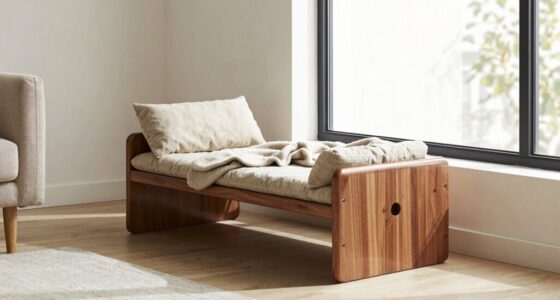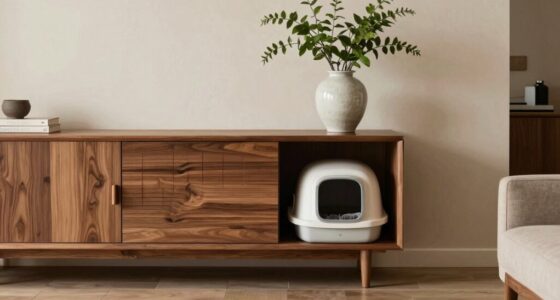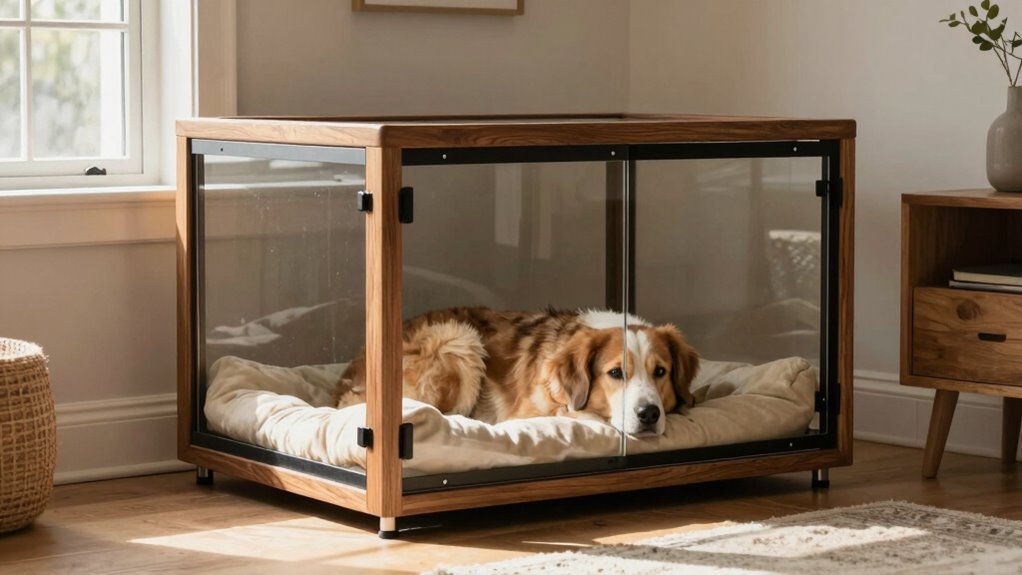
A stylish dog crate only works if your dog feels safe and comfortable inside it. To do that, choose a design that blends seamlessly with your home decor while ensuring a cozy, inviting environment for your pet. Proper placement in quiet, familiar surroundings and adding familiar items like toys or blankets help your dog feel secure. When your dog feels at ease, the crate becomes a positive space. Keep exploring to discover how the right environment can boost your dog’s well-being even more.

Get furniture and decor delivered free with Prime
- Fast, free delivery on millions of items
- Prime Video, Amazon Music and more included
- Member-only deals all year
Key Takeaways
- A stylish crate enhances home decor but must be positioned in a quiet, secure spot to ensure the dog feels safe.
- Comfort items like cozy blankets and familiar toys inside the crate promote a sense of security.
- Proper crate placement at eye level and away from loud noises helps dogs perceive it as a safe haven.
- Natural materials and calming design elements create a soothing environment that encourages relaxation.
- Aesthetic design supports positive associations, but the dog’s emotional comfort is crucial for the crate’s effectiveness.
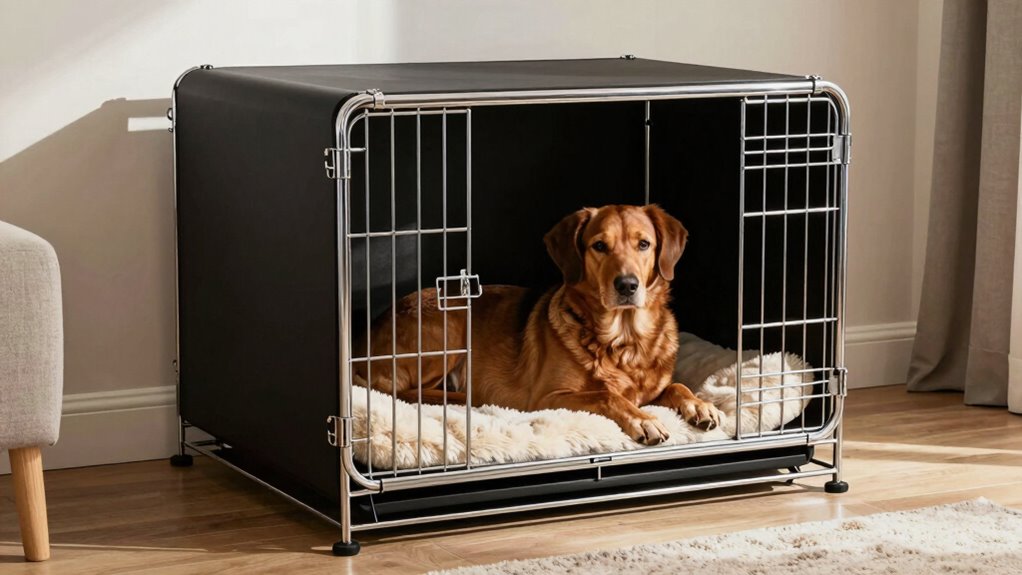
If you’re looking to combine functionality with aesthetics, stylish dog crates are the perfect solution. These crates don’t just serve as a practical space for your dog; they also enhance your home’s decor. When choosing a stylish dog crate, you want one that blends seamlessly with your interior design while providing a secure environment for your pet. Dog crate aesthetics matter because they influence how comfortable your dog feels about entering and staying in their space. A visually appealing crate can make the entire experience less stressful for your pup, especially if it looks inviting rather than intimidating.
However, even the most attractive crate won’t work if your dog doesn’t feel safe in it. That’s why crate placement is crucial. You need to find a spot that balances accessibility with a sense of security. Position the crate in a quiet corner away from high traffic areas, but still within your line of sight so your dog doesn’t feel isolated. If the crate is too close to loud appliances or busy walkways, your dog might associate it with noise and chaos, making it harder for them to relax. Conversely, placing it in a secluded corner can help your dog feel tucked away and protected, encouraging them to view the crate as a safe haven.
Once you’ve found the right spot, consider how you arrange the crate in relation to the rest of your living space. It’s best to keep the crate at a comfortable height—on a sturdy stand if needed—so your dog can easily see their surroundings without feeling overwhelmed. Surrounding the crate with familiar items like toys or a cozy blanket can also boost your dog’s sense of security, making them more likely to want to spend time inside willingly. Incorporating biodiversity-friendly elements, like natural materials or plants nearby, can further create a calming environment for your pet. Creating a calming environment around the crate can significantly enhance your dog’s comfort and willingness to rest there. Additionally, understanding the importance of dog crate aesthetics can help you choose a design that not only looks good but also contributes to your dog’s overall well-being. Using natural materials and eco-friendly designs in your decor can promote a more soothing atmosphere for your furry friend.
Products Worth Considering

Dyson Ball Animal Total Clean Upright Vacuum

Philips Hue Festavia Globe Outdoor String Lights, 32 Bulbs, 91 ft

Shark Navigator Robot Vacuum with 30-Day Self-Empty Base, White (AV2110S)
As an affiliate, we earn on qualifying purchases.
Frequently Asked Questions
How Long Should a Dog Stay in a Crate Daily?
You should limit your dog’s time in a crate to about 3-4 hours a day for proper crate training and mental stimulation. Puppies need even shorter sessions, around 1-2 hours, to prevent boredom and stress. Always make sure your dog feels safe and comfortable, using positive reinforcement. Incorporate play and exercise outside the crate to keep them mentally stimulated and happy, making crate time a positive experience.
Can a Crate Replace Proper Training and Socialization?
A crate can’t replace proper training and socialization, as it’s like trying to build a house without a foundation. While crate training creates a safe space, you need to actively expose your dog to new people and environments using socialization techniques. Imagine your dog confidently exploring parks and meeting friends—this can’t happen behind bars alone. Use the crate as a tool, but remember, real growth comes from positive interactions beyond it.
What Are Signs My Dog Feels Unsafe in the Crate?
You’ll notice your dog feels unsafe in the crate if they whimper, bark excessively, or try to escape. During puppy separation and crate training, watch for signs like trembling, refusing to enter, or avoiding eye contact. If your dog shows these behaviors, it’s a sign they need reassurance and a more gradual approach to crate training. Ensuring the crate is comfortable and positive helps your dog feel secure.
Are There Specific Crate Styles for Anxious Dogs?
Imagine a cozy hideaway where your anxious dog feels secure—certain crate styles cater specifically to this. For instance, crates with decorative designs that resemble furniture blend into your home, reducing stress. Ventilation options like mesh sides ensure fresh air and comfort. Look for crates with soft, rounded edges, and calming colors to help ease anxiety. Tailoring the style to your dog’s needs develops a peaceful space, encouraging relaxation and confidence.
How Do I Introduce My Dog to a New Crate?
To introduce your dog to a new crate, start with positive crate decoration like a cozy blanket or favorite toy. Keep the crate size considerations in mind, ensuring it’s comfortable without being too spacious. Place treats inside and encourage your dog to explore at their own pace. Gradually increase crate time, always rewarding calm behavior. This approach helps your dog feel safe and builds a positive association with the new space.
Conclusion
A stylish dog crate might catch your eye, but your dog’s comfort and safety should always come first. Just like a cozy home offers peace and security, a crate that feels safe becomes a refuge, not a prison. Beauty may draw you in, but trust builds the bond. Remember, a crate that looks good but doesn’t feel right won’t serve its purpose. Prioritize your dog’s well-being, and style will naturally follow.