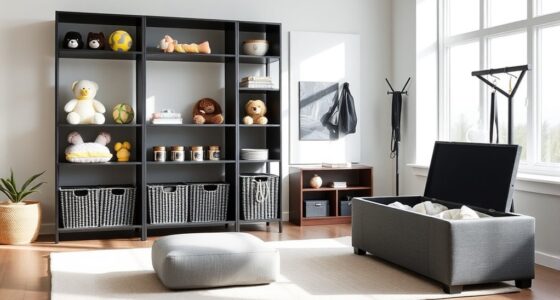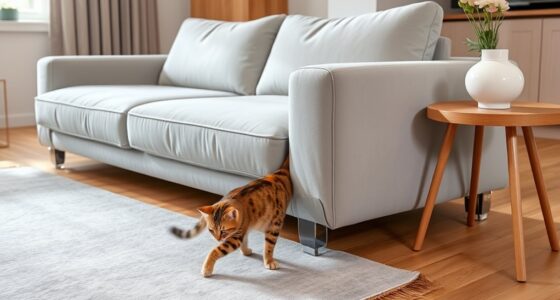
To help your senior dog move more easily at home, start by creating clear, obstacle-free pathways and secure non-slip flooring to prevent slips and falls. Install ramps or steps for easier access to favorite spots and add orthopedic bedding for comfort and joint support. Use pet gates and barriers to guide and restrict unsafe areas, and consider mobility aids like harnesses or slings. Routine updates guarantee your dog’s safety and comfort—keep exploring for more practical tips.
Key Takeaways
- Remove clutter and secure rugs to prevent falls and create clear pathways.
- Install ramps, non-slip mats, and supportive bedding to enhance mobility and comfort.
- Use pet gates and barriers to restrict access to unsafe areas and guide movement safely.
- Incorporate orthopedic beds and supportive furniture designed for aging dogs’ needs.
- Regularly monitor gait and activity levels to identify issues early and adjust home modifications accordingly.
How Can You Tell If Your Senior Dog Is Struggling to Move?

As your dog ages, you may notice subtle signs that indicate it’s having trouble moving. One common sign is joint stiffness, which makes it harder for your dog to get up or walk smoothly. You might see them hesitating before standing or taking longer to settle after resting. Muscle weakness is another indicator; your dog may seem less energetic, struggle to climb stairs, or drag their legs. Watch for changes in gait, such as limping or favoring one side. These signs can signal discomfort or mobility issues, often linked to aging joints or muscle loss. Recognizing these early signs helps you address mobility challenges promptly, ensuring your senior dog remains comfortable and active for as long as possible. Incorporating energy-efficient solutions can also contribute to a healthier environment for your pet and family. Additionally, reducing environmental stressors can help improve your dog’s overall well-being. Being aware of these subtle cues allows for timely intervention, which can significantly improve your dog’s quality of life. Regular gentle exercise and aromatherapy for relaxation can also support your dog’s comfort and mobility.
How to Create Clear, Obstacle-Free Pathways at Home

Creating clear, obstacle-free pathways at home is essential for keeping your senior dog safe and mobile. Start by removing clutter and securing loose rugs to prevent falls. Use dog-friendly paint to mark pathways clearly, guiding your dog safely through rooms. Choose pet-safe plants like spider plants or Boston ferns to decorate without risking toxicity if ingested. Arrange furniture to create wide, unobstructed routes, making it easier for your dog to navigate comfortably. Consider adding non-slip mats in high-traffic areas. Here’s a quick overview:
| Tip | Example | Benefit |
|---|---|---|
| Remove clutter | Clear walkways | Prevents tripping |
| Use dog-friendly paint | Mark pathways | Guides your dog safely |
| Pet-safe plants | Spider plant, Boston fern | Safe and attractive decor |
| Arrange furniture | Keep wide paths | Easier movement |
| Add non-slip mats | Entryways, hallways | Reduce slipping and slipping hazards |
Additionally, incorporating proper lighting can significantly improve visibility, helping your dog navigate safely at all times. Well-placed lighting can also highlight pathways, making it easier for your dog to distinguish safe routes from obstacles. Using appropriate lighting fixtures with adjustable levels can further enhance safety by eliminating shadows and glare, creating a consistent environment for your senior dog. Ensuring the lighting is well-placed can eliminate shadows that might otherwise confuse your dog or cause accidents. Enhancing home safety with these simple modifications creates a more comfortable environment for your senior dog.
How to Install Ramps and Steps for Easy Access to Favorite Spots
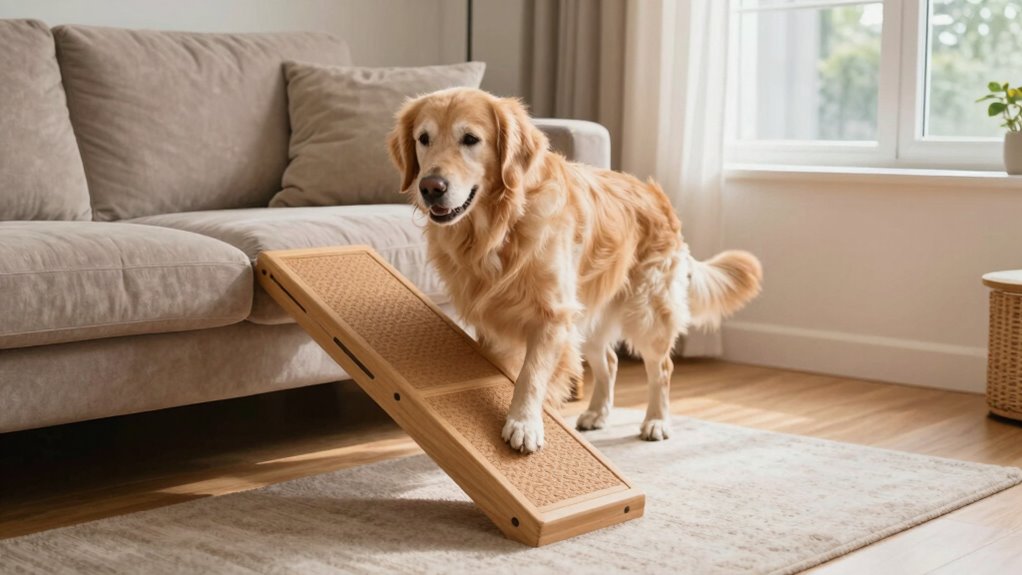
Installing ramps and steps can substantially improve your senior dog’s access to favorite spots around the home, reducing strain on joints and preventing injuries. To do this, start by choosing the right ramp or step height that matches your dog’s needs. When you install ramps, ensure they are stable, with a gentle slope for easy walking. For step installation, secure each step firmly and check that it’s level. Use non-slip surfaces to prevent slips and falls. Position ramps and steps near furniture, beds, or doorways your dog frequents. Regularly inspect the installation for stability and wear. Proper installation makes everyday movement safer and more comfortable for your senior dog, encouraging independence and reducing the risk of accidents. Understanding filtration and airflow and imaging-scale concepts can help you better assess the most suitable equipment for your home. Additionally, choosing fabrics like Suprem, which have high durability and moisture-wicking properties, can help create a comfortable environment as your dog moves around more easily. Ensuring stability and safety during installation is crucial to prevent accidents and provide peace of mind.
Why Non-Slip Flooring Keeps Your Senior Dog Safe and Stable
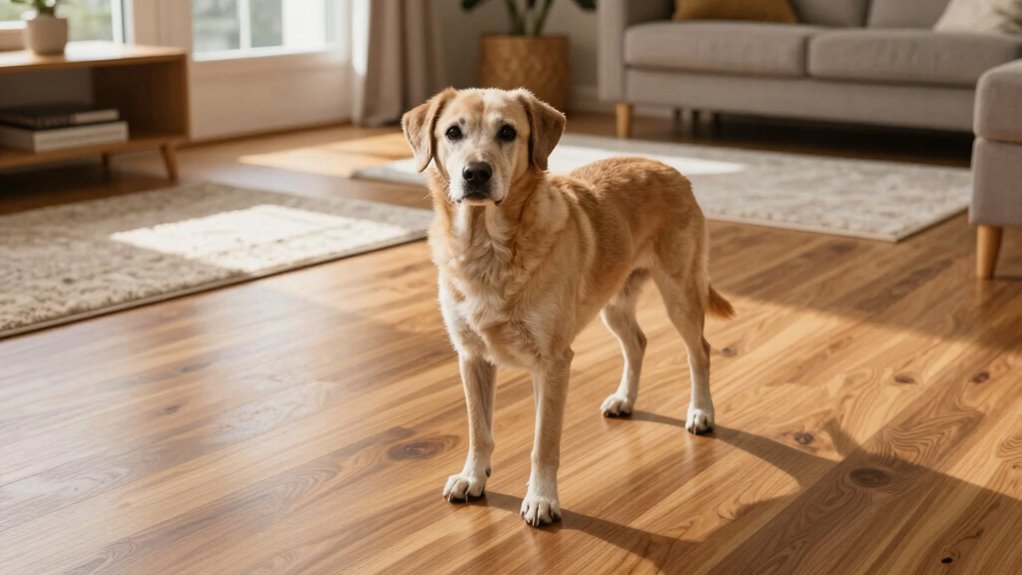
Non-slip flooring is essential for keeping your senior dog safe and stable, especially as their balance and joint strength decline. It provides excellent slip resistance, reducing the risk of falls and injuries. Durable flooring can withstand daily wear and tear, maintaining safety over time. Imagine your dog confidently walking across a surface that grips their paws, preventing slips on smooth or wet areas. Incorporating smart IoT technologies such as monitoring systems can also help track your dog’s activity and ensure their environment remains safe and accessible. Additionally, choosing flooring materials that are designed for durability can further enhance safety and longevity in your home. Selecting appropriate flooring types that combine slip resistance with comfort is crucial for supporting your senior dog’s mobility and confidence, especially when considering the specific materials that best balance safety and comfort. To maximize safety, it’s also beneficial to consider non-slip coatings that can be applied to existing floors to improve grip and reduce slipperiness.
What’s the Best Supportive Bedding for Rest and Recovery?
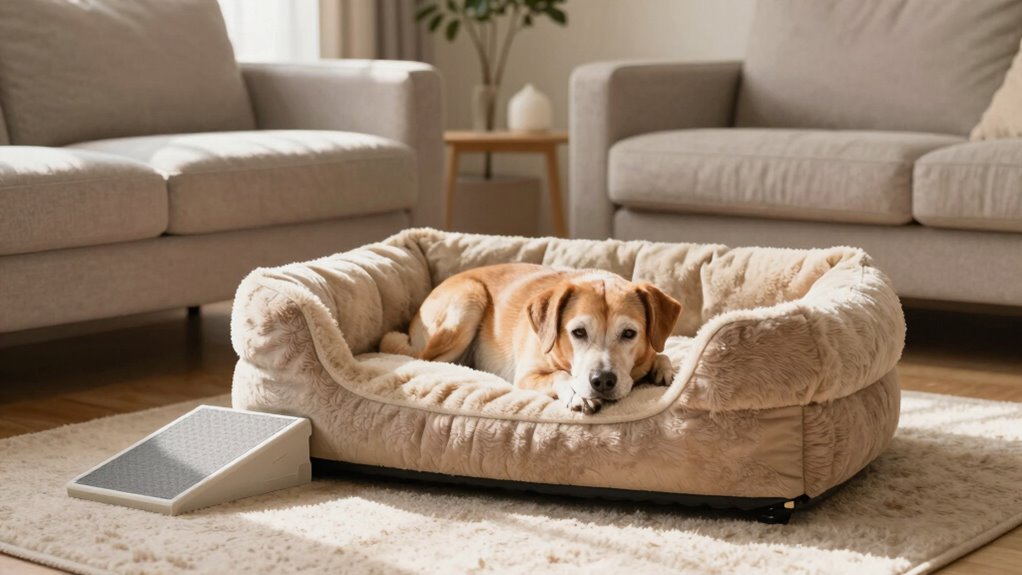
Choosing the right supportive bedding is crucial for your senior dog’s comfort and recovery, especially as they age and require extra joint and muscle support. Orthopedic bedding, like memory foam cushions, provides the ideal solution. Memory foam molds to your dog’s body, alleviating pressure points and reducing pain from arthritis or joint stiffness. Look for beds with high-quality foam and a non-slip bottom to prevent slipping and ensure stability. A well-chosen orthopedic bed offers a soft, supportive surface that promotes restful sleep and quicker recovery. Keep the bed clean and dry, and consider adding washable covers for hygiene. By providing supportive bedding, you help your senior dog stay comfortable, relaxed, and more mobile throughout their golden years.
How to Adjust Furniture Heights for Easier Sitting and Standing
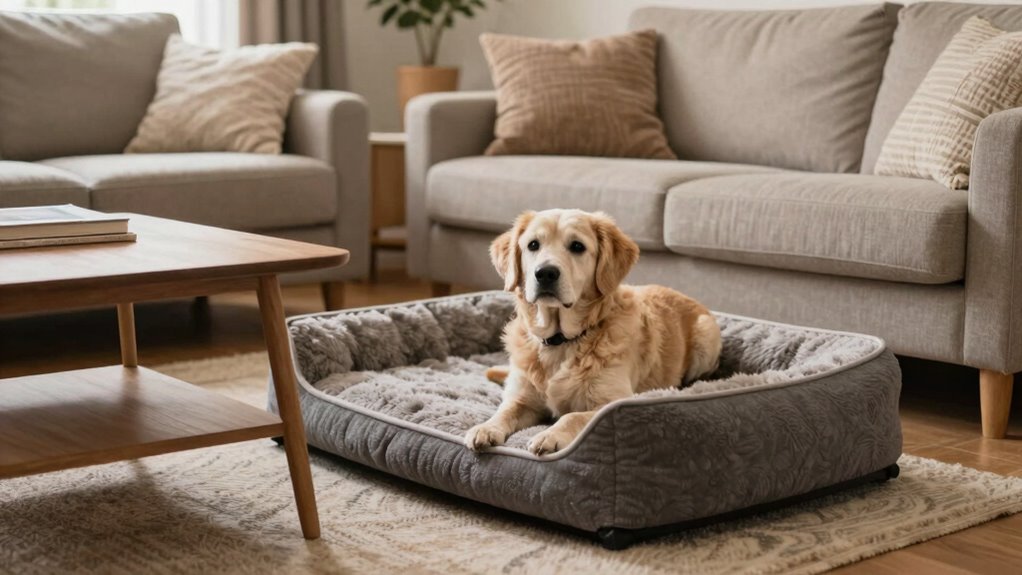
Adjusting your furniture height can make a considerable difference in your senior dog’s comfort and mobility. By customizing furniture for easier sitting and standing, you reduce strain and encourage independence. Start with furniture customization options like adjustable beds or replacing existing pieces with lower or higher versions. For height adjustment, consider adding risers or sturdy pads to sofas and chairs to bring them closer to your dog’s reach. Visualize:
- Low-profile cushions on the sofa for easier access
- Riser blocks under the legs of chairs or beds
- Non-slip pads for stability during movement
- Replacing high furniture with more accessible options
- Using furniture with ergonomic design for better support
- Furniture customization options can include adjustable features or modular pieces that adapt to your dog’s changing needs. Incorporating ergonomic design principles can further enhance comfort and reduce strain during daily activities. Additionally, selecting mobility-friendly furniture can help create a safer environment for your senior dog. Integrating adaptive furniture solutions can optimize your home for your dog’s evolving mobility needs. Research shows that vacuum features such as ergonomic handles and lightweight construction can also make cleaning less strenuous for pet owners managing mobility issues.
These simple modifications can considerably improve your dog’s comfort, making everyday activities less stressful and more manageable.
How to Use Pet Gates and Barriers to Keep Your Dog Safe and Guided

Choosing the right gate materials guarantees your senior dog stays safe without risk of injury. Proper placement helps guide your dog and prevents them from accessing unsafe areas. Training your dog to respect barriers makes these tools more effective and less stressful for everyone.
Choosing Safe Gate Materials
Ensuring your pet gate is made from safe materials is essential for your senior dog’s well-being. When choosing gate materials, prioritize safety considerations that prevent injuries or discomfort. Look for gates made of non-toxic, durable materials that won’t splinter or break easily. Avoid gates with sharp edges or small parts that could be chewed off. Consider the following:
- Smooth, rounded edges to prevent cuts
- Sturdy, non-toxic plastic or metal
- Breathable mesh or fabric options
- Lightweight but strong construction
- Free of harmful chemicals or paints
These safety considerations help you select gate materials that keep your senior dog secure and comfortable. A well-chosen gate ensures safe navigation and peace of mind in your home.
Proper Gate Placement Strategies
Proper gate placement is essential for keeping your senior dog safe and guiding them through your home. To do this effectively, consider the flow of your space and identify areas where your dog might encounter hazards or where you want to restrict access. Place gates at doorways, staircases, or hallways to create clear boundaries. When choosing barrier design, opt for sturdy gates with a low threshold and a size that fits your dog comfortably. Confirm that gates are tall enough to prevent climbing and securely anchored to prevent tipping. Proper gate placement not only restricts unsafe areas but also encourages your dog to navigate your home calmly and confidently. Regularly check the gates for stability and adjust their position as needed to maintain safety and ease of movement.
Training Senior Dogs Effectively
Using pet gates and barriers effectively can make a big difference in training your senior dog to stay safe and follow your guidance. They help create safe zones where your dog can rest without accidents and reinforce boundaries. To maximize their benefit, position gates near areas like stairs or kitchens, and use barriers to restrict access to unsafe spots. Regular veterinary checkups and attention to dog nutrition support your dog’s health, making training easier. Consistent use of gates helps your senior dog understand limits and reduces anxiety. Remember to praise your dog when they respect barriers, making training a positive experience. Visualize your dog peacefully resting in a designated space, knowing boundaries keep them safe and comfortable. This simple tool promotes better behavior and a happier, healthier senior dog.
What Mobility Aids Can Help Your Senior Dog Stay Active?

As your senior dog ages, mobility can become a challenge, but thankfully, there are several aids that can help keep them active and comfortable. Harnesses and slings support your dog’s dog gait, making walking easier and reducing strain on joints. Ramps and stairs help your dog access furniture or cars without jumping, lowering the risk of injury. Non-slip mats provide stability on slippery floors, preventing slips and falls. Additionally, incorporating gentle mobility exercises can strengthen muscles and improve coordination. Using these aids encourages your dog to stay active, which is essential for their overall health. With the right tools, you can help your senior dog maintain independence and improve their quality of life.
How to Maintain a Routine That Reduces Stress for Aging Dogs

Creating a consistent daily schedule helps your senior dog feel secure and reduces anxiety. Make sure their resting area is comfortable and quiet, offering a peaceful space they can relax in. When you prioritize these routines, you’ll help your dog stay calm and enjoy a better quality of life.
Consistent Daily Schedule
Establishing a consistent daily schedule is essential for reducing stress in senior dogs. A predictable routine helps them feel secure and limits anxiety. Set regular times for walks, meals, and play, so your dog knows what to expect. Consistency also benefits dog grooming and nutrition tips, ensuring your pet stays comfortable and healthy. To create a calming environment, imagine your dog:
- Waking up at the same time each morning
- Enjoying a gentle walk before breakfast
- Eating nutritious meals at regular intervals
- Engaging in light play or cuddles after meals
- Going to bed at a consistent hour each night
This steady rhythm keeps your senior dog comfortable and relaxed, making alterations smoother and reducing stress in their daily life.
Comfortable Rest Environment
A comfortable rest environment is essential for reducing stress in aging dogs, helping them feel secure and relaxed. Start by providing a soft, supportive bed in a quiet, low-traffic area. Ensure dog toy safety by choosing durable, appropriately sized toys that won’t pose choking hazards. Regularly inspect toys and replace any damaged ones. A veterinary mobility assessment can identify any physical limitations, guiding you to adjust the resting space accordingly. Keep the environment consistently calm and familiar, avoiding sudden noise or disruptions. Adding cozy blankets or a familiar piece of clothing can provide extra comfort. By creating a secure, well-maintained rest space, you help your senior dog relax more easily and feel safe in their environment.
How to Monitor Your Dog’s Mobility and Make Ongoing Home Adjustments
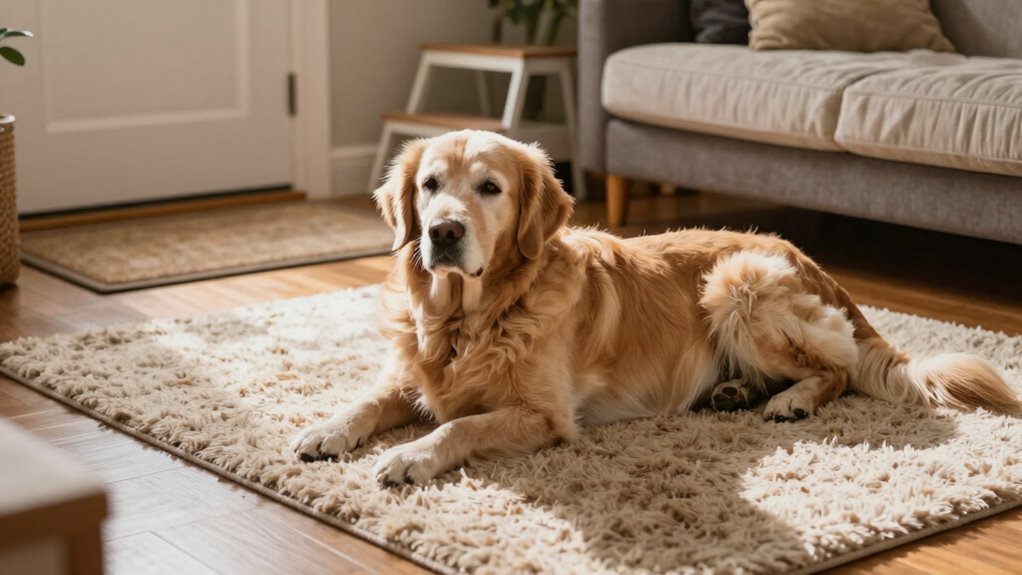
Monitoring your senior dog’s mobility requires paying close attention to subtle changes in their movement and behavior. Regular gait analysis helps identify early signs of joint issues or discomfort. Watch for stiffness after rest, limping, or reluctance to climb stairs. Keep an eye on how smoothly they walk and if their posture shifts. Observe their ability to get up or lie down without difficulty. To better understand their joint health, note any hesitation or decreased activity. You might notice:
- Limping or favoring a paw
- Reduced playfulness
- Difficulty maneuvering stairs
- Hesitation when standing up
- Changes in posture or balance
Making these observations allows you to adjust your home gradually, ensuring your dog stays comfortable and supported as they age.
Frequently Asked Questions
How Often Should I Have My Senior Dog’s Mobility Checked by a Vet?
You should have your senior dog’s mobility checked by a vet at least twice a year. As they age, issues like age-related arthritis can develop, affecting their movement. Regular mobility assessments help catch problems early and guarantee your dog stays comfortable. If your dog shows signs of stiffness or trouble moving, schedule a vet visit sooner. Consistent check-ups keep their quality of life high and address mobility concerns promptly.
Are There Specific Exercises to Improve My Senior Dog’s Mobility?
Think of your senior dog’s mobility like a rusty hinge; gentle exercises can restore movement. Try encouraging short walks, gentle stretches, and low-impact activities to boost joint flexibility and muscle strengthening. Activities like swimming or guided leg lifts work well too. Regular, consistent exercises help keep your dog active and comfortable. Always check with your vet before starting new routines to make certain they’re safe for your dog’s specific needs.
Can Dietary Changes Help Improve My Senior Dog’s Movement?
Yes, dietary changes can help improve your senior dog’s movement. Incorporate dietary supplements like glucosamine and chondroitin, which support joint health, into their diet. Nutritional therapy tailored for aging dogs provides essential nutrients that promote mobility and reduce inflammation. Consult your veterinarian to create a balanced plan that includes these supplements and dietary adjustments, helping your dog stay more active and comfortable as they age.
What Signs Indicate My Senior Dog Needs More Support at Home?
You might notice your senior dog shows signs of arthritis discomfort or balance issues, indicating they need more support. If your dog hesitates before jumping, struggles to get up, or avoids stairs, these are clear signs. Don’t dismiss subtle changes—your dog could be experiencing pain or difficulty moving. Providing supportive bedding, ramps, and gentle assistance can make a big difference, helping your furry friend stay comfortable and active.
How Can I Encourage My Senior Dog to Stay Active Safely?
You can encourage your senior dog to stay active safely by incorporating interactive toys that stimulate their mind and encourage movement. Gentle stretching exercises help maintain their flexibility without straining muscles or joints. Keep sessions short and positive, always watching for signs of fatigue or discomfort. Consistently engaging your dog with these activities helps keep them active, healthy, and happy while respecting their pace and physical limits.
Conclusion
Just like guiding a ship through calm waters, making simple home changes can keep your senior dog moving smoothly and safely. When you notice your dog hesitating on stairs or struggling to find a comfy spot, it’s time to steer adjustments like ramps or non-slip floors. With these easy steps, you’ll help your furry friend navigate aging with confidence, ensuring they feel secure and loved every step of the way.