To keep your self-cleaning litter box running smoothly, regularly check and empty the waste bin, ensuring it doesn’t overflow or cause odors. Clean and disinfect the litter chamber weekly, replacing or refilling litter as needed. Inspect and calibrate sensors and mechanical parts like motors and seals, keeping them clean and lubricated. Troubleshoot jams and leaks promptly to prevent damage. For lasting performance, proper maintenance tips will help you extend its lifespan and efficiency.
Key Takeaways
- Regularly check and calibrate sensors for accurate detection and prevent false triggers.
- Clean sensors and mechanical parts frequently to avoid dust buildup and jams.
- Empty the waste drawer daily to prevent odors and maintain hygiene.
- Disinfect the chamber weekly using pet-safe solutions to eliminate bacteria and odors.
- Lubricate motors and inspect wiring regularly to ensure smooth, reliable operation.

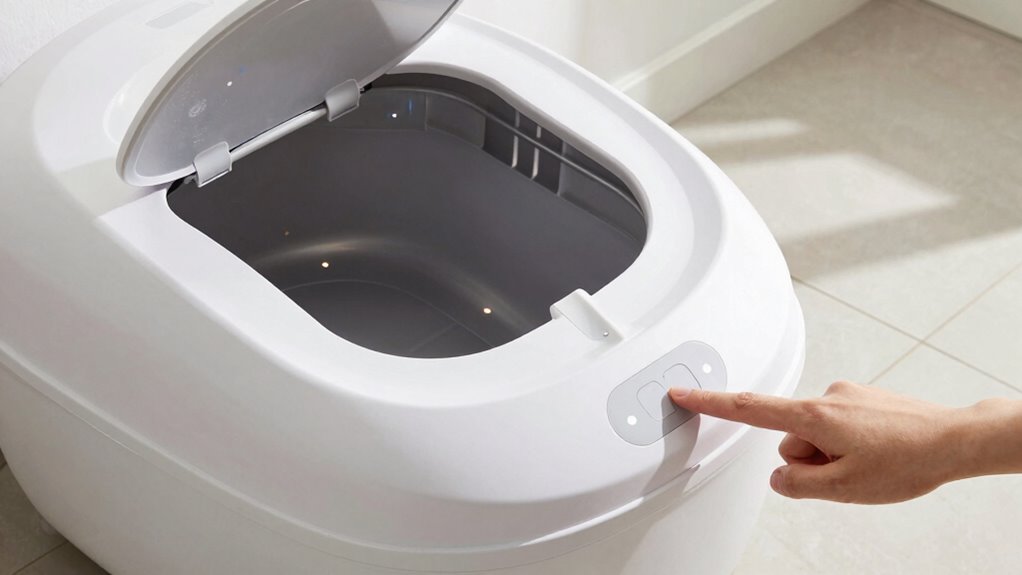
PARUUNTYS Self Cleaning Litter Box,Open Top Automatic Litter Box with App Control for Multiple Cats, Safety Sensors Protection, Odor Control Includes 2 roll Liners,Large Waste Bin, Cream White
- Open-Top Spacious Design: Generous 16.5”×16.5” entrance for easy access
- Enhanced Safety Sensors: 7 sensors for instant protection and safety
- Remote App Control: Manage cleaning and monitor litter via smartphone
As an affiliate, we earn on qualifying purchases.
As an affiliate, we earn on qualifying purchases.
How Your Self-Cleaning Litter Box Works
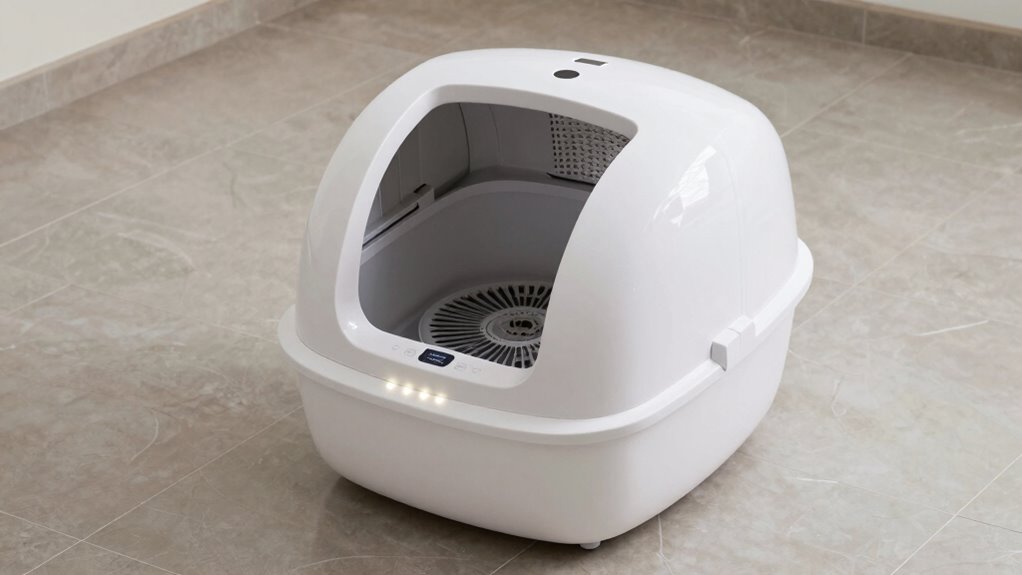
Self-cleaning litter boxes operate automatically by detecting when your cat has used the box and then initiating a cleaning cycle. The core of this process lies in the litter box mechanics, which include sensors that monitor activity within the box. These sensors detect when your cat has left, triggering the cleaning process. Proper sensor calibration is essential; if the sensors aren’t correctly calibrated, the box might start cleaning too early or too late, causing inconvenience or messes. Many models have adjustable settings to fine-tune sensitivity levels, ensuring the system responds accurately to your cat’s usage. Understanding how these components work helps you keep the box functioning smoothly and reduces false triggers, making maintenance easier and providing a more hygienic environment for your feline friend. Additionally, sensor accuracy plays a critical role in preventing false activations and ensuring reliable operation. Regularly inspecting and cleaning the sensors can also help maintain their performance, preventing dust or debris from interfering with detection.
Check and Empty the Waste Bin Regularly

Make sure to monitor the waste levels in your litter box regularly so it doesn’t overflow or cause odors. Empty the waste bin often to keep the area clean and fresh for your cat. Always dispose of the waste properly to maintain hygiene and prevent messes. Using a litter box cleaning routine can help keep your setup odor-free and hygienic. Additionally, choosing a litter box with easy-to-empty features can streamline this maintenance process. Regularly inspecting the warranty terms for your litter box can prevent unexpected issues and ensure longevity. Being aware of environmental considerations can help you adopt sustainable practices for your pet’s care. For those seeking extra convenience, some support breakfast options include models with automatic waste disposal features that minimize manual maintenance.
Monitor Waste Levels
How often should you check the waste bin in your self-cleaning litter box? You should do so daily to prevent overflows and odors. Keep an eye on litter box indicators and waste level alerts that signal when the bin is full. Regular monitoring ensures your cat’s environment stays clean and hygienic.
To stay on top of waste levels:
- Check the waste bin visually for fullness
- Listen for warning sounds or alerts from the device
- Observe any indicator lights signaling waste buildup
- Empty the bin before it reaches capacity to maintain ideal operation
Empty Waste Bin Frequently
Regularly checking and emptying the waste bin is essential to keep your litter box functioning properly. When you do this frequently, you prevent unpleasant odors from building up, which improves odor control in your space. A full waste bin can also hinder the litter box’s self-cleaning mechanism, reducing its efficiency. By promptly disposing of waste, you ensure smooth waste disposal and prevent clogs or jams in the system. Additionally, regular emptying minimizes bacteria growth and keeps the area hygienic for both your cat and household members. Regular maintenance also contributes to the resale value of the self-cleaning litter box, prolonging its lifespan. Proper maintenance routines are crucial for optimal operation and longevity of your device. Make it a habit to check the waste bin daily and empty it as needed. This simple step helps maintain proper hygiene, keeps odors at bay, and ensures your self-cleaning litter box continues to operate seamlessly.
Use Proper Disposal Methods
Using proper disposal methods for waste is crucial to maintaining a clean and odor-free environment. Regularly checking and emptying the waste bin ensures your self-cleaning litter box functions efficiently and reduces unpleasant smells. Effective waste management involves using sealed bags or containers to contain waste and prevent leaks or odors. Always dispose of waste in outdoor trash bins designated for pet waste or household trash, and avoid flushing anything inappropriate down the toilet. Keep a dedicated scoop or glove nearby for quick removal, and wash your hands afterward. Proper disposal methods support the cleanliness of your pet’s environment and help prevent bacterial growth. Incorporating sound therapy techniques can also promote a calmer environment during cleanup routines. Additionally, understanding the impact of cookies on your browsing experience can help you customize your privacy preferences. Proper disposal also highlights the importance of reliance on cloud services, ensuring that digital operations run smoothly even during maintenance routines. This routine not only keeps your home fresh but also promotes better hygiene for you and your pet. Proper disposal is essential for maintaining a tidy, odorless space and extending the life of your litter box.
Clean and Disinfect the Litter Chamber Weekly

Each week, you should remove the old litter and replace it with fresh material to keep the box clean. Use an appropriate disinfectant to eliminate bacteria and odors, ensuring your cat’s health. Be sure to rinse the chamber thoroughly to remove any residue before refilling with new litter. Incorporating nanomaterial coatings can help prevent bacterial buildup and make future cleaning easier. Regular maintenance can also reduce the buildup of ear wax odor and other smells that may develop over time. Utilizing digital resources like the Études Architect App can streamline your cleaning schedule and provide helpful tips for maintaining a hygienic environment. Additionally, choosing the correct air purification methods can further improve the overall air quality in the area around your litter box.
Remove Old Litter
Have you ever wondered why your self-cleaning litter box stays fresh and odor-free? Removing old litter regularly is essential for maintaining its effectiveness and litter box aesthetics. It prevents buildup, reduces odors, and keeps your cat comfortable. When you scoop out the old litter, you’re also removing waste that can cause unpleasant smells. For a more thorough clean, consider alternative cleaning methods—like rinsing the chamber with water or using natural cleaning solutions. This helps eliminate bacteria and keeps the interior hygienic. Regularly replacing the old litter ensures your cat’s environment remains inviting. Remember, consistent maintenance not only keeps the litter box functioning smoothly but also contributes to a healthier, happier pet. Stay proactive to avoid lingering odors and extend your litter box’s lifespan.
Use Appropriate Disinfectant
Regularly removing old litter keeps the box fresh, but to truly maintain a hygienic environment, it’s important to disinfect the litter chamber weekly. Use a disinfectant with proven effectiveness that’s safe for your cat and your household. Avoid harsh chemicals that could harm your pet or compromise the litter’s safety. Choose safe cleaning agents that kill bacteria and viruses without leaving harmful residues. Here’s a quick guide:
| Disinfectant Type | Effectiveness | Safety Level |
|---|---|---|
| Hydrogen Peroxide | High, eco-friendly | Safe when diluted |
| White Vinegar | Moderate, natural | Very safe |
| Commercial Cleaners | Varies, check labels | Ensure pet-safe label |
Opt for these options to keep your litter box clean and safe for your cat. Proper disinfectant use is a key component of somatic therapy that emphasizes holistic well-being, including creating a safe environment for your pet.
Rinse Thoroughly
Are you guaranteeing your litter box is thoroughly rinsed after disinfecting? Rinsing thoroughly is essential to remove any residual disinfectant and prevent irritation to your cat’s paws. Use clean water, paying attention to water quality, to ensure no chemicals remain. Proper rinsing not only keeps the litter chamber safe but also extends its lifespan. Here are some tips to help you rinse thoroughly:
- Use a gentle spray nozzle to reach all corners
- Check water quality; avoid hard or contaminated water
- Rinse multiple times if necessary for complete removal
- Dry the chamber completely before refilling
- Incorporate attention to detail to ensure every spot is properly cleaned and rinsed, preventing buildup and maintaining a hygienic environment.
Taking these steps guarantees your self-cleaning litter box stays hygienic and odor-free, providing a healthy environment for your feline friend.
Refill and Replace Litter When Needed
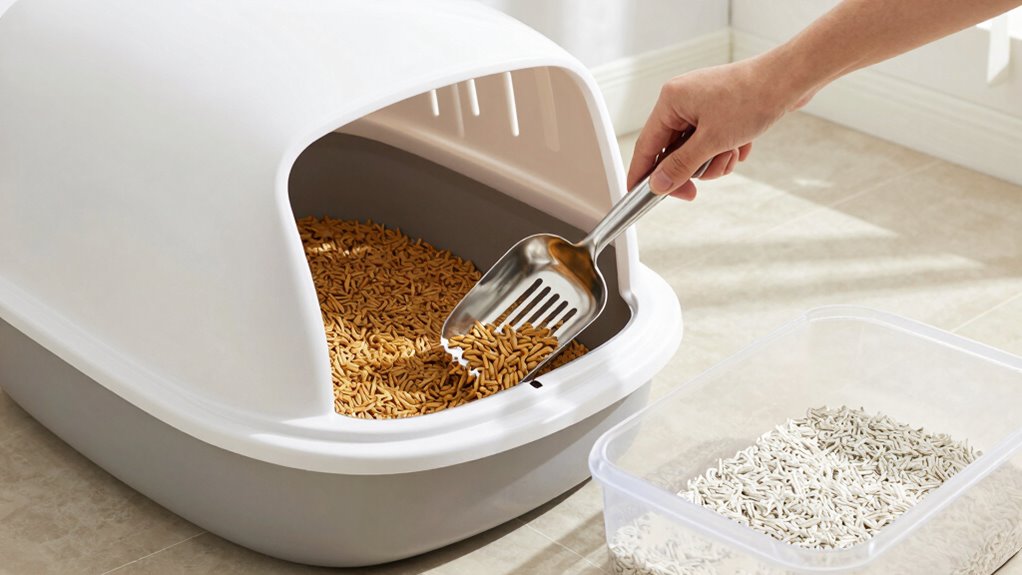
When your litter box starts to look or smell less clean, it’s time to refill or replace the litter. Maintaining good litter quality is essential for odor control and your cat’s comfort. Check the litter level regularly—if it’s low, add fresh litter to maintain proper coverage and odor absorption. How often you need to refill depends on your cat’s usage and the type of litter you choose. Some litter brands require more frequent top-offs, while others last longer. When the litter becomes heavily soiled or clumpy, it’s best to do a full replacement. Regularly swapping out old litter prevents odors from lingering and keeps your self-cleaning box functioning at its best. Staying attentive to litter quality and refill frequency ensures your cat’s environment stays fresh and inviting. Incorporating odor control techniques can help extend the lifespan of your litter and reduce odor buildup. Additionally, using sound healing science principles like gentle vibrations during cleaning may contribute to a calmer environment for your pet. Proper piercing care and hygiene routines can also prevent infections that might cause unpleasant odors in the vicinity.
Keep Mechanical Parts Like Sensors and Motors in Top Shape

To keep your self-cleaning litter box functioning smoothly, you need to maintain its mechanical parts, like sensors and motors, in top condition. Regularly check and perform sensor calibration to ensure accurate detection of your cat’s movements. Lubricate motors as recommended by the manufacturer to prevent squeaking and ensure smooth operation. Keep sensors clean and free from dust or litter debris, which can interfere with their readings. Additionally, inspect wiring for wear or damage, replacing parts if necessary to avoid malfunctions. Proper maintenance extends the lifespan of these components and keeps your litter box running reliably.
- Clean sensors gently with a soft cloth
- Perform sensor calibration as instructed in the user manual
- Lubricate motors periodically with appropriate lubricant
- Check wiring connections regularly for damage
Fix Common Problems Like Jams or Odor Leaks
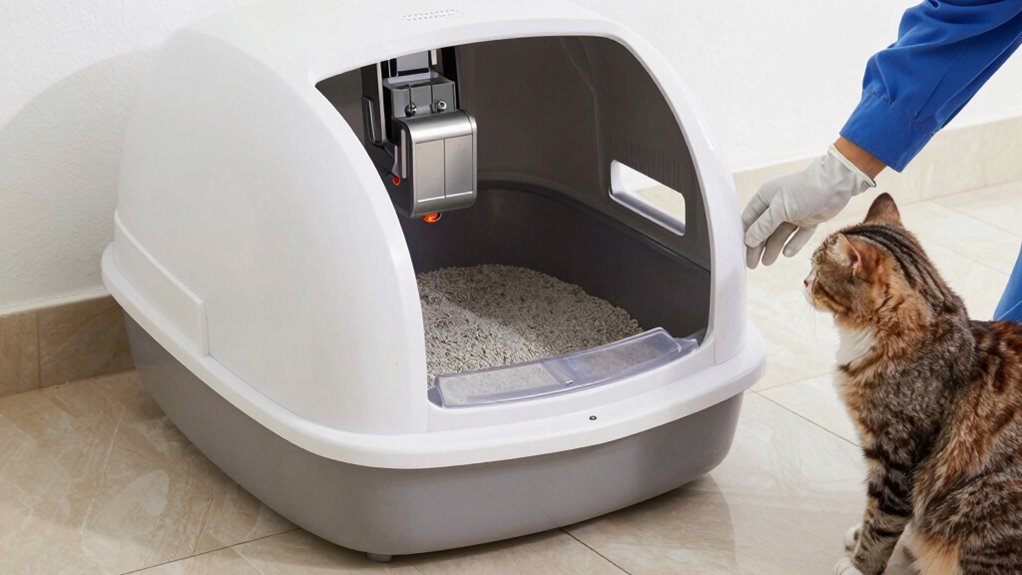
Jams and odor leaks are common issues that can disrupt your self-cleaning litter box’s performance. Litter box jams often occur when debris or clumped waste get stuck in the moving parts or conveyor system. To fix this, turn off your unit, carefully clear any obstructions, and check for damaged components. Regularly cleaning the mechanical parts prevents future jams. Odor leaks happen when seals wear out or if the litter tray isn’t sealing properly. Inspect all seals and replace them if needed. Also, ensure the waste drawer is emptied frequently. Using an odor-neutralizing spray around the seal areas can help. Staying proactive with these simple fixes keeps your litter box functioning smoothly and minimizes foul odors and jams.
Tips to Maximize Your Self-Cleaning Litter Box’s Durability
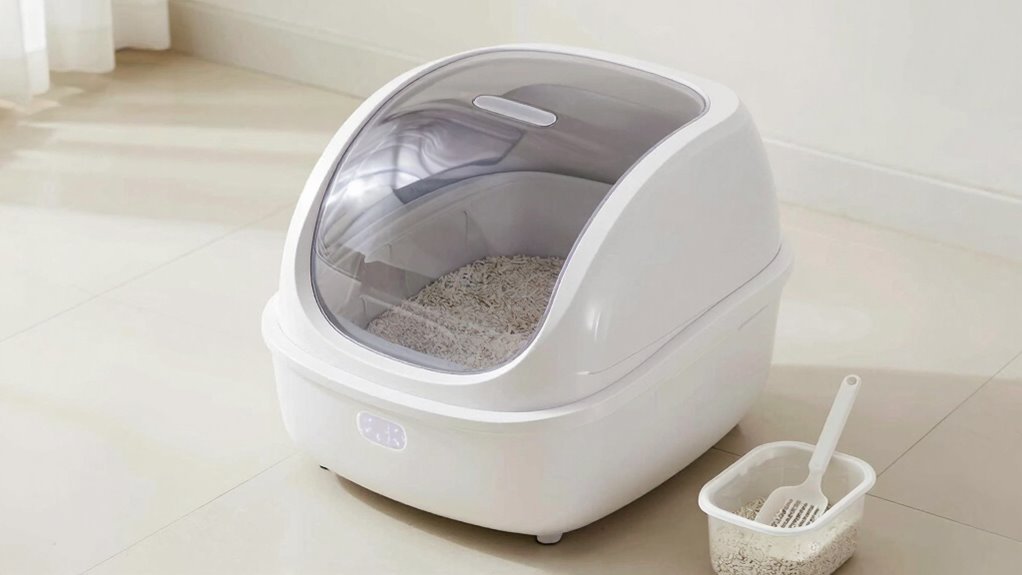
Regular maintenance is key to extending the lifespan of your self-cleaning litter box. To maximize durability, pay attention to the litter box materials—choose models made from sturdy, durable plastics that resist cracks and wear. Follow user maintenance tips like regularly cleaning sensors and moving parts to prevent buildup, which can cause jams or malfunctions. Avoid harsh cleaning agents that may degrade materials over time. Keep the litter level consistent; overfilled boxes strain the motor. Also, inspect the power cord and connections periodically to prevent electrical issues. Proper handling and routine checks help your litter box run smoothly longer, saving you money and frustration. Remember, a well-maintained unit depends on attentive care and understanding the materials it’s made from.
Managing Odors and Extending Your Litter Box’s Lifespan
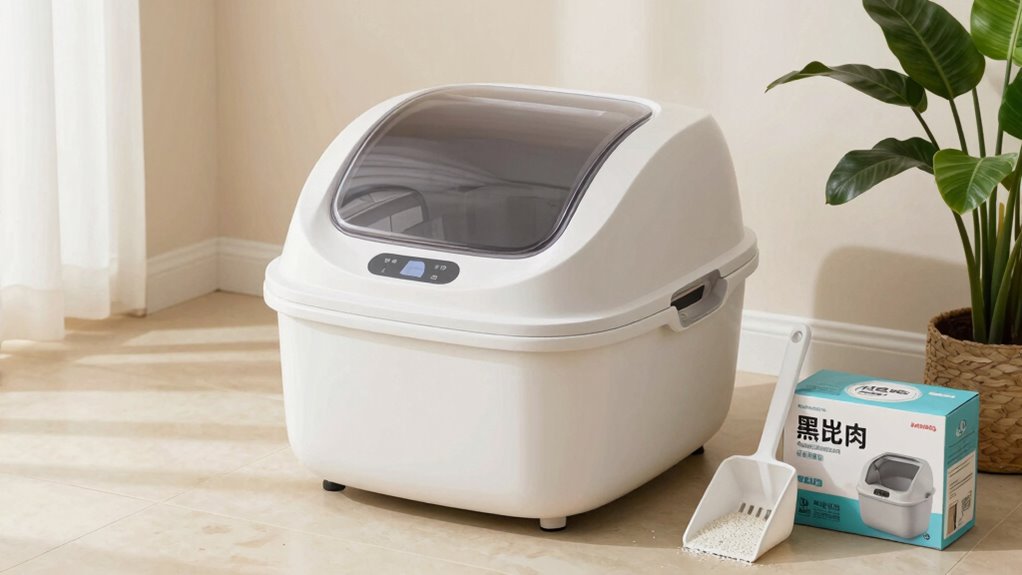
Managing odors effectively not only keeps your home smelling fresh but also helps prolong the life of your self-cleaning litter box. To do this, consider using an air purifier in the room, which can reduce airborne smells and bacteria. Regularly applying an odor neutralizer directly to the litter or around the box can also make a noticeable difference. Change the litter according to the manufacturer’s recommendations to prevent buildup and odors. Keep the litter box clean by wiping down the exterior and ensuring the sensors are free of debris. Proper ventilation helps disperse smells and reduces strain on the box’s filtration system. Combining these practices extends your litter box’s lifespan, maintains a healthier environment, and keeps your space odor-free.
Frequently Asked Questions
How Often Should I Replace the Entire Self-Cleaning Litter Box?
You should replace your self-cleaning litter box every 1 to 2 years, depending on its litter box lifespan and overall condition. Regularly check for wear, persistent odors, or malfunctioning parts, as these signs indicate it’s time for a replacement. Sticking to a consistent replacement schedule guarantees your cat’s comfort and hygiene, preventing issues caused by aging or damaged equipment. Keep an eye on performance to know when it’s time to upgrade.
Can I Use Any Type of Litter With My Self-Cleaning System?
You can’t use just any litter with your self-cleaning system because of litter compatibility and brand restrictions. Check your litter box’s manual to see which types are recommended; usually, clumping, low-dust litters work best. Avoid using non-compatible litters, as they can clog or damage your system. Sticking to the suggested brands guarantees smooth operation and prevents costly repairs. Always follow the manufacturer’s guidelines for the best results.
What Safety Precautions Should I Take During Maintenance?
You need to stay alert during maintenance to avoid dangers like electric shock and chemical exposure. Always unplug the unit before cleaning or refilling to prevent electric shock. Wear gloves and a mask if you’re handling cleaning agents or waste, and work in a well-ventilated area. Never bypass safety features or rush through the process—these precautions keep you safe and make sure your litter box stays in top shape.
How Do I Troubleshoot if the Sensors Aren’t Detecting Waste?
If your sensors aren’t detecting waste, start by checking the wiring for loose or damaged connections. Next, perform sensor calibration according to the manufacturer’s instructions to guarantee accurate detection. If issues persist, clean the sensors gently to remove dirt or debris that may interfere. Regular calibration and wiring inspection help maintain proper sensor function, preventing detection problems and keeping your self-cleaning litter box working smoothly.
Is Professional Maintenance Recommended for Complex Repairs?
Think of your litter box as a delicate engine that needs expert hands for complex repairs. For DIY repairs, you can handle minor issues, but when it comes to emergency repairs or intricate problems, professional maintenance is optimal. It ensures safety, avoids further damage, and keeps your system running smoothly. Trust experts for complex fixes, so your self-cleaning litter box continues to serve reliably without risking more costly damage.
Conclusion
With regular checks and simple maintenance, your self-cleaning litter box stays efficient, almost like clockwork. Imagine opening the door to a fresh, odor-free space for your cat, just as you notice the waste bin is empty and the sensors are clean. Keeping mechanical parts in top shape and managing odors guarantees your litter box runs smoothly, extending its lifespan. Consistent care turns routine chores into a seamless part of your day, making pet ownership even easier.