Creating a family room that works for both kids and adults involves maneuvering zoning rules, managing noise, and visually defining spaces. Use furniture, rugs, and soft furnishings to absorb sound and establish zones. Incorporate lighting and decor cues to separate play areas from relaxation spots. Keep in mind local regulations to prevent costly changes later. If you explore more, you’ll discover effective strategies to balance openness with practicality and harmony for your family.
Key Takeaways
- Understand local zoning regulations to ensure compliant layout modifications for open concept family rooms.
- Use furniture, rugs, and lighting to define separate zones for kids and adults within the open space.
- Incorporate sound-absorbing materials like acoustic panels and soft furnishings to manage noise levels effectively.
- Create visual boundaries with decor and furniture placement to establish functional areas without sacrificing openness.
- Balance openness with practicality by planning for noise control, safety, and activity-specific zones tailored to family needs.
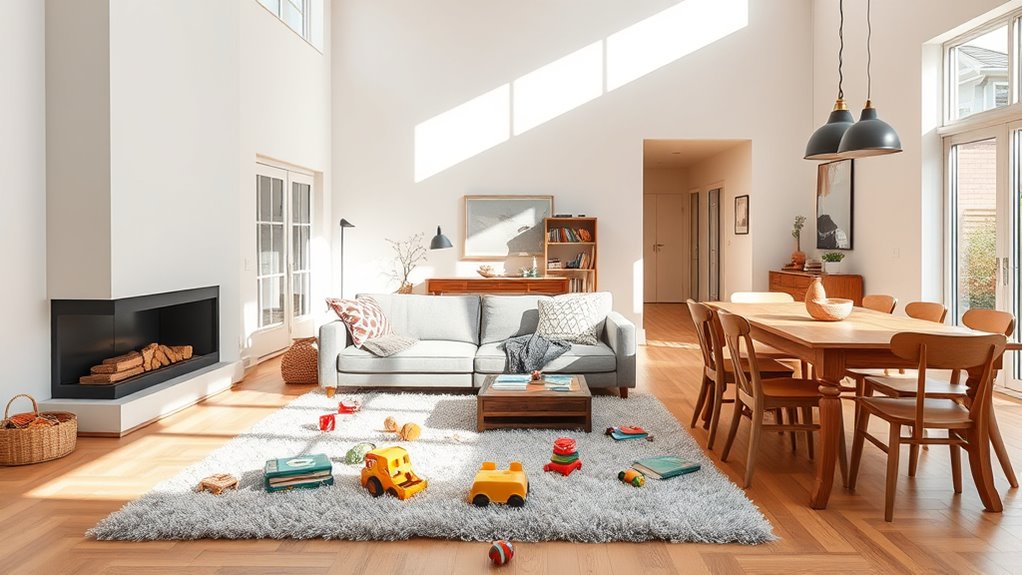
Have you ever wondered if open concept layouts are worth the convenience? While they create spaciousness and encourage interaction, they also come with their own set of challenges. One of the biggest hurdles you might face is zoning challenges. In many neighborhoods, local regulations or homeowners’ associations have strict rules about how much open space can be used and how certain areas are designated. You might find yourself needing permits or approvals to make major changes, especially if you want to incorporate designated zones for different activities. *Navigating* these regulations can feel overwhelming, but understanding what’s allowed can save you from costly renovations or legal issues down the line. Plus, zoning rules often influence the layout and functionality of your family room, limiting your options for creating defined spaces. Additionally, local regulations can vary significantly based on your location, making it important to research specific requirements before planning your layout.
Beyond zoning, noise management becomes a *crucial* concern in open concept designs. When your family room serves both kids and adults, it’s easy for noise levels to escalate, creating a chaotic environment. Children’s play and entertainment can interfere with conversations or relaxation for adults, especially if the space isn’t properly sound-proofed. Without designated boundaries, sounds easily travel across the room, making it difficult to focus, work, or unwind. To tackle this, you might consider using strategic furniture placement, area rugs, or acoustic panels to absorb sound. Installing soft furnishings, like plush couches and curtains, can also help reduce noise transmission. Lighting and visual cues can further define zones within the open space, giving kids their own area for play while adults relax nearby. These small adjustments can *significantly* improve noise management, making your family room more functional and enjoyable for everyone.
Balancing the openness with effective zoning and noise control isn’t easy, but it’s essential for creating a space that works for all ages. You’ll need to weigh your desire for a spacious, connected environment against the practical needs of a family that includes kids and adults with different routines. Thoughtful planning—such as using furniture to create visual boundaries, installing sound-absorbing materials, and understanding local zoning rules—can help you carve out a harmonious space. While open concept layouts are attractive, they demand careful consideration to avoid headaches down the line. With some effort, you can enjoy the benefits of an open, inviting family room that caters to everyone’s needs without turning into a source of constant noise or regulatory trouble.
Frequently Asked Questions
How Can I Prevent Noise From Disturbing Different Family Zones?
To prevent noise from disturbing different family zones, you should consider soundproofing techniques like adding acoustic paneling to walls and ceilings. These panels absorb sound, reducing noise transfer between areas. You can also use rugs, heavy curtains, and furniture to further dampen sound. By incorporating these solutions, you create a more peaceful environment, allowing kids and adults to enjoy their spaces without constant disruptions.
What Are the Best Storage Solutions for Open Family Rooms?
You should consider using storage baskets and shelving units to keep your open family room organized and clutter-free. Storage baskets are perfect for toys, books, and blankets, making things easy to grab and put away. Shelving units provide space for decorative items and essentials, while also adding structure to the room. These solutions help you maintain a tidy space, making it enjoyable for everyone without sacrificing style.
How Do I Create Distinct Spaces Without Walls?
Think of your space as a symphony waiting to harmonize. To create distinct areas without walls, use section dividers like rugs or bookshelves to provide visual cues. Incorporate different furniture arrangements, lighting, or colors to define zones subtly. These visual cues act as gentle signals, guiding the eye and creating the feeling of separate spaces, all while maintaining an open, cohesive flow that keeps everyone connected and comfortable.
What Safety Measures Are Recommended for Open-Concept Layouts?
When it comes to safety in open-concept layouts, you should focus on child proofing tips and furniture safety. Use outlet covers, corner protectors, and secure heavy furniture to the wall to prevent accidents. Choose soft, rounded furniture edges, and keep small objects out of kids’ reach. Regularly inspect for hazards, and create designated safe zones to make certain both kids and adults enjoy the space securely.
How Can I Incorporate Privacy in an Open Family Room?
Ironically, in an open family room, privacy feels like a luxury. To create some seclusion, you can add privacy screens or movable partitions, which easily shift when you want space or togetherness. These options let you carve out quiet corners for work or rest without sacrificing the open feel. With a little clever planning, you’ll enjoy both openness and privacy, making your space truly adaptable for everyone’s needs.
Conclusion
So, as you piece together your open-concept family room, remember that sometimes the best design solutions come when you’re least expecting them—like that accidental rearrangement leading to a perfect balance of space and coziness. It’s funny how a small change or coincidence can turn chaos into harmony, making your shared space work seamlessly for both kids and adults. Embrace those unexpected moments—they might just be the key to your perfect family haven.