To maximize natural light and airflow, position windows to face the sun and keep areas around them clear. Arrange furniture against walls to create open pathways and avoid blocking vents or windows. Use mirrors opposite windows to reflect light and enhance brightness. Keep taller furniture away from windows, and create cross-ventilation by aligning seating and storage effectively. For more ideas on creating a bright, breezy space, keep exploring how layout adjustments can transform your room.
Key Takeaways
- Position windows and seating to maximize sunlight exposure and facilitate cross-ventilation throughout the room.
- Keep pathways clear and avoid blocking windows with bulky furniture to enhance airflow and natural light flow.
- Use mirrors opposite windows to reflect and amplify natural light, brightening the space.
- Place taller furniture away from windows to prevent obstruction of light and airflow.
- Arrange furniture and storage to promote natural air movement and maintain an open, airy atmosphere.

Have you ever wondered how to make your room feel more spacious and inviting? One of the simplest ways to achieve this is by carefully considering your window placement and furniture arrangement. Properly positioned windows allow natural light to flood in, instantly brightening the space and creating an open, airy atmosphere. When you’re planning your room, think about where the windows are located and how you can maximize their potential. If possible, position your main seating or work areas near these windows to take full advantage of the sunlight, which not only makes the room feel larger but also boosts your mood and energy. Avoid blocking windows with bulky furniture; instead, keep the area around them clear to let light flow freely and enhance ventilation.
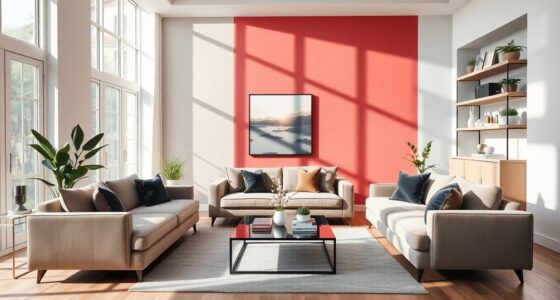
Maximize natural light by thoughtfully placing windows and seating areas for a brighter, more inviting room.
Your furniture arrangement plays a pivotal role in how well your room breathes. To optimize airflow and sunlight, try to keep pathways open and avoid cluttering the space with oversized pieces. Use low-profile furniture that doesn’t obstruct the view or natural light sources. Placing larger furniture pieces against the walls creates a sense of openness in the middle of the room, making it feel more spacious. When arranging furniture, think about the natural flow of air through the space. Positioning seating and storage so that they don’t block vents or windows encourages better air circulation, keeping the room fresh and cool. Remember, the goal is to create a balanced layout that promotes cross-ventilation, especially if your windows are on different walls. This way, fresh air can move freely through your space, reducing stuffiness and increasing comfort.
Additionally, consider the height and placement of your furniture relative to your windows. Taller items, like bookshelves or wardrobes, should be placed away from windows to avoid blocking sunlight and airflow. Mirrors can also be a clever addition—positioned opposite windows, they reflect light deeper into the room, amplifying brightness and making the space feel larger. Incorporating water efficiency features into your home, such as proper ventilation, can further enhance airflow and indoor air quality. When you combine strategic window placement with thoughtful furniture arrangement, you’re not just improving aesthetics—you’re actively enhancing natural ventilation and sunlight. This approach reduces reliance on artificial lighting and mechanical cooling, saving energy and creating a healthier environment.
In the end, designing your room with natural light and ventilation in mind transforms your space into a more inviting, comfortable retreat. It’s all about making intentional choices—placing windows thoughtfully, arranging furniture to promote flow, and keeping pathways clear. With these simple adjustments, you’ll notice your room feels more open, fresh, and welcoming every day.

YoungsTex Linen Semi Sheer Curtains 63 Inch Length 2 Panels for Living Room – Light Filtering Drapes with Bronze Grommet Beige Window Treatments for Office Bedroom, 52 X 63 Inch
- Package Includes: Set of 2 linen curtain panels
- Dimensions: 52 x 63 inches per panel
- Grommet Details: 8 bronze grommets per panel
As an affiliate, we earn on qualifying purchases.
As an affiliate, we earn on qualifying purchases.
Frequently Asked Questions
How Can I Improve Airflow Without Structural Changes?
To improve airflow without structural changes, you can add interior plants that help circulate air naturally. Placing ceiling fans strategically boosts air movement, making the space feel fresher. Keep windows open when possible to encourage cross-ventilation, and avoid blocking vents or airflow paths. These simple steps enhance ventilation, increase comfort, and create a healthier environment without needing any major renovations.
What Materials Enhance Natural Light Without Causing Glare?
Think of your space as a canvas where light dances effortlessly. You should choose glass coatings that diffuse sunlight softly, reducing glare and creating a gentle glow. Reflective surfaces, like polished tiles or painted walls, bounce light around without overwhelming your eyes. These materials act like prisms, spreading natural light evenly and enhancing brightness while keeping glare at bay. This way, your room feels luminous yet comfortable.
How Do I Balance Privacy With Ventilation?
Balancing privacy concerns with ventilation can be tricky, but you can achieve it by using soundproofing solutions like acoustic panels or double-glazed windows. Place vents or operable windows strategically to maintain airflow while adding privacy screens or frosted glass to block sightlines. Keep in mind, you might need to compromise a little on openness to ensure privacy, but clever placement and soundproofing help you enjoy fresh air without sacrificing your privacy.
Are There Specific Window Shapes That Optimize Sunlight?
You wonder if certain window shapes can optimize sunlight. Rectangular or tall, narrow windows often capture more natural light and distribute it evenly throughout your space. Arched or circular windows add aesthetic appeal and can direct sunlight at specific angles, enhancing sunlight optimization. Consider your room’s orientation and desired lighting effects when choosing window shapes, as these factors greatly influence how effectively sunlight enters and brightens your space.
How Can I Prevent Heat Loss While Maximizing Sunlight?
Research suggests that strategic window placement and design can effectively prevent heat loss while maximizing sunlight. You should invest in good thermal insulation around your windows and walls to retain warmth. Additionally, using exterior shading, like awnings or shutters, helps block excess heat during warmer months, while still allowing sunlight to enter. This combination guarantees your space stays warm in winter and cool in summer, optimizing natural light without sacrificing energy efficiency.
Conclusion
By arranging your space thoughtfully, you open the door to sunlight dancing across your rooms and breezes whispering through open windows. Think of your home as a living garden, where strategic placement nurtures natural light and fresh air, creating a sanctuary that breathes with energy. With these tips, your space transforms into a luminous, airy haven—an inviting oasis where sunlight and breeze weave together, painting your daily life with comfort and serenity.