To design a safe bedroom for your elderly parent, assess their mobility and medical needs first. Choose a comfortable, supportive bed at the right height and arrange furniture to keep pathways clear. Install good lighting, including motion-activated options, and add grab bars in key areas. Use non-slip flooring and secure rugs to prevent falls. Keep essentials within reach to avoid stretching or bending. For more ideas, discover how to create a truly supportive space.
Key Takeaways
- Arrange furniture against walls to keep pathways clear and reduce trip hazards.
- Place essential items within easy reach to minimize stretching or bending for safety.
- Ensure adequate space around the bed for movement and assistive devices.
- Use non-slip flooring and secure rugs to prevent slips and falls.
- Install proper lighting, including motion-activated and glow-in-the-dark features, for enhanced visibility at night.
Assessing the Specific Needs of Your Elderly Parent
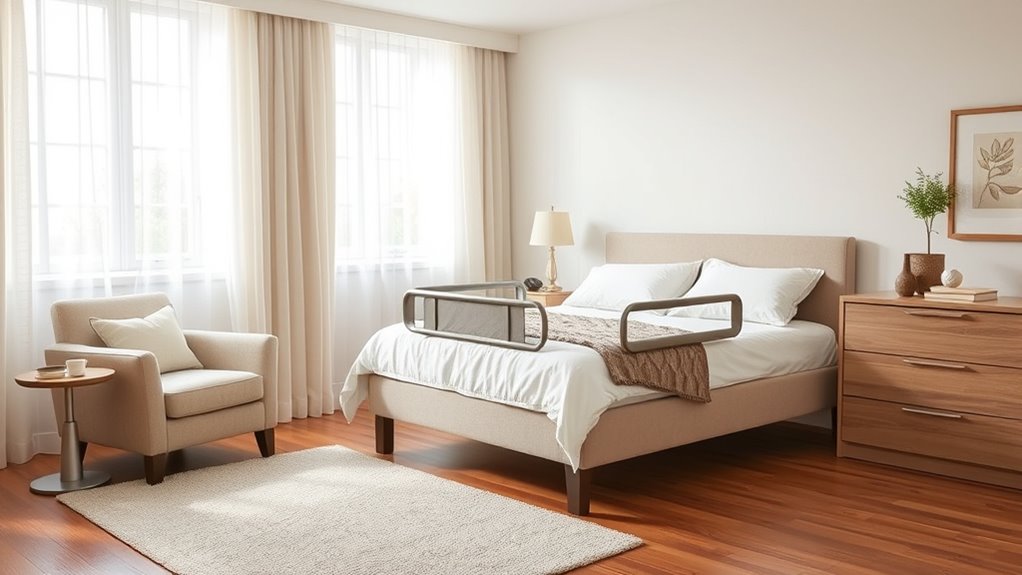
Before designing a safe bedroom layout, you need to clearly understand your elderly parent’s specific needs. Consider their mobility, vision, and any medical conditions that affect daily activities. Personal safety is essential; identify potential hazards like loose rugs or clutter that could cause falls. Think about their emotional well-being too—creating a space that feels comfortable and secure can reduce anxiety and promote independence. Talk to your parent to understand their preferences, routines, and concerns, ensuring the environment supports their sense of control. Evaluating these needs helps you prioritize safety features and design choices that make the room both functional and welcoming. Additionally, understanding falls risk factors as part of your assessment can further help in designing a safer environment. Recognizing fatigue and dry signs of physical or mental exhaustion that might impact your parent’s safety can enable you to address these issues proactively. Incorporating regional safety standards and best practices can also guide you in creating a secure space tailored to their needs. Being aware of other hazards and vulnerabilities can help prevent accidents and injuries. By understanding their unique requirements, you can create a space that enhances their quality of life and peace of mind.
Choosing the Right Bed and Mattress for Safety and Comfort
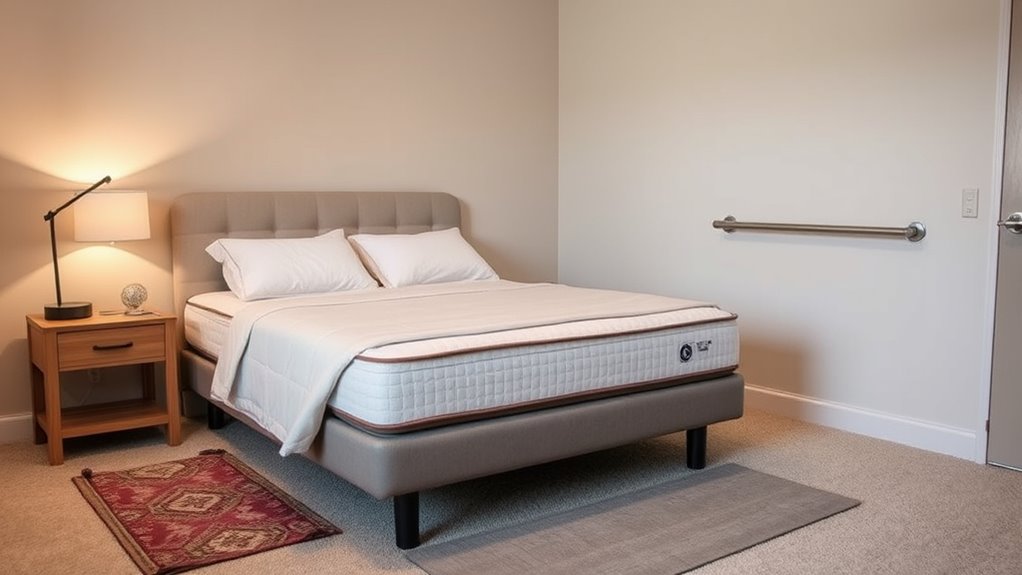
When selecting a bed and mattress, focus on choosing a firmness level that provides adequate support without sacrificing comfort. Make sure the bed height is easy to access, reducing the risk of falls when getting in and out. These choices can considerably improve safety and help your parent rest more comfortably. Incorporating ergonomic design principles can further enhance safety and comfort by promoting proper posture and reducing strain during sleep. Additionally, selecting a high-quality, durable mattress ensures long-term support and minimizes the need for frequent replacements. Considering the skin health benefits from materials and finishes can also contribute to a more comfortable and health-conscious sleeping environment. Using modern materials can improve breathability and reduce allergens, creating a healthier sleep space. Considering the rustic and vintage elements common in farmhouse bedroom decor can also create a warm and inviting space that feels familiar and comforting.
Mattress Firmness and Support
Choosing the right mattress firmness and support is essential to guarantee your elderly parent sleeps safely and comfortably. Memory foam mattresses offer excellent support by conforming to their body shape, reducing pressure points. When selecting firmness levels, softer mattresses are ideal for those who need gentle support, while firmer options suit individuals who prefer more stability. The goal is to find a balance that prevents sagging and provides proper spinal alignment. Proper support is vital for maintaining healthy posture and avoiding discomfort. Too soft can cause instability, increasing fall risk, whereas too firm may cause discomfort or pressure sores. Test different firmness levels to see what feels best and provides steady support throughout the night. Incorporating bed safety features such as sturdy frames and non-slip pads can further enhance stability and prevent accidents. Additionally, selecting a mattress with advanced safety features like pressure redistribution can help reduce the risk of falls and injuries. Ensuring the mattress is compatible with headphones or other assistive devices can also improve overall sleep quality for elderly users. Prioritizing the right mattress firmness helps ensure your parent’s safety, comfort, and restful sleep. Supportive sleep environments are crucial for maintaining overall health and preventing injuries in elderly individuals.
Bed Height and Accessibility
Selecting the right bed height is essential for your elderly parent’s safety and ease of getting in and out of bed. Ideally, the bed should be positioned so that when your parent is standing, their feet touch the floor comfortably, and their hips are roughly level with the mattress. This improves accessibility and reduces the risk of falls. A bed height between 20 and 23 inches often works well, but personal comfort matters. Consider adjustable beds or beds with removable risers if needed. Proper bed height makes transfers safer and easier, especially for those with mobility challenges. Additionally, choosing a bed with appropriate safety features can further enhance security. Keep in mind that accessibility isn’t just about height—ensure there’s enough space around the bed for easy movement and use of assistive devices.
Optimizing Lighting to Prevent Accidents

Proper lighting is essential to prevent accidents in your elderly parent’s bedroom. Well-placed lights help them move safely at night and avoid obstacles. Use motion-activated lighting near the bed and bathroom for convenience and safety, so lights turn on automatically when needed. Incorporate glow-in-the-dark accents on steps, door handles, and pathways to provide subtle illumination without glare. These features improve visibility during nighttime visits, reducing falls.
| Lighting Feature | Benefits |
|---|---|
| Motion Activated Lights | Turns on automatically, reducing the need to find switches |
| Glow in the Dark Accents | Enhances nighttime visibility without harsh light |
Implementing these lighting strategies creates a safer environment, giving your parent independence and peace of mind.
Arranging Furniture to Minimize Clutter and Hazards
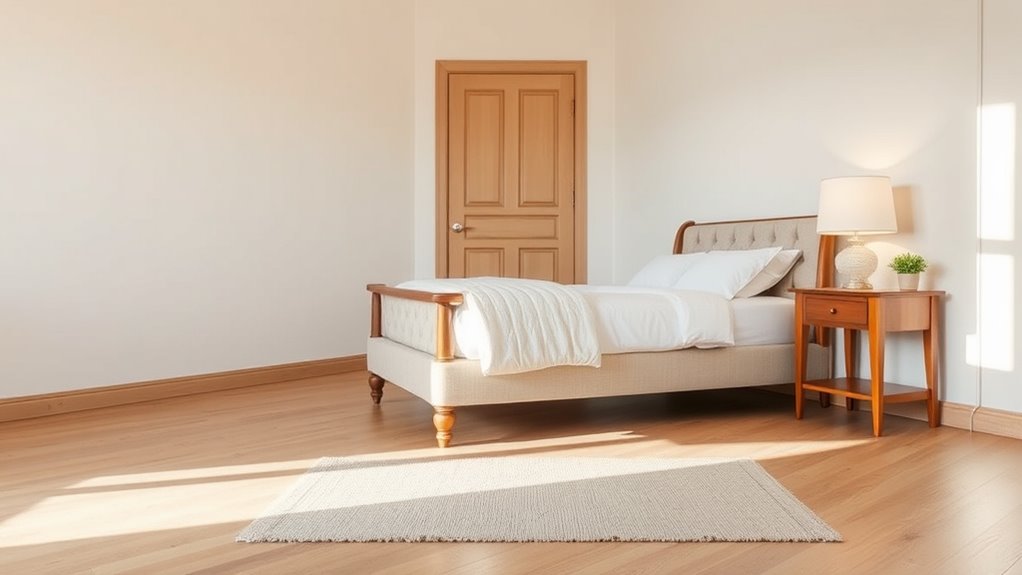
After installing adequate lighting, arranging furniture thoughtfully can considerably reduce trip hazards and clutter. Keep pathways clear by placing larger pieces, like the bed and dresser, against the walls, leaving enough space for easy movement. Use decorative accents sparingly to avoid overcrowding and maintain a tidy look. Choose a cohesive color scheme that creates a calm, organized atmosphere, making it easier to identify pathways and essential furniture. Keep frequently used items within reach to prevent unnecessary stretching or bending. Avoid placing obstacles in the middle of the room. Regularly reassess the layout, removing or repositioning items that may become hazards over time. Incorporating diverse and practical planters can also help define specific areas and add visual interest to the room, enhancing safety and aesthetics. Utilizing ergonomic furniture can further support comfort and reduce strain for your elderly parent. A well-organized space not only minimizes accidents but also promotes a sense of tranquility for your elderly parent. Incorporating grooming and skincare products such as glycolic acid can help improve skin texture and radiance, contributing to overall well-being.
Incorporating Assistive Devices and Supportive Features
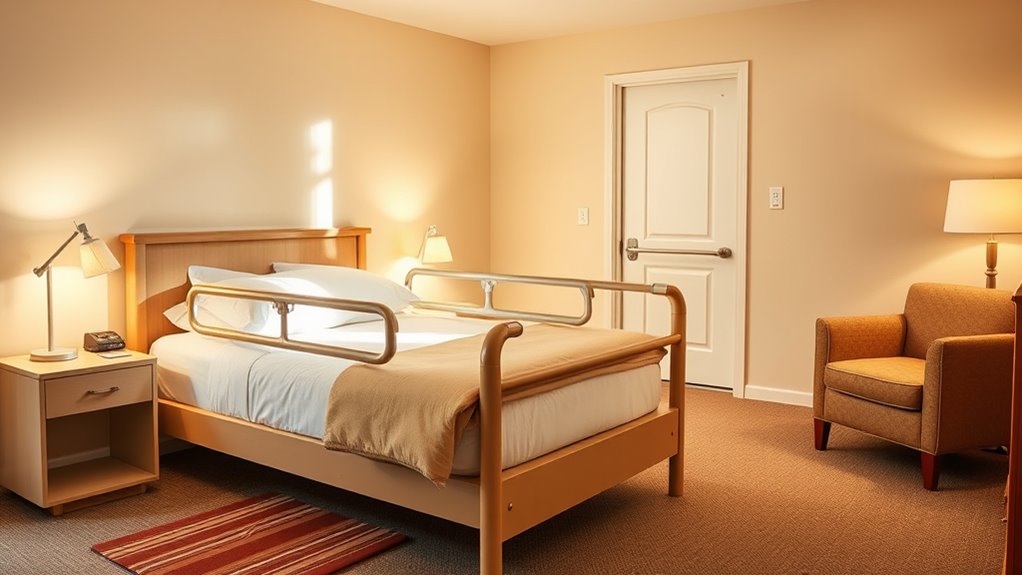
To make your parent’s bedroom safer, consider installing assistive devices and supportive features that promote independence. You can start by choosing an accessible bed height, adding non-slip flooring, and setting up emergency call systems within easy reach. These simple upgrades can substantially enhance safety and peace of mind. Incorporating safety features such as grab bars and proper lighting can further reduce fall risks and create a more secure environment.
Accessible Bed Heights
Have you considered how adjustable bed heights can make a significant difference for your elderly parent’s safety and independence? Choosing the right bed frame styles is essential; look for models that offer easy height adjustments to minimize strain and improve mobility. An appropriately elevated bed helps your parent get in and out safely, reducing fall risks. When selecting bedding materials, opt for lightweight, breathable fabrics that are easy to handle and won’t add unnecessary effort when making the bed. Confirm the bed height aligns with your parent’s comfort level, ideally allowing their feet to touch the floor when seated. This setup promotes stability and confidence, making daily routines smoother. Incorporating adjustable bed heights tailored to their needs supports both safety and independence in their bedroom environment. Additionally, consider the ergonomic design of the bed to further enhance comfort and ease of use. Research shows that sound vibrations are believed to enhance cellular regeneration and overall health, which can be beneficial in creating a healing bedroom space. Incorporating assistive devices can further improve safety and support daily activities, ensuring your parent’s environment is both comfortable and secure. Creating a safe bedroom layout also involves optimizing lighting and maintaining clutter-free pathways to prevent trips and falls.
Non-Slip Flooring Options
Selecting non-slip flooring options is crucial for creating a safe bedroom environment for your elderly parent, especially when incorporating assistive devices like walkers or canes. Start by choosing floors with slip-resistant coatings to reduce the risk of falls. Avoid smooth surfaces like polished wood or tile that can be slippery when wet. Instead, opt for textured vinyl, rubber, or laminate flooring designed for slip resistance. If you want to add area rugs, ensure they have non-slip backing or add a slip-resistant pad underneath. This prevents tripping hazards and provides extra stability. Regularly inspect and clean the floors to keep them free of dust and spills. By prioritizing slip-resistant flooring, you create a safer space that supports your parent’s independence and confidence.
Emergency Call Systems
How can you guarantee your elderly parent can quickly summon help in an emergency? Installing emergency call systems is essential. Consider home automation features that integrate communication devices, such as wall-mounted panic buttons or wearable alert systems. These devices allow your parent to easily alert family members or emergency services with a simple press. Wireless options provide flexibility and reduce tripping hazards. Look for systems with loud alarms, clear voice communication, and quick response features. Some advanced setups connect to smartphones, enabling remote monitoring. Regularly test the system to ensure it’s functioning properly. By incorporating these assistive devices and supportive features, you create a safer environment where your parent can summon help swiftly, giving both of you peace of mind.
Ensuring Accessibility and Ease of Movement
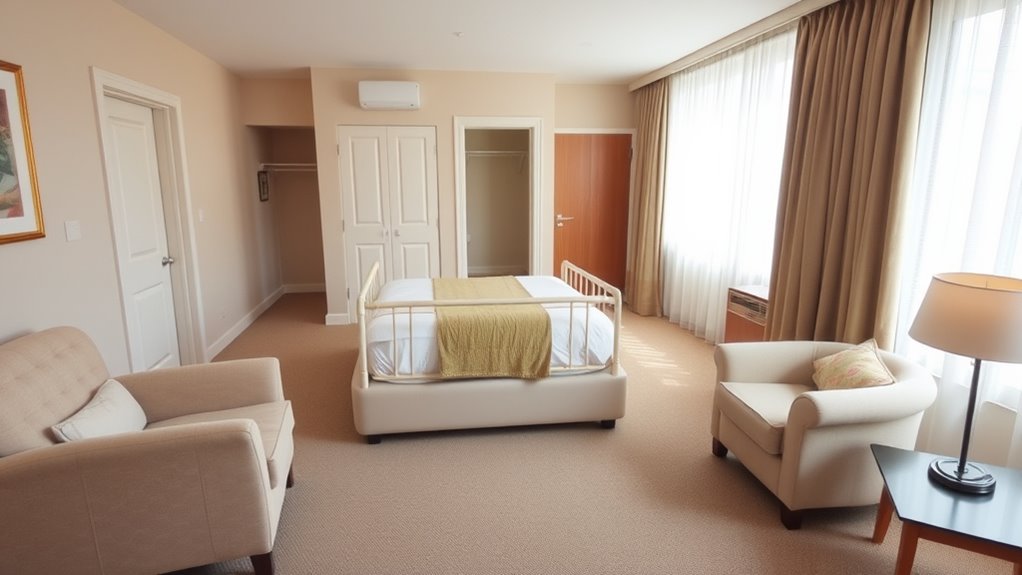
Creating a bedroom that is easy to navigate is essential for your elderly parent’s safety and independence. Place the bedside table close to the bed within easy reach, so they don’t have to stretch or reach awkwardly. Make sure the pathway from the bed to the door and other key areas is clear and wide enough—at least 36 inches—to allow easy movement with mobility aids if needed. Consider window placement carefully; avoid positioning furniture or the bed near windows where they might trip or bump into edges. Keep cords, clutter, and unnecessary furniture out of walkways to prevent tripping hazards. By prioritizing accessible layout choices, you help your parent move comfortably and confidently around the room.
Selecting Non-Slip Flooring and Safe Surfaces

Choosing the right flooring is essential for preventing slips and falls in your elderly parent’s bedroom. Opt for non-slip surfaces like textured vinyl, rubber, or cork, which provide traction and reduce hazards. Avoid smooth, glossy finishes that can be slippery when wet. Incorporate sturdy, low-pile area rugs with non-slip backing to add comfort without risking slips. Be cautious with wall coverings; choose textured or matte finishes to prevent glare and slipping hazards. Properly secured rugs and wall coverings help create a safer environment. Here’s a quick comparison:
| Feature | Recommended Options | Considerations |
|---|---|---|
| Flooring | Non-slip vinyl, rubber, cork | Avoid glossy or polished surfaces |
| Area Rugs | Low-pile, non-slip backed rugs | Ensure rugs are securely anchored |
| Wall Coverings | Textured or matte finishes | Prevent glare and slipping hazards |
Creating a Calm and Supportive Environment

Establishing a calm and supportive environment in your elderly parent’s bedroom can considerably enhance their sense of security and comfort. Incorporate soft, decorative accents like cozy blankets, soothing artwork, or gentle colors to create a welcoming atmosphere. These decorative accents add warmth without overwhelming the space. Additionally, ambient lighting plays a crucial role; opt for adjustable, warm-toned lights that can be easily controlled to prevent harsh glare and promote relaxation. Avoid bright, direct lighting that may cause discomfort or disorientation. Keep clutter to a minimum to foster a peaceful environment. By combining tasteful decorative accents with gentle ambient lighting, you help your parent feel safe, relaxed, and supported in their personal space.
Frequently Asked Questions
How Can I Prevent Falls During Nighttime Bathroom Visits?
To prevent falls during nighttime bathroom visits, you should install bed rails to prevent accidental falls from the bed. Place a nightlight near the pathway and bathroom entrance to improve visibility and reduce trip hazards. Keep the pathway clear of clutter, and consider adding a sturdy grab bar near the toilet for extra support. These precautions create a safer environment, helping your elderly parent move confidently at night.
What Colors Promote a Calming and Safe Bedroom Environment?
You want to create a calming bedroom environment, so choose soothing color schemes and calming wall shades. Soft, muted tones like pastel blues, gentle greens, or warm neutrals promote relaxation and reduce stress. Avoid bright, harsh colors that can be overstimulating. These calming hues not only help your elderly parent feel safe and at ease but also contribute to better sleep and overall well-being during nighttime rest.
How Do I Choose the Best Window Coverings for Safety?
Choosing the right window covering options is like picking a sturdy fence that keeps your loved ones safe. Safety considerations include cordless blinds, which eliminate strangulation risks, and heavy, secure curtains that stay in place. You should also guarantee coverings are easy to operate and don’t block emergency exits. Always prioritize safety considerations to prevent accidents and give your parent peace of mind in their bedroom.
What Emergency Exit Strategies Should I Consider?
You should plan clear emergency exit strategies by installing emergency lighting and visible exit signage. Make sure pathways are unobstructed and easy to navigate, even in low light or power outages. Practice regular drills with your elderly parent, so they know how to find exits quickly. Consider adding grab bars or handrails near exits for added support. These measures guarantee safety and quick evacuation during emergencies.
How Can I Monitor My Elderly Parent’s Safety Remotely?
To monitor your elderly parent’s safety remotely, you can install smart alarm systems that alert you to falls or emergencies instantly. Additionally, remote health monitoring devices track essential signs and daily activity, providing peace of mind. These tools allow you to stay connected and aware of their well-being, ensuring prompt assistance if needed. Embracing technology helps you create a safer environment and maintain your parent’s independence.
Conclusion
By designing your elderly parent’s bedroom with care, you’re crafting a sanctuary where safety blooms like a well-tended garden. Every thoughtfully placed piece of furniture, gentle light, and supportive feature becomes a sturdy branch in their peaceful haven. When you create this safe space, you’re not just arranging furniture—you’re weaving a cocoon of comfort and security. In this nurturing environment, your loved one can rest easy, knowing they’re embraced by safety as warm as a spring breeze.