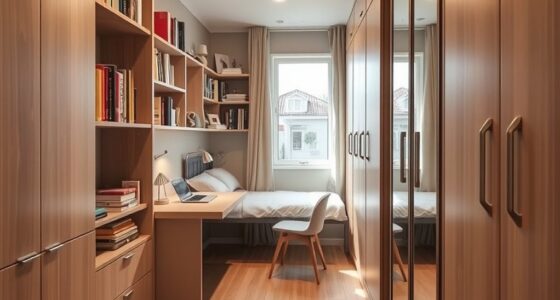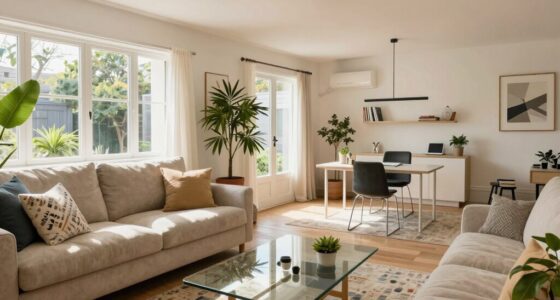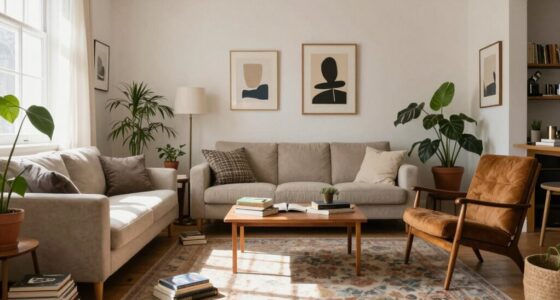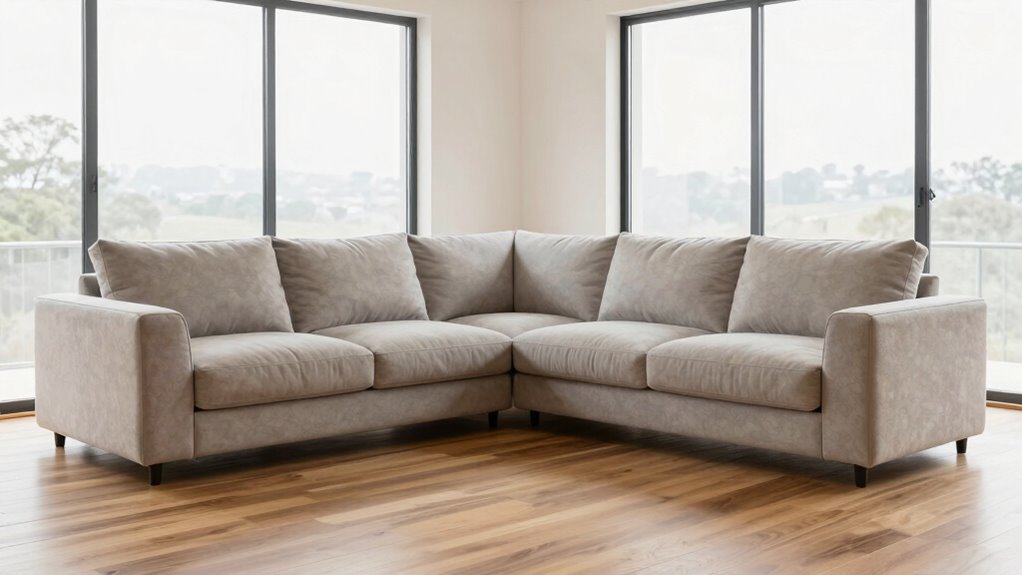

To arrange a modular sofa without blocking walkways, start by measuring your space carefully, leaving at least 24-30 inches of clearance for easy movement. Use painter’s tape to outline potential layouts, ensuring furniture doesn’t obstruct doors or main pathways. Position sections to promote natural flow, avoiding tight angles and overcrowding. Balance style with safety by keeping pathways open and functional. Keep exploring further tips to perfect your living room layout effortlessly.
Key Takeaways
- Measure room dimensions and identify key pathways, aiming for 24-30 inch wide walkways.
- Use painter’s tape to outline potential sofa arrangements, ensuring clear traffic flow.
- Position sectional components to avoid blocking entrances, windows, and main walkways.
- Balance furniture placement with visual cues like rugs and accents to define zones without clutter.
- Adjust layout based on room shape and size, maintaining open pathways and easy movement.

MONVANE 141" U-Shaped Modular Sectional Sofa, Green
- Multiple Packages for Delivery: Delivered in 3 separate boxes
- Removable Armrests: Adjustable for versatile configurations
- Convertible Sleeper Sofa: Transforms into a bed for extra sleeping space
As an affiliate, we earn on qualifying purchases.
As an affiliate, we earn on qualifying purchases.
How to Arrange Your Sectional Sofa for a Functional Living Room

Arranging your sectional sofa for a functional living room starts with understanding the space and how you use it. Consider your decorating accents to create visual harmony. Choose a color scheme that complements your walls and accessories, making the room feel cohesive. Position the sectional to maximize seating without crowding walkways, ensuring easy movement around the space. Experiment with different orientations—L-shape, U-shape, or modular setups—to suit your lifestyle. Incorporate throw pillows and rugs in coordinating colors to enhance the look. Keep the layout flexible so you can adapt it for entertaining or everyday use. By focusing on decorating accents and color coordination, your sectional will blend seamlessly into a practical, inviting living area. Additionally, understanding space planning principles can help optimize your layout for both functionality and visual appeal. Considering zoning techniques can further help define specific areas within your living room for different activities.
How to Measure and Plan Your Space Before Arranging

Before arranging your sectional, you need to measure your space accurately to avoid surprises later. Visualizing different layout options helps you find the most functional and appealing arrangement. Taking these steps guarantees your furniture fits perfectly and enhances your living area. Considering ergonomic principles can also improve comfort and accessibility in your layout. Additionally, incorporating simple organization strategies ensures your space remains calm and clutter-free once arranged. Paying attention to projector placement and viewing angles can further optimize your setup for a comfortable and immersive experience. Understanding space utilization can help you make the most of your available room and prevent overcrowding. Using essential oils for space ambiance can also create a calming environment, making your living area more inviting and relaxing.
Measure Your Space Carefully
To guarantee your sectional layout fits perfectly, start by measuring your space accurately. Use a tape measure to note the length, width, and height of your available area, including doorways and pathways. Consider the decor style you want to achieve—whether modern, traditional, or eclectic—and ensure the measurements support that aesthetic. Pay attention to existing furniture, windows, and architectural features that could influence placement. Think about color coordination as well; choosing a size that complements your color palette helps create a cohesive look. Accurate measurements prevent surprises later and help you select a sectional that fits comfortably without blocking walkways. Taking the time to measure thoroughly makes planning easier and ensures your furniture enhances your space rather than cluttering it. Additionally, understanding sound healing science can inspire calming accents in your space that promote relaxation and well-being. Incorporating space planning principles can further optimize your layout for both functionality and style. Being aware of Free Floating concepts can also help you design a more open and flexible living area that adapts to your needs and encourages better space utilization. When planning your layout, consider furniture arrangement tips to maximize comfort and flow within your space.
Visualize Your Layout Options
Have you ever wondered how your new sectional will look in your space before bringing it home? Visualizing your layout options helps you see how different arrangements work with your existing decor accents and color schemes. Start by sketching your room’s dimensions and experimenting with placement on paper or digital tools. Consider the flow of traffic and ensure walkways stay clear. Visualize how your chosen sofa sections align with windows, doors, and focal points. Think about the overall aesthetic—will the colors complement your walls and decor accents? This planning step allows you to try various configurations without physical movement, saving time and effort. By imagining different setups, you can select the arrangement that maximizes space, highlights your decor, and maintains easy access throughout your room.
Why Proper Sectional Layout Matters for Your Living Room

A proper sectional layout is essential because it directly influences how comfortable and functional your living room feels. When your furniture is arranged thoughtfully, it highlights decorative accents like artwork or vases, making your space more inviting. Good layout also ensures ideal lighting placement, so you can enjoy cozy ambiance or bright task lighting without glare or shadows. An effective arrangement encourages conversation and easy movement, preventing cramped or cluttered areas. It also plays a crucial role in spatial flow, helping you create a seamless and harmonious environment. It helps you define zones for relaxing, entertaining, or working, making the room versatile. Additionally, furniture placement impacts overall spatial flow, helping you avoid blocking walkways and ensuring easy access throughout the room. Proper furniture arrangement can also optimize space utilization, making even smaller rooms feel more open and comfortable. Thoughtful placement considers visual balance to create an aesthetically pleasing and cohesive look. When you prioritize a balanced layout, your living room becomes a welcoming space that reflects your style while remaining practical and accessible for everyday use. Understanding furniture placement is key to creating a harmonious and functional living environment.
How to Choose the Right Sectional Size and Configuration
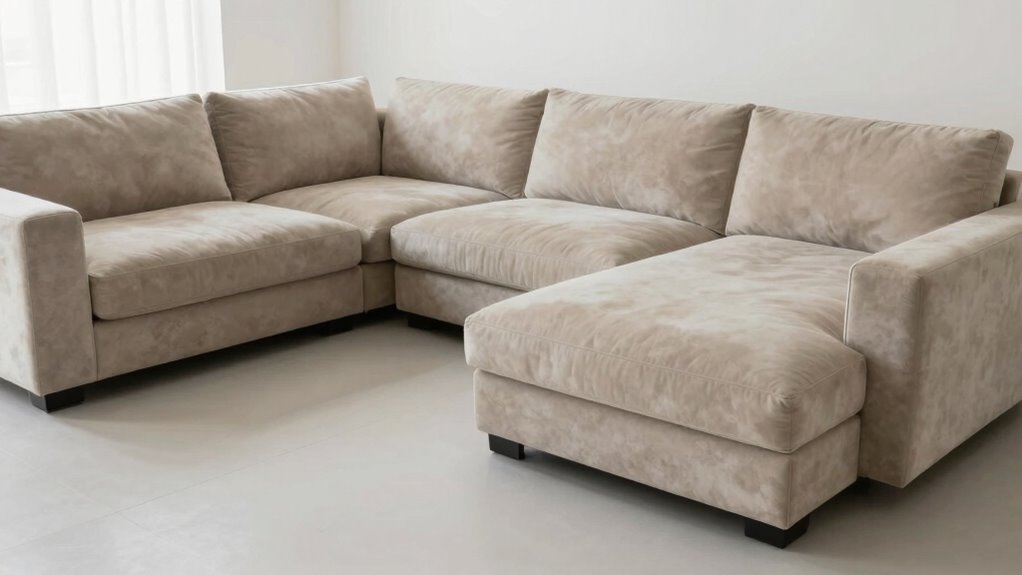
Start by measuring your space carefully to make certain your sectional fits comfortably without crowding. Then, choose sofa sections that match your needs, whether you want more seating or a cozy corner. Making these choices thoughtfully helps create a functional and inviting living room layout. Additionally, consider flow rate and walking paths to ensure your furniture arrangement maintains easy circulation throughout the room.
Measure Your Space Properly
To choose the right sectional size and configuration, you need to measure your space carefully before shopping. Start by noting the room’s dimensions, including doorways and windows, to ensure the sofa fits comfortably without blocking walkways. Consider your existing color schemes and lighting design, as these influence how the sectional will look and feel in the space. A larger sectional can create a cozy atmosphere, but it may overwhelm a small room. Conversely, a compact piece might leave the space feeling sparse. Use painter’s tape to outline potential sofa sizes on the floor, visualizing how different configurations will work. Accurate measurements help you select a sectional that complements your room’s layout, enhances lighting, and maintains a balanced flow. Additionally, understanding space planning principles can help optimize your layout for both comfort and functionality. Being aware of traffic flow considerations ensures you won’t block key pathways or create awkward traffic patterns in your room. Incorporating furniture arrangement tips can further improve the overall harmony and accessibility of your space. For example, considering accessibility standards can help ensure your furniture choices are suitable for all users, enhancing safety and usability. Moreover, consulting halal standards for furniture materials can help ensure your choices align with your lifestyle preferences.
Match Sofa Sections to Needs
Choosing the right sectional size and configuration depends on how you intend to use your space and the number of people you want to accommodate. Consider your lifestyle—do you host gatherings or prefer cozy evenings? Match sofa sections to your needs by selecting the appropriate size and layout. Pay attention to fabric options to guarantee durability and comfort, especially if you have kids or pets. Also, think about color coordination to complement your existing decor. For example:
- Opt for neutral tones for versatile style or bold colors for a statement piece
- Choose sectional configurations that maximize seating without blocking walkways
- Select fabric options that balance aesthetics and ease of maintenance
- Incorporate personalized design insights to ensure your sectional truly reflects your lifestyle and preferences
Matching your sectional to your needs creates a functional, stylish space that feels just right.
How to Position Your Sectional for Easy Movement and Access
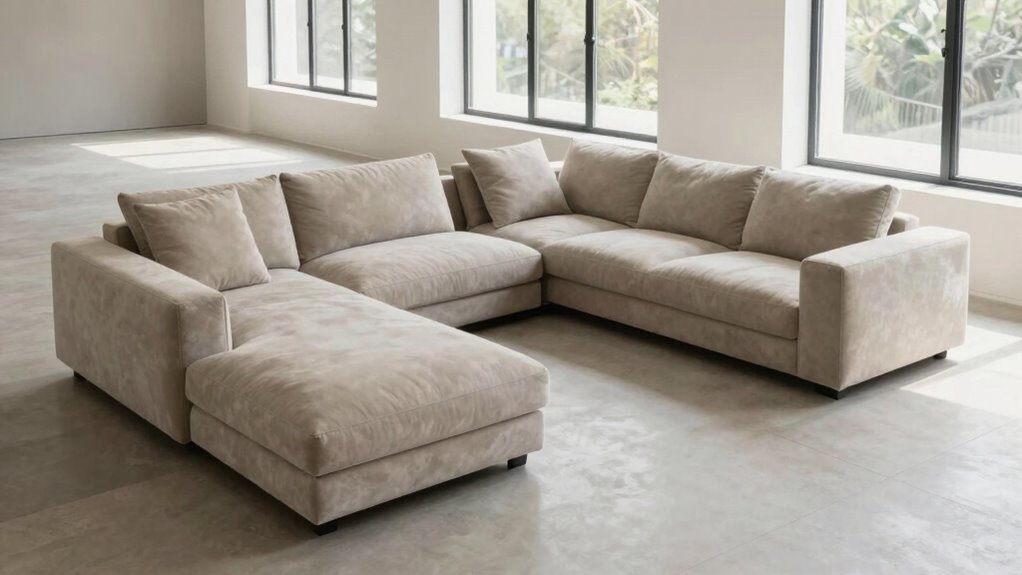
Positioning your sectional thoughtfully guarantees it doesn’t obstruct pathways or create a cramped space. Start by ensuring there’s enough room for easy movement around the furniture. Place decorative accents like side tables or plants nearby to define zones without blocking walkways. Consider light placement too; position lamps or lighting fixtures so they don’t interfere with traffic flow but still illuminate key areas. Keep the main aisles clear, especially between entrances and high-traffic zones. Angle the sofa to encourage a natural flow, avoiding tight corners that hinder movement. Remember, functional layout enhances comfort and accessibility, so prioritize open space and strategic placement of accents and lighting. This way, your sectional remains inviting while maintaining practical ease of access throughout the room.
How Visual Cues and Room Zones Help Optimize Your Layout

Using visual cues and defining room zones can particularly enhance your sectional layout by guiding movement and creating a cohesive space. Color coordination helps establish distinct areas, making zones intuitive and inviting. Decorative accents, like rugs or artwork, reinforce these zones and add personality. To optimize your layout, consider:
- Using contrasting or complementary colors to delineate seating, dining, or conversation areas
- Placing decorative accents strategically to highlight specific zones and foster flow
- Arranging lighting to accentuate visual cues and define functional spaces
These techniques help prevent clutter and ensure each zone feels intentional. Incorporating color coordination and decorative accents creates visual harmony, making your space feel organized and welcoming. Properly defined room zones streamline movement and elevate your overall layout.
What Common Layout Mistakes to Avoid With Your Sectional

One of the most common mistakes in sectional layout is overcrowding the space, which can make the room feel cramped and hinder movement. To avoid this, don’t overuse decorating accessories; too many can clutter the area and distract from the sectional’s design. Instead, choose a few key pieces that complement your sofa and enhance the room’s flow. Pay attention to color coordination—clashing or mismatched hues can interrupt the visual harmony and make the space feel chaotic. Keep your accessories simple and cohesive with your color scheme, ensuring they add to the style without overwhelming the layout. Remember, a well-balanced layout relies on open pathways and thoughtful choices, preventing your sectional from blocking walkways or creating a cluttered look.
How to Balance Style and Functionality in Your Living Room

Remember these key points:
- Use a consistent color scheme for a harmonious look
- Add accent accessories to enhance style without overloading
- Prioritize furniture that combines comfort and utility
Balancing style and function keeps your living room inviting and practical.
How to Adjust Your Sectional Layout for Different Room Shapes and Sizes
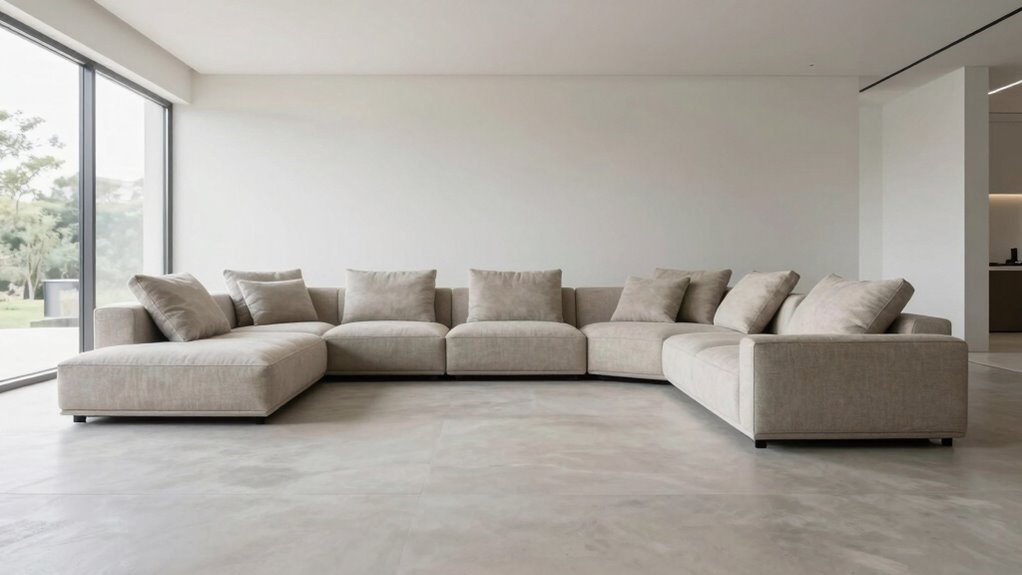
Adjusting your sectional layout to suit different room shapes and sizes guarantees your living space remains both functional and stylish. For small rooms, opt for a compact arrangement that keeps walkways clear, using decorative accessories to add personality without cluttering. In larger spaces, create zones by positioning the sectional to define different areas, ensuring the layout promotes easy movement. For irregularly shaped rooms, experiment with modular sections to fit corners or alcoves, maintaining good flow. Focus on color coordination to unify the space, making it feel cohesive regardless of room dimensions. Keep the arrangement flexible so you can easily swap or reposition sections as needed. This approach ensures your sofa setup works seamlessly with your room’s unique shape, enhancing both comfort and style.
Final Checklist: Ensuring Your Modular Sofa Setup Is Comfortable and Walkway-Friendly
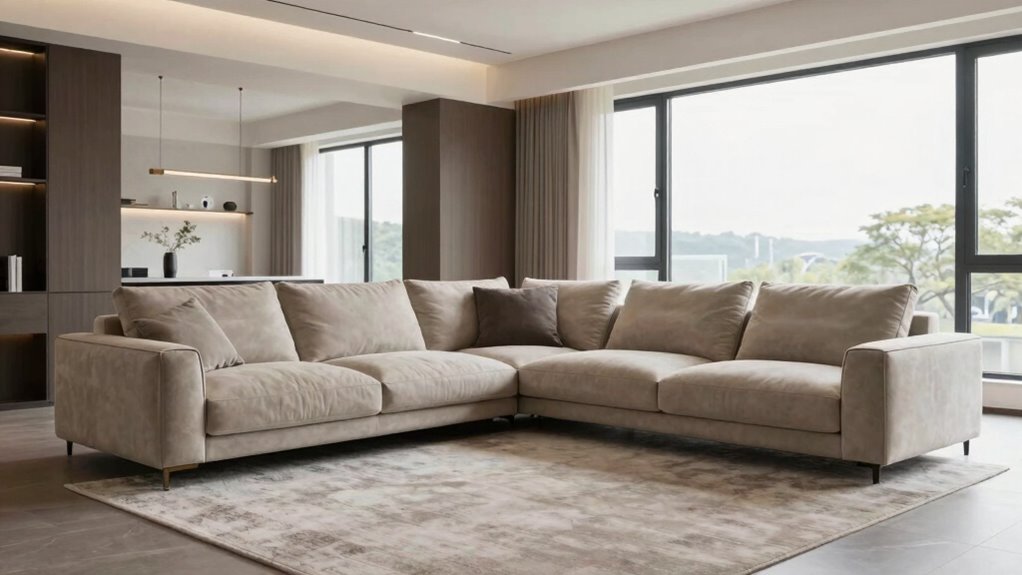
Before finalizing your sofa setup, make certain to measure clear pathways to avoid congestion. Check the sofa dimensions to ensure they fit comfortably within your space, and test the seating to confirm it’s cozy. These steps help create a room that’s both functional and inviting.
Measure Clear Pathways
Have you measured the pathways around your sofa to make certain easy movement? Ensuring clear routes prevents congestion and enhances comfort. Use a tape measure to check that walkways are at least 24-30 inches wide, allowing smooth traffic flow. Remember, color coordination and decorative accessories shouldn’t block these paths; they should complement the space without clutter. To stay organized:
- Keep pathways free of bulky furniture or large decor items
- Arrange decorative accessories where they won’t obstruct movement
- Use contrasting colors to highlight clear routes and avoid visual clutter
Taking these steps helps maintain a functional layout that’s both aesthetically pleasing and practical. Proper measurement guarantees your modular sofa setup is inviting, comfortable, and walkways remain unobstructed for everyday activities.
Check Sofa Dimensions
Measuring your sofa dimensions guarantees it fits comfortably within your space and doesn’t block walkways. Start by noting the length, width, and height of each modular piece, considering the sofa upholstery to ensure it complements your room’s proportions. Check the depth of the cushions and their placement, since bulky cushions can reduce usable space and hinder easy movement. Confirm the overall size aligns with your planned layout, leaving enough space for walkways. Remember to account for any armrests or additional features that might extend the sofa’s footprint. Accurate measurements help prevent overcrowding and ensure a seamless flow. Properly sized furniture allows you to enjoy a comfortable seating area without sacrificing accessibility or disrupting your room’s functionality.
Test Seating Comfort
Ensuring your modular sofa is comfortable and walkway-friendly involves testing its seating and overall arrangement in your space. Sit on each section to evaluate cushion firmness; it should be supportive without being too hard or too soft. Check the fabric durability by gently pressing or rubbing the surface—durable fabric resists wear and stains. Make sure the seats provide enough space for comfort without crowding or restricting movement.
- Test multiple cushions for firmness consistency
- Ensure fabric feels sturdy yet soft to the touch
- Sit in different positions to verify comfort and support
Frequently Asked Questions
What Are the Best Materials for Modular Sofas to Maximize Flexibility?
You should choose modular sofas with flexible fabric options like microfiber, linen, or performance fabrics that resist stains and wear. Opt for frame materials such as hardwood or metal, which provide durability and support. These choices allow you to reconfigure your sofa easily without sacrificing style or comfort. By selecting versatile fabrics and sturdy frames, you maximize flexibility, making it simple to adapt your seating layout to your needs.
How Can Lighting Influence the Perception of Your Sectional Layout?
Lighting markedly influences how your sectional layout feels. Ambient lighting creates a warm, inviting atmosphere, making your space look more open and cohesive. Carefully placed focal points, like a statement lamp or artwork, draw attention and enhance the overall design. You can highlight your modular sofa’s features and shape, making the layout more dynamic. Proper lighting also helps prevent blocking walkways, ensuring your space remains functional and stylish.
Are There Specific Color Schemes That Enhance Walkway Clarity?
Yes, using color contrast and maintaining visual harmony can enhance walkway clarity. You should choose a color scheme with bold contrasts between your sofa and flooring to make pathways stand out. Stick to a cohesive palette that complements your room’s overall look, ensuring the space feels balanced. This approach helps distinguish walkways from seating areas, making navigation easier while creating a visually appealing, harmonious environment.
How Do Room Acoustics Affect Sectional Placement Decisions?
Room acoustics markedly influence your sectional placement. You should position your sofa to optimize sound absorption, reducing echo and creating a comfortable environment. Placing the sectional away from reflective surfaces like bare walls or windows helps control echo and enhances sound clarity. Using soft furnishings and textiles can further improve sound absorption. By considering these factors, you guarantee better acoustics and a more inviting, functional space for conversation and relaxing.
What Accessories Can Help Define Zones Around Your Sectional?
Imagine you want to create cozy zones around your sectional; decorative accents like stylish rugs or statement lighting work wonders. For example, a bold rug under your seating defines the area, while storage solutions like ottomans with hidden compartments add both function and style. These accessories help visually separate spaces, making your living area more organized and inviting without disrupting flow.
Conclusion
By carefully planning your sectional’s layout, you’ll create a welcoming space where everyone can move freely, just like a well-designed puzzle fitting perfectly together. Picture yourself walking smoothly around your sofa, with cozy conversations and effortless traffic flow. When you balance style and function, your living room becomes a harmonious haven—where every piece, like a piece of art, feels just right. With thoughtful placement, your space invites both comfort and ease.