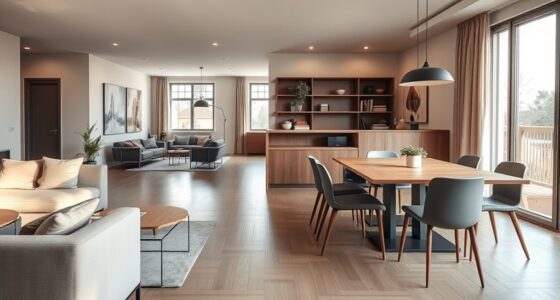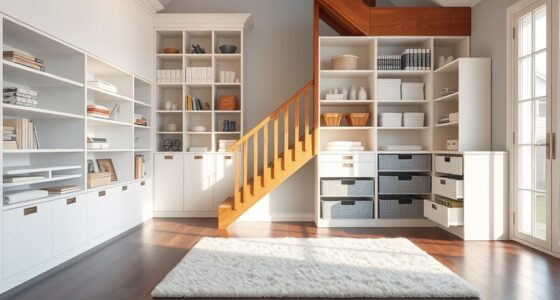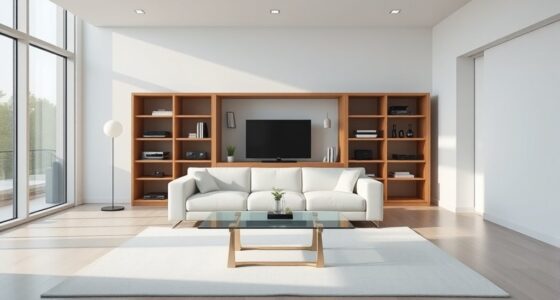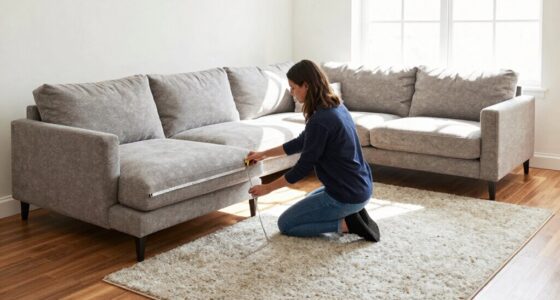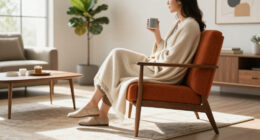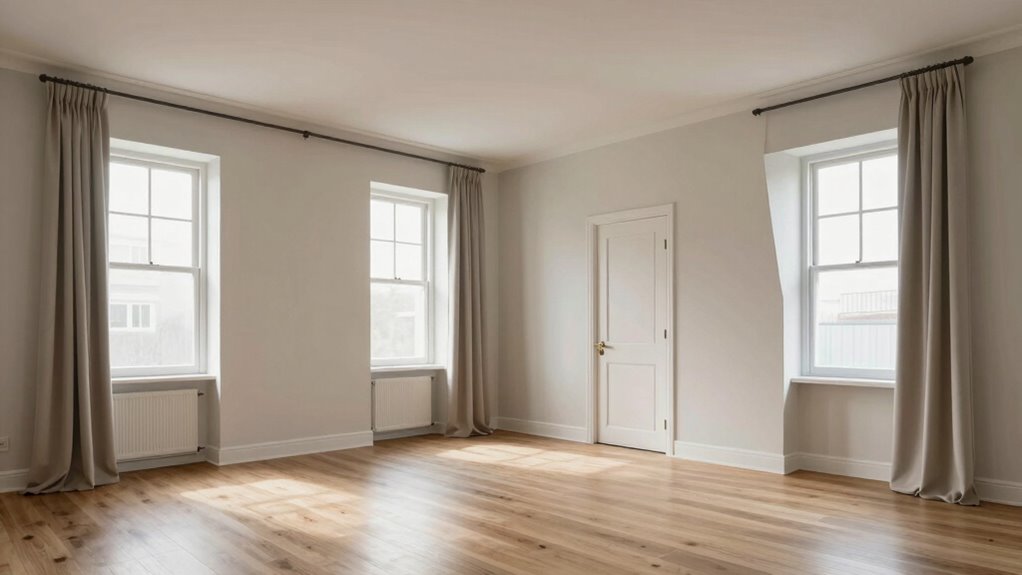
To fix room layouts with awkward doors and windows, start by using furniture as visual buffers like tall plants or bookshelves near doorways to soften disruptions. Swapping swinging doors for sliding or pocket doors can free up space, while placing furniture along walls or at angles prevents obstructions. Maximize natural light with curtains, mirrors, and strategic furniture grouping. Highlight key features with lighting and create balance to improve flow. Keep exploring to discover even more effective room transformation tips.

Get furniture and decor delivered free — and shop member deals
- Fast, free delivery on millions of items
- Access to Prime Big Deal Days deals on October 6–7
- Prime Video, Amazon Music and more included
Key Takeaways
- Use furniture like bookshelves or plants as visual buffers near doors to reduce clutter and improve flow.
- Replace swinging doors with sliding or pocket doors to maximize usable space and enhance accessibility.
- Position furniture away from doorways, along walls or at angles, to keep pathways clear and prevent obstructions.
- Incorporate mirrors and strategic lighting to reflect natural light and visually expand the room.
- Group accessories and furniture to divert attention from awkward features, creating a balanced and harmonious look.
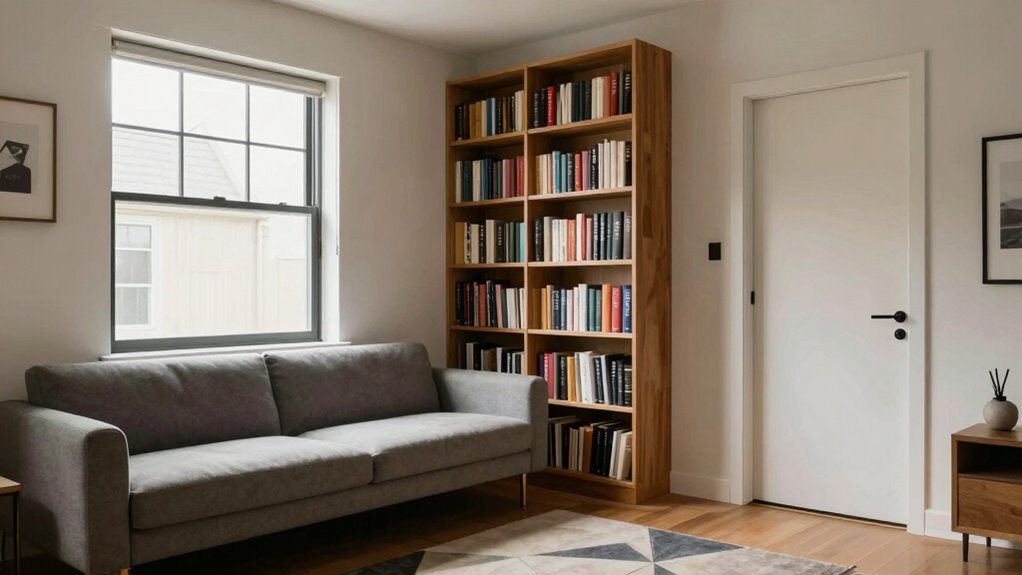
Dealing with doors that cut across a room or create awkward angles, think about how you can use furniture to redirect or soften the effect. For instance, placing a bookshelf or a tall plant near a door can act as a visual buffer, making the entrance less disruptive. If a door swings into a problematic area, consider swapping it for a sliding or pocket door, freeing up space for better furniture arrangement. This simple change can dramatically improve flow and usability. Additionally, avoiding bulky furniture directly in front of doors is essential. Instead, position pieces at an angle or along walls that don’t interfere with door operation, ensuring easy access without sacrificing style. Incorporating optimizing furniture placement can further enhance the room’s functionality and aesthetic appeal. In rooms with unusual window shapes or placements, consider custom or modular furniture that fits neatly into the available space. Corner sofas or L-shaped arrangements can work well around irregular window areas, creating cozy nooks while maintaining a clear pathway through the room. Use curtains or blinds that complement the room’s design, but also consider how they can be hung to emphasize the natural light rather than block it. By carefully planning your furniture placement around these features, you can create a room that feels balanced and harmonious despite its quirks. Adding strategic lighting can also help draw attention away from awkward features and highlight the room’s best aspects. Finally, remember that visual tricks can help make awkward spaces seem intentional rather than problematic. Mirrors placed opposite windows can amplify natural light and give the illusion of more space. Strategically grouping furniture and accessories can also draw attention away from challenging features, making the room feel cohesive and well-thought-out. With a thoughtful approach to natural light and furniture placement, you’ll turn even the most awkward doors and windows into opportunities for creative and efficient design.
As an affiliate, we earn on qualifying purchases.
Frequently Asked Questions
How Can I Optimize Natural Light With Awkward Window Placements?
To optimize natural light with awkward window placements, you should experiment with curtain arrangements and window treatments. Use light, airy curtains that can be easily moved to redirect sunlight where needed. Consider installing adjustable blinds or sheer panels to control light flow without blocking it entirely. Strategic placement of mirrors can also reflect light into darker corners. These adjustments help maximize brightness, even with unconventional window positions.
Are There Specific Furniture Styles That Work Best With Unusual Door Layouts?
When dealing with unusual door layouts, a modern or minimalist furniture style often works best because it emphasizes clean lines and flexibility. For example, a sleek sectional sofa fits well around awkward door placements, maintaining door compatibility and flow. Use neutral color coordination to unify the space, and add decorative accents like statement lamps or artwork to divert attention from the irregular layout, creating a harmonious and functional room.
How Can I Create a Sense of Balance in a Room With Odd Door Positions?
To create balance with odd door positions, focus on door alignment and wall symmetry. You can visually balance the space by arranging furniture symmetrically around the room’s center, even if the doors aren’t perfectly aligned. Use rugs, artwork, or lighting to draw attention away from irregularities. Incorporate color or decorative elements on walls to create a harmonious look, making the room feel more cohesive despite the unusual door placements.
What Are Quick Fixes for Uneven Wall Spaces Caused by Window Placement?
To fix uneven wall spaces caused by window placement, you can add decorative wall art to fill gaps or create focal points. Use accent wall techniques, like painting or wallpaper, to balance the room visually and distract from irregularities. Additionally, consider installing floating shelves or tall plants near windows to add height and symmetry, making the space feel more cohesive and intentional.
Can Mirror Placement Improve Room Flow With Unusual Door and Window Locations?
Yes, carefully placing mirrors can considerably improve room flow. Mirrored surfaces reflect light and create the illusion of space, helping to make awkward door and window locations less noticeable. Position mirrors strategically to direct attention away from problem areas and encourage a smooth, seamless flow. By balancing bold, bright, and brilliant placements, you can transform tricky layouts into inviting, open environments that feel more cohesive and comfortable.
Conclusion
By applying these layout fixes, you can transform awkwardly shaped rooms into functional, inviting spaces. Don’t let tricky doors and windows hold you back from creating the perfect room. With a little creativity and strategic planning, you’ll be surprised at what you can achieve. Are you ready to turn your challenging room into a beautifully designed sanctuary? Remember, every problem has a solution—sometimes, all it takes is a fresh perspective.
Fall Picks
fall essentials
As an affiliate, we earn on qualifying purchases.