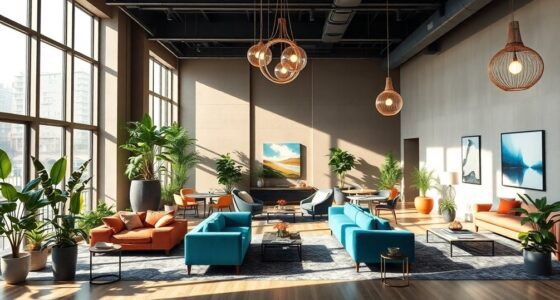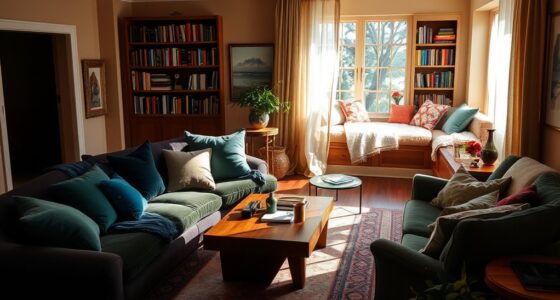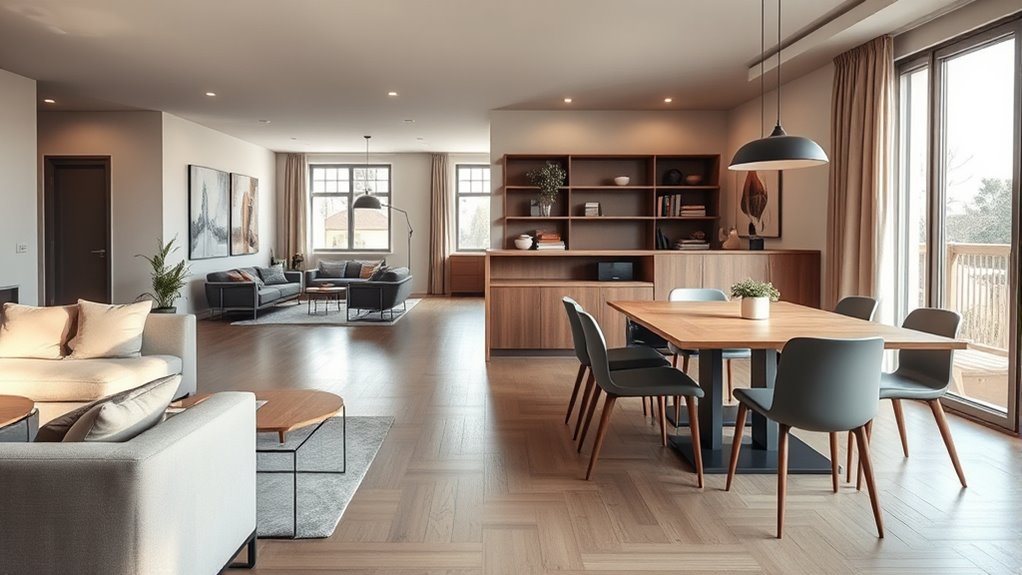
To zone your multi-use living area like a pro, start by visualizing specific functions for each space, using focal points and rugs to visually separate zones. Arrange furniture to create natural boundaries and avoid blocking pathways, integrating multi-functional pieces for flexibility. Use a consistent color scheme with subtle variations to unify the space while adding depth. Enhance visual separation with targeted lighting and mirrors. Keep the flow smooth and harmonious—continue exploring these tips for a perfectly divided living area.
Key Takeaways
- Identify specific functions for each zone and plan furniture placement accordingly.
- Use focal points and rugs to create visual separation while maintaining open flow.
- Incorporate varied lighting and mirrors to enhance functionality and define different areas.
- Choose a cohesive color scheme with subtle variations to distinguish zones harmoniously.
- Utilize multi-functional furniture and strategic arrangement to maximize space and comfort.
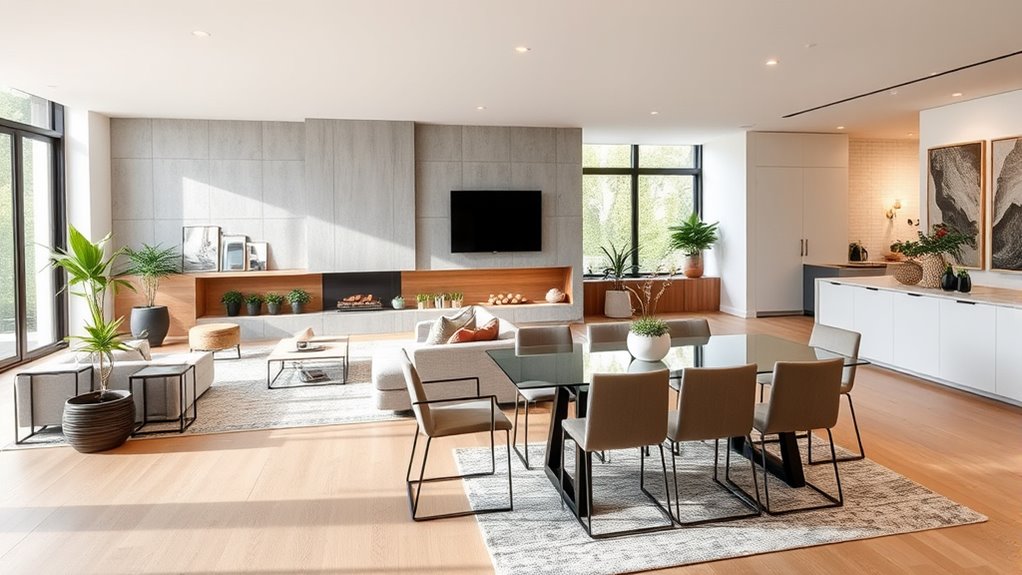
Creating a functional multi-use living area can be challenging, but with the right layout ideas, you can seamlessly blend different zones into one cohesive space. The key is to focus on furniture arrangement and color schemes that define each area without making the space feel cluttered or disconnected. Start by visualizing how you want to use each zone—whether it’s relaxing, working, dining, or entertaining—and then plan your furniture placement accordingly. Position your sofa and chairs to create a natural boundary for the living area, perhaps facing a focal point like a fireplace or TV. Use rugs to anchor each zone, giving visual cues that separate one space from another while maintaining an open flow.
Effective multi-zone living relies on thoughtful furniture placement and color schemes to define spaces seamlessly.
When arranging furniture, think about the flow of movement. Avoid blocking pathways with oversized pieces and ensure each zone has enough space for easy navigation. For instance, a compact desk can be tucked into a corner with a bookshelf or a tall plant acting as a subtle divider. Multi-functional furniture pieces, like sofas with storage or fold-out tables, help maximize space and keep clutter at bay. These choices allow you to customize each zone for its specific purpose without sacrificing style or comfort.
Color schemes also play an essential role in zone separation. Opt for a unified palette across the entire living area to create harmony, but introduce subtle variations in shades or accents to distinguish each zone. For example, use a calming blue and neutral tones in the lounging area and a brighter, energizing hue like yellow or orange in the workspace or dining spot. This approach maintains visual consistency while subtly defining boundaries. Incorporate different textures and patterns through cushions, curtains, or accessories to add depth and interest, further reinforcing each zone’s identity.
Lighting is another crucial element. Use targeted lighting to highlight each area—think task lighting over the desk, pendant lights over the dining table, or ambient lamps in the lounge. Lighting not only enhances functionality but also visually separates zones, guiding your eye naturally from one space to another. Mirrors can also amplify the sense of space and reflect light, making the entire area feel larger and more unified. Additionally, choosing projectors with high contrast ratios can significantly improve the visual quality, especially in multi-use spaces where different activities require different lighting conditions.
In the end, successfully dividing a multi-use living area hinges on thoughtful furniture arrangement and cohesive color schemes. With a strategic layout, you’ll create distinct zones that serve your needs while maintaining a harmonious, inviting atmosphere. The goal is to make each space functional and comfortable without sacrificing the overall flow, so you can enjoy a versatile living area that feels both organized and stylish.
Frequently Asked Questions
How Can I Maximize Natural Light Across Divided Zones?
To maximize natural light across divided zones, you should choose light-colored, sheer window treatments that allow sunlight to flow freely. Incorporate light reflecting surfaces like mirrors and glossy finishes to bounce light around the space. Keep furniture low and avoid heavy drapes that block light. These strategies help distribute natural brightness evenly, making each zone feel open and inviting without sacrificing privacy or style.
What Are Budget-Friendly Ways to Create Distinct Areas?
To create distinct areas on a budget, you can use affordable dividers like open shelving or curtains to define spaces without breaking the bank. DIY partitions, such as repurposed furniture or hanging fabric, also work well. These options help you visually separate zones while maintaining flexibility and style. You’ll enjoy a functional, personalized layout without overspending, making your multi-use living area both practical and inviting.
How Do I Ensure Privacy Without Sacrificing Openness?
To guarantee privacy without sacrificing openness, you can incorporate privacy screens and sound barriers strategically. Use lightweight screens or folding partitions to create visual separation when needed, and add soft furnishings or bookshelves as sound barriers to reduce noise transfer. This approach maintains an airy feel while offering privacy, allowing you to enjoy both communal and private spaces comfortably. Remember, smart placement makes all the difference.
Which Materials Are Best for Temporary or Flexible Zones?
When creating temporary or flexible zones, you should consider using removable partitions or lightweight dividers. These materials are easy to install and remove, allowing you to reconfigure your space effortlessly. Removable partitions made of fabric, plastic, or thin wood panels work well for quick adjustments. Lightweight dividers, such as folding screens or tension rods with fabric, provide privacy without sacrificing openness, making your multi-use area adaptable and functional.
How Can I Incorporate Storage Into Zone Designs Effectively?
You can incorporate storage into your zone designs by using multifunction furniture, like ottomans with hidden compartments or beds with built-in drawers, to maximize space. Hidden storage solutions, such as under-stair drawers or wall-mounted shelves, help keep clutter out of sight while maintaining a clean look. These options make your zones more functional and flexible, seamlessly blending storage with your layout without sacrificing style or space.
Conclusion
Remember, a well-divided space makes a house a home. By thoughtfully zoning your multi-use living area, you create distinct zones that suit your lifestyle, all while maintaining a cohesive look. Whether you choose furniture, rugs, or lighting, these ideas help you maximize your space’s potential. Keep in mind, “A place for everything, and everything in its place,” and you’ll enjoy a functional, stylish home that works as hard as you do.