
TL;DR

Get furniture and decor delivered free with Prime
- Fast, free delivery on millions of items
- Prime Video, Amazon Music and more included
- Member-only deals all year
House Beautiful reports that interior designers recommend looking for 10 kinds of antiques at estate sales, including glassware, candlesticks, pottery, distinctive furniture, rugs, artwork, old books and intaglios. The recommendations reflect designers’ preferences and experience; they do not establish that these items are always inexpensive, authentic or valuable.
House Beautiful has published a list of 10 antiques interior designers say they look for at estate sales, recommending items ranging from vintage glassware and copper kitchenware to rugs, artwork and old books. The report offers shoppers a guide to what designers value for character and display, but it does not verify that every item is antique, a bargain or a sound investment.
The list draws on comments from Krystal Reinhard, founder and principal designer of Old Soul Design Studio; Valerie Helgeson, founder and lead designer at Design Directions; and Paige Loperfido, founder and principal designer of Decor & More Design Studio. Their recommendations reflect how they source and use objects in interiors, rather than a ranked assessment of market value.
The 10 categories are vintage glassware, candlestick holders, copper kitchenware, pottery, culturally rich pieces, distinctive furniture, vintage rugs, artwork, old books and intaglios. Loperfido includes hand-painted porcelain, midcentury ceramics and antique glassware such as ice buckets and goblets. Reinhard favors candlesticks for their height and warmth, pottery for its texture, and old books for the personality they bring to shelves and tables.
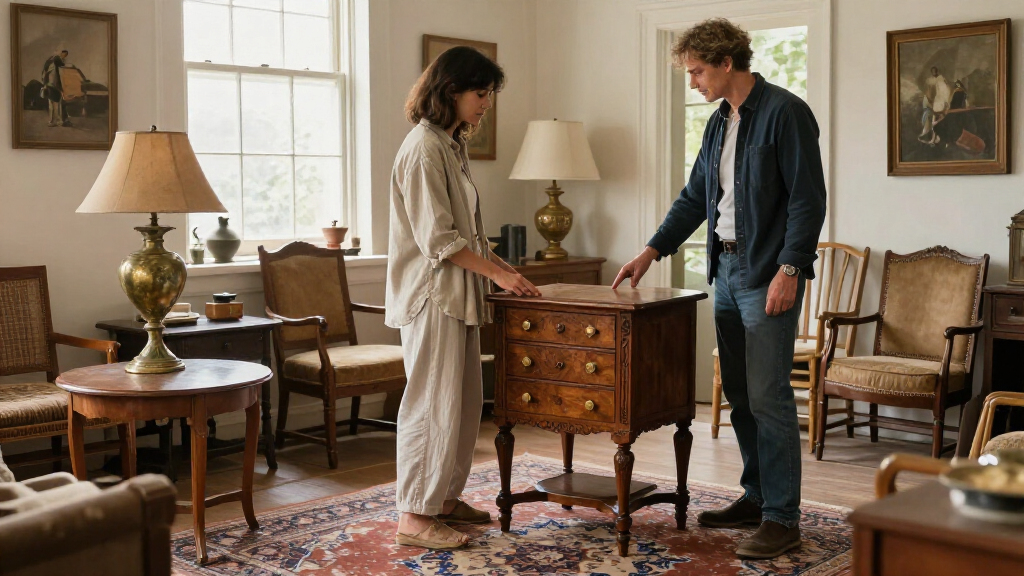
Helgeson says she watches for furniture with a strong silhouette and often seeks copper kitchenware. Reinhard recommends vintage rugs for color and pattern and says estate sales can offer original art at less than gallery prices. Loperfido points to objects such as Chinese antiques, ginger jars and majolica fish candlesticks, as well as intaglios—small, finely detailed etched artworks. The article does not provide prices, authentication records or examples of specific sales.
What Designers Value in These Finds
The recommendations give estate-sale shoppers a practical way to focus attention in homes filled with varied belongings. Instead of looking only for familiar furniture or branded collectibles, buyers might notice materials, craftsmanship, shape and patina—qualities the designers say help objects contribute to a room.
Many of the suggested finds are useful as well as decorative. Glassware and copper cookware can be put to use, while pottery, books, artwork and candlesticks can be displayed in different rooms. The designers also describe mixing older objects with newer furnishings, which may help shoppers consider pieces for their existing homes rather than treating them solely as collectibles. These are design judgments, not guarantees about resale value or condition.
Products Worth Considering

Levoit Vital Pet Pro Smart Air Purifier for Pets, White

Ring Alarm Pro 8-Piece Kit with Built-In eero Wi-Fi 6 Router

Dyson Ball Animal 3 Upright Vacuum
As an affiliate, we earn on qualifying purchases.
Why Designers Shop Estate Sales
The source describes estate sales as opportunities to browse belongings in the homes where they were used and collected. It says that items may not have passed through a dealer and may cost less than similar pieces in antique shops. That possibility is not a promise: the report gives no price comparisons and does not say that all estate-sale merchandise is cheaper.
Reinhard says seeing an object in its original setting helps her judge its quality, scale and patina. Helgeson emphasizes the quick pace of sales, where shoppers may need to make decisions on the spot. The article presents these conditions as part of the appeal for designers, while leaving buyers responsible for inspecting items and deciding what they are worth.
“It makes it easier to spot quality, scale, and patina.”
— Krystal Reinhard, founder and principal designer of Old Soul Design Studio
Prices, Condition and Authenticity
The report does not identify particular estate sales, give prices or provide documentation that would authenticate any example. Its suggestion that some items may cost less than comparable antiques-shop finds is a possibility, not a measured comparison. It also does not assess condition, restoration needs, provenance, market demand or resale prospects.
Those details depend on each object and sale. A shopper considering a purchase would need to inspect the item, ask what is known about its history and compare prices independently. The article’s list is a set of designers’ sourcing preferences, not an appraisal guide or a guarantee that a listed category contains valuable antiques.
How Shoppers Can Use the List
The recommendations do not announce a product launch or a scheduled follow-up; they serve as a guide for future estate-sale visits. Shoppers can use the 10 categories as a starting checklist, while keeping an open mind about objects that are not on it. As Helgeson’s comments suggest, designers sometimes find pieces they had not planned to seek.
Before buying, readers can assess an object’s condition, dimensions and fit for their home, and check any claims about age or origin. Prices and authenticity need to be evaluated item by item; the source does not provide a later event or market update against which to measure the recommendations.
Key Questions
Which 10 antiques do the designers recommend?
The categories are vintage glassware, candlestick holders, copper kitchenware, pottery, culturally rich pieces, distinctive furniture, vintage rugs, artwork, old books and intaglios.
Does the report say estate-sale antiques are always cheaper?
No. It says some items may cost less than similar pieces at antique shops because they may not have passed through a dealer. It provides no price data and does not claim that every estate-sale item is cheaper.
What are intaglios?
Loperfido describes intaglios as finely detailed etched artworks that can add historical texture and visual interest to a room.
Does the list confirm that the items are authentic antiques?
No. The article shares designers’ preferred categories but does not authenticate specific objects. Buyers would need to assess each item’s age, condition and history.
Source: housebeautiful.com