
A 15-minute daily reset helps you keep your home tidy and manageable with minimal effort. By focusing on quick decluttering, organizing high-traffic areas, and using simple tools like baskets or labels, you prevent clutter from building up. Establishing a set time each day makes this habit easy and effective, leading to less stress and a more welcoming space. Keep going, and you’ll discover how small daily efforts can lead to lasting results.
Key Takeaways
- A 15-minute daily reset prevents clutter from accumulating and maintains a manageable, stress-free environment.
- Focused, room-specific routines quickly address high-traffic areas for maximum impact.
- Consistent scheduling and involving family members make tidying a sustainable habit.
- Using designated spaces and smart storage solutions speeds up the tidying process.
- Regular resets promote mental clarity, reduce stress, and boost motivation and productivity.
Why a 15-Minute Reset Can Transform Your Home

Even with busy schedules, taking just 15 minutes to reset your home can make a noticeable difference. When you focus on clutter hotspots, you prevent messes from spreading and becoming overwhelming. A quick reset helps you stay ahead of clutter, instead of letting it pile up. Establishing a simple cleaning schedule makes these short bursts of tidying effective, turning chaos into order effortlessly. This routine keeps your space manageable and reduces stress, giving you a sense of accomplishment every day. Incorporating routine maintenance like regular decluttering can also prolong the benefits of your reset efforts. Developing landscaping habits that include outdoor area upkeep can extend the sense of order beyond the indoor space. Setting a consistent tidying routine helps embed these habits into your daily life, making it easier to sustain long-term organization. Additionally, practicing tool organization ensures all your cleaning supplies and tools are accessible when needed, maximizing your efficiency during these quick resets. Integrating connected home technology such as smart storage solutions or automated reminders can further streamline your efforts. In just 15 minutes, you can reclaim your space and maintain a tidy home without feeling overwhelmed or exhausted.
How to Prepare Your Space for a Quick Daily Tidy
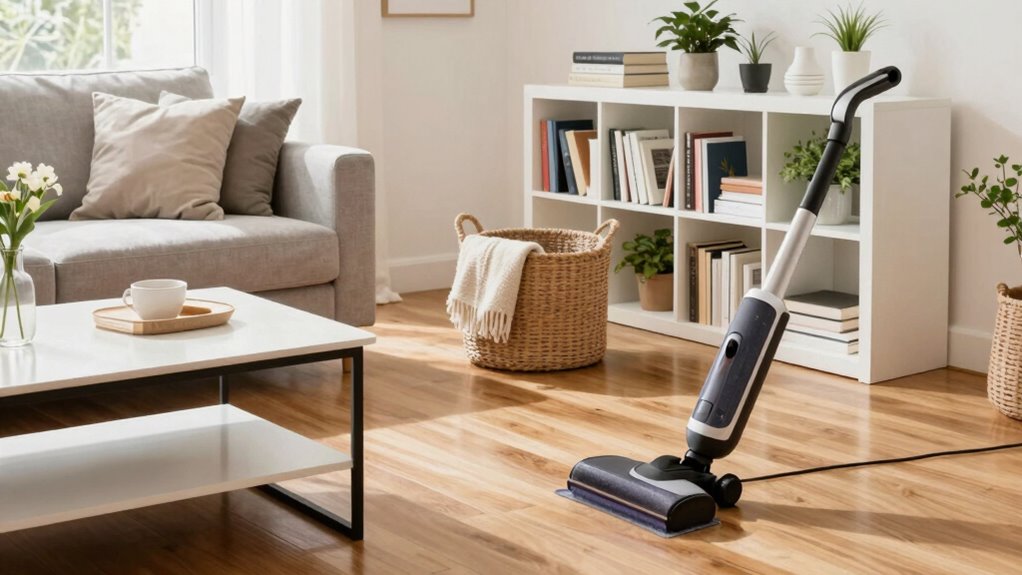
To make your quick daily tidy more effective, start by creating a designated spot for frequently used items. Use smart storage solutions that keep essentials accessible and organized. Implement decluttering techniques to remove items you no longer need or use regularly, freeing up space and reducing visual clutter. Clear surfaces and keep daily items like keys, mail, and gadgets in specific containers or baskets. Label storage areas to make tidying faster and ensure everything has a home. Regularly reassess your space, discarding or donating items that no longer serve a purpose. Incorporating European cloud innovation can also inspire you to adopt organized, energy-efficient storage solutions that are both sustainable and secure. Considering pinball machine weight and its implications can help in planning safe and effective storage for larger items. Understanding tent camping locations and their layout can provide inspiration for organizing and optimizing your space for easy access and minimal clutter. Additionally, adopting modular storage systems allows for flexible organization tailored to your specific needs. This preparation minimizes the effort needed during your daily reset, making it easier to maintain a tidy home with just 15 minutes a day. A well-organized space sets the foundation for an efficient, stress-free tidy by utilizing electric bikes for quick errands and transportation.
How to Do Your 15-Minute Tidy: A Step-by-Step Guide

When you start your 15-minute tidy, set a timer to stay focused and motivated. Begin by quickly scanning your space, identifying clutter hotspots that need attention. Use effective storage solutions like baskets or bins to group similar items, making cleanup faster and more organized. Follow a consistent cleaning routine—pick up items, put them in their proper places, and wipe down surfaces as needed. Prioritize high-traffic areas and visible surfaces to make the biggest impact in less time. Keep your movements deliberate, avoiding getting sidetracked. Once the timer goes off, you’ve efficiently tidied up, maintaining a clutter-free environment with minimal effort. This simple step helps reinforce good habits and keeps your space consistently tidy. Paying attention to your clean-home systems, like proper storage and surface maintenance, can make your daily reset even more effective. Incorporating space‑heating basics, such as thoughtful placement of heaters, can contribute to a more comfortable and welcoming environment. Additionally, being aware of energy-efficient solutions can help you create a cozy space while saving on heating costs. Developing a routine that includes these home organization principles can further streamline your tidying efforts and promote long-term cleanliness. Regularly updating your home organization strategies ensures your space remains functional and stress-free over time.
Common Mistakes to Avoid When Tidying Up Daily

Many people make the mistake of tackling their tidying efforts without a clear plan, which can lead to frustration and wasted time. One common error is ignoring clutter hotspots—areas where mess tends to accumulate. Without focusing on these spots, clutter builds up quickly, making daily cleanups less effective. Additionally, overlooking items that don’t belong or are misplaced wastes time and creates new messes. Rushing through without a systematic approach often results in leaving clutter behind or missing small messes that add up. To avoid these mistakes, identify your clutter hotspots and prioritize their organization. Regularly check overlooked items, like misplaced keys or papers, so they don’t pile up. Incorporating sound healing science principles into your routine can help promote focus and mindfulness, making your tidying sessions more effective. Developing a home organization system tailored to your space can further enhance the effectiveness of your efforts. Understanding how mindfulness techniques can improve focus during chores can make a significant difference. A focused, intentional approach, supported by mindful awareness, makes your daily reset more efficient and keeps your home consistently tidy. Emphasizing scientific principles related to focus and mental clarity can deepen your understanding of how to maintain an organized environment.
How to Customize Your Reset for Different Rooms

Different rooms in your home have unique needs and clutter patterns, so customizing your reset makes the process more effective. For example, your kitchen benefits from room-specific organization, like designated spots for utensils and pantry items, while your bedroom may need a quick surface declutter and bedding refresh. Tailoring your cleaning routines ensures you focus on the most critical tasks for each space, preventing overwhelm. In the living room, you might prioritize tidying up throw pillows and magazines, whereas in the bathroom, quick sink and countertop wipes make a difference. Incorporating simple ventilation considerations can also help maintain fresh air and reduce clutter buildup. Additionally, understanding the clutter hotspots unique to each area allows you to target your efforts more effectively. Applying consistent organizational principles can further enhance your home’s tidiness and efficiency. Being mindful of storage solutions tailored to each room can optimize space and keep clutter at bay. This personalized method keeps your entire home consistently clutter-free and inviting.
Tips to Make the 15-Minute Tidy a Lasting Habit

To turn your 15-minute tidy into a lasting habit, start by setting consistent scheduling techniques that fit your routine. Involving family members can make the task feel less like a chore and more like teamwork. When everyone commits, maintaining your tidy becomes easier and more natural over time.
Consistent Scheduling Techniques
Establishing a consistent schedule is key to turning the 15-minute tidy into a lasting habit. By using time blocking, you set aside a specific moment each day dedicated to tidying. This creates routine consistency, making it easier to stick with the habit over time. Pick a time that works best for your daily routine—whether morning, lunch, or evening—and treat it as an unbreakable appointment. When you prioritize this daily block, it becomes automatic, and you won’t have to think twice about fitting it in. Over time, this consistency reinforces the habit, turning a simple 15-minute task into a natural part of your day. The regular rhythm helps keep your home consistently tidy and stress-free.
Involving Family Members
Have you considered how involving family members can make your 15-minute tidy stick? When you engage everyone in shared responsibilities, cleaning becomes a team effort rather than a chore. Family involvement fosters a sense of ownership and accountability, making tidying up a routine everyone expects. To keep this habit lasting, assign specific tasks suited to each person’s abilities, ensuring no one feels overwhelmed. Make it fun by setting timers or playing music, encouraging participation. Clear communication about expectations helps everyone stay committed, turning daily tidying into a shared goal. This approach not only maintains a tidy home but also builds teamwork and responsibility within your family, reinforcing the importance of working together for a cleaner, happier home.
Benefits of Daily Resetting Beyond Just a Tleaner Home

Daily resetting offers benefits that go far beyond maintaining a tidy space. When you dedicate just 15 minutes each day, you create a sense of mental clarity that helps you start and end your day with focus. Clearing clutter and organizing your environment reduces stress and prevents overwhelm, boosting your emotional well-being. This simple habit encourages mindfulness, making you more aware of your surroundings and your reactions. As a result, you feel calmer and more in control, which can improve your mood and relationships. Plus, maintaining a clean space fosters a positive atmosphere at home, helping you stay motivated and productive. Overall, daily resetting isn’t just about cleanliness—it’s a powerful tool for nurturing your mental and emotional health.
Must-Have Tools and Supplies for Easy Tidying

To make your 15-minute reset as smooth and effective as possible, having the right tools on hand makes all the difference. Stock up on essential supplies that simplify tidying and support eco-friendly choices. Use multi-purpose cleaning sprays made from natural ingredients, which cut down on waste and harsh chemicals. Invest in versatile storage solutions like stackable bins and labeled containers to keep clutter organized and accessible. Keep microfiber cloths handy for quick surface cleanups without paper waste. These tools make your daily reset faster and more sustainable, encouraging consistency. By choosing eco-friendly products and smart storage options, you create a tidy space that’s easy to maintain and environmentally conscious. Simple, effective tools are the foundation of a clutter-free home.
What to Do When You’re Short on Time or Motivation

When time or motivation are running low, quick tidying tricks can save the day. Try simple routines that don’t take much effort, and find ways to boost your energy to stay motivated. By simplifying your approach, you’ll keep moving forward even when you’re short on time.
Quick Tidy Hacks
Sometimes, you just need to clear the clutter fast, even if you’re feeling low on energy or motivation. Quick tidying tricks tap into organizational psychology and clutter psychology, helping you make meaningful progress in minutes. Focus on high-impact spots like the kitchen counter or entryway, where clutter quickly accumulates. Set a timer for 5 minutes and prioritize visible messes that disrupt your peace. Remember, small wins boost your mindset and motivate you to keep going.
- Tackle one clutter hotspot at a time to avoid overwhelm
- Use baskets or bins to quickly contain scattered items
- Practice the “one-in, one-out” rule to prevent future buildup
These hacks reinforce that even brief efforts can reset your environment and shift your clutter psychology.
Motivation Boost Strategies
Feeling short on time or motivation doesn’t mean you have to abandon your goals. When energy is low, turn to quick mood boosters like a favorite song or a brief walk outside to lift your spirits. Motivational quotes can also serve as instant reminders of your purpose, fueling your determination. Visualize the satisfying feeling of a tidy space, and let that motivate you to start even if it’s just for a few minutes. Remember, small wins build momentum, so focus on achievable tasks. These simple strategies can reignite your motivation, making it easier to get back on track. By incorporating quick mood boosters and uplifting quotes, you’ll find that even limited time can lead to meaningful progress.
Simplify Your Routine
If you’re short on time or motivation, simplifying your routine can make a big difference. Focus on streamlining your organization systems so you spend less effort maintaining clutter control. When routines are straightforward, it’s easier to stay consistent, even on busy days. Prioritize quick wins like tackling one small area or setting a timer for 5 minutes to tidy up. Remember, the goal isn’t perfection but maintaining a manageable space. Simplifying reduces decision fatigue and helps you stay focused on what truly matters.
- Break tasks into small, manageable steps to avoid overwhelm
- Limit the number of organization systems to what you can maintain easily
- Regularly reassess clutter to keep clutter control simple and effective
Frequently Asked Questions
How Can I Motivate Myself to Do the 15-Minute Reset Daily?
To motivate yourself for the 15-minute reset daily, try using motivation techniques like setting small, achievable goals and rewarding yourself afterward. Accountability strategies, such as sharing your plans with a friend or using a habit-tracking app, can boost your commitment. Remind yourself of the benefits—like a cleaner space and less stress—to stay inspired. Consistency becomes easier when you make it a non-negotiable part of your daily routine.
What if I Miss a Day or Fall Behind?
If you miss a day or fall behind, don’t get discouraged. You’ll face consistency challenges, but you can overcome them by using accountability strategies like setting reminders or sharing your goals with someone. Just pick up where you left off without guilt, and remember that staying flexible helps build lasting habits. Focus on progress, not perfection, and soon, the reset will become a natural part of your routine.
Can This Habit Help Reduce Stress and Anxiety?
Yes, this habit can considerably help reduce stress and anxiety. When you dedicate just 15 minutes daily, you create a sense of control and accomplishment, easing your mind. As your space stays organized, clutter-related worries diminish, leading to better stress reduction and anxiety relief. Consistency builds a calming routine, making it easier to manage daily pressures and feel more relaxed. Over time, this simple habit boosts your overall mental well-being.
How Do I Involve Family Members in the Reset?
You involve family participation by creating simple chore charts that assign daily reset tasks to each member. Make it fun by setting a timer and encouraging teamwork. Talk about the benefits of a tidy home, like more space and less stress. When everyone understands their role, chores become a shared responsibility, and the reset becomes a quick, cooperative habit everyone can enjoy and maintain together.
What Are Quick Tips for Maintaining Long-Term Tidiness?
To maintain long-term tidiness, implement simple organization strategies like designated storage spots and regular decluttering techniques. Make it a habit to put things back in their places immediately, and schedule weekly quick resets to stay on top of clutter. Involving your family in these routines encourages shared responsibility, making organization easier. Consistency is key—small daily efforts prevent messes from piling up, keeping your home neat and manageable.
Conclusion
Spending just 15 minutes daily on your reset can drastically reduce clutter, with studies showing it can boost your mood and productivity. Nearly 60% of people report feeling calmer and more in control when their home is tidy. By making this quick habit part of your routine, you’ll create a more peaceful, organized space—and enjoy the mental clarity that comes with it. Start today, and watch your home—and your stress—transform.