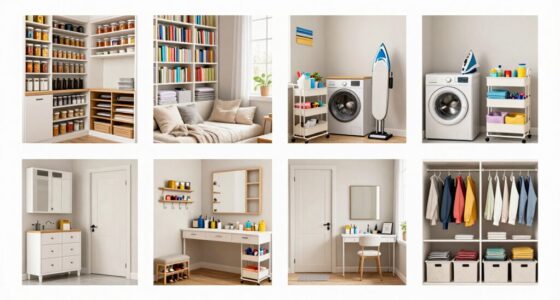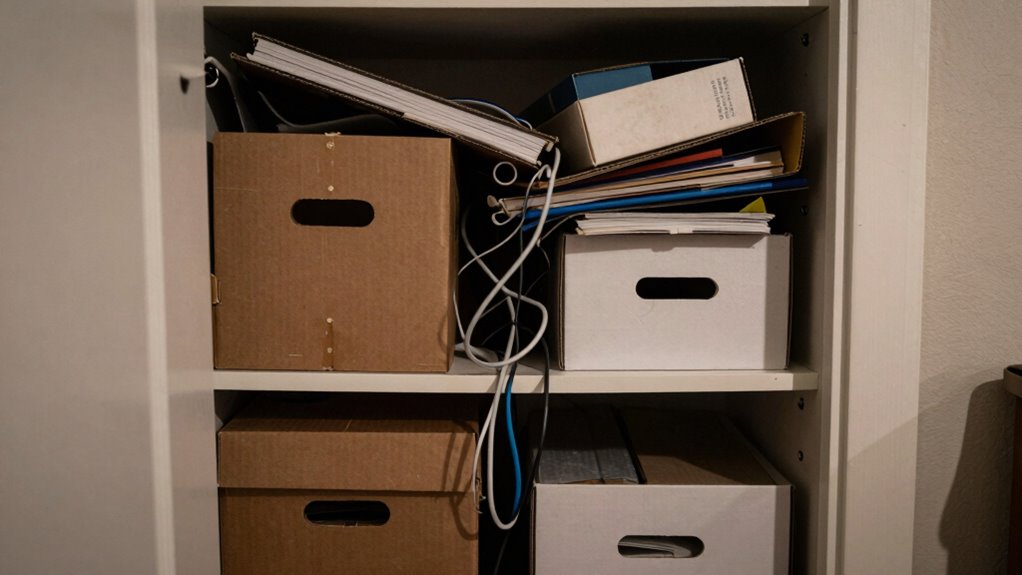

Hidden storage can save space and make your home look sleek, but it often makes items hard to access and organize. You may struggle to find or reach belongings tucked away in deep or obscure compartments. This can cause frustration and clutter over time. While it’s attractive, it might not suit your daily needs or quick access. Want to discover smarter storage options that balance practicality and style? Keep exploring to find out more.

Get furniture and decor delivered free — and shop member deals
- Fast, free delivery on millions of items
- Access to Prime Big Deal Days deals on October 6–7
- Prime Video, Amazon Music and more included
Key Takeaways
- Hidden storage can be difficult to access, causing inconvenience during daily routines.
- Concealed compartments may be hard to see into, leading to forgotten or unused items.
- Complex installation or modifications increase cost and reduce practicality.
- Limited accessibility can be problematic for individuals with mobility issues.
- Overemphasis on aesthetics may sacrifice convenience and organization efficiency.
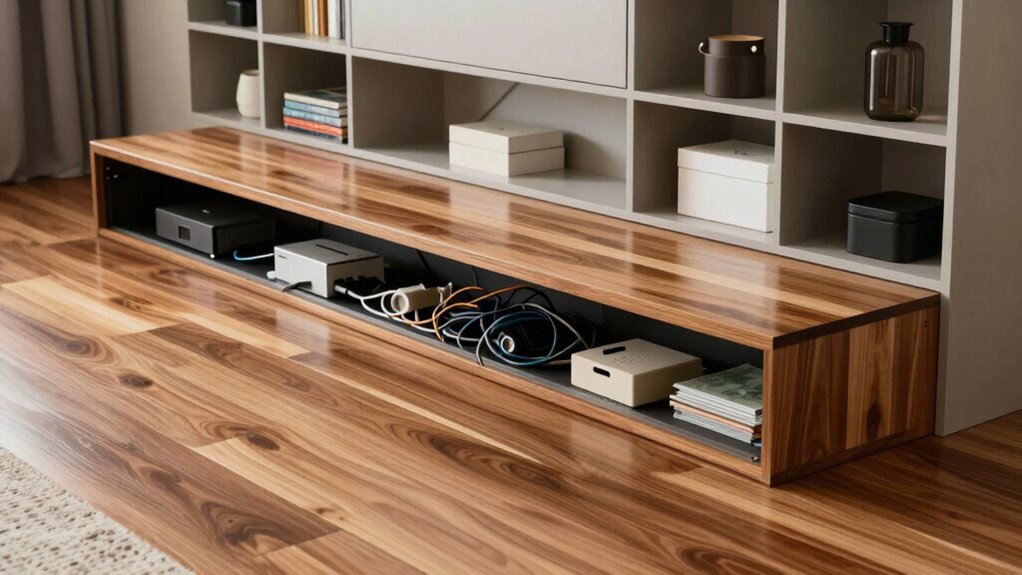
Hidden storage offers a clever way to maximize space and keep your belongings out of sight, making your home look tidier and more organized. However, it’s not always the best option, especially when you consider creative alternatives and accessibility concerns. While hidden storage can be attractive and space-efficient, it often requires sacrificing convenience for aesthetics. You might find yourself struggling to access items stored in deep or obscure compartments, which can be frustrating during daily routines. If you have limited mobility or health issues, reaching into hidden spaces can become a real inconvenience, highlighting one of the key accessibility concerns.
When you rely heavily on hidden storage, you risk creating areas that are difficult to access or see into, which defeats the purpose of having a functional home. Instead of hiding everything away, you could explore creative alternatives that balance storage and accessibility. For example, open shelves or transparent containers allow you to see your belongings at a glance, saving you time and effort. These options can be especially useful for frequently used items, so you don’t have to rummage through hidden compartments. In addition, using multifunctional furniture like ottomans with internal storage or beds with built-in drawers can provide easy access without sacrificing style.
Another issue with hidden storage is that it can make your space feel cluttered if not organized properly. When you hide items in hard-to-reach places, it’s easier to forget about them, leading to unnecessary clutter and even waste. If you’re not careful, you might end up with a collection of stored items you rarely see or use, which defeats the purpose of having extra storage in the first place. Plus, some hidden storage solutions require complex installation or modifications, which can be costly and time-consuming. This can be a drawback if you’re looking for quick, affordable ways to organize your home.
Considering the importance of accessible storage is crucial, especially in a luxury setting where convenience and style should coexist seamlessly. Additionally, choosing storage options that are easy to access can significantly improve your daily routines and overall home functionality. Ultimately, hidden storage isn’t always the best choice if accessibility concerns or ease of use are priorities for you. While it can improve the look of your space, it’s important to weigh the benefits against potential inconveniences. Creative alternatives like open shelving, clear containers, or multifunctional furniture often strike a better balance between style, practicality, and accessibility. Keep in mind that the best storage solutions are those that fit your lifestyle, making everyday living easier rather than complicating it with hard-to-reach or hard-to-see compartments.
open shelving units for living room
As an affiliate, we earn on qualifying purchases.
As an affiliate, we earn on qualifying purchases.
Frequently Asked Questions
How Secure Is Hidden Storage From Theft or Unauthorized Access?
Hidden storage isn’t always highly secure from theft or unauthorized access. While it offers concealed security, determined thieves or unauthorized individuals can still find ways to locate and access your hidden items. Relying solely on hidden storage for theft prevention isn’t foolproof; it’s best to combine it with other security measures. Always evaluate potential risks and consider more robust security options to protect your valuables effectively.
Can Hidden Storage Damage the Structural Integrity of My Home?
Hidden storage can sometimes compromise your home’s structural integrity, as about 30% of homeowners report issues from unconventional storage spaces. These hidden risks include weakening walls or floors if installation isn’t done properly or if weight limits are ignored. If you’re considering secret compartments, make certain professional assessment first. Otherwise, you might unintentionally cause structural damage, risking safety and costly repairs down the line.
Is Hidden Storage Suitable for Storing Valuable or Fragile Items?
Hidden storage isn’t ideal for storing valuable items or fragile objects. You might not easily find or access these items when needed, risking damage or loss. Plus, hidden spaces often lack proper climate control, which can harm delicate objects. For valuable or fragile items, choose secure, accessible storage with proper protection to guarantee safety and preservation, rather than relying on hidden compartments that aren’t designed for such sensitive contents.
How Does Hidden Storage Affect Home Insurance Policies?
Hidden storage ethics and public perception can influence your home insurance policies. When insurers discover hidden compartments, they might question your transparency, potentially affecting coverage or premiums. While hidden storage can seem clever, it may raise concerns about risk concealment or non-disclosure. Being open about your storage choices helps maintain trust and guarantees your policy accurately reflects your home’s security, avoiding misunderstandings that could complicate claims or coverage in the future.
What Are the Legal Considerations for Installing Hidden Storage?
When installing hidden storage, you need to make certain of legal compliance by checking local building codes and regulations. You should also consider privacy concerns, especially if the storage affects shared spaces or involves surveillance. It’s crucial to get any necessary permits and inform relevant authorities to avoid legal issues later. By doing so, you protect yourself from potential fines and ensure your hidden storage is both safe and lawful.
Conclusion
While hidden storage might seem like the perfect solution, it’s not always ideal. Imagine hiding valuables in a secret compartment only to forget about them later—this could lead to missed opportunities or even damage. In your home, consider balancing hidden and accessible storage options. For example, a homeowner who stored seasonal decorations in an easily accessible closet avoided clutter while keeping seldom-used items out of sight. So, think carefully about your needs before choosing hidden storage.
Halloween Picks
halloween
As an affiliate, we earn on qualifying purchases.