
To organize a multiuse room without losing flexibility, focus on smart storage solutions that hide clutter and maximize space. Use versatile, multi-functional furniture like fold-away beds and stackable chairs that can easily adapt to different activities. Create designated zones for various tasks while keeping pathways clear for easy movement. Regularly assess and adjust your setup to meet changing needs. Keep exploring for more tips to maintain both order and versatility effortlessly.

Get furniture and decor delivered free with Prime
- Fast, free delivery on millions of items
- Prime Video, Amazon Music and more included
- Member-only deals all year
Key Takeaways
- Use versatile, multi-functional furniture that can easily adapt to different activities and storage needs.
- Designate specific zones for each function while keeping pathways open for easy movement.
- Incorporate hidden or vertical storage solutions to maximize space without cluttering the room.
- Opt for lightweight, movable furniture to reconfigure the layout quickly as needs change.
- Regularly reassess and reorganize to ensure the space remains functional and adaptable.

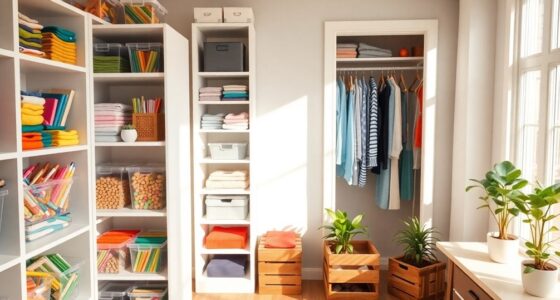
Creating a multiuse room that stays flexible can seem challenging, but with the right organization strategies, you can maximize functionality without sacrificing adaptability. The key is to implement smart storage solutions and thoughtful furniture arrangements that allow the space to serve various purposes effortlessly. You want a room that can shift from a home office to a guest bedroom or a play area without feeling cluttered or restricted. To achieve this, focus on versatile storage options that keep clutter out of sight but easily accessible when needed. Think about using multi-functional furniture with built-in storage, such as ottomans, beds with drawers, or desks with shelves. These pieces help you keep essentials organized while maintaining an open, inviting atmosphere.
Smart storage and versatile furniture keep your multiuse room organized and adaptable effortlessly.
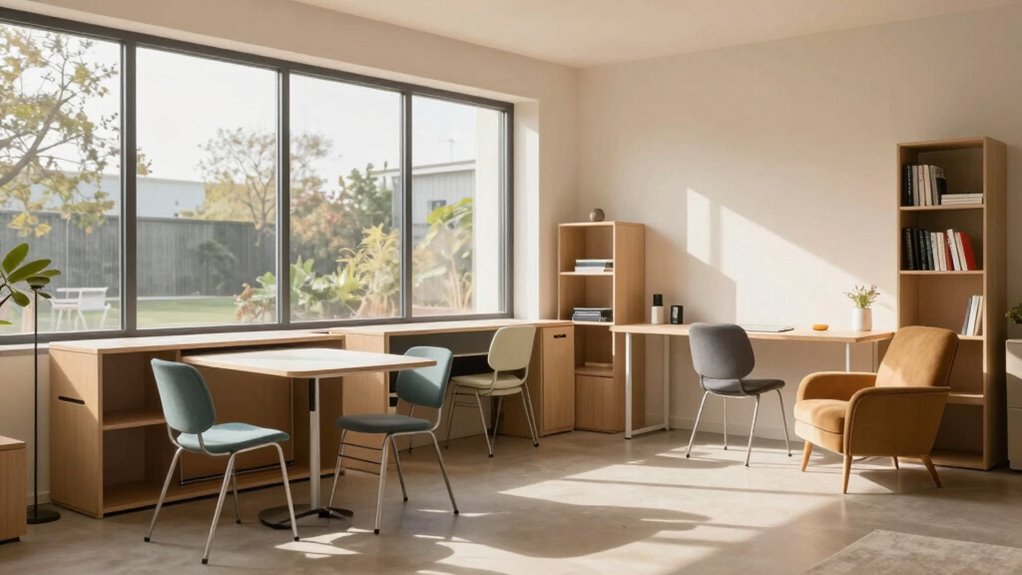
Next, consider your furniture arrangements carefully. Arrange pieces in a way that creates zones within the room, each designated for a specific activity, yet still allowing fluid movement between them. For example, position a foldable or Murphy bed against a wall to free up space when it’s not in use. Use lightweight or easily movable furniture, like stacking chairs or fold-away tables, so you can quickly reconfigure the room depending on its current purpose. A well-planned layout ensures you don’t lose the room’s flexibility, even when you add or remove furniture pieces. Keep pathways clear and avoid overcrowding to preserve the room’s openness for spontaneous use. Incorporating multiuse furniture can further enhance the room’s adaptability and streamline your space management.
Incorporate storage solutions that don’t dominate the space but instead blend seamlessly with your room’s design. Vertical storage units, floating shelves, or wall-mounted organizers are excellent choices because they maximize space without making it feel cramped. Label storage containers to make it easy to find what you need, and group similar items together to streamline organization. When you’re able to keep everything tidy and accessible, the room remains versatile and ready for any activity.
Finally, stay flexible by choosing furniture and storage options that can serve multiple functions. For instance, a desk that doubles as a craft station or a sofa bed for guests keeps your room adaptable. Regularly reassess your setup to guarantee it continues to meet your needs, swapping out bulky or unnecessary pieces as your activities evolve. By combining strategic storage solutions with flexible furniture arrangements, you create a multiuse room that’s both organized and adaptable, making it easy to switch from work mode to relaxation or play without hassle.
multi-functional furniture with storage
As an affiliate, we earn on qualifying purchases.
As an affiliate, we earn on qualifying purchases.
Frequently Asked Questions
How Can Storage Solutions Be Hidden in a Multiuse Room?
You can hide storage solutions in a multiuse room by incorporating concealed storage and hidden compartments into your furniture. Opt for beds with drawers underneath, ottomans with hidden compartments, or wall-mounted cabinets that blend seamlessly into the walls. Using furniture that doubles as storage helps keep the space flexible and clutter-free, while maintaining a sleek look. These clever solutions guarantee your room stays functional without sacrificing style or openness.
What Are the Best Furniture Options for Easy Space Reconfiguration?
Ever imagine transforming your space with a simple move? Convertible furniture, like fold-away beds or extendable tables, makes reconfiguration effortless. Modular storage units allow you to customize and adapt your room quickly, whether you’re creating a workspace or relaxing. These flexible options keep your room functional and stylish. By choosing versatile furniture, you can easily reimagine your space without sacrificing comfort or practicality, making every inch work for you.
How Do I Maintain a Clutter-Free Environment in a Multiuse Room?
To keep your multiuse room clutter-free, regularly declutter and assign designated spots for essentials. Use decor accents like stylish baskets or storage ottomans to hide items, maintaining a tidy look. Stick to cohesive color schemes to create visual harmony, making the space feel organized and calm. Keep surfaces clear and implement smart storage solutions, so you easily restore order after each use, ensuring flexibility without chaos.
What Lighting Setups Enhance Versatility in a Multiuse Space?
Ironically, the secret to versatile lighting is simplicity. You should opt for smart lighting and adjustable fixtures, so you can effortlessly switch from bright task lighting to soft ambient glow. Use dimmable bulbs and flexible fixtures to match the mood or activity, making your multiuse space truly adaptable. This way, your room transforms seamlessly, whether you’re working, relaxing, or hosting friends—without sacrificing style or functionality.
How Can Zoning Be Achieved Without Permanent Walls?
You can achieve zoning without permanent walls by using strategic color schemes and acoustic treatments. Use different wall colors or rugs to visually define areas without physical barriers. Incorporate acoustic panels or curtains to dampen sound in specific zones, creating a sense of separation. This approach maintains flexibility, allowing you to easily reconfigure the space for various activities while still providing distinct, functional zones.
Conclusion
By mastering these organization tips, you’ll turn your multiuse room into a superhero of space, capable of transforming from a cozy lounge to a bustling workspace in seconds. Say goodbye to clutter chaos and hello to endless possibilities—your room will be so flexible, it’ll practically have superpowers! With just a little clever planning, you’ll be able to tackle any task and still have room left for spontaneous dance parties. Flexibility has never been this powerful!
Fall Picks
fall essentials
As an affiliate, we earn on qualifying purchases.