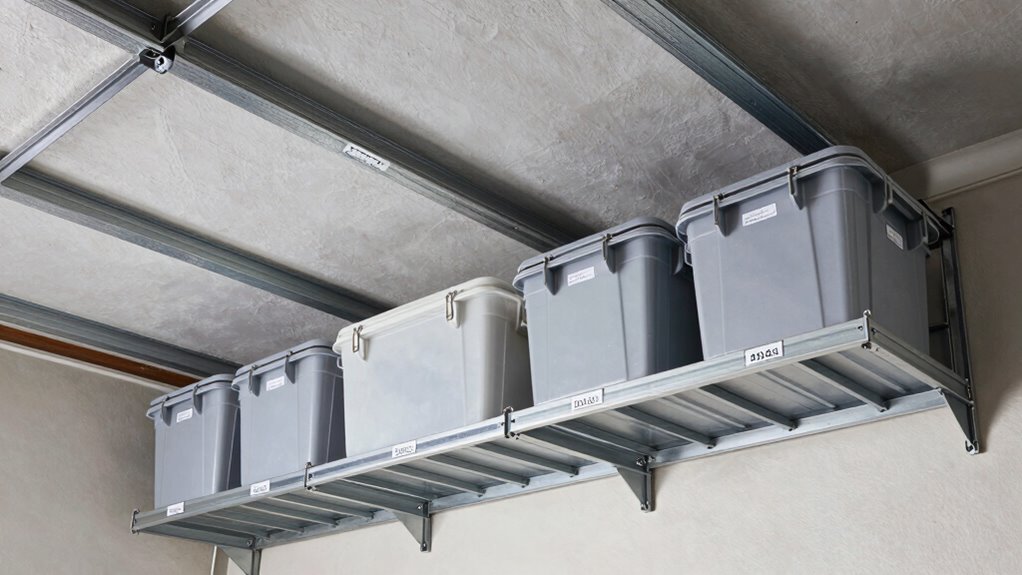

To guarantee your overhead garage storage stays safe, you must respect the weight limits specified by the manufacturer, as overloading can cause shelves to sag, fall, or collapse, risking injuries and property damage. Regularly check labels, distribute weight evenly, and avoid placing heavy items at the front or unsupported areas. Proper installation and maintenance help prevent accidents. If you want to keep your garage secure and avoid costly mishaps, understanding these guidelines is essential—more tips follow.
Key Takeaways
- Always check manufacturer labels for specific weight limits before installing or loading overhead storage shelves.
- Distribute weight evenly, placing heavier items near the wall and lighter items within easy reach.
- Regularly inspect shelves for signs of sagging, bowing, or damage indicating overloading.
- Secure storage units properly to ceiling joists using appropriate anchors and brackets.
- Respect weight capacities to prevent shelf collapse, structural damage, and potential injuries.
Why Overloading Garage Storage Is a Safety Risk

Overloading your garage storage can considerably increase the risk of accidents and injuries. When you pack a storage unit beyond its recommended weight capacity, the entire system becomes unstable. Overloading can cause shelves or overhead racks to sag or collapse, risking serious injury or damage to your belongings. Excess weight puts unnecessary stress on mounting hardware and framing, increasing the likelihood of failures. Many people underestimate how much weight their storage units can hold, but ignoring the weight capacity can lead to dangerous situations. To stay safe, always respect the maximum load limits specified by the manufacturer. Properly distributing weight and avoiding overloading will help maintain the integrity of your garage storage and prevent avoidable accidents. Additionally, choosing trusted businesses for installation or repairs can ensure your storage units are safely secured and capable of handling your stored items. Being aware of and adhering to these weight limits is essential for ensuring long-term safety and stability. Remember, understanding your garage storage capacity is key to avoiding accidents and ensuring safety over time.
How to Understand and Check Your Garage Shelves’ Weight Limits
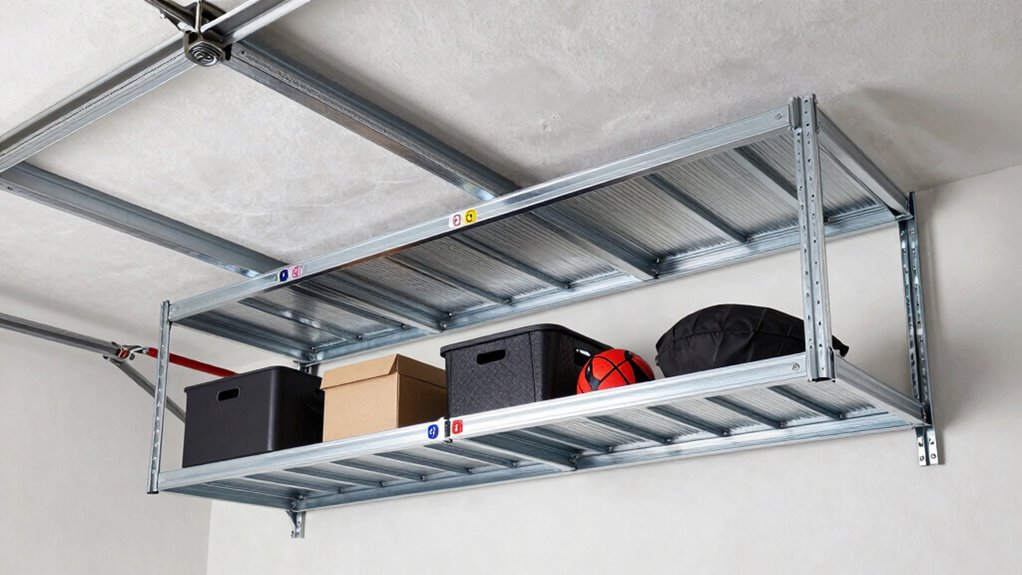
To keep your garage safe, start by checking the manufacturer labels for weight limits. Next, evaluate the shelf material to make certain it can handle your intended load, and always follow the provided weight guidelines. These steps help prevent overloading and potential accidents. Additionally, understanding the weight capacity of your shelves ensures you avoid exceeding their limits and maintain a secure storage environment. Remember that shelf material strength plays a crucial role in supporting heavier loads without risk of failure. Conducting a regular safety inspection can help identify any signs of wear or damage early. Being aware of wiring basics (informational) can also be beneficial if you plan to install or modify electrical components near your shelving units. Also, consider inspecting installation techniques to ensure your shelves are securely mounted and capable of supporting the intended weight.
Check Manufacturer Labels
Understanding your garage shelves’ weight limits starts with checking the manufacturer labels. These labels provide essential information about the shelf’s weight restrictions and proper usage. Carefully read the label instructions to identify the maximum weight capacity for each shelf. Keep in mind that these labels are specific to the product and should be your primary source of guidance. Don’t assume that all shelves have the same weight limits—overloading beyond the recommended weight restrictions can cause damage or failure. If the label is unclear or missing, contact the manufacturer or refer to the product manual for accurate details. Always respect the specified weight limits to ensure safe and long-lasting storage, preventing accidents and damage to your garage shelving system. Incorporating smart storage solutions can also help monitor and manage load capacities more effectively, especially when using load monitoring devices to ensure safety. Remember that ergonomic design plays a vital role in organizing your garage efficiently while maintaining safety standards. Additionally, understanding weight distribution is crucial to prevent uneven stress that could compromise shelf stability. When considering shelf material strength, selecting the right materials can significantly enhance the durability of your storage system.
Assess Shelf Material Strength
After checking the manufacturer labels for specific weight limits, it’s important to evaluate the material strength of your garage shelves. The shelf material determines how much weight it can safely hold. Different materials like wood, metal, or plastic have varying strengths. To understand your shelves’ capacity, consider their construction and condition. Here’s a quick guide:
| Shelf Material | Typical Material Strength |
|---|---|
| Wood | Moderate; prone to warping with heavy loads |
| Metal | High; durable and strong |
| Plastic | Lower; sensitive to heavy weight |
| Particle Board | Low; weak under heavy loads |
| Wire Shelves | Moderate; depends on gauge and support |
Knowing your shelf material helps you avoid overloads and guarantees safety. Additionally, appliance maintenance plans can help ensure your garage storage systems stay in good condition over time.
Follow Weight Guidelines
Checking and adhering to the weight guidelines for your garage shelves is vital to prevent overloading and guarantee safety. To do this effectively, you need to understand the weight limits specified by the manufacturer. Always look for clear labels showing the maximum load capacity — visibility here is essential. When organizing, consider how storage container organization impacts weight distribution; evenly spread the load reduces stress on shelves. Regularly inspect the shelves for signs of strain or damage. Keep labels visible so you can quickly verify weight limits before adding items. Remember, exceeding these limits risks shelf failure, which can cause injury or damage. Properly following weight guidelines ensures your garage remains safe and your storage solutions remain intact. Additionally, utilizing local automation can help monitor and alert you to potential overload situations before they occur. Being proactive with weight monitoring techniques can further enhance safety and prevent accidents. Implementing shelf load testing can also provide added assurance that your storage setup can handle the intended loads safely. Incorporating weight capacity labels into your organizational system can help you maintain awareness of each shelf’s limits at a glance. Regular weight capacity assessments are also recommended to adapt to changing storage needs and ensure ongoing safety.
Signs Your Garage Storage Is Overloaded and Unsafe

If your garage storage is overloaded, it can quickly become unsafe. One clear sign is sagging or bowing shelves, indicating they’re bearing too much weight. If you notice items shifting or falling, it’s a warning you’ve exceeded safe limits. Poor garage organization can also lead to cluttered, unstable setups that threaten safety. Another sign is difficulty reaching or removing items without risking a fall or causing the entire storage unit to shift. If your storage solutions feel unstable or if you hear creaking or cracking sounds, it’s time to reassess. Overloading not only risks damage to your storage but also jeopardizes your safety. Regularly inspecting your garage storage for these signs helps prevent accidents and keeps your space organized and secure. Understanding weight limits is essential for maintaining safe and effective storage solutions. Additionally, proper weight distribution can help extend the lifespan of your shelves and prevent structural failure. Taking the time to follow safe loading practices can greatly reduce the risk of accidents and ensure your garage remains a secure storage area. Being aware of capacity guidelines further supports safe and balanced loading practices.
How to Properly Distribute Items on Overhead Shelves

Properly distributing items on overhead shelves is key to maintaining safety and maximizing space. You want to prevent overloads and keep everything accessible. Use storage container organization to group similar items together, making it easier to manage weight and find what you need. Apply weight distribution techniques by placing heavier items on the sides and back, closer to the wall, and lighter items toward the front. Keep frequently used items within easy reach, and store seasonal or rarely used items on higher or less accessible spots. Remember, uneven weight distribution can compromise shelf stability and safety. Regularly check your setup to ensure loads are balanced, and avoid stacking items too high or haphazardly. Proper organization keeps your garage safe and your storage efficient.
Tips for Choosing Safe and Suitable Garage Storage Systems
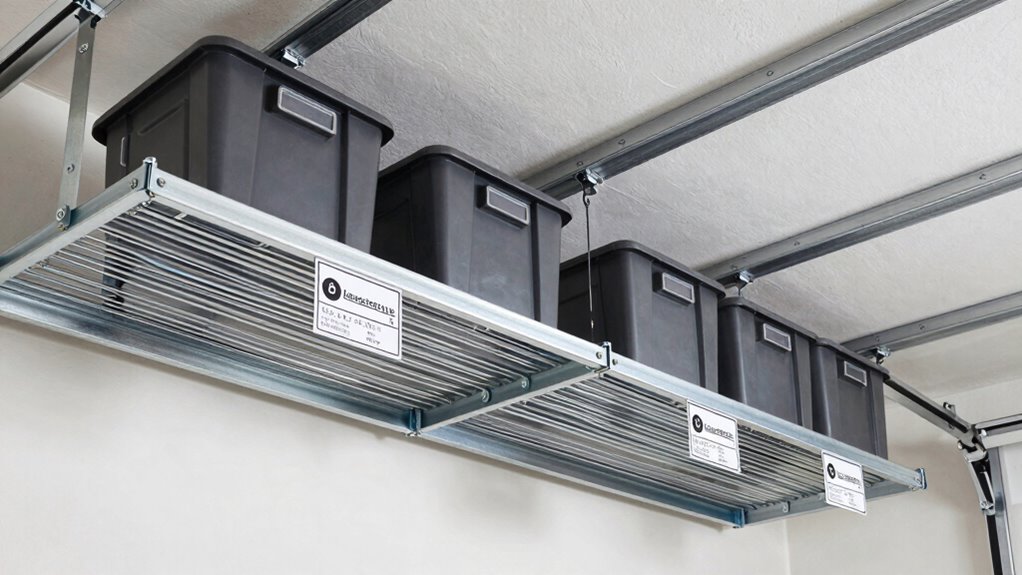
Choosing the right garage storage system is essential for safety and efficiency. To guarantee your space stays organized and safe, select systems designed for proper storage unit organization. Focus on sturdy materials and weight capacities, following garage safety tips to prevent overloads. Consider adjustable racks or modular units that suit your storage needs and allow easy access.
| Tip | Explanation |
|---|---|
| Check weight limits | Always respect maximum load capacities to prevent accidents. |
| Prioritize accessibility | Choose systems that allow safe, easy retrieval of stored items. |
| Use appropriate hardware | Securely install units to structural supports for stability. |
Installing Overhead Garage Shelves: Best Practices for Safety
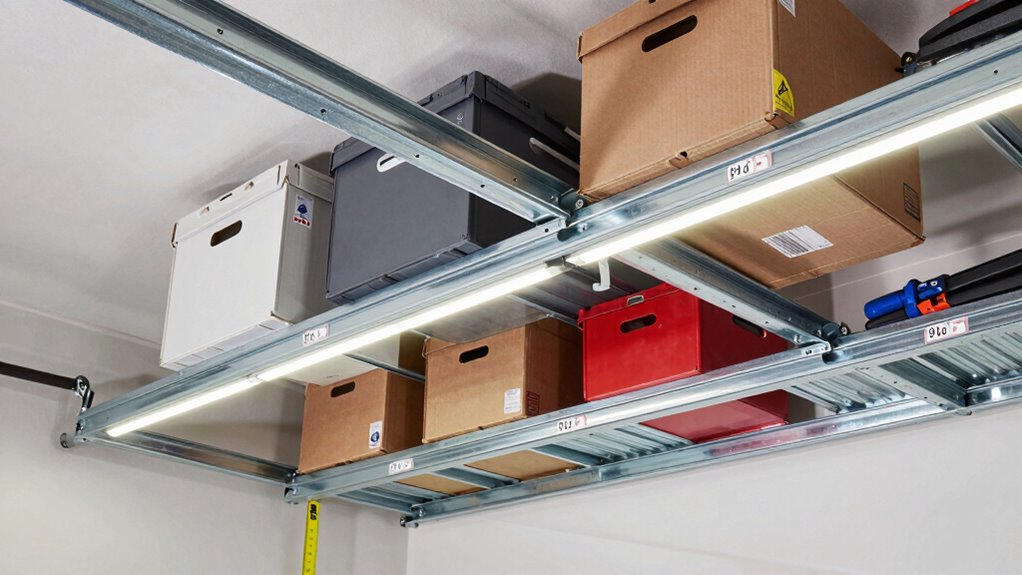
Installing overhead garage shelves can considerably maximize your storage space while maintaining safety, but it requires careful attention to detail. To guarantee your storage unit remains secure, follow best practices like verifying ceiling strength, using appropriate anchors, and evenly distributing weight. Proper installation prevents accidents and damage. Keep these organization tips in mind:
- Use sturdy brackets that support the weight limits recommended.
- Secure shelves tightly to ceiling joists for stability.
- Avoid overloading; respect weight limits for each shelf.
What Happens When You Ignore Weight Limits? Risks and Consequences
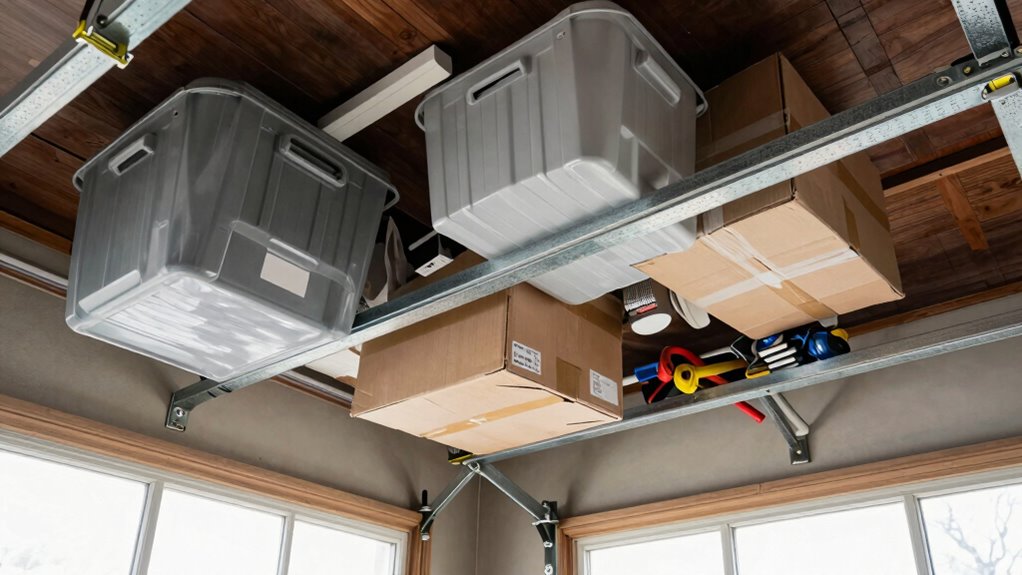
Ignoring weight limits can lead to serious problems, like damaging your garage’s structure or causing shelves to collapse. This puts you and your family at risk of injury and can also result in costly property damage. Understanding these dangers helps you stay safe and protect your belongings.
Structural Damage Risks
When you exceed the weight capacity of your overhead garage storage, you risk causing serious structural damage. Overloading can stress your garage wall and ceiling joists, leading to costly repairs. The added weight can cause ceiling joists to bend or crack, weakening the entire structure. This strain might also cause your garage wall to bow or break, compromising safety. Ignoring weight limits increases the likelihood of:
- Sagging or collapsing ceiling components
- Cracks spreading across garage walls
- Damage to the wall anchors or fasteners
Such damage not only threatens the integrity of your garage but also poses safety risks. To avoid these issues, always respect the weight limits and ensure your storage system is properly installed and maintained.
Personal Injury Hazards
Exceeding the weight capacity of your overhead garage storage doesn’t just risk structural damage—it also puts you in direct danger of injury. When you ignore weight limits, items can fall unexpectedly, causing serious harm. Improper lifting techniques or poor storage organization can increase the risk of strains, sprains, or worse. To stay safe, always respect the weight limits and organize your items to distribute weight evenly. Use proper lifting techniques, such as bending at the knees and keeping your back straight. Here’s a quick guide:
| Risk | Potential Injury | Prevention Tips |
|---|---|---|
| Falling objects | Head or foot injuries | Secure items properly and avoid overloading |
| Strains and sprains | Back or shoulder injuries | Use correct lifting techniques |
| Structural failure | Sudden collapses, injuries | Follow weight limits strictly |
| Slip and fall | Cuts, bruises, broken bones | Clear walkway clutter and use ladders safely |
Property Damage Costs
Failing to stay within the weight limits for your overhead garage storage can lead to costly property damage. Overloaded shelves may collapse, damaging your stored items and the ceiling structure itself. This can create a fire hazard if electrical wiring is affected or sparks ignite debris. Additionally, excessive weight can worsen humidity effects, promoting mold and rot on stored materials and weakening the ceiling support. Ignoring limits might also cause structural shifts, cracking drywall, or damaging your garage door system.
- Shelves breaking and falling, risking further damage
- Electrical components compromised, increasing fire risk
- Humidity damage accelerating mold growth and material decay
Regularly Inspect and Maintain Your Garage Storage for Safety

Regular inspections and maintenance are essential to keep your garage storage safe and secure. You should regularly check your storage unit organization to ensure items are properly arranged and not overloaded. Look for signs of wear or damage, especially on shelves and brackets. Reinforce weak or sagging shelves with shelf reinforcement to prevent sudden collapses. Tighten any loose bolts or screws to maintain stability. Keep an eye out for rust or corrosion that could weaken your storage system over time. Removing unnecessary or outdated items reduces clutter and weight, lowering the risk of accidents. By staying proactive with inspection and maintenance, you help make certain your overhead garage storage remains sturdy and safe for everyday use.
Frequently Asked Questions
Can Different Materials Affect the Weight Capacity of Garage Shelves?
Yes, different materials can affect the weight capacity of garage shelves. Material compatibility influences how well shelves hold weight without bending or breaking, impacting shelf durability. For example, metal shelves often support more weight than plastic ones. When choosing materials, consider the weight you plan to store. Properly matched materials guarantee your shelves remain durable and safe, preventing accidents or damage. Always follow manufacturer guidelines for weight limits based on the material used.
How Do Temperature Changes Impact Garage Storage Safety?
Temperature changes in your garage are like a rollercoaster ride—unpredictable and sometimes jarring. They cause temperature expansion and contraction, which can loosen shelves or damage stored items. Insulation effects help stabilize these fluctuations, keeping your storage safer. Without proper insulation, extreme heat or cold can compromise the integrity of your shelves and weaken connections, increasing the risk of accidents. Make sure your garage is well-insulated to maintain a stable environment.
Are There Specific Safety Standards for Overhead Garage Shelving?
Yes, there are specific safety standards for overhead garage shelving. You should follow garage shelving regulations and storage safety codes to guarantee your setup is secure. These standards specify weight limits, installation procedures, and materials used, helping prevent accidents or collapses. Always check local building codes and manufacturer guidelines before installing or loading shelves, and regularly inspect them to maintain safety and compliance.
What Tools Are Best for Installing Heavy Garage Storage Units?
You’ll want a sturdy power drill to securely install heavy garage storage units. It makes drilling into studs easier and faster, ensuring your shelves stay put. A stud finder is essential to locate the best support points behind the drywall, preventing accidents. Use the power drill with proper anchors and screws that can handle the weight limits. This combo guarantees a safe, durable installation that keeps your garage organized and secure.
How Often Should I Reassess My Garage Storage Weight Limits?
You should reassess your garage storage weight limits at least once a year, ideally before you start piling on new items. Think of it as a storage organization spa day—refresh, reevaluate, and guarantee your weight distribution is still balanced. Ignoring this could turn your ceiling into a gravity experiment. Staying proactive keeps your overhead storage safe, secure, and well within limits, preventing a dangerous “surprise” crash.
Conclusion
Sticking to your garage shelves’ weight limits might seem like a hassle, but it’s essential for safety. Overloading can lead to dangerous falls and costly damage. Trust me, taking a few extra minutes to check the limits and distribute weight properly is worth it—your safety and peace of mind matter most. Don’t risk a preventable accident; prioritize safe storage habits now to protect yourself and your belongings.