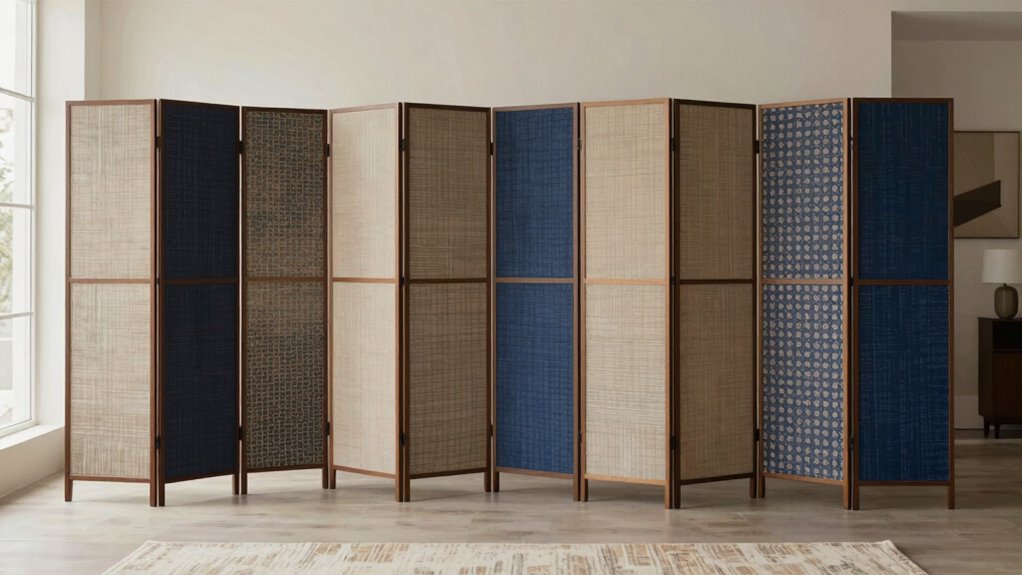

A folding room divider screen can carve out a work area, add privacy, or soften an open room without a permanent installation. My best overall pick is the Mayoliah 6 Panel Folding Privacy Screen, whose listed 9-foot width and 6-foot height give it an advantage when broad coverage matters. The VEVOR 4-Panel Screen stands out for its listed 136-inch span, while the RANTILA 4 Panel Room Divider is a strong alternative for shoppers who value wide feet and a tall profile. The main tradeoffs are coverage versus ease of repositioning, opaque fabric versus decorative bamboo or patterned panels, and a wider footprint versus easier storage. Read on for the full comparison, practical buying advice, and picks for different rooms and priorities.

Get furniture and decor delivered free with Prime
- Fast, free delivery on millions of items
- Prime Video, Amazon Music and more included
- Member-only deals all year
Complete the kit


Key Takeaways
- Coverage varies widely: the Mayoliah lists a 9-foot width, and VEVOR lists 136 inches, while many four-panel options are listed around 88–89 inches wide.
- Panel count is not the whole story: six- and eight-panel screens can offer more layout flexibility, but they may take up more folded storage space than a four-panel design.
- Stability features deserve attention: RANTILA and the 3-wide-feet option foreground broad feet, a useful detail for shoppers who expect frequent repositioning or have busy rooms.
- Materials shape the room’s feel: fabric screens prioritize visual privacy, while the natural bamboo options from Furnnylane and the handmade bamboo listing bring a more decorative, airy look.
- Mobility is a distinct priority: SUNALLY’s four-panel screen includes wheels, making it the clearest pick for people who plan to move a divider often rather than leave it in one place.


| folding room divider screen | Mounting | Color | Materials | Panels |
|---|---|---|---|---|
| TEAKMAMA 6-Panel Folding Priva | Freestanding | Dark mocha | — | — |
| Roundhill Furniture Giyano 4 P | — | White screen with gold frame | Nonwoven fabric and wood | — |
| Mayoliah 6 Panel Folding Priva | — | Black | Powder-coated metal frame and 180 gsm polyester fabric | — |
| RANTILA 4 Panel Room Divider | Floor mount, freestanding | Black | — | — |
| 8 Panel Room Dividers and Fold | Freestanding | White | — | — |
| SUNALLY Room Divider Privacy S | Floor mount | Black | Metal frame and polyester fabric | 4 |
| 6 Panel Folding Room Divider | Freestanding | Light beige | Wood frame with woven fiber | 6 |
| Room Divider Folding Privacy S | Freestanding | Brown | — | 4 |
| RHF Room Divider | Freestanding | Dark coffee | Bamboo, paper, and pine wood | 4 |
| VEVOR 4-Panel Room Divider | — | Grey | Iron and Oxford fabric | 4 |
| FDW 4-Panel Folding Room Divid | Freestanding | — | — | 4 |
| 4-Panel Room Divider | Floor mount | — | Polyester with PA coating; powder-coated steel frame | 4 |
| Roundhill Furniture Black Japa | Freestanding | — | Heavy-duty rice paper and wood frame | 4 |
| Room Divider 4 Panel Folding P | Floor mount | — | Polyester and metal frame | 4 |
| Furnnylane 6 Panel Bamboo Room | Floor mount, freestanding | — | Bamboo and solid pinewood | 6 |
More Details on Our Top Picks
TEAKMAMA 6-Panel Folding Privacy Screen Room Divider, Dark Mocha
The TEAKMAMA makes the most sense when a divider needs to look like part of the room, not just block off a corner. Its woven wood design and dark mocha color bring more visual texture than the plain fabric on the Mayoliah screen, while six hinged panels let you shape a broad, freestanding barrier or fold it down between uses. At 95 inches wide and 70.8 inches tall, it offers generous coverage, though the Mayoliah can span wider when fully opened. This model arrives assembled and is described as lightweight, so it is easier to reposition than a fixed partition. The tradeoff is practical: woven material needs gentler cleaning, and it is not designed to block sound or withstand outdoor exposure.
Pros:- Six panels create a broad screen that can be angled to fit different room layouts.
- Woven dark mocha finish adds texture and suits modern or farmhouse interiors.
- Fully assembled for use straight out of the box.
- Foldable, lightweight design supports repositioning and storage.
Cons:- Woven material may take more care to clean than the polyester fabric on the RANTILA.
- Indoor-only construction is not suited to patios or exposed areas.
- Does not provide sound privacy.
Best for: Renters or homeowners who want a wide, decorative indoor divider that arrives ready to position.
Not ideal for: Buyers who need sound reduction, outdoor use, or a smooth surface that is easy to wipe clean.
- Panel count:6
- Dimensions:95 in W x 70.8 in H
- Material:Wood
- Color:Dark mocha
- Mounting:Freestanding
- Features:Double hinged, foldable, lightweight, portable, stain resistant
- Use:Indoor
Our verdict“Choose the TEAKMAMA if decorative woven texture and ready-to-use width matter more than easy wipe-down care or maximum coverage.”
Roundhill Furniture Giyano 4 Panel Screen Room Divider, White Screen with Gold Frame
The Roundhill Furniture Giyano is the style-led compact pick in this group. Its four narrow panels and white fabric with a gold frame create a lighter, more decorative look than the black, opaque RANTILA, while its 69.5-inch overall width takes up less room than the six-panel TEAKMAMA. That smaller footprint suits a dressing corner or a modest office nook where a broad wall of panels would feel excessive. At 18.7 pounds, it is movable, and it needs no assembly. The compromise is coverage: four panels give less reach than the TEAKMAMA or Mayoliah, and the nonwoven screen is a different choice from the wood and woven finishes elsewhere. Its indoor-only design and fixed look also limit where it fits.
Pros:- Four panels fit smaller spaces more easily than the six-panel TEAKMAMA.
- White screen and gold frame provide a distinctive contemporary accent.
- No assembly required.
- At 18.7 pounds, it can be moved without the bulk of a wide multi-panel screen.
Cons:- Its 69.5-inch width offers less coverage than the TEAKMAMA or Mayoliah.
- Nonwoven fabric may not suit buyers seeking a wood or woven finish.
- Indoor-only use limits placement.
Best for: Apartment dwellers who want a light-colored decorative screen for a small dressing area or work nook.
Not ideal for: People who need a wide privacy barrier, a dark opaque screen, or a divider suited to outdoor use.
- Panel count:4
- Dimensions:69.5 in W x 70.5 in H
- Individual panel size:17 in W x 70.5 in H
- Weight:18.7 lb
- Materials:Nonwoven fabric and wood
- Color:White screen with gold frame
- Assembly:No assembly required
- Use:Indoor
Our verdict“Pick the Giyano for compact, decorative separation, but choose a wider option if privacy coverage is the priority.”
Mayoliah 6 Panel Folding Privacy Screen 9ft Wide 6ft Tall Room Divider
For buyers who need to screen off a large area, the Mayoliah offers the broadest stated reach among these five: its six panels can be arranged at different angles and are described as spanning up to 120 inches. That flexibility gives it an advantage over the fixed-width four-panel RANTILA, while its opaque polyester fabric is more practical for blocking sightlines than the decorative open woven look of the TEAKMAMA. A powder-coated iron frame and waterproof fabric suit everyday indoor room division, and folding helps with storage once the screen is no longer needed. The tradeoff is setup: it requires assembly, which may be easier with two people, and the non-see-through fabric can make a divided area feel closed off. Its stated dimensions and maximum span also differ, so check the opened configuration for your space.
Pros:- Six adjustable panels provide broad coverage and flexible positioning.
- Opaque polyester fabric blocks direct sightlines.
- Powder-coated iron frame and waterproof fabric are suited to practical indoor use.
- Folds for storage when the room needs to be opened up.
Cons:- Assembly is required and may be easier with two people.
- Opaque fabric can make the screened area feel more enclosed than the Giyano.
- Indoor-only use rules out outdoor placement.
Best for: People dividing a large shared room who need a wide, opaque screen that can be angled to fit the layout.
Not ideal for: Buyers who want a ready-assembled decorative divider or prefer visibility through the panels.
- Panel count:6
- Dimensions:110 in W x 72 in H
- Maximum stated width:Up to 120 in
- Weight:22.6 lb
- Materials:Powder-coated metal frame and 180 gsm polyester fabric
- Color:Black
- Foldable and portable:Yes
- Use:Indoor
Our verdict“Choose the Mayoliah when adjustable, wide visual privacy matters more than assembly-free convenience or a decorative wood finish.”
RANTILA 4 Panel Room Divider, 6 FT Folding Privacy Screen with Wide Feet, Freestanding Partition for Room Separation, 89″ W x 71″ H, Black
The RANTILA is the practical choice for buyers who want a straightforward opaque screen with a steel frame and fabric that is described as water-resistant and easy to clean. Its wide feet are intended to support stability, a useful distinction from the lightweight, portable Giyano, which is better suited to decorative separation than a more grounded partition. At 89 inches wide, it gives more reach than the Giyano but less than the six-panel Mayoliah, so it balances coverage with a simpler four-panel layout. The black polyester panels prioritize privacy over ornament; they will not bring the woven warmth of the TEAKMAMA. Its 17.5-pound weight may make frequent repositioning less convenient, and the all-black design is less adaptable to rooms built around lighter colors.
Pros:- Opaque polyester fabric supports visual privacy.
- Water-resistant, easy-to-clean surface suits regular indoor use.
- Powder-coated steel frame and wide feet are designed for sturdy support.
- Folds for storage or room-layout changes.
Cons:- At 17.5 pounds, it is less convenient to move often than the Giyano.
- Four panels provide less reach than the six-panel Mayoliah.
- Black fabric and frame may not suit lighter or more decorative interiors.
Best for: Home office users or households who want an opaque, wipe-clean indoor partition that can stay in one place.
Not ideal for: People who frequently move their divider, need more than 89 inches of width, or want a decorative wood or light-colored screen.
- Panel count:4
- Dimensions:89 in W x 71 in H
- Weight:17.5 lb
- Frame material:Powder-coated metal
- Screen material:Polyester fabric
- Color:Black
- Mounting:Floor mount, freestanding
- Use:Indoor
Our verdict“Choose the RANTILA for a stable, easy-care privacy screen that can remain in place, rather than for frequent moves or maximum width.”
8 Panel Room Dividers and Folding Privacy Screens, White
This eight-panel wood screen is the longest option in this group by its stated dimensions, stretching 128 inches while standing 66 inches tall. That makes it a strong fit for dividing a broad room without reaching the height of the TEAKMAMA or Mayoliah. Its white natural-wood construction offers a different visual character from the Mayoliah’s black polyester panels, and the eight sections can be folded to adjust the screen’s shape. It arrives without assembly and is described as lightweight, which helps when changing a room layout. The shorter height is the main compromise: it offers less vertical coverage than the roughly 71-inch Giyano and RANTILA, so it may not suit dressing areas where a taller barrier is preferred. Its indoor-only design and decor-specific white finish also narrow its best placements.
Pros:- Eight panels and a stated 128-inch length cover a broad area.
- Natural wood construction offers a distinct alternative to fabric screens like the RANTILA.
- No assembly required.
- Foldable and described as lightweight for repositioning and storage.
Cons:- At 66 inches tall, it is shorter than the Giyano and RANTILA.
- White finish may not suit every room or conceal everyday marks.
- Indoor-only use limits where it can be placed.
Best for: Buyers who need a long, foldable divider for a wide living area and prefer a white wood finish.
Not ideal for: People who need a taller screen for dressing privacy, outdoor use, or a darker finish that blends into the room.
- Panel count:8
- Dimensions:128 in L x 66 in H
- Individual panel size:16 in L x 66 in H
- Height:5.6 ft
- Material:Natural wood
- Color:White
- Mounting:Freestanding
- Use:Indoor
Our verdict“Pick this eight-panel screen for long, lower-profile room separation, but choose a taller model if vertical privacy matters more.”
SUNALLY Room Divider Privacy Screens, 4 Panels with Wheels, Black
The SUNALLY is the most practical pick here when a folding screen needs to move between work, changing, or sleeping areas. Its lockable wheels make repositioning less awkward than with the RHF Room Divider, which is freestanding but has no listed casters. Once placed, the opaque, water-repellent polyester helps block sightlines more fully than the woven screens in this lineup. At 88 inches wide and 72 inches tall, it can define a useful zone without needing a permanent fixture, and it folds for storage. The tradeoff is that wheels and a steel frame add weight: at 7.51 kg, it is not the easiest screen to shift repeatedly. The fabric may also need ventilation because initial staining or odor is noted, and this is for indoor use only.
Pros:- Lockable wheels make room-to-room repositioning easier while helping the screen stay put.
- Opaque, water-repellent polyester offers stronger visual privacy than light-filtering woven panels.
- Four panels span 88 inches and fold for storage or alternate layouts.
- Powder-coated steel frame and adjustable footpad support indoor stability.
Cons:- At 7.51 kg, it may feel cumbersome to move frequently despite the wheels.
- Fabric may have an initial stain or odor that calls for ventilation.
- Indoor-only construction limits where it can be used.
Best for: Remote workers, renters, or households that need to roll an opaque privacy screen between indoor spaces and lock it in place.
Not ideal for: Anyone who wants a lightweight screen to carry often, a decorative woven look, or a divider for outdoor use.
- Panels:4
- Dimensions:88 in wide x 72 in high
- Weight:7.51 kg
- Materials:Metal frame and polyester fabric
- Color:Black
- Mounting:Floor mount
- Use:Indoor
- Features:Lockable wheels, foldable design, wrinkle-resistant fabric, adjustable footpad
Our verdict“Choose the SUNALLY if you need an opaque indoor divider that rolls into position; skip it if low weight or a natural woven finish matters more.”
6 Panel Folding Room Divider, Woven Privacy Screen, Light Beige
This six-panel screen suits buyers who want a broad visual boundary without turning a room dark or making the divider the focal point. Its light beige woven diamond pattern filters light, unlike the opaque SUNALLY, so it reads more like a decorative room partition than a blackout-style privacy barrier. The 94.5-inch width gives it more span than the RHF Room Divider’s 63-inch-wide four-panel layout, which helps separate a larger area. It arrives assembled and folds flat, a useful advantage for anyone who does not want to build a screen before using it. That breadth comes with a limitation: the panels are described as fixed in one direction, reducing angle flexibility, and the woven material may leave silhouettes visible. I’d choose it for gentle separation, not changing areas where full visual privacy is needed.
Pros:- Six panels create a broad 94.5-inch span for dividing larger indoor zones.
- Woven fiber filters light and gives the screen a softer look than opaque fabric models.
- No assembly is required, so it is ready to position out of the box.
- Lightweight construction and flat-folding storage suit occasional room changes.
Cons:- Light filtering may allow shadows or silhouettes to show through.
- Panels are fixed in one direction, limiting layout and angle changes.
- Indoor-only materials are not weatherproof.
Best for: People furnishing a bedroom or living space who want a wide, assembled divider that filters light and adds a subtle woven texture.
Not ideal for: Buyers who need opaque privacy, frequent panel-angle adjustments, or a screen suitable for outdoor exposure.
- Panels:6
- Dimensions:94.5 in wide x 70.5 in high
- Materials:Wood frame with woven fiber
- Color:Light beige
- Pattern:Woven diamond pattern
- Mounting:Freestanding
- Use:Indoor
- Storage:Folds flat
Our verdict“Pick this screen for wide, light-filtering separation and easy setup, but choose the SUNALLY or another opaque option when privacy is the priority.”
Room Divider Folding Privacy Screens, Hand-Made Natural Bamboo Room Dividers
The bamboo screen stands apart from the fabric-and-metal choices by making its handcrafted natural material part of the room’s decor. Its four panels unfold to 70.8 inches wide, so it forms a more compact boundary than the six-panel woven beige screen, while its 2-in-1 split design offers a different way to adapt the layout. That combination makes sense for a bedroom corner or home office where the divider should look intentional even when folded or repositioned. It is listed as lightweight and portable, though assembly is required; by contrast, the RHF Room Divider is ready to use out of the box. Bamboo’s natural joints and texture can vary, and it calls for dry-cloth care rather than wipe-clean convenience. This is an indoor decorative partition, not a weatherproof screen.
Pros:- Natural bamboo gives the divider a warmer, more decorative look than fabric screens.
- The 2-in-1 split design supports more than one room arrangement.
- Lightweight construction and foldable panels help with repositioning and storage.
- Adjustable footpad and double hinges add flexibility to its freestanding setup.
Cons:- Assembly is required, unlike the ready-to-use RHF Room Divider.
- Natural bamboo texture and joints can vary between panels.
- Dry-cloth care and indoor-only use limit cleaning and placement options.
Best for: Buyers styling a bedroom, living room, or home office who prefer a natural bamboo divider and want a portable four-panel layout.
Not ideal for: People who want an assembled screen, uniform factory-finished panels, or a wide divider for a large open room.
- Panels:4
- Unfolded dimensions:67 in high x 70.8 in wide
- Folded dimensions:2.7 ft deep x 67 in high
- Material:Bamboo
- Color:Brown
- Mounting:Freestanding
- Use:Indoor
- Features:Double hinged, adjustable footpad, lightweight, portable
Our verdict“Choose this model if natural bamboo and flexible styling matter more than assembly-free setup or a wide privacy span.”
RHF Room Divider, 4 Panel Partition Screen, Dark Coffee
The RHF is a straightforward choice for buyers who want a folding screen they can set up immediately, with no assembly listed. Its four woven panels and 72-inch height create a defined boundary for a bedroom or shared room, while the dark coffee finish and natural fibers suit spaces where a plain black fabric divider would look too utilitarian. Compared with the much wider VEVOR screen, the RHF covers a smaller area at 63 inches wide, so it is easier to fit into a compact room but less suited to screening a broad opening. It is also lighter at 8.9 pounds, though it has no listed wheels. The woven bamboo, paper, and pine construction brings texture, but it needs careful cleaning and should not be treated as an opaque privacy barrier.
Pros:- Ready to use out of the box with no assembly listed.
- At 63 inches wide, it can fit where broader four-panel screens may feel oversized.
- Lightweight construction makes folding and carrying easier than the VEVOR model.
- Dark coffee woven fibers add a natural decorative finish.
Cons:- Its narrower span covers less area than the VEVOR or six-panel beige divider.
- Woven material may allow some light or shapes through and needs careful cleaning.
- Indoor-only construction rules out outdoor placement.
Best for: Renters or occasional users who want a compact, decorative screen that is ready to unfold without assembly.
Not ideal for: Buyers dividing a large open-plan space, needing opaque privacy, or looking for a screen that can be wheeled around.
- Panels:4
- Dimensions:63 in wide x 72 in high
- Weight:8.9 lb
- Materials:Bamboo, paper, and pine wood
- Color:Dark coffee
- Mounting:Freestanding
- Use:Indoor
- Setup:No assembly required
Our verdict“Choose the RHF for compact, assembly-free decorative separation; pick a wider or more opaque screen for stronger coverage and privacy.”
VEVOR 4-Panel Room Divider, 136″ W Folding Privacy Screen, Portable Partition for Office, Bedroom, Study, Grey
For buyers who need to screen a broad opening, the VEVOR’s 136.4-inch width is its defining advantage. It offers substantially more coverage than the SUNALLY’s 88-inch span and the RHF’s 63-inch width, making it better suited to an office, study, or large room that needs a long temporary boundary. Its iron frame and waterproof Oxford fabric favor practical separation over the natural woven look of the bamboo and RHF screens. The tradeoff is heft: at 21.4 pounds, this is the heaviest option in this group, and assembly may take two people to keep the setup stable. Although it folds for storage, its size and weight make frequent solo repositioning less appealing. Choose it for coverage first, not for quick carrying or a delicate decorative effect.
Pros:- 136.4-inch overall width covers a much larger span than the other four-panel options here.
- Waterproof Oxford fabric supports practical use in busy indoor spaces.
- Iron frame with black powder coating offers a sturdy structural base.
- Folding construction allows storage when the full-width screen is not needed.
Cons:- At 21.4 pounds, it is considerably heavier than the SUNALLY and RHF screens.
- Assembly may require two people for a stable setup.
- Grey is the only listed color, limiting decor matching.
Best for: Office managers, shared households, or home workers who need a long, foldable screen to divide a wide indoor area.
Not ideal for: Anyone who needs a lightweight, assembly-free divider for frequent solo moves or a natural woven appearance.
- Panels:4
- Overall dimensions:136.4 in wide x 72.4 in high
- Panel dimensions:34 in wide x 72.4 in high
- Weight:21.4 lb
- Materials:Iron and Oxford fabric
- Color:Grey
- Finish:Black powder coating
- Recommended use:Privacy
Our verdict“Pick the VEVOR when broad coverage outweighs easy solo handling, and choose a lighter screen if you will move it often.”
FDW 4-Panel Folding Room Divider | 6ft, Coal Black | Light & Portable
The FDW is a practical choice if you want a freestanding wood screen that is easy to move between rooms. Its four panels open to a reported 106 inches across, giving it more reach than the Roundhill Japanese 4-Panel, whose listed open width is 71 inches. That extra span can help screen a sleeping area or divide a shared room without adding a bulky fixed partition. At 11 pounds, it is also relatively easy to reposition or fold away. The tradeoff is that its solid coal-black panels do not filter light like the Roundhill’s rice paper, and the modern look may clash with ornate furnishings. Assembly is required, and the supplied information recommends indoor use for stable placement despite listing indoor and outdoor usage.
Pros:- Reported 106-inch open width offers broad room coverage
- 11-pound wood construction is manageable to move and store
- Four flexible panels can be arranged to suit different layouts
- Solid coal-black finish suits modern interiors
Cons:- Assembly is required
- Solid panels block more light than the Roundhill Japanese screen’s rice paper
- Indoor placement is the safer choice for stability
Best for: Renters or home-office users who need a wide, movable wood partition with an understated modern look.
Not ideal for: Buyers seeking a light-filtering screen, traditional decorative detail, or dependable outdoor use.
- Panels:4
- Panel dimensions:17 in W x 70 in H
- Reported overall width:106 in unfolded
- Weight:11 lb
- Material:Wood
- Color and pattern:Coal black, solid
- Mounting:Freestanding
- Listed rooms:Bedroom, dining room, living room, study room
Our verdict“Choose the FDW if you want a lightweight wood divider with more listed width than the Roundhill Japanese screen and do not need light to pass through.”
4-Panel Room Divider – 88 inches Wide, 6 Feet Tall Folding Privacy Screen
This screen favors practical coverage over decorative materials: its 88-inch span and polyester fabric create a more enclosed partition than the light-filtering rice paper on the Roundhill Japanese 4-Panel. A powder-coated steel frame supports the panels, while the coated fabric is described as water- and wrinkle-resistant, useful in a busy home office or shared living space where occasional cleaning matters. It folds to a slim listed footprint, so it can be put away when the room needs to feel open again. Compared with the wider-reach FDW, this model has a more clearly specified maximum width but less listed coverage. Fabric also limits light and visibility, and the maker notes that uneven floors can affect stability. Assembly instructions may take extra patience.
Pros:- 88-inch maximum width provides useful separation
- Powder-coated steel frame is described as rust- and scratch-resistant
- Water- and wrinkle-resistant fabric simplifies upkeep
- Folds to a compact listed storage size
Cons:- Opaque fabric reduces light flow and visibility between areas
- May be less stable on uneven floors
- Assembly instructions may be difficult to follow
Best for: Households or small offices that want a fold-away screen with opaque coverage and fabric that is easier to clean than delicate paper.
Not ideal for: People who want a decorative, light-filtering divider or need a screen that stands securely on uneven flooring.
- Panels:4
- Maximum width:88 in
- Height:71.3 in
- Folded dimensions:22 in W x 71.3 in H x 6.3 in T
- Materials:Polyester with PA coating; powder-coated steel frame
- Color and pattern:Black, solid
- Mounting:Floor mount
- Additional features:Double-hinged, foldable, lightweight, portable, wrinkle-free
Our verdict“Pick this model for low-maintenance fabric privacy, but choose the Roundhill Japanese screen if filtered light and decorative detail matter more.”
Roundhill Furniture Black Japanese 4-Panel Screen Room Divider, Plum Blossom
The Roundhill stands apart from the more utilitarian FDW and steel-frame fabric screens through its plum-blossom print and rice-paper panels. Those panels soften the view rather than creating a fully opaque barrier, so the screen can separate a corner without making a small room feel as closed in. At a listed 71 inches wide when opened, it covers less ground than the FDW’s reported 106-inch span and the 88-inch fabric model; this is a better fit for a modest nook than a broad room division. Its 11-pound weight and folding design help with occasional rearranging and storage. The tradeoff is delicate rice paper, which is less suited to rough handling, plus indoor-only use and possible color variation from photos.
Pros:- Japanese-inspired plum-blossom pattern adds visual interest
- Rice paper filters light rather than fully blocking it
- Lightweight wood frame is easy to move
- Folds flat for storage
Cons:- Rice-paper panels may be damaged by rough handling
- Listed open width is narrower than the FDW and 88-inch fabric divider
- Intended for indoor use
Best for: Decor-focused buyers who want to screen a small bedroom, office, or living-room corner while keeping some light in the space.
Not ideal for: Families needing a tough, opaque barrier or anyone who needs broad coverage across a large room.
- Panels:4
- Panel dimensions:18 in W x 71 in H per panel
- Overall dimensions:71 in W x 71 in H fully opened
- Weight:11 lb
- Materials:Heavy-duty rice paper and wood frame
- Color and pattern:Black, floral plum-blossom print
- Mounting:Freestanding
- Listed rooms:Dining room, living room, office
Our verdict“Choose the Roundhill for a decorative, light-filtering screen in a smaller space, not for maximum coverage or hard-wearing privacy.”
Room Divider 4 Panel Folding Privacy Screen with 3 Wide Feet
This white polyester screen is a straightforward option for buyers who value simple setup and easy repositioning over a distinctive finish. Its 88-inch width matches the listed span of the black steel-and-fabric divider, while its 67.2-inch height is shorter than that model’s 71.3 inches. That lower profile may suit rooms where a tall screen would feel imposing, but it also leaves less vertical coverage. Four flexible panels let you adjust the shape to fit a dressing area or study corner, and the metal frame is powder-coated. The product description highlights easy assembly and folding, though it provides less detail about fabric treatment than the black fabric alternative. Its polyester panels may wear over time, and uneven floors can undermine the stability expected from a freestanding screen.
Pros:- Four flexible panels support varied room layouts
- Designed to assemble and fold for convenient storage
- Powder-coated metal frame supports the fabric panels
- White solid finish blends into light-colored rooms
Cons:- At 67.2 inches tall, it is shorter than the 71.3-inch black fabric alternative
- Polyester panels may not hold up well to extended wear
- Indoor use only, with no stated protection for outdoor conditions
Best for: People furnishing a bedroom or dressing area who want a white, foldable divider that can be set up and repositioned without a complex configuration.
Not ideal for: Buyers who need taller coverage, detailed material-care information, or a screen for outdoor use.
- Panels:4
- Dimensions:88 in W x 67.2 in H
- Weight:5.47 kg
- Materials:Polyester and metal frame
- Finish:Powder-coated
- Color and pattern:White, solid
- Mounting:Floor mount
- Listed rooms:Bedroom, dining room, dressing room, living room, study room
Our verdict“Choose this screen for a quick, flexible white partition, but opt for the taller black fabric model if vertical coverage is your priority.”
Furnnylane 6 Panel Bamboo Room Divider – 5.6 ft Tall Folding Privacy Screen for Room Separation, Natural Brown
With six bamboo panels, the Furnnylane offers more sections to angle around a room than the four-panel FDW or Roundhill. Its listed open width of 92.1 inches is broad enough for a home-office boundary or bedroom dressing area, while the 67-inch height keeps it lower than the roughly six-foot screens in this group. Bamboo and solid pinewood give it a natural look that fits casual or contemporary rooms, rather than the black, solid appearance of the FDW. The screen is described as lightweight, easy to unfold, and flat-folding for storage. Its lower height means less visual privacy than taller alternatives, and the product notes possible wobble on uneven surfaces. Choose another material if you need an opaque fabric barrier or a screen for outdoor exposure.
Pros:- Six panels allow more flexible angling than the four-panel options
- Bamboo and solid pinewood provide a natural finish
- Folds flat for storage and is described as lightweight
- 92.1-inch listed width covers a useful area
Cons:- 67-inch height is shorter than the FDW and Roundhill screens
- May wobble on uneven surfaces
- Listed for indoor use only
Best for: Buyers who want a natural-material divider with several adjustable sections for a bedroom, dressing area, or home office.
Not ideal for: People needing near-six-foot coverage, a fully opaque screen, or reliable placement on uneven floors.
- Panels:6
- Open dimensions:92.1 in W x 67 in H
- Materials:Bamboo and solid pinewood
- Color and finish:Natural brown
- Mounting:Floor mount, freestanding
- Listed rooms:Bedroom, dining room, dressing room, living room, study room
- Recommended uses:Decoration, partition, privacy
- Indoor/outdoor use:Indoor
Our verdict“Pick the Furnnylane for adjustable, natural-style coverage, but choose a taller four-panel screen if maximum height matters more than panel count.”

How We Picked
I compared the 15 listed screens through the needs that make a room divider useful day to day: coverage, privacy, stability, mobility, material, and storage. Product names and stated dimensions helped distinguish broad-span options such as Mayoliah and VEVOR from more compact four-panel screens. I also considered whether a design’s listed features answer a clear buyer need, such as wheels for frequent movement or wide feet for steadier placement.
The ranking favors screens with a defined advantage for a common use case, rather than treating panel count or decorative style as proof of better performance. Options with standout coverage or practical features rank ahead for all-purpose use; specialty picks follow when they better serve a particular room, style, or mobility need. Since the supplied product information does not specify every construction detail, I avoid assuming fabric opacity, exact assembly requirements, or long-term durability beyond what each listing names.
| folding room divider screen | Mounting |
|---|---|
| TEAKMAMA 6-Panel Folding Priva | Freestanding |
| Roundhill Furniture Giyano 4 P | — |
| Mayoliah 6 Panel Folding Priva | — |
| RANTILA 4 Panel Room Divider | Floor mount, freestanding |
| 8 Panel Room Dividers and Fold | Freestanding |
| SUNALLY Room Divider Privacy S | Floor mount |
| 6 Panel Folding Room Divider | Freestanding |
| Room Divider Folding Privacy S | Freestanding |
| RHF Room Divider | Freestanding |
| VEVOR 4-Panel Room Divider | — |
| FDW 4-Panel Folding Room Divid | Freestanding |
| 4-Panel Room Divider | Floor mount |
| Roundhill Furniture Black Japa | Freestanding |
| Room Divider 4 Panel Folding P | Floor mount |
| Furnnylane 6 Panel Bamboo Room | Floor mount, freestanding |
Factors to Consider When Choosing Folding Room Divider Screen
Before choosing a folding room divider screen, match its footprint and material to the job it needs to do. These broader checks can help prevent a common mismatch: buying for the divider’s appearance while overlooking how it will fit, move, and function in your room.
Measure the space in both open and folded positions
Start by measuring the span you want to screen, then check how much floor area the divider can occupy without blocking doors, vents, or walking routes. A listed open width is useful, but the screen may need to sit at an angle or zigzag to stand freely, which changes how much of the room it covers. Also plan where it will go when folded; a wide or multi-panel screen can be harder to tuck beside furniture than its open dimensions suggest. If you need a long boundary, compare listed widths directly rather than guessing from panel count. For a small room, a shorter four-panel model may be easier to place even if it covers less. Measure twice before choosing a wide-span option.
Decide how much visual privacy you actually need
A screen that divides a space does not always block views or light to the same degree. Opaque fabric is generally the more suitable direction when the goal is to hide a desk, laundry area, or sleeping space, while woven or bamboo panels may feel less visually heavy but can allow more light and visibility through their structure. Product names alone do not confirm opacity, so check the listing’s material description and images before relying on a screen for changing or sleeping privacy. Consider the view from both sides, especially if the divider will sit near a window or a shared room entrance. More coverage can also make a room feel smaller, so balance privacy against openness. Choose for the task, not just the finish.
Treat stability and movement as separate requirements
A screen that stays in one spot has different needs from one that moves between rooms every day. Wider feet, such as those highlighted by RANTILA and the three-wide-feet option, may suit buyers who prioritize a freestanding base, though no base removes the need for sensible placement away from heavy traffic. Wheels make relocation easier, but they add a different consideration: whether you can keep the divider in position when you want it stationary. Check whether the product listing explains how the wheels lock and how the feet attach. Avoid placing a tall screen where a bump, door swing, or pet could knock it over. If the divider will be moved often, favor manageable sections and clear mobility details over maximum width alone.
Choose a material that fits the room’s light and style
Fabric, woven, and bamboo screens can create very different effects even when they serve the same basic purpose. Fabric options tend to read as softer visual boundaries, while natural bamboo can add texture and a more decorative presence. Patterned designs, including the Roundhill Japanese plum blossom screen, may work as a focal point, but can be less neutral if your decor changes. Think about cleaning as well: dust may be more visible on dark finishes, while textured surfaces may take more effort to wipe than a smooth panel. Ask whether the screen is meant to blend into the room or become part of its decor. A finish that suits the room can make a functional divider feel intentional.
Balance panel count against setup and storage
More panels can give you more ways to shape a boundary, but they do not automatically provide better privacy or a larger useful span. Additional hinges and sections can make a screen more adaptable around a corner, yet they can also increase the folded footprint and the amount of setup needed. A four-panel divider is often a simpler starting point when you want a straightforward partition; six- or eight-panel designs make more sense when you have room to arrange a broader or more flexible screen. Consider where the divider will live when not in use, not only how it looks fully opened. If you expect to fold it away regularly, check the listing for its folded dimensions and weight. This small check can prevent a storage headache.
Pay more for a feature you will use often
A premium choice only makes sense when its materials, finish, or construction details solve a real need in your home. A decorative bamboo or patterned screen may justify a larger commitment if it will remain visible as part of the room, while a basic portable screen may be more practical for temporary zoning. Frequent movers should prioritize wheels or a manageable design; buyers creating a permanent-feeling work nook may care more about width and visual privacy. Do not assume that a higher panel count means better build quality, or that a broad screen will be easier to handle. Compare the features you will use weekly against those that merely sound appealing. Spend toward function first, then style.
Frequently Asked Questions
Is a six-panel screen better than a four-panel screen?
Not automatically. Six panels can offer more flexibility for shaping a divider around furniture or extending a boundary, but the overall width, height, material, and footprint matter just as much. The Mayoliah’s listed 9-foot width makes it a coverage-focused option, while a four-panel screen such as the RANTILA may be easier to place in a more limited layout. Check the stated dimensions rather than using panel count as a shortcut. Also verify how much space the screen takes up when folded if you plan to put it away often.
Can a folding room divider provide privacy for a bedroom or changing area?
It can create a visual boundary, but the degree of privacy depends on the panel material, gaps between panels, and how the screen is positioned. A fabric screen may be a better starting point than a woven or bamboo design when blocking views is the main goal, but the product listing should confirm how opaque its panels are. Check the screen from the angles people are likely to approach, not only straight on. For sensitive privacy needs, avoid relying on a divider unless its materials and coverage meet your expectations. It is a room partition, not a replacement for a door.
Will a wide room divider fit in a small apartment?
It may, but the open width alone does not tell you whether it will work in a compact room. Measure the intended span, the space needed to angle the panels for freestanding use, and the folded storage location. Wide options such as the Mayoliah and VEVOR are suited to broader coverage, but they may be awkward where walkways are narrow. A four-panel model can be easier to position, even if it covers less. Mark the planned footprint on the floor before ordering to see how it affects daily movement.
Should I choose a screen with wheels if I plan to move it?
Wheels can make frequent repositioning simpler, which is why SUNALLY is the clearest mobility-focused choice in this lineup. They are less useful if the divider will remain in one place, and you should check whether the wheels lock or otherwise keep the screen stationary. Consider the floor surface and any thresholds the screen must cross, since those can affect how easily it rolls. A lighter portable model may also be easier to move without wheels, depending on its construction. Match the mobility feature to how often you expect to relocate the divider.
Are bamboo room dividers a good choice when I need strong privacy?
Bamboo screens can add natural texture and serve as a decorative partition, but their woven construction may leave more visual openings than an opaque fabric panel. The Furnnylane and handmade natural bamboo options make more sense when appearance and a lighter, textured boundary matter. If hiding a work area or sleeping space is the main goal, verify the panel density in the listing images and description before choosing bamboo. Room lighting and viewing angle can change how much can be seen through a screen. When privacy is the priority, choose based on confirmed opacity rather than material name alone.
Conclusion
For a strong all-around balance of coverage and a clearly stated size, I’d start with the Mayoliah 6 Panel; its listed 9-foot width suits buyers who need a broad boundary. My best value direction is a straightforward four-panel option such as the FDW if portability and a simple layout matter more than maximum span, while shoppers seeking a more decorative, premium-feeling look can compare the handmade natural bamboo and Roundhill Japanese plum blossom designs. For beginners, a four-panel screen is an easy format to plan around; the RANTILA adds wide feet for buyers focused on freestanding placement. Choose SUNALLY for frequent movement, VEVOR for an especially broad listed span, or Furnnylane for a natural bamboo style. Match the pick to your room’s measurements and the privacy level you actually need.
Fall Picks

eufy Security Essential Alarm System, 7-Piece
As an affiliate, we earn on qualifying purchases.