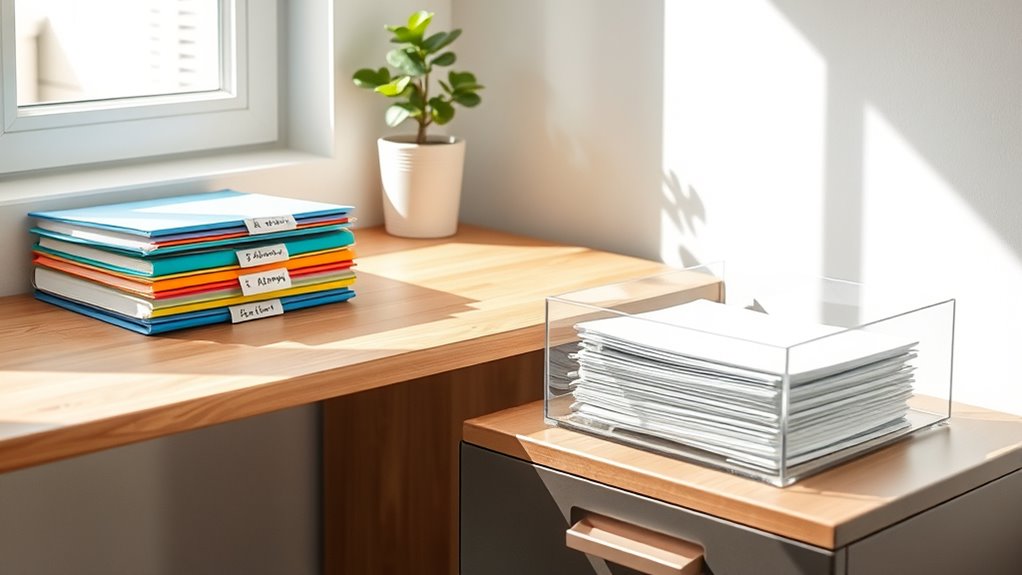

To set up a simple home filing system, start by sorting your documents into broad categories like bills, medical, and warranties. Create smaller folders within each category and clearly label them for quick access. Keep frequently used papers nearby and store older documents securely. Regularly review and update your files to stay organized. By establishing routines, you’ll keep your paperwork manageable and find what you need faster—learn more about creating an effective system below.
Key Takeaways
- Categorize documents into broad groups like bills, medical, and warranties for easier sorting.
- Use clear, consistent labels on folders to enable quick identification and access.
- Keep frequently used papers accessible in designated spots, with less-used items stored in a filing cabinet.
- Scan important documents to create digital backups stored securely in the cloud or external drives.
- Regularly review, update, and maintain both physical and digital files to ensure ongoing organization.
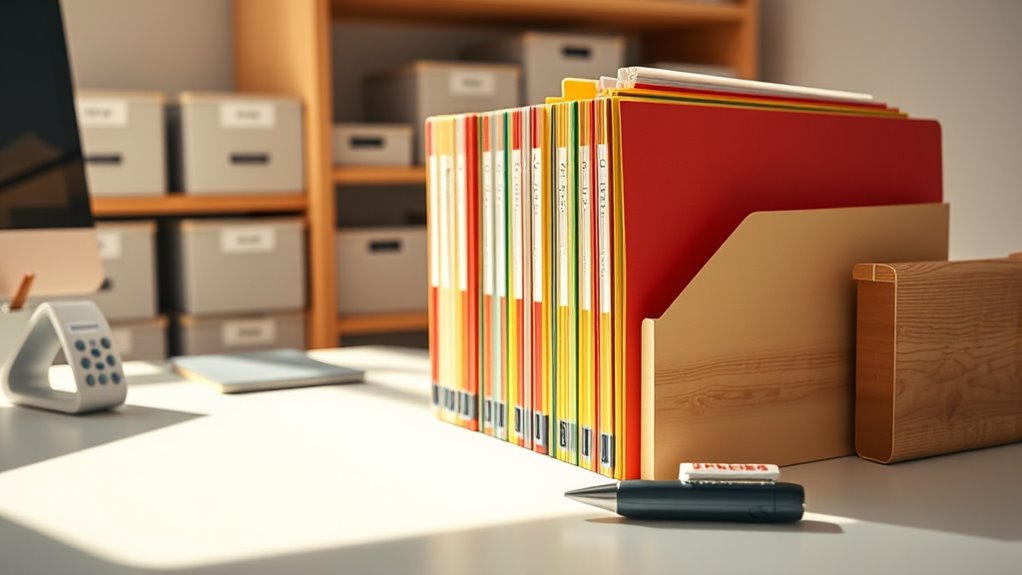
Have you ever wondered how your digital footprint leaves a paper trail? It’s the same with your physical documents. Every receipt, bill, or important letter creates a paper trail that, if left unmanaged, can quickly turn into chaos. That’s why establishing a simple home filing system is vital. When you focus on good document organization, you make it easier to find what you need and keep your space clutter-free. Plus, a well-thought-out system helps you stay on top of your paperwork and reduces stress when deadlines or important documents pop up unexpectedly.
Start by sorting your documents into broad categories—things like bills, medical records, warranties, personal correspondence, and legal papers. Within each category, create smaller, specific folders or labels. For example, under bills, you might have separate folders for utilities, credit cards, and subscriptions. Use clear, consistent labels so that you can quickly identify and access what you need. This simple step makes document organization straightforward and effective, saving you time and frustration. Keep frequently used documents in a designated spot, perhaps a desktop tray or a small file box, so they’re always within reach. Less-used papers can go into a more permanent storage area, like a filing cabinet or a dedicated box.
Organize documents into broad categories with clear labels for easy access and reduced clutter.
In addition to physical organization, digital archiving plays an essential role. When you scan important documents and save them electronically, you create a backup that’s easy to access and difficult to lose. Digital archiving not only reduces paper clutter but also offers a layer of security—especially if you use cloud storage or external drives. Label your digital files clearly and organize them into folders that mirror your physical filing system. That way, whether you’re searching for an invoice or a medical record, you know exactly where to look. Regularly updating and backing up your digital archives ensures your important information stays safe and available, even if your physical files are misplaced or damaged. Incorporating digital backups into your system enhances data security and accessibility.
A simple home filing system isn’t just about tidiness; it’s about creating an efficient way to manage your documents. When you combine thoughtful document organization with diligent digital archiving, you build a reliable system that saves you time and prevents lost paperwork. Over time, maintaining this system becomes second nature, making your home a more organized and less stressful place. Remember, the key is consistency—set aside a few minutes each week to review and update your files, and you’ll stay ahead of the clutter and keep your paper trail manageable.
Frequently Asked Questions
How Often Should I Reorganize My Home Filing System?
You should reorganize your home filing system every six to twelve months. This guarantees your papers stay current and manageable. During updates, incorporate digital backups for important documents and discard anything outdated. Regular reorganization keeps your system efficient, prevents clutter, and makes finding files easier. Set a reminder to review and update your files periodically, so your filing system remains organized and effective without becoming overwhelming.
What Are the Best Tools for Labeling Files Effectively?
You’ll want tools that make labeling clear and quick to read. Imagine color-coded labels that instantly organize your files by category, making retrieval effortless. Use clear font choices like Arial or Helvetica to guarantee readability from a distance. Sharp, permanent markers or label makers produce crisp, durable labels. These tools help you create an efficient, visually appealing system, making your home filing process smoother and less stressful every time you need a document.
How Can I Protect Sensitive Documents From Damage?
You should store sensitive documents in acid-free, waterproof storage materials like binders or folders to prevent damage. For added protection, consider using digital security measures like password protection or encryption for digital copies. Keep physical documents in a cool, dry place away from sunlight and humidity. Regularly back up digital files to secure cloud storage, ensuring your sensitive information stays safe from physical harm and unauthorized access.
What’s the Ideal Size for a Home Filing Cabinet?
You might wonder what size file cabinet fits best. The ideal dimensions are around 15-20 inches wide, 25-30 inches high, and 18-24 inches deep, providing ample storage without overwhelming your space. Consider your storage capacity needs—if you have lots of documents, opt for a larger model. This way, you keep everything organized, protected, and within reach, avoiding clutter and ensuring your important papers stay safe and accessible.
How Do I Declutter Files Without Losing Important Information?
To declutter files without losing important information, start by sorting your documents into categories. Use color coding to easily identify essential files and separate outdated ones. Scan and create digital backups of crucial papers, then securely delete or archive the physical copies you no longer need. This approach keeps your filing system streamlined, guarantees important info is preserved, and makes future retrieval effortless.
Conclusion
Now that you’ve set up your simple home filing system, you might wonder if all this effort truly keeps your papers organized. Some say digital storage is better, but studies show that a physical system can reduce stress and improve recall. So, the next time you find that lost bill or important document easily, you’ll know that a straightforward filing system isn’t just practical—it’s backed by real evidence that it works.