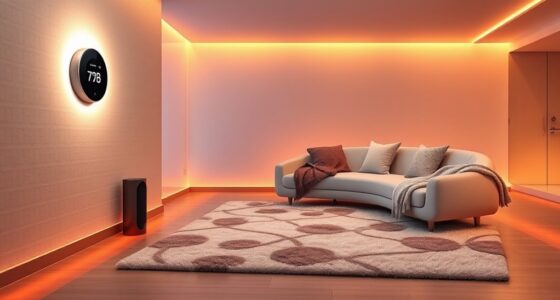
The best rooms for smart home upgrades are the ones where a small change solves a daily annoyance: the living room benefits from the Echo Dot Max’s room-filling sound, while the bedroom can gain flexible color lighting from Govee’s LED strip. For climate control, ecobee Smart Thermostat Premium stands out with a smart sensor, while Kasa switches and plugs offer more targeted ways to automate lights and appliances. The main tradeoff is between easy, plug-in devices and upgrades that need wiring, setup, or a stronger commitment to one control ecosystem. I ranked these options by how well they fit real room needs, not by how many features they list. Read on for the full breakdown and help matching each upgrade to your home.

Get furniture and decor delivered free with Prime
- Fast, free delivery on millions of items
- Prime Video, Amazon Music and more included
- Member-only deals all year
Complete the kit


Key Takeaways
- The best starting point depends on the room: Echo Dot Max suits shared living spaces, while Govee’s LED strip targets bedroom ambience rather than whole-home control.
- Wiring separates simple upgrades from installation projects: Kasa smart plugs and the myQ camera avoid in-wall switch work, while the Kasa switches require a neutral wire.
- Three-way lighting needs a dedicated solution: Kasa HS210 is the specific pick for controlling one light from two switch locations; a single-pole switch will not replace that setup.
- Climate control is the most room-specific premium upgrade: ecobee’s thermostat and sensor make more sense for uneven temperatures than a speaker or smart plug can.
- Control style matters as much as device type: Echo Show 5 adds a visual interface, while NSPanel combines touch controls and temperature monitoring in a wall-mounted panel.




| rooms for smart home upgrade | Dimensions |
|---|---|
| Amazon Echo Dot Max | 4.27 x 4.27 x 3.9 inches |
| SONOFF NSPanel Smart Switch | 5 x 3 x 2 inches |
| myQ Indoor Plug-in Security Ca | 2.64 x 2.64 x 3.8 inches |
| Kasa Smart Dimmer Switch HS220 | — |
| Kasa Smart Light Switch | 3.33 x 1.74 x 5.06 inches |
| Govee 16.4ft RGBIC LED Strip L | — |
| Kasa Smart 3-Way Light Switch | — |
| ecobee Smart Thermostat Premiu | — |
| Amazon Echo Show 5 | 5.8 x 3.6 x 3.2 in |
| Kasa Smart Plug KP200 | 1.73 x 3.33 x 5.11 in |
More Details on Our Top Picks
Amazon Echo Dot Max (newest model), Alexa speaker with room-filling sound and nearly 3x bass, Graphite
For a room upgrade that should do more than control one fixture, the Echo Dot Max is my strongest all-around pick. Its built-in hub supports Zigbee, Matter, and Thread, letting compatible devices connect directly, while Omnisense can support personalized routines. Compared with the Echo Show 5, this speaker prioritizes room-filling audio and smart-home connections over a screen for visual controls. It also adds eero Built-in, which may extend a compatible eero network, though it is not a standalone Wi-Fi upgrade. The tradeoff is a more involved setup when combining services and devices, and its extender function depends on an eero router. I’d choose it for a living room or shared space where sound and several kinds of smart devices matter more than a display.
Pros:- Built-in hub supports Zigbee, Matter, and Thread devices
- Room-filling sound with a dedicated woofer and tweeter
- eero Built-in can extend a compatible eero network
- Supports Alexa routines and multiple streaming services
Cons:- Wi-Fi extension features require a compatible eero router
- Combining multiple smart-home integrations can make setup more involved
- Does not provide the visual interface of the Echo Show 5
Best for: People upgrading a shared room who want a capable Alexa speaker and a hub for compatible Zigbee, Matter, or Thread devices.
Not ideal for: Buyers who mainly want a visual control panel, or anyone seeking Wi-Fi extension without a compatible eero router.
- Dimensions:4.27 x 4.27 x 3.9 inches
- Weight:17.82 oz (505.3 g)
- Audio bandwidth:53 Hz–16 kHz
- Drivers:0.8-inch tweeter and 2.5-inch woofer
- Connectivity:Wi-Fi 6E, Bluetooth 5.3
- Smart-home protocols:Zigbee, Matter, Thread
- Processor:AZ3 with AI Accelerator
- Additional features:eero Built-in, Amazon Sidewalk, smart home hub
Our verdict“Choose the Echo Dot Max for a room that needs strong audio and broad smart-device control, but pick the Echo Show 5 if a screen matters more.”
SONOFF NSPanel Smart Switch – 2-Switch Touchscreen Panel with Temperature Control, Lights, Alexa & Google Home Compatible
The SONOFF NSPanel makes the most sense when a room needs a fixed control point rather than another voice assistant. Its touchscreen and two-switch design put lighting and scene controls on the wall, while temperature, weather, time, and date add useful room context. Compared with the Kasa HS220P3, which focuses on dimming a single lighting circuit, this panel is built around a broader interface and temperature control. That makes it a more visible upgrade for a room where people want to tap controls without reaching for a phone. The tradeoff is installation fit: it is specified for 240-volt systems, requires 2.4 GHz Wi-Fi, and setup may take more effort than replacing a conventional smart switch. Check the electrical system and compatibility before choosing it.
Pros:- Touchscreen provides a fixed, at-a-glance control point
- Two-switch panel supports control of more than one lighting function
- Integrated temperature control and indoor/outdoor readings
- Works with Alexa, Google Home, and Siri Shortcuts
Cons:- Specified for 240-volt electrical systems, limiting installation fit
- Requires 2.4 GHz Wi-Fi for setup
- Setup can be more involved than installing a simpler Kasa switch
Best for: Homeowners with a compatible 240-volt setup who want a wall-mounted touchscreen for room lighting, scenes, and temperature information.
Not ideal for: People with 120-volt wiring or anyone seeking a straightforward replacement for a single standard light switch.
- Dimensions:5 x 3 x 2 inches
- Weight:9.2 oz
- Voltage:240 V
- Wattage:480 W
- Switch type:2-way
- Mounting:Wall mount
- Material:Polycarbonate
- Warranty:1 year
Our verdict“Pick the NSPanel when a compatible room benefits from a touchscreen control center, not when you just need basic app-controlled switching.”
myQ Indoor Plug-in Security Camera Gen 2 – 2K Wi-Fi Camera with Night Vision, Motion Detection, 2-Way Audio, and App Control
For a smart-room upgrade centered on visibility, the myQ Indoor Plug-in Security Camera Gen 2 brings together 2K video, night vision, and a 130-degree view. That wide angle can cover more of a nursery, family room, or pet area from one tabletop position than a narrow-view camera, and two-way audio lets you speak through the app. Unlike the Echo Dot Max, which manages compatible smart-home devices and audio, this camera addresses monitoring rather than room automation. Its motion detection includes people- and pet-aware capabilities in the product information, but advanced alerts require a subscription. The camera is also indoor-only, corded, and has manual rather than remote swivel, so placement matters. I’d choose it for checking a defined indoor area, not for a flexible, battery-powered camera setup.
Pros:- 2K resolution and night vision support day-and-night monitoring
- 130-degree field of view covers a broad indoor area
- Two-way audio supports communication through the app
- Motion detection includes people- and pet-aware features
Cons:- Advanced alerts require a subscription
- Corded power limits placement flexibility
- Indoor-only camera with manual swivel adjustment
Best for: Households that want to check on children or pets in a defined indoor area and use app-based two-way audio.
Not ideal for: Buyers who need outdoor coverage, cordless placement, or advanced alerts without a subscription.
- Resolution:2K
- Field of view:130 degrees
- Night vision:Yes
- Motion detection:Yes
- Audio:Two-way audio
- Connectivity:Wi-Fi, Bluetooth
- Power:Corded electric
- Dimensions:2.64 x 2.64 x 3.8 inches
- Mount type:Tabletop
Our verdict“Choose this camera for wide-angle indoor monitoring and two-way talk, but skip it if you need outdoor or cordless coverage.”
Kasa Smart Dimmer Switch HS220P3, Single Pole, Needs Neutral Wire
The Kasa HS220P3 is my lighting pick for rooms where brightness matters as much as remote control. Its adjustable dimming, schedules, and voice or app operation let you set a softer evening scene without replacing the room’s bulbs with smart models. Compared with the Kasa HS200P3, this switch adds dimming but gives up the simplicity of ordinary on/off control; that distinction is useful if a living room or bedroom needs varied light levels. It works without a separate hub, though installation depends on a neutral wire and single-pole wiring. Dimming results can vary by bulb, so compatibility deserves attention before installation. This listing includes three switches, making it a practical option for upgrading several suitable circuits, but not for homes with three-way arrangements or incompatible lamps.
Pros:- Adjustable dimming helps tailor room lighting to different activities
- App control, voice commands, and scheduling are supported
- Works with Alexa and Google Assistant without a separate hub
- Three switches are included for multiple compatible circuits
Cons:- Requires a neutral wire at the switch box
- Limited to single-pole installations
- Dimming performance can vary with bulb types
Best for: Homeowners upgrading multiple single-pole room circuits who want scheduled, voice-controlled dimming and have neutral wiring.
Not ideal for: People without a neutral wire, those with three-way circuits, or buyers whose bulbs do not work reliably with smart dimmers.
- Model:HS220P3
- Operating voltage:120 V
- Wattage:150 W
- Switch type:Dimmer switch
- Circuit type:Single-pole
- Connectivity:Wi-Fi
- Control methods:Voice, app
- Compatible assistants:Amazon Alexa, Google Assistant
- Included:3 smart dimmer switches, wall plates, wire nuts, wire labels, installation guide
Our verdict“Choose the HS220P3 when dimmable lighting is the goal; choose the HS200P3 for simpler on/off smart control.”
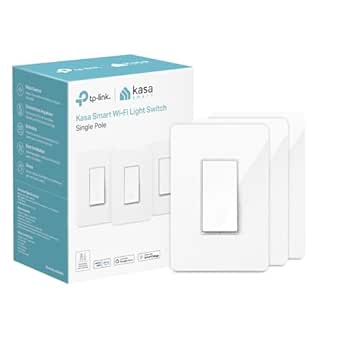
Kasa Smart Light Switch, Single Pole, Requires Neutral Wire, HS200P3
If a room only needs reliable remote on/off control, the Kasa HS200P3 is the simpler choice over the dimming-focused HS220P3. App control, schedules, and Alexa or Google Assistant compatibility can make ordinary ceiling lights easier to manage, while the three-switch pack suits buyers updating several compatible rooms. It avoids the extra dimming considerations of the HS220P3, but it cannot adjust brightness; that makes it a weaker fit for spaces where lighting moods matter. Installation still requires a neutral wire and single-pole circuit, and remote access depends on Wi-Fi. I’d use it for straightforward room lighting rather than a complex multi-location setup. The listed 2-year warranty is a useful product detail, but wiring compatibility should guide the choice before pack size does.
Pros:- Three switches support upgrades across multiple compatible rooms
- App control and scheduling simplify routine light management
- Compatible with Alexa and Google Assistant
- Includes a 2-year warranty
Cons:- Requires a neutral wire at each switch location
- Single-pole use excludes multi-location switching setups
- Does not dim lights like the Kasa HS220P3
Best for: Homeowners replacing standard on/off switches in several single-pole rooms who have neutral wiring and use Alexa or Google Assistant.
Not ideal for: People who want adjustable brightness, have three-way wiring, or need smart control that works without Wi-Fi.
- Model:HS200P3
- Operating voltage:120 V
- Wattage:600 W
- Switch type:Rocker
- Circuit type:1-way
- Connectivity:Wi-Fi, 2.4 GHz
- Compatible assistants:Amazon Alexa, Google Assistant
- Dimensions:3.33 x 1.74 x 5.06 inches
- Warranty:2 years
Our verdict“Pick the HS200P3 for basic scheduled on/off control across suitable rooms, and choose the HS220P3 if dimming is a priority.”
Govee 16.4ft RGBIC LED Strip Lights for Bedroom, APP Control
For a bedroom or entertainment area that needs atmosphere rather than hands-free smart-home control, I’d pick these Govee RGBIC strips. Their standout advantage is displaying multiple colors along one strip, creating more layered effects than the Kasa HS210 switches, which control ordinary on/off lighting. App scenes, adjustable effects, and music sync also make them a flexible choice for changing a room’s mood without replacing a wall switch. The tradeoff is that this is a Bluetooth-controlled decorative light, not a full voice-assistant upgrade: the provided details list no Alexa compatibility. It also needs a clean surface for the adhesive to hold and is indoor-only. I’d choose it for expressive accent lighting, but choose a smart switch when dependable control of existing fixtures matters more.
Pros:- RGBIC effects show multiple colors along one strip.
- App offers customizable effects and preset scenes.
- Music sync adds reactive lighting for entertainment spaces.
- Timer and adjustable color settings support everyday mood lighting.
Cons:- No Alexa compatibility is listed.
- Not water resistant, so it is unsuitable for outdoor or wet areas.
- Adhesion depends on a clean, properly prepared surface.
Best for: Renters or bedroom and media-room owners who want app-adjustable color effects and music-synced accent lighting.
Not ideal for: Buyers seeking Alexa control, outdoor lighting, or smart control of an existing ceiling fixture.
- Length:16.4 ft
- Lighting:Multicolor RGBIC LED
- Light sources:90
- Control:Govee Home app; Bluetooth
- Power:Corded electric
- Voltage:24 V
- Wattage:12 W
- Water resistance:Not water resistant
Our verdict“Choose the Govee strip for colorful, app-controlled room accents; choose a Kasa switch if controlling installed lights matters more than visual effects.”
Kasa Smart 3-Way Light Switch Kit, HS210, Requires Neutral Wire, 2-Pack
When one light is controlled from two wall locations, I’d put the Kasa HS210 kit ahead of the Kasa KP200 outlet: the HS210 is made to replace a 3-way switch setup, while the KP200 adds control to devices plugged into an outlet. Its two-switch kit, app access, and Alexa and Google Assistant support can make an existing hallway or stairway circuit easier to control remotely and by voice. That room-level usefulness earns it a distinct role among these upgrades. The catch is installation: it requires a neutral wire, and wiring a multi-location circuit can be challenging without electrical experience. It also connects over 2.4 GHz Wi-Fi rather than dual-band Wi-Fi like the Echo Show 5. I’d choose it for a compatible 3-way circuit, not as a quick plug-in upgrade.
Pros:- Designed for controlling a light from multiple switch locations.
- Two switches are included for the 3-way setup.
- Supports app control and Alexa and Google Assistant voice commands.
- UL certified.
Cons:- Requires a neutral wire, which some existing switch boxes may lack.
- Works with 2.4 GHz Wi-Fi, not 5 GHz networks.
- Multi-location wiring may call for professional installation.
Best for: Homeowners replacing a compatible two-location light circuit who have a neutral wire and want app or voice control.
Not ideal for: Renters, households without a neutral wire, or anyone uncomfortable checking and wiring a 3-way circuit.
- Circuit type:1-way and 3-way
- Operating voltage:120 V
- Control:App and voice
- Wireless:2.4 GHz Wi-Fi
- Supported protocols:Wi-Fi IEEE 802.11b/g/n
- Maximum wattage:1800 W
- Mounting:Wall mount
- Certification:UL certified
Our verdict“Pick the HS210 when you want to smarten a compatible 3-way light circuit; choose the KP200 for smart control of plug-in devices instead.”
ecobee Smart Thermostat Premium – WiFi, Siri & Alexa Built-In, Smart Sensor
For a whole-home comfort upgrade, the ecobee Smart Thermostat Premium reaches beyond the lighting and outlet control offered by the Kasa HS210 and KP200. Its included SmartSensor can help account for temperature differences between rooms, while built-in air-quality monitoring adds information a basic thermostat may not provide. Siri and Alexa support and a large display make it a more feature-rich room hub than a straightforward wall switch, though it also asks more of the buyer: check HVAC compatibility before purchase, and note that some security features require an ecobee subscription. Siri control also needs an Apple home hub, and a single included sensor may not cover every room in a larger home. The stated energy-savings figure is up to 26%, not a guaranteed result. I’d choose it for broad climate features, not a simple lighting fix.
Pros:- Included SmartSensor supports room-specific temperature control.
- Built-in air-quality monitoring adds insight beyond temperature alone.
- Supports Siri and Alexa voice control.
- Large, vibrant display is easy to read and interact with.
Cons:- Some security features require an ecobee Smart Security subscription.
- Siri control requires an Apple home hub.
- One included sensor may not cover all rooms in a larger home.
Best for: Homeowners with a compatible HVAC system who want room-aware temperature control, voice features, and air-quality monitoring.
Not ideal for: Buyers seeking a low-complexity lighting upgrade, homes with incompatible HVAC equipment, or households unwilling to add sensors or use subscription features.
- HVAC compatibility:Works with 95% of HVAC systems, per product data
- Included sensor:SmartSensor
- Energy savings:Up to 26%, per product data
- Air-quality monitoring:Built in
- Voice control:Siri and Alexa
- Display:Large, vibrant interface
- Warranty:3 years
Our verdict“Choose the ecobee for a compatible home where room-level climate and air-quality features justify a more involved upgrade.”
Amazon Echo Show 5 (newest model), Smart Display, Alexa+, Charcoal
I’d choose the Echo Show 5 when a room needs a visible, compact point of access for smart-home controls, calls, and everyday information. Unlike the Govee strip, it is not a lighting fixture; its 5.5-inch touchscreen brings compatible devices and visual content into one place. Its camera, speaker, and privacy controls also give it more room-side utility than the Kasa HS210, which focuses on a wired light circuit. The small footprint is useful on a nightstand or kitchen counter, but the screen and 1.75-inch speaker are still compact, so I wouldn’t choose it for a large display or room-filling audio. The 2 MP camera is modest, too. Dual-band Wi-Fi gives it broader network support than the HS210’s 2.4 GHz-only connection, while its camera shutter and mic-off button offer direct privacy controls.
Pros:- Compact 5.5-inch touchscreen can display information and control compatible smart devices.
- Built-in camera supports video calling and has a physical shutter.
- Mic-off button provides a direct privacy control.
- Dual-band Wi-Fi offers more network flexibility than the 2.4 GHz-only Kasa HS210.
Cons:- The 2 MP camera is limited for buyers prioritizing call image quality.
- The small display is less suited to extended video viewing.
- The 1.75-inch speaker is compact compared with a dedicated room-filling speaker.
Best for: People who want Alexa controls, video calls, and a small visual information display on a bedroom nightstand or kitchen counter.
Not ideal for: Buyers who want a large video screen, high-resolution calls, or a dedicated room-filling music speaker.
- Display:5.5-inch touchscreen
- Dimensions:5.8 x 3.6 x 3.2 in
- Weight:16.1 oz
- Camera:2 MP with built-in shutter
- Wi-Fi:Dual-band 802.11a/b/g/n/ac
- Speaker:1.75-inch full-range speaker
- Bluetooth:A2DP and AVRCP profiles
- Privacy controls:Mic/camera off button and camera shutter
Our verdict“Choose the Echo Show 5 for a compact Alexa display and control point, but look elsewhere for a large screen or stronger room audio.”
Kasa Smart Plug KP200, In-Wall Smart Home Wi-Fi Outlet
The Kasa KP200 suits a room where two plug-in devices need smart control without leaving a separate adapter visible. Unlike the HS210, which replaces a wired light switch, this in-wall outlet controls connected devices through app or voice commands, with scheduling, grouping, and away mode for routines. That makes it a practical fit for lamps or other compatible loads that are used regularly. The tradeoff is installation: unlike a plug-in smart outlet, it requires replacing a wall receptacle, and the product data sets a 15 A maximum load. It also depends on Wi-Fi and has no physical switches, so manual control is less direct than with the Echo Show 5’s touchscreen. I’d pick it for a clean, built-in outlet upgrade, but skip it if you need a portable adapter or local operation without a network.
Pros:- Controls two connected devices from an in-wall outlet.
- Supports Alexa and Google Assistant voice commands.
- Scheduling, grouping, and away mode support room routines.
- Built-in installation avoids a separate adapter occupying the outlet.
Cons:- Requires replacing a wall outlet, making it less portable than an adapter-style smart plug.
- Requires Wi-Fi for operation.
- No physical switches; control is through the app or voice.
Best for: Homeowners who want an installed outlet to automate two compatible plug-in devices, such as lamps, with app or voice routines.
Not ideal for: Renters, buyers who need a portable smart plug, or anyone whose devices exceed the 15 A maximum load or need physical outlet controls.
- Model:KP200
- Operating voltage:125 V
- Wi-Fi protocol:IEEE 802.11b/g/n
- Control:Voice and remote
- Dimensions:1.73 x 3.33 x 5.11 in
- Weight:6.4 oz
- Operating temperature:-32°F to 104°F
- Certification:ETL
Our verdict“Choose the KP200 for a built-in, network-connected outlet upgrade for compatible loads; choose the HS210 if the room’s main need is smart wall-switch control.”

How We Picked
I compared these ten products by the room problems they can solve: lighting access, atmosphere, climate comfort, security visibility, power control, and convenient voice or screen interaction. I gave more weight to a clear use case, practical setup, and fit for the room than to feature count alone. I also separated plug-in or app-led upgrades from products that depend on existing wiring, since installation limits can determine whether a device is a sensible choice at all.
The ranking favors options that offer a distinct, useful improvement without forcing a whole-room overhaul. That puts flexible, broadly useful picks ahead of more specialized devices, while still giving dedicated roles to a thermostat, a three-way switch kit, and a touchscreen panel. Compatibility, maintenance needs, and the work required to install each product shape the order: buyers who need a specific function may find a lower-ranked specialist a better match than the overall pick.
Factors to Consider When Choosing Rooms For Smart Home Upgrades
I’d choose the room before choosing the device. Start with the repeated inconvenience you want to remove, then check whether the fix depends on wiring, Wi-Fi, a hub, or a particular voice assistant. These broader checks can prevent a useful gadget from becoming an awkward fit for the home.
Match the Upgrade to a Room Problem
Write down the one recurring issue in the room before browsing devices: dim lighting, uneven temperature, missed visitors, or hard-to-reach controls. A product that addresses that specific friction is more likely to earn a place in everyday routines than a device bought for novelty. Avoid upgrading several rooms at once if you have not settled on which controls you prefer. A bedroom may benefit more from a quiet lighting routine than from a screen, while a shared living space can make better use of voice audio or visible controls. If the room has multiple needs, rank them rather than expecting one device to solve everything. This keeps a focused upgrade from turning into a scattered collection of apps and accessories.
Check Wiring and Installation Limits First
Smart switches can make existing lights easier to automate, but they are not always a direct swap for a regular switch. Confirm whether the electrical box has a neutral wire and whether the circuit is single-pole or three-way before buying. Those details determine which models can work and may call for an electrician if you are unsure about the wiring. Plug-in products avoid much of that commitment, though they only control devices connected to an accessible outlet. Renters should also check whether changes can be reversed cleanly and whether the landlord permits switch replacement. Choosing around the home’s actual wiring is usually more useful than choosing around a feature list.
Plan for Your Control Ecosystem
Decide how you want to operate devices: voice, phone app, physical switch, touchscreen, or a mix. A voice assistant is convenient when hands are busy, but it is a poor sole control method if other household members prefer buttons or do not use the same platform. Screens can make status and controls easier to see, yet they take up space and add another device to manage. Before adding products from different brands, check their supported assistants and any hub or network requirements. A mixed setup can work well, but switching among multiple apps for basic tasks quickly becomes tedious. Favor controls that fit the habits already used in that room.
Think Through Wi-Fi and Placement
Smart devices rely on a dependable connection, but the best location for a device may be a poor spot for wireless coverage. Cameras need a useful view and access to power; speakers need room to project sound; and smart plugs must stay reachable without blocking neighboring outlets. Check whether your home network reaches the room reliably before adding devices that depend on app access or live camera feeds. For a camera, consider privacy as well as signal: aim it at the area you need to monitor and avoid unnecessary views into private spaces. A device with a narrow role can still be a bad fit if its placement is inconvenient. Mapping outlets, switches, and network coverage first can save rearranging later.
Choose Between Ambient and Functional Lighting
Decorative lighting and practical lighting solve different problems. An RGB strip can add color and mood, but it may not replace a ceiling light needed for reading, cleaning, or getting dressed. A dimmer is better suited to adjusting the brightness of compatible existing lights, while an on/off switch provides straightforward remote or scheduled control. Check the type of bulb or fixture and the room’s normal lighting tasks before choosing a control. Think about how the light will be operated when the phone is elsewhere; retaining a useful physical control can matter more than extra app effects. Layered lighting often works better than asking one smart product to provide every kind of illumination.
Weigh Ongoing Upkeep Against Convenience
Smart upgrades bring small but recurring tasks: keeping apps and firmware current, maintaining account access, and replacing or repositioning equipment as routines change. Cameras add privacy and notification settings to manage, while lighting products may need occasional adjustments to schedules or scenes. A thermostat’s value depends on whether its controls and sensor placement reflect how the household uses rooms. Before buying, ask who will handle setup and what happens if the internet or voice assistant is unavailable. Local physical controls and simple fallbacks can make an upgrade more dependable for the whole household. Pay for extra automation only when it reduces a real chore or improves comfort enough to justify that upkeep.
Frequently Asked Questions
Which room should I upgrade first if I have never used smart home products?
Start with the room where a single, reversible change can solve a frequent annoyance. A plug-in device is often a lower-commitment way to learn how app control and routines fit your household than replacing a wall switch. If the main issue is lighting, check whether you want color effects, dimming, or simple on/off control before choosing a product. Avoid starting with a complicated installation if you are still deciding which assistant or app you prefer. Once the first device feels natural to use, you can build around the routines that actually help.
Can I install a smart switch if I do not know whether my box has a neutral wire?
Do not assume a switch will fit until you verify the wiring and circuit type. Several Kasa switches in this roundup require a neutral wire, and the three-way kit is meant for lights controlled from two locations. If you cannot confidently identify the wires, ask a qualified electrician rather than relying on wire color alone. A plug-in smart device may be a simpler alternative if it can control the lamp or appliance you have in mind. Confirming compatibility first can prevent buying a switch that cannot be safely installed in your setup.
Is a smart speaker or a smart display better for a shared room?
Choose a speaker if the room mainly needs voice access, music, or audio routines without another screen to manage. A display can make controls and information visible, which may help household members who do not want to remember voice commands. The screen also takes up space and may be unnecessary if phones already serve that role. For shared spaces, consider whether people are comfortable using voice commands around others and whether the device’s placement suits everyone. The better choice is the one that matches the room’s everyday interaction, not simply the one with more interface options.
Do smart LED strips replace a room’s regular lights?
Usually, an LED strip is best treated as accent lighting, not the room’s only light source. It can add color or a softer glow around furniture, but that may not provide the brightness or direction needed for reading, cooking, or cleaning. Check where the strip can be mounted and whether the power lead will reach an outlet without creating a trip hazard. Pairing accent lighting with a conventional fixture or smart dimmer gives the room more useful range. Choose a strip for atmosphere and a switch or dimmer for dependable everyday illumination.
When does a smart thermostat with a room sensor make sense?
A room sensor is most useful when the thermostat’s location does not reflect comfort in the rooms people actually use. It can help address temperature differences across a home, especially when schedules and sensor placement match household routines. It will not fix every cause of uneven heating or cooling, such as poor insulation or an HVAC system that needs service. Check compatibility with your heating and cooling equipment before choosing a thermostat, and consider where the sensor can sit without being affected by direct sunlight or drafts. If temperatures are already consistent and easy to manage, a more modest room upgrade may offer better value.
Conclusion
For a balanced starting point, I’d choose the Amazon Echo Dot Max as best overall for a shared room where sound and voice control are useful. The best value for targeted lighting is a Kasa switch when your wiring matches; choose HS200 for a single-pole circuit, HS210 for a three-way setup, or HS220 when dimming is the priority. For best premium climate control, ecobee Smart Thermostat Premium is the specialist pick for homes that need room-aware temperature management. Best for beginners is the Kasa KP200 plug, which avoids replacing a wall switch and offers a straightforward way to control a connected device. For specific needs, choose the myQ camera for indoor monitoring, Govee for bedroom accent lighting, NSPanel for a wall-mounted touch interface, or Echo Show 5 when a compact visual Alexa control point fits the room. The right choice is the one that solves a regular problem and works with your wiring, network, and preferred controls.