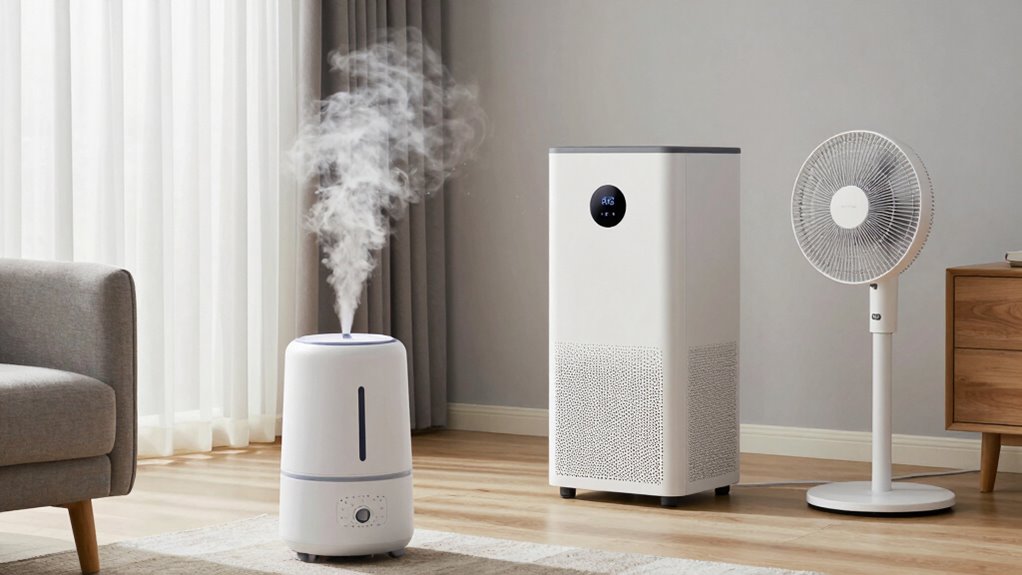

Humidifiers add moisture to dry air, easing skin dryness and respiratory issues during winter. Dehumidifiers remove excess humidity, preventing mold and musty odors in damp spaces. Fans improve airflow, cooling you down and spreading conditioned air evenly. Each device targets a specific comfort problem—dryness, dampness, or poor circulation. Understanding how they work helps you create a healthier, more comfortable indoor environment. Keep going to discover how to choose and use them effectively.

Get furniture and decor delivered free — and shop member deals
- Fast, free delivery on millions of items
- Access to Prime Big Deal Days deals on October 6–7
- Prime Video, Amazon Music and more included
Key Takeaways
- Humidifiers add moisture to dry air, alleviating dryness-related discomfort and respiratory issues.
- Dehumidifiers remove excess moisture, preventing mold, musty odors, and improving air quality.
- Fans circulate air to enhance cooling, reduce stale air, and promote even temperature distribution.
- Each device addresses specific indoor air problems: dryness, humidity, or poor circulation.
- Properly selecting and using these devices creates a healthier, more comfortable indoor environment.
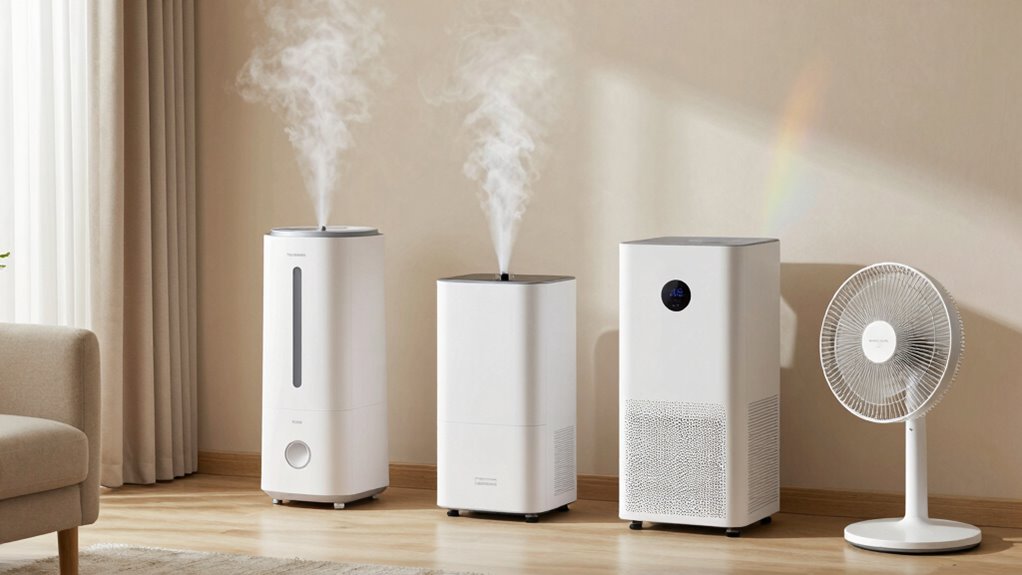
Maintaining a comfortable indoor environment often involves managing air humidity and circulation, and that’s where humidifiers, dehumidifiers, and fans come into play. Each device tackles a specific problem, improving your air quality and energy efficiency in different ways. When your home feels stuffy or dry, a humidifier can add moisture to the air, which helps alleviate dry skin, irritated sinuses, and breathing difficulties. However, if your space becomes excessively humid, it can encourage mold growth and dust mites, compromising air quality. That’s when a dehumidifier becomes crucial. It extracts excess moisture, reducing the risk of mold and musty odors while making the air healthier and more comfortable.
Managing indoor humidity and air circulation is key to a healthier, more comfortable home.
Fans, on the other hand, circulate air within a room, providing a cooling effect and preventing stale air from lingering. They don’t actually change the humidity levels but are essential for improving air circulation, which can make a space feel fresher and more inviting. They also help distribute conditioned air more evenly throughout a room, enhancing overall comfort. Proper circulation also ensures that air pollutants and indoor allergens don’t settle in one area, supporting better air quality overall. Using fans strategically can lead to significant energy savings because they can make you feel cooler without needing to lower the thermostat, reducing your reliance on air conditioning. Additionally, understanding the importance of air circulation helps optimize indoor comfort and air quality.
When choosing among these options, consider your home’s specific needs for air quality and energy efficiency. For example, during winter months when the air tends to be dry, a humidifier can boost comfort and prevent respiratory issues. In contrast, summer heat combined with high humidity calls for a dehumidifier to keep the air dry and reduce the workload on your air conditioning system. Fans can be used year-round to enhance air circulation, making your heating or cooling efforts more effective and less expensive. Proper use of these devices not only improves air quality but also supports energy efficiency by optimizing indoor climate control. For instance, a well-placed fan can make a room feel cooler, allowing you to set the thermostat higher and save on energy bills.
Ultimately, understanding the role each device plays helps you create a balanced indoor environment. You’ll enjoy better air quality, enhanced comfort, and more efficient energy use. Whether adding moisture or removing it, or simply circulating air, each tool has its place in maintaining a healthy, comfortable home. By selecting and operating these devices thoughtfully, you ensure your living space remains inviting, cost-effective, and aligned with your comfort needs. Recognizing the interplay between these devices and air quality management is key to achieving optimal indoor conditions.
humidifier for dry skin and respiratory issues
As an affiliate, we earn on qualifying purchases.
As an affiliate, we earn on qualifying purchases.
Frequently Asked Questions
How Do I Choose the Right Size for Each Device?
To choose the right size, start with sizing considerations like room size and humidity needs. Measure your space accurately to guarantee compatibility; a small device in a large room won’t be effective, while a large one in a small space may be overkill. Check the manufacturer’s guidelines for room compatibility, and opt for a device that matches your specific room dimensions and comfort requirements for maximum performance.
Can These Appliances Be Used Together Effectively?
Yes, these appliances can work together effectively, providing synergy benefits by maintaining ideal indoor air quality. To guarantee compatibility considerations, position your humidifier, dehumidifier, and fan correctly and use them as needed based on your environment. Keep an eye on humidity levels and airflow, adjusting settings accordingly. When used together thoughtfully, they create a balanced and comfortable indoor climate, enhancing overall comfort and air quality.
What Maintenance Is Required for Optimal Performance?
Your comfort depends on proper maintenance! Change air filters regularly to keep airflow smooth and prevent dust buildup, which can cause your appliances to work harder. Keep noise levels in mind—choose models with quieter operation if you’re sensitive to sound. Regularly clean humidifier tanks, dehumidifier filters, and fans to prevent mold and bacteria. These simple steps guarantee your appliances run efficiently, saving you energy and maintaining a cozy, healthy environment.
Are There Energy-Efficient Models Available?
Yes, there are energy-efficient models available. You can find humidifiers, dehumidifiers, and fans designed with energy savings in mind, helping you cut costs while staying comfortable. Look for eco-friendly options with energy star ratings or advanced features like programmable timers and variable speeds. These models use less power without sacrificing performance, making them an excellent choice if you’re aiming to reduce your environmental impact and save on energy bills.
How Do I Troubleshoot Common Issues With These Devices?
Did you know that improper sensor calibration causes over 30% of device malfunctions? To troubleshoot common issues, first check sensor calibration—recalibrate if readings seem off. For noise problems, inspect fan blades or vents for dust or obstructions. Regular maintenance, like cleaning filters and ensuring correct placement, can improve sensor accuracy and noise reduction, keeping your device running smoothly and efficiently.
Conclusion
Understanding the roles of humidifiers, dehumidifiers, and fans helps you create a balanced, comfortable home. Think of them as tools in your comfort toolkit, each tackling a different weather villain—moisture, dryness, or stagnation. By choosing the right device for your needs, you’ll turn your living space into a sanctuary where air feels just right, like a perfectly tuned instrument, playing a harmonious melody of comfort and well-being.
Fall Picks
fall essentials
As an affiliate, we earn on qualifying purchases.