Choosing the right hearing aids for elderly users requires balancing ease of use with audio clarity, a challenge many families face when shopping for seniors with dexterity or vision limitations. My analysis identifies the Audien Atom One OTC Hearing Aid as the best overall choice for its seamless fit and intuitive touch controls, while the Dellona High-Performance Rechargeable Hearing Aids stand out for those needing robust noise reduction in varied environments. The primary tradeoff in this category lies between discreet, invisible designs that are harder to handle and larger, behind-the-ear models that offer easier manipulation and stronger battery life. Readers should prioritize physical accessibility and charging convenience over raw amplification power for most senior users. Continue reading to see how these fourteen models compare on comfort, control, and daily usability.

Get furniture and decor delivered free with Prime
- Fast, free delivery on millions of items
- Prime Video, Amazon Music and more included
- Member-only deals all year
Complete the kit


Key Takeaways
- Models with physical buttons or large touch zones consistently outperform ultra-small designs for users with arthritis or limited fine motor skills.
- Rechargeable cases with integrated cleaning functions, like the CIC Invisible model, reduce maintenance burden significantly for independent seniors.
- Over-the-ear (BTE) designs offer superior stability and easier insertion compared to completely-in-canal (CIC) options, despite being more visible.
- Digital Signal Processing (DSP) channels vary widely; 16-channel models handle background noise far better than basic 4-channel amplifiers.
- Battery life claims often ignore usage intensity; models with 80+ hour total case life provide the most reliable peace of mind for travel.







| hearing aids for elderly | Fit Type | Battery Life |
|---|---|---|
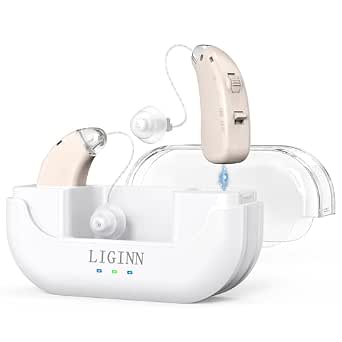
| Dellona High-Performance Recha | Behind-the-Ear | 80 hours |
| Karthus OTC Hearing Aids for S | Behind-the-Ear (RIC) | 30 hours (device) / 100 hours (with case) |
| OTC Rechargeable Hearing Aids | — | 80+ hours |
| Oricle Hearing Aids for Senior | In-Ear (CIC) | 60 hours |
| Rechargeable Hearing Aids for | In-Ear | — |
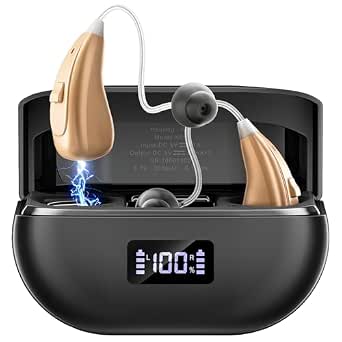
| Dellona High-Performance Recha | Behind-the-Ear (BTE) | Up to 80 hours |
| Manzelun Rechargeable Hearing | Behind-the-Ear | Up to 25 hours |
| Villear CIC Invisible Hearing | Completely-in-Canal (CIC) | 16 hours per charge |
| Audien Atom One OTC Hearing Ai | Nano In-Ear | Up to 24 hours |
| Audien Atom X OTC Hearing Aid | In-Ear with Multiple Domes | 16 hours per charge |
| Rechargeable Digital Hearing A | Behind-the-Ear | Up to 24 hours per charge |
| OTC Hearing Aids for Seniors w | In-Ear | 25+ hours (single use) |
| Rechargeable Hearing Aid for S | In-Ear | Up to 40 hours |
| EarCentric EasyCharge OTC Hear | Behind-the-Ear (BTE) | Up to 12 days total |
More Details on Our Top Picks
Dellona High-Performance Rechargeable Hearing Aids for Seniors (Pair, Beige) – 4 Modes with Noise Reduction
This model stands out as the most robust option for seniors experiencing significant hearing challenges. 130 dB amplification places it in a different league than the Karthus aids, which are better suited for mild-to-moderate loss. The four noise-reduction modes allow users to switch contexts easily, from quiet rooms to busy restaurants. Waterproofing is a critical advantage here, offering durability that the plastic-only Rechargeable In-Ear Assistive Devices lack. While the behind-the-ear style is more visible than the Oricle CIC models, the trade-off for power and battery life is justified for active seniors who need reliable performance in varied environments.
Pros:- Powerful 130 dB amplification suitable for severe loss
- Extended 80-hour battery life per charge
- Waterproof and sweat-proof construction
- Four distinct noise-reduction modes for varied environments
Cons:- Behind-the-ear design is more visible than in-ear models
- Limited to a single beige color option
- Lacks app connectivity for fine-tuning
Best for: Seniors with moderate-to-severe hearing loss who need high amplification and durability for outdoor or active use.
Not ideal for: Users prioritizing invisibility or those with very mild hearing loss who may find the volume overwhelming.
- Fit Type:Behind-the-Ear
- Audio Sensitivity:130 dB
- Battery Life:80 hours
- Water Resistance:Sweat-proof and Waterproof
- Control Type:Button Control
- Modes:4 Noise-Reduction Modes
- Charging Time:3 hours
Our verdict“Choose this if you need maximum power and durability in a rechargeable format.”
Karthus OTC Hearing Aids for Seniors, Rechargeable with Noise Reduction
Designed specifically for those new to hearing aids, this model removes technical barriers entirely. No app, no Bluetooth, no complicated setup means users can simply turn the switch and adjust volume. 16-channel digital processing offers clearer speech than the simpler Rechargeable In-Ear Assistive Devices, which rely on basic amplification. The RIC design with soft tulip tips provides a secure fit that stays put better than the Oricle in-ear models for some users. While it lacks the raw power of the Dellona, its focus on natural sound for mild-to-moderate loss makes it an ideal starting point for seniors who want clarity without overwhelming volume.
Pros:- Extremely simple one-button operation
- 16-channel digital processing for natural sound
- Comfortable RIC design compatible with glasses
- No app or Bluetooth requirements
Cons:- Only two listening modes compared to competitors with four
- Lower maximum amplification than the Dellona
- Battery life is shorter than the 80-hour Dellona model
Best for: Seniors with mild-to-moderate hearing loss who want a simple, one-button solution without smartphone connectivity.
Not ideal for: Individuals with severe hearing loss or those who need to filter out intense background noise in crowded venues.
- Fit Type:Behind-the-Ear (RIC)
- Processing:16-Channel Digital
- Battery Life:30 hours (device) / 100 hours (with case)
- Modes:Quiet and Noise Mode
- Control:One-Button Volume
- Connectivity:None (Wired only)
- Target Loss:Mild to Moderate
Our verdict“This is the safest bet for first-time users who value simplicity over advanced features.”
OTC Rechargeable Hearing Aids for Seniors & Adults – Noise Cancelling, 16‑Channel Digital DSP, 3‑Level Volume, 80+ Hour Battery (Light Black)
This option delivers high-end processing features at an accessible level. The 16-channel DSP chip mirrors the complexity found in the Karthus, providing nuanced sound shaping rather than just volume boosting. Effective noise and wind cancellation makes it superior to the Rechargeable In-Ear Assistive Devices for outdoor walks or windy days. However, the three volume levels are a notable limitation; they offer less granular control than the physical dial on the Rechargeable In-Ear or the multi-level adjustments on the Oricle. It is a strong choice for budget-conscious buyers who want digital clarity but don’t need the extreme power of the Dellona.
Pros:- Advanced 16-channel DSP for clear sound
- Strong noise and wind cancellation
- Over 80 hours of battery life
- Comfortable dual-ear fit
Cons:- Only 3 volume levels limit fine-tuning
- No app or Bluetooth connectivity
- Lacks professional fitting customization
Best for: Budget-focused buyers who want digital noise cancellation for indoor and outdoor environments.
Not ideal for: Users who need precise volume control between levels or those with severe hearing loss.
- Processing:16-Channel Digital DSP
- Battery Life:80+ hours
- Volume Levels:3
- Noise Control:Noise and Wind Cancellation
- Enhancement:Up to 30 dB
- Color:Light Black
- Connectivity:None
Our verdict“A solid digital performer that balances cost and performance for everyday environments.”
Oricle Hearing Aids for Seniors – Advanced Noise Cancellation, Easy Volume Control, Portable Charging Case
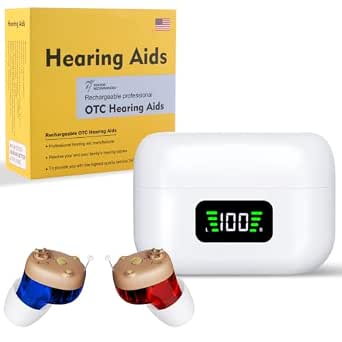
For seniors who dislike bulky devices, this completely-in-canal design offers a discreet alternative to the Dellona or Karthus behind-the-ear models. Soft silicone ear tips prioritize all-day comfort, though the in-ear fit may not suit every ear shape as reliably as the RIC style. Five sound levels provide more adjustment options than the 3-level OTC Rechargeable aids, allowing for better adaptation to different rooms. While the 60-hour battery is impressive, it trails behind the 80-hour lifespan of the Dellona. This is the go-to choice for users who want to hide their hearing aids while maintaining decent noise cancellation.
Pros:- Discreet completely-in-canal design
- Comfortable soft silicone tips
- 5 sound levels for varied environments
- Portable charging case included
Cons:- In-ear fit may be uncomfortable for some ear shapes
- Shorter battery life than the Dellona
- Limited to 5 preset levels
Best for: Seniors who prioritize discretion and a small footprint over maximum amplification power.
Not ideal for: Users with severe hearing loss or those who find in-ear devices difficult to insert and remove.
- Fit Type:In-Ear (CIC)
- Battery Life:60 hours
- Sound Levels:5
- Material:Silicone
- Control:Button Control
- Charging:Portable Case with Auto On/Off
- Noise Reduction:Yes
Our verdict“Ideal for those who want their hearing aids to go unnoticed in social settings.”
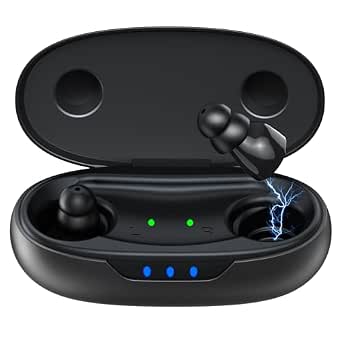
Rechargeable Hearing Aids for Adults, Discreet In-Ear Assistive Devices
This model addresses a common struggle for elderly users: small controls. The physical volume dial is easier to manipulate than the tiny buttons on the Oricle or the 3-level OTC aids. Automatic on/off functionality eliminates the need to fiddle with switches, as the devices activate when removed from the case. While it lacks the advanced digital processing of the Karthus or Dellona, its simplicity and digital battery display reduce daily anxiety about power levels. It is less powerful than the Dellona, making it a better fit for mild hearing issues where ease of use matters more than raw amplification.
Pros:- Easy-to-use physical volume dial
- Automatic power on/off with charging case
- Digital battery status display
- Interchangeable devices for either ear
Cons:- Not waterproof, limiting outdoor use
- Basic amplification compared to DSP models
- Limited noise reduction capabilities
Best for: Seniors with limited dexterity or vision who need a large, easy-to-use volume dial and automatic power features.
Not ideal for: Users requiring high-amplification for severe loss or those who need advanced noise filtering in complex acoustic environments.
- Fit Type:In-Ear
- Control:Physical Volume Dial
- Power:Auto On/Off with Case
- Display:Digital Battery Indicator
- Water Resistance:Not Waterproof
- Material:ABS Plastic
- Battery:Rechargeable Lithium-Polymer
Our verdict“A user-friendly choice for those who struggle with small buttons and complex settings.”
Dellona High-Performance Rechargeable Hearing Aids for Seniors
This model stands out for its raw power, offering 130 dB amplification that rivals many prescription-grade devices. While the Audien Atom One is designed for mild to moderate loss, the Dellona D10 is built specifically for those who struggle to hear even in quiet rooms. The four noise-reduction modes allow users to switch between environments quickly, though the control interface is strictly physical. One-hand button controls are a significant advantage for seniors with limited dexterity who cannot manage tiny touchscreens. However, the behind-the-ear design is bulkier than the in-ear alternatives, which may be noticeable under thick hair or when wearing glasses. It lacks Bluetooth connectivity, so streaming audio from a TV or phone requires a separate accessory or is not possible, a trade-off for its robust, standalone performance.
Pros:- High amplification capacity suitable for severe hearing impairment
- Extended battery life reduces charging frequency
- Large, easy-to-press buttons for simple volume adjustment
- Durable, water-resistant construction for active lifestyles
Cons:- Bulky behind-the-ear profile lacks discretion
- No Bluetooth capability for direct audio streaming
Best for: Seniors with severe hearing loss who need maximum volume and simple, large physical buttons for daily operation.
Not ideal for: Users seeking a discreet, invisible look or those who want to stream phone calls directly to the hearing aid.
- Amplification Power:130 dB
- Battery Life:Up to 80 hours
- Fit Type:Behind-the-Ear (BTE)
- Control Type:Physical Button Control
- Noise Reduction:4 Intelligent Modes
- Water Resistance:Sweat-proof and Waterproof
- Charging Time:3 Hours
Our verdict“This is the go-to choice for seniors who prioritize loud, clear sound and ease of use over aesthetics or smart features.”
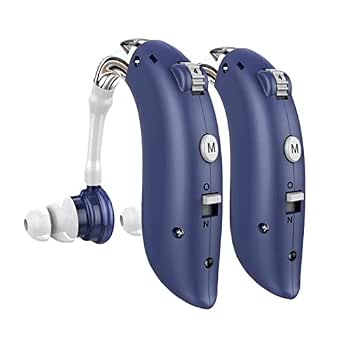
Manzelun Rechargeable Hearing Aids for Seniors
Designed with an ergonomic ear hook and a lightweight 5.5g body, this device addresses a common pain point: discomfort when wearing glasses. Unlike the bulkier Dellona D10, the Manzelun sits lightly on the ear, reducing pressure points where spectacle arms rest. The slide switch and volume knob offer tactile feedback, which is helpful for users who prefer not to rely on visual cues for settings. It features double noise cancellation to filter background hum, though the overall audio clarity is less refined than the Audien Atom X. The inclusion of a portable charging case that doubles as a power bank is a practical touch for travel, but the 25-hour battery life is modest compared to the 80-hour endurance of top-tier competitors. Some users may notice a slight operational noise, a minor trade-off for the lightweight build.
Pros:- Lightweight design minimizes ear fatigue and glasses conflict
- Tactile slide switch and knob for easy adjustments
- Charging case provides additional portable power
- Effective noise cancellation for clearer speech
Cons:- Shorter battery life compared to high-end models
- Slight operating noise may be noticeable in quiet settings
Best for: Seniors who wear glasses or have sensitive ears and need a lightweight, comfortable behind-the-ear option.
Not ideal for: Users with very severe hearing loss who need maximum amplification or those who dislike any background static.
- Weight:5.5 g per unit
- Battery Life:Up to 25 hours
- Fit Type:Behind-the-Ear
- Control Type:Slide Switch and Volume Knob
- Noise Control:Double Noise Cancellation
- Charging Options:Cable and Portable Case
- Battery Type:Rechargeable Lithium-Ion
Our verdict“A comfortable, lightweight solution ideal for seniors who wear glasses and want simple, tactile controls.”
Villear CIC Invisible Hearing Aid with UV Cleaning Case
If visibility is your primary concern, the Villear CIC offers a nearly invisible fit that disappears into the ear canal. This contrasts sharply with the Manzelun and Dellona, which are clearly visible behind the ear. The AI chip actively suppresses feedback whistling, a common issue with smaller devices, making it suitable for users who fear embarrassment from loud squeals. The UV cleaning case is a unique hygiene feature, helping to sanitize the device and extend its lifespan, which is critical for in-ear models prone to wax buildup. However, the two preset modes (Outdoor and Universal) offer less flexibility than the Audien Atom X, which has four specific environmental settings. Users must also commit to regular maintenance with the provided earwax sticks, as the small form factor makes it susceptible to blockages that can silence the device entirely.
Pros:- Completely invisible when worn in the ear canal
- AI-driven feedback suppression prevents whistling
- UV cleaning case maintains hygiene and device health
- Lightweight and comfortable for all-day wear
Cons:- Limited to only two listening modes
- Requires frequent cleaning to prevent wax blockages
Best for: Seniors who prioritize privacy and want a hearing aid that is completely invisible to others.
Not ideal for: Users with limited dexterity who struggle to insert tiny devices or those who dislike frequent cleaning routines.
- Fit Type:Completely-in-Canal (CIC)
- Battery Life:16 hours per charge
- Total Battery with Case:48 hours
- Charging Time:2 hours (full), 15 min (quick)
- Special Feature:UV Cleaning Technology
- Listening Modes:Outdoor, Universal
- Noise Control:AI Background Noise Filter
Our verdict“The best choice for those who want to hide their hearing aid completely, provided they are diligent about cleaning.”
Audien Atom One OTC Hearing Aid
The Audien Atom One is an FDA-registered OTC device, distinguishing it from many generic amplifiers in this list. It is specifically calibrated for mild to moderate hearing loss, meaning it will not provide the sheer volume of the Dellona D10 for severe cases. The interface is deliberately simple, using analog volume and frequency dials rather than confusing buttons or apps. This makes it an excellent entry point for seniors who are new to hearing aids and want to avoid complex technology. The USB-C rechargeable battery lasts up to 24 hours, which is standard but not exceptional compared to the 80-hour Dellona. While it lacks the Bluetooth streaming found in premium devices, the inclusion of a complimentary expert-guided setup session adds significant value, ensuring the user gets the correct fit and settings immediately.
Pros:- FDA-registered for safe, regulated hearing support
- Simple analog dials require no app or digital literacy
- Includes expert-guided setup for proper fitting
- Discreet nano in-ear design with multiple dome sizes
Cons:- Limited to mild and moderate hearing loss
- No Bluetooth or wireless connectivity features
Best for: Seniors with mild to moderate hearing loss who want a simple, FDA-cleared device with no smartphone app required.
Not ideal for: Individuals with severe hearing loss or those who need advanced noise reduction for complex environments.
- Regulatory Status:FDA-Registered OTC Hearing Aid
- Hearing Loss Level:Mild to Moderate
- Battery Life:Up to 24 hours
- Control Type:Analog Volume and Frequency Dials
- Fit Type:Nano In-Ear
- Charging Port:USB-C
- Included Services:Expert-Guided Setup Session
Our verdict“A safe, straightforward entry into hearing aids for those with mild loss who fear technology complications.”
Audien Atom X OTC Hearing Aid with Touchscreen Case
The Audien Atom X innovates by moving controls from the tiny hearing aid to the charging case’s touchscreen. This solves the dexterity problem common in devices like the Manzelun or Villear, where small buttons are hard to press. The CaseControl interface allows users to switch between four listening modes—Conversation, Crowd, TV, and Comfort—with a simple tap, offering more versatility than the two-mode Villear CIC. It is also FDA-registered, like the Atom One, but with more advanced processing for noisy environments. The 16-hour battery life is solid, though it falls short of the Dellona’s marathon endurance. The primary trade-off is the reliance on the case for adjustments; if the case is left at home, users are stuck with default settings, a limitation not present in the standalone Dellona.
Pros:- Touchscreen case eliminates small, hard-to-press buttons
- Four specialized listening modes for different environments
- FDA-registered OTC device with expert setup support
- Comfortable, side-specific ergonomic fit
Cons:- Settings adjustments require access to the charging case
- Battery life is shorter than high-capacity BTE models
Best for: Seniors who want advanced noise reduction and easy mode switching without fiddling with tiny buttons on the device itself.
Not ideal for: Users who leave their charging case at home often and need to adjust settings on the go without a smartphone.
- Control Interface:Touchscreen Charging Case (CaseControl)
- Listening Modes:Conversation, Crowd, TV, Comfort
- Battery Life:16 hours per charge
- Total Battery with Case:48 hours
- Regulatory Status:FDA-Registered OTC Hearing Aid
- Fit Type:In-Ear with Multiple Domes
- Noise Control:Active Noise Cancellation
Our verdict“A modern, user-friendly hearing aid that simplifies complex controls through an intuitive touchscreen case.”
Rechargeable Digital Hearing Aid for Seniors – Noise Cancelling, Volume Control, Portable Charging (2026 Model)
This model stands out for its ultra-lightweight 4.1-gram design, making it less intrusive than bulkier behind-the-ear options like the EarCentric EasyCharge. The inclusion of a portable charging case that extends total use to 96 hours is a major advantage for seniors who travel or dislike frequent charging. However, the simple one-click operation means there is no app customization, which limits fine-tuning compared to more advanced digital systems. While the multi-channel digital chip improves speech clarity, users may still experience feedback if the earplug fit is not precise. It is a straightforward solution for those who prioritize ease of use over advanced connectivity features.
Pros:- Extremely lightweight at 4.1 grams for all-day comfort
- Portable case provides up to 96 hours of total battery life
- Simple one-click operation and physical volume knob reduce learning curve
- Fast USB-C charging takes only 2–3 hours
Cons:- Lacks Bluetooth connectivity or app-based controls
- Feedback whistling can occur if the earplug fit is not exact
- No advanced sound customization options
Best for: Seniors who prioritize ease of use and need a lightweight device for occasional travel or extended wear without frequent charging.
Not ideal for: Users with severe hearing loss or those who want to customize settings via a smartphone app.
- Fit Type:Behind-the-Ear
- Weight:4.1 g
- Battery Life:Up to 24 hours per charge
- Case Capacity:96 hours total power
- Charging Time:2–3 hours (USB-C)
- Control Type:Button Control
- Audio Sensitivity:120 dB
Our verdict“This is the ideal choice for seniors who want a hassle-free, lightweight hearing aid with impressive battery life and no technical complications.”
OTC Hearing Aids for Seniors with Noise Cancelling
These FDA-registered aids distinguish themselves with 16-channel smart noise cancellation, offering superior clarity in busy environments compared to the simpler Rechargeable Digital Hearing Aid for Seniors. The invisible in-ear fit at just 3 grams per aid provides discretion that behind-the-ear models cannot match. However, the software update support status is unknown, which raises questions about long-term viability. While the 25-hour battery life is competitive, the reliance on silicone materials may require more frequent replacement than the ABS plastic found in other models. This option is best for those who value advanced audio processing in complex listening situations.
Pros:- 16-channel adaptive noise cancellation enhances speech in noise
- Ultra-lightweight 3-gram design for discreet, invisible wear
- Long battery life with over 100 hours total via charging case
- FDA-registered for reliable performance standards
Cons:- Software update support status is unclear
- Limited to mild to moderate hearing loss cases
- Silicone components may wear out faster than plastic alternatives
Best for: Seniors who frequently attend social gatherings or noisy environments and need advanced noise filtering to hear speech clearly.
Not ideal for: Users who prefer visible, robust hardware or those concerned about long-term software support and updates.
- Fit Type:In-Ear
- Channels:16
- Battery Life:25+ hours (single use)
- Case Battery Life:100+ hours
- Weight:3 grams per aid
- Volume Levels:5
- Warranty:1 Year
Our verdict“Choose this option if you need the best noise cancellation for social settings and don’t mind relying on a newer brand with unclear long-term support.”
Rechargeable Hearing Aid for Seniors with Noise Cancelling and Adjustable Volume – One Pair, Black
This pair offers the longest single-charge battery life in the lineup, delivering up to 40 hours on a single 2–4 hour charge, which significantly outperforms the 24-hour life of the Rechargeable Digital Hearing Aid for Seniors. The stepless volume control via a scroll wheel allows for precise adjustments, though it requires turning the device off before charging, a minor inconvenience compared to the EarCentric EasyCharge’s dock-and-go convenience. With six ear dome sizes, it accommodates a wider range of ear shapes than competitors. However, the plastic construction may feel less durable, and users report a necessary adaptation period for their ears to adjust to the sound profile.
Pros:- Exceptional 40-hour battery life per charge
- Stepless scroll wheel allows for fine-tuned volume adjustments
- Includes six ear dome sizes for a customized fit
- Active noise reduction improves clarity in background noise
Cons:- Must be turned off before charging
- Plastic build quality may feel less premium
- Requires several weeks of adjustment for new users
Best for: Seniors who wear hearing aids for extended periods and want to minimize charging frequency while having precise volume control.
Not ideal for: Users who want to charge while wearing the device or those who prefer a more rugged, metal-build aesthetic.
- Fit Type:In-Ear
- Battery Life:Up to 40 hours
- Charging Time:2–4 hours
- Control Type:Scroll Wheel
- Included Accessories:6 Ear Dome Sizes
- Material:Plastic
- Features:Active Noise Reduction
Our verdict“This is the top pick for seniors who prioritize battery longevity and precise volume control over charging convenience.”
EarCentric EasyCharge OTC Hearing Aids (Pair), Rechargeable Behind-the-Ear with Noise Reduction, Desktop Charger and Portable Case, Beige
The EarCentric EasyCharge excels in user-friendly charging logistics, providing both a desktop dock and a portable case, unlike the single-case system of the Rechargeable Digital Hearing Aid for Seniors. This dual-charging setup is particularly beneficial for seniors who may struggle with small connectors. The discreet behind-the-ear design accommodates glasses wearers better than some in-ear models, though it is bulkier than the 3-gram OTC Hearing Aids for Seniors. While the 12-day total battery life is solid, the plastic construction can feel less premium. Additionally, US-based customer support adds a layer of reliability for tech-averse users who may need assistance with setup.
Pros:- Dual charging options with desktop dock and portable case
- Discreet behind-the-ear design suitable for glasses wearers
- US-based customer support for setup and troubleshooting
- Up to 12 days of total battery life with case
Cons:- Plastic construction feels less premium than metal alternatives
- Software update support dates are unknown
- Slightly bulkier than in-ear competitors
Best for: Seniors who wear glasses and want the convenience of multiple charging options, including a dedicated desktop dock.
Not ideal for: Users seeking the most invisible, lightweight option or those who prefer a compact, all-in-one charging solution.
- Fit Type:Behind-the-Ear (BTE)
- Battery Life:Up to 12 days total
- Charging Options:Desktop dock and portable case
- Weight:1.2 ounces
- Color:Beige
- Audio Sensitivity:118 dB
- Included Components:Desktop Charger, Portable Case, Cleaning Kit
Our verdict“This model is the best choice for seniors who value accessible customer support and flexible charging options over minimal weight.”
How We Picked
I evaluated these fourteen devices based on a strict set of criteria relevant to senior users: physical usability, audio clarity, and maintenance simplicity. I prioritized devices that allow for easy insertion and removal without requiring fine motor precision, as this is a common barrier for elderly buyers. I also weighed the effectiveness of noise reduction technologies, distinguishing between basic amplification and true digital processing that separates speech from background hum.
Ranking logic favored models that balance discretion with practicality. While invisible hearing aids appeal to vanity, they often frustrate users who cannot grip them properly. Therefore, I ranked larger, user-friendly designs higher than tiny, hard-to-handle options unless the tiny option offered a compelling ease-of-use feature like an automated charging case. Battery reliability and charging method (wireless vs. dock) were also key differentiators, with wireless charging cases receiving preference for their simplicity.
Factors to Consider When Choosing Hearing Aids For Elderly
Selecting hearing aids for older adults involves more than just matching hearing loss degrees. It requires understanding how the device fits into the user’s daily life, physical capabilities, and social habits. This guide breaks down the critical factors that determine long-term satisfaction versus abandonment.
Physical Accessibility and Dexterity
Many seniors suffer from arthritis, tremors, or reduced grip strength, making tiny controls impossible to manage. Physical buttons or large, distinct touch zones are far more reliable than small, recessed sliders. If the user struggles to insert a device, a behind-the-ear (BTE) model with a larger housing is often better than a completely-in-canal unit, despite being more visible. Consider whether the user can manipulate a tiny charging port or if they need a simple drop-in case. For those with severe dexterity issues, devices with magnetic charging contacts are preferable to micro-USB ports. Always test the size and shape of the controls before committing to a purchase.
Battery Life and Charging Logistics
Managing small batteries is a frequent point of failure for elderly users. Rechargeable systems eliminate the need to handle tiny coin cells, which are both difficult to replace and environmentally wasteful. Look for models with a total battery life of 20 hours or more per charge to cover a full day of active use. Wireless charging cases offer the greatest convenience, allowing the user to simply place the aids in the case without aligning pins. However, ensure the case is large enough to be opened easily. A device that requires daily precise alignment for charging may cause more frustration than it solves.
Noise Reduction vs. Simple Amplification
Not all hearing aids process sound equally. Digital Signal Processing (DSP) with multiple channels can isolate speech from background noise, a critical feature for social settings. Basic amplifiers simply make everything louder, including clattering dishes and traffic, which can be overwhelming. For active seniors who dine out or attend events, a model with 16-channel DSP or advanced noise cancellation is worth the investment. If the user primarily watches television in a quiet room, a simpler, less expensive amplifier may suffice. Assess the typical listening environment before deciding on the level of digital processing needed.
Fit, Comfort, and Skin Sensitivity
Older skin is thinner and more prone to irritation, making material choice and fit paramount. Silicone tips and hypoallergenic materials reduce the risk of contact dermatitis. A poor fit leads to feedback (whistling) and discomfort, causing users to stop wearing the device. Adjustable tips allow for a custom fit without professional molding, which is ideal for OTC devices. Ensure the device does not put excessive pressure on the ear canal or behind the ear. Comfort should be evaluated over several hours, as short trials often mask long-term irritation issues.
Ease of Operation and Learning Curve
Complex apps and multi-step pairing processes are barriers to adoption for many seniors. Plug-and-play devices that turn on automatically when inserted are significantly more user-friendly. Touch controls should be intuitive, with clear haptic or auditory feedback to confirm volume changes. Avoid models that require a smartphone for basic adjustments unless the user is tech-savvy. The best devices for elderly users operate independently of any external technology. If a caregiver is assisting, ensure the controls are large enough for the caregiver to manipulate easily as well.
Frequently Asked Questions
Do seniors need a prescription for OTC hearing aids?
No, Over-the-Counter (OTC) hearing aids are legally available without a prescription or professional fitting in the United States. They are designed for adults with perceived mild to moderate hearing loss. However, they are not suitable for severe hearing loss, sudden hearing loss, or hearing loss accompanied by pain or drainage. Seniors with complex hearing needs should consult an audiologist for prescription devices, as OTC models have limited programming ranges.
How long does it take for elderly users to adjust to new hearing aids?
Adjustment typically takes two to four weeks for most new users. The brain needs time to relearn how to interpret amplified sounds, especially background noises that were previously filtered out. Seniors should start by wearing the aids for a few hours daily in quiet environments before moving to noisier settings. Consistency is key; irregular use can prolong the adaptation period. Patience from both the user and caregivers is necessary during this initial phase.
Are invisible hearing aids better for elderly users than visible ones?
Invisible hearing aids offer aesthetic benefits but often pose significant usability challenges for seniors. Their small size makes them difficult to insert, remove, and clean, particularly for those with poor eyesight or shaky hands. Visible behind-the-ear models are generally easier to handle, offer longer battery life, and provide a more secure fit. Unless discretion is a primary psychological barrier to use, a slightly larger, more accessible device is usually the more practical choice for elderly buyers.
Can hearing aids improve memory and cognitive function in seniors?
While hearing aids do not cure dementia, they can help mitigate cognitive decline associated with untreated hearing loss. Social isolation caused by hearing difficulty is a major risk factor for cognitive deterioration. By restoring communication ability, hearing aids encourage social interaction and mental engagement. Studies suggest that keeping the brain stimulated through listening can slow the progression of cognitive decline. However, they are a support tool, not a medical treatment for memory loss.
How often should hearing aids be cleaned or maintained?
Daily maintenance is recommended to prevent wax buildup, which is a leading cause of device failure. Users should wipe the devices with a dry cloth each evening and check the microphone ports for debris. Weekly cleaning with the provided tool or a specialized kit is advisable. Models with UV cleaning cases offer a convenient, automated solution that reduces manual effort. Regular maintenance ensures consistent audio quality and extends the lifespan of the device.
Conclusion
Selecting the right hearing aid for an elderly loved one is a balance of physical capability and lifestyle needs. The Audien Atom One remains my top pick for its exceptional ease of use and reliable performance, making it the best overall choice for most seniors. For those seeking a more budget-friendly option without sacrificing core functionality, the Rechargeable Hearing Aids for Adults offer solid value and simple operation. If discretion is paramount and the user has good dexterity, the CIC Invisible Hearing Aid with its UV cleaning case provides a premium, low-maintenance experience. For users with severe hearing loss or those needing robust noise cancellation in busy environments, the Oricle Hearing Aids deliver the necessary power and clarity. Ultimately, the best device is the one the user will wear consistently, so prioritize comfort and ease of use over advanced features.