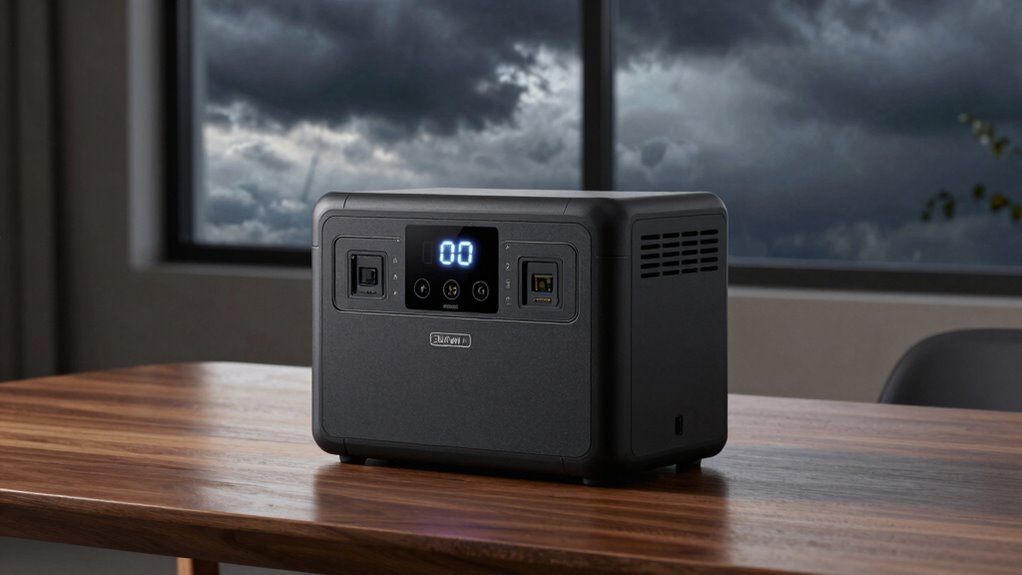

When selecting a home backup battery power station 2000W, the primary tradeoff lies between portability and raw storage capacity. My top overall pick is the Jackery HomePower 3600 Pro Max, which offers massive 3584Wh capacity and dual-voltage output, making it ideal for whole-home backup rather than just camping. For those prioritizing battery longevity and safety, the DABBSSON 2000L stands out with its semi-solid LiFePO4 chemistry and robust 2200W continuous output. Meanwhile, the Anker SOLIX S2000 balances smart features with a sleek design for tech-focused users. The main challenge buyers face is matching the wattage to actual household loads without overspending on unused capacity. Continue reading to see how these eight models stack up in performance, durability, and value.

Get furniture and decor delivered free with Prime
- Fast, free delivery on millions of items
- Prime Video, Amazon Music and more included
- Member-only deals all year
Complete the kit


Key Takeaways
- Capacity (Wh) is more important for home backup than peak wattage; 2000W output is standard, but battery size varies from 576Wh to 3584Wh.
- LiFePO4 battery chemistry dominates the high-end models, offering 6-10x longer lifespans compared to older NMC batteries.
- Dual-voltage (120V/240V) support is the key differentiator for heavy-duty home backup units versus portable camping stations.
- Continuous output rating matters more than surge rating; many ‘2000W’ stations only sustain lower loads for extended periods.
- Integration with home transfer switches is a critical feature for true whole-home backup, separating premium units from basic portables.
| Jackery HomePower 3600 Pro Max Power Station |  | Best Whole-Home Backup | Capacity: 3584Wh | Output: 2000W (120V) / 4000W (240V) | Battery Type: LiFePO4 | VIEW ON AMAZON | See Our Full Breakdown |
| OUPES Mega 1 Portable Power Station |  | Best for Rapid Recharging | Capacity: 1024Wh | Output: 2000W (4500W Surge) | Recharge Time: 36 mins (0-80%) | VIEW ON AMAZON | See Our Full Breakdown |
| EGO POWER+ Portable Power Station |  | Best for EGO Tool Users | Peak Output: 3000W | Continuous Output: 2000W | Power Source: 56V Batteries | VIEW ON AMAZON | See Our Full Breakdown |
| DABBSSON Portable Power Station 2000L |  | Best High-Capacity Portable | Capacity: 2048Wh | Output: 2200W (3300W Surge) | Weight: 41 lbs | VIEW ON AMAZON | See Our Full Breakdown |
| Jackery Explorer 1000 v2 Portable Power Station |  | Best for Light Backup & Camping | Capacity: 1070Wh | Output: 1500W (3000W Surge) | Weight: 23.8 lbs | VIEW ON AMAZON | See Our Full Breakdown |
| Portable Power Station 2000W Peak, 576Wh LiFePO4 Battery Solar Generator |  | Best for Portability and Light-Duty Backup | Capacity: 576Wh | Continuous Output: 1000W | Peak Output: 2000W | VIEW ON AMAZON | See Our Full Breakdown |
| Anker SOLIX S2000 Portable Power Station, 2,010Wh, 1,500W |  | Best Balanced Home Backup | Capacity: 2010Wh | Continuous Output: 1500W | Peak Output: 3000W | VIEW ON AMAZON | See Our Full Breakdown |
| Jackery HomePower 3600 Plus Power Station, 3584Wh, 3600W AC Output |  | Best for Heavy-Duty Home Backup | Capacity: 3584Wh | Output: 3600W | Weight: 77.2 lbs | VIEW ON AMAZON | See Our Full Breakdown |
| home backup battery power station 2000w | Weight | Capacity | Battery Type | Output |
|---|---|---|---|---|
| Jackery HomePower 3600 Pro Max | 74 lbs | 3584Wh | LiFePO4 | 2000W (120V) / 4000W (240V) |
| OUPES Mega 1 Portable Power St | 27.8 lbs | 1024Wh | LiFePO4 | 2000W (4500W Surge) |
| EGO POWER+ Portable Power Stat | 45 lbs | — | Interchangeable 56V | — |
| DABBSSON Portable Power Statio | 41 lbs | 2048Wh | Semi-Solid LiFePO4 | 2200W (3300W Surge) |
| Jackery Explorer 1000 v2 Porta | 23.8 lbs | 1070Wh | LiFePO4 | 1500W (3000W Surge) |
| Portable Power Station 2000W P | 14.8 lbs | 576Wh | LiFePO4 | — |
| Anker SOLIX S2000 Portable Pow | 35.7 lbs | 2010Wh | — | — |
| Jackery HomePower 3600 Plus Po | 77.2 lbs | 3584Wh | — | 3600W |
More Details on Our Top Picks
Jackery HomePower 3600 Pro Max Power Station
This unit stands out as the only option in this lineup offering true 240V output, making it suitable for powering heavy-duty home systems like well pumps or electric dryers. While the OUPES Mega 1 is far more portable, this Jackery model is designed for stationary installation with a fast transfer switch that kicks in during outages. The tradeoff is significant weight and complexity; at 74 pounds, it is not a grab-and-go solution. You are paying for integration and raw capacity, not convenience.Pros:- Supports 240V output for heavy appliances
- Extremely quiet operation under 30dB
- Expandable capacity up to 43kWh
- Fast UPS transfer time under 10ms
Cons:- Heavy at 74 pounds
- Requires professional installation for full home use
- High initial cost compared to portable units
Best for: Homeowners needing seamless backup for 240V appliances and whole-home circuits.
Not ideal for: Renters or campers who need a lightweight, portable power source.
- Capacity:3584Wh
- Output:2000W (120V) / 4000W (240V)
- Battery Type:LiFePO4
- Weight:74 lbs
- Noise Level:<30dB
- Transfer Time:<10ms
- Expandability:Up to 43kWh
Our verdict“This is the clear choice for fixed home installations requiring 240V power and high capacity.”
OUPES Mega 1 Portable Power Station
If downtime during recharging frustrates you, this model addresses it with industry-leading speed, hitting 80% charge in just 36 minutes via AC. Compared to the Jackery HomePower 3600 Pro Max, the OUPES is significantly lighter and more portable, though it lacks 240V output. Its modular design allows expansion to 5kWh, bridging the gap between portable and home backup. The primary drawback is the reliance on specific expansion batteries for higher capacity, which adds to the total system cost if you outgrow the base unit.Pros:- 0-80% charge in 36 minutes
- Modular expansion up to 5120Wh
- Lightweight at 27.8 lbs
- Smart app control for monitoring
Cons:- Base capacity (1024Wh) is modest
- Expansion requires additional battery purchases
- Limited to 120V output
Best for: Users who need fast turnaround times and a balance of portability and expandable power.
Not ideal for: Those needing immediate 240V capability or maximum capacity without buying extra modules.
- Capacity:1024Wh
- Output:2000W (4500W Surge)
- Recharge Time:36 mins (0-80%)
- Weight:27.8 lbs
- Max Expandable Capacity:5120Wh
- UPS Transfer Time:<20ms
- Battery Type:LiFePO4
Our verdict“Choose this if rapid recharge speed and modular growth potential are your top priorities.”
EGO POWER+ Portable Power Station
This unit is unique because it runs on the same 56V batteries used in EGO lawn and garden tools. If you already own EGO equipment, you can swap batteries in seconds, unlike the DABBSSON 2000L which has an internal battery. This flexibility is a massive advantage for contractors or homeowners with existing EGO kits. However, the base unit lacks a large internal battery, meaning runtime depends entirely on how many charged batteries you have on hand. It is also bulkier and heavier than dedicated portable power stations.Pros:- Uses interchangeable 56V EGO batteries
- High peak power at 3000W
- Weather-resistant construction
- No internal battery degradation over time
Cons:- Requires separate batteries for operation
- Heavy at 45 lbs
- Battery cost adds up quickly
Best for: Contractors and homeowners who already own EGO 56V batteries and tools.
Not ideal for: Buyers without existing EGO batteries who want a self-contained power solution.
- Peak Output:3000W
- Continuous Output:2000W
- Power Source:56V Batteries
- Weight:45 lbs
- Battery Type:Interchangeable 56V
- Outlets:3 AC, 4 USB
- Warranty:5 Year Tool, 3 Year Battery
Our verdict“This is the ideal companion for those already invested in the EGO 56V ecosystem.”
DABBSSON Portable Power Station 2000L
This model offers a sweet spot between portability and serious home backup, delivering 2048Wh in a manageable 41-pound package. Compared to the OUPES Mega 1, the DABBSSON has nearly double the base capacity, meaning you can run appliances longer without needing expansion batteries. It features a semi-solid LiFePO4 battery for enhanced safety and longevity. The tradeoff is a slightly higher weight than smaller units and a lack of 240V support, limiting it to standard household outlets and RV use.Pros:- 2048Wh capacity in a portable form factor
- Ultra-fast 1-hour AC charging
- 2200W continuous output
- 4000+ cycle life
Cons:- Solar panel sold separately
- Heavier than sub-1000Wh competitors
- No 240V output
Best for: RV travelers and homeowners wanting high capacity in a single portable unit.
Not ideal for: Those needing to power 240V well pumps or heavy industrial equipment.
- Capacity:2048Wh
- Output:2200W (3300W Surge)
- Weight:41 lbs
- Recharge Time:1 Hour (AC)
- Battery Type:Semi-Solid LiFePO4
- Solar Input:Up to 800W
- Cycle Life:4000+ cycles
Our verdict“This is the best balance of high capacity and portability for general home backup needs.”
Jackery Explorer 1000 v2 Portable Power Station
While the DABBSSON 2000L offers double the capacity, the Jackery 1000 v2 is significantly lighter at 23.8 pounds, making it far easier to move around or take on camping trips. It is designed for shorter outages and powering smaller electronics, laptops, and lights. The LiFePO4 battery ensures long-term durability, but the 1070Wh capacity will drain quickly if you try to run a refrigerator. This is a starter unit for those who prioritize ease of handling over raw runtime.Pros:- Lightweight at 23.8 lbs
- Durable LiFePO4 battery
- Fast charging capability
- Compact footprint
Cons:- Limited 1070Wh capacity
- 1500W continuous output limit
- Solar panel compatibility restricted to Jackery brand
Best for: Campers and users with limited storage space needing light backup power.
Not ideal for: Anyone needing to run high-wattage appliances like space heaters or microwaves for extended periods.
- Capacity:1070Wh
- Output:1500W (3000W Surge)
- Weight:23.8 lbs
- Battery Type:LiFePO4
- Outlets:7 Total
- Voltage:120V
- Dimensions:12.87″ x 8.82″ x 9.72″
Our verdict“Pick this if you need a lightweight, easy-to-store unit for occasional outages and camping.”
Portable Power Station 2000W Peak, 576Wh LiFePO4 Battery Solar Generator
This model is better suited to users who prioritize weight and portability over raw capacity. At just 14.8 lbs, it is significantly lighter than the Anker SOLIX S2000, making it easier to move between a home office and a campsite. However, its 576Wh capacity is less than a third of the Anker’s, meaning it cannot sustain high-draw appliances like refrigerators for extended periods. While the 2000W peak output matches the ‘2000W’ keyword in this roundup, the continuous 1000W limit restricts it to smaller electronics and microwaves, unlike the Jackery HomePower 3600 Plus which handles heavy-duty tools. It is an excellent choice for short outages where mobility matters more than endurance.
Pros:- Extremely lightweight at 14.8 lbs for easy transport
- Fast 0-70% recharge time in 1.8 hours via AC
- 9 versatile ports including 100W USB-C for fast laptop charging
- LiFePO4 battery offers 10+ year lifespan and high safety
Cons:- Low 576Wh capacity limits runtime for essential home appliances
- 1000W continuous output restricts use of high-wattage devices like space heaters
- No native 12V DC car charging port mentioned in key specs
Best for: Campers and RV owners who need a lightweight backup for laptops, CPAP machines, and small appliances without carrying heavy equipment.
Not ideal for: Homeowners needing to run a full-size refrigerator or central HVAC systems, as the 576Wh capacity will deplete too quickly.
- Capacity:576Wh
- Continuous Output:1000W
- Peak Output:2000W
- Weight:14.8 lbs
- Battery Type:LiFePO4
- Recharge Time (AC):1.8 hours (0-70%)
- Ports:4x AC, 2x USB-C, 2x USB-A, 1x DC
Our verdict“Choose this if you need a lightweight, portable unit for short-term emergencies and travel rather than whole-home backup.”
Anker SOLIX S2000 Portable Power Station, 2,010Wh, 1,500W
The Anker SOLIX S2000 stands out for its exceptional efficiency, claiming up to 35 hours of fridge backup thanks to low idle power draw. Compared to the Jackery HomePower 3600 Plus, it is 30% smaller and 25% lighter, offering a more compact footprint for home use. However, its 1500W continuous output falls short of the 2000W benchmark, potentially struggling with simultaneous heavy loads like a microwave and a coffee maker. While it lacks the raw power of the Jackery, its 2010Wh capacity and 10,000-cycle lifespan make it a durable, space-saving option for keeping essentials running during multi-day outages.
Pros:- Highly efficient with up to 35-hour fridge backup capability
- Compact and lightweight design for its 2010Wh capacity
- Long-lasting 10,000-cycle LiFePO4 battery lifespan
- Fast <10ms UPS switchover for sensitive electronics
Cons:- 1500W continuous output is below the 2000W target for heavy loads
- No 12V DC port for car accessory charging
- Higher weight (35.7 lbs) than portable-focused competitors
Best for: Urban homeowners with limited storage space who need long-lasting, efficient backup for refrigerators and electronics.
Not ideal for: Users requiring high-wattage support for power tools or multiple high-draw appliances simultaneously, as it caps at 1500W continuous.
- Capacity:2010Wh
- Continuous Output:1500W
- Peak Output:3000W
- Weight:35.7 lbs
- Battery Cycles:10,000
- Dimensions:8.2 x 11.1 x 12.7 inches
- Solar Input:Up to 400W
Our verdict“This is the ideal choice for those who value efficiency and compact size over maximum wattage output.”
Jackery HomePower 3600 Plus Power Station, 3584Wh, 3600W AC Output
This unit dominates the capacity conversation with a massive 3584Wh battery, offering more than triple the energy storage of the Anker SOLIX S2000. Its 3600W output easily clears the 2000W threshold, capable of running high-draw appliances like well pumps and large refrigerators without strain. While the Anker is more compact, the Jackery is a 77.2 lb behemoth that requires wheeled transport and significant storage space. It is not a portable solution for camping trips but rather a semi-permanent home backup system. If your priority is keeping a household running for days rather than moving the unit around, this is the clear winner over lighter, lower-capacity options.
Pros:- Massive 3584Wh capacity provides multi-day backup for critical loads
- 3600W output handles high-wattage appliances like HVAC and pumps
- Wheeled design and telescopic handle aid in moving the heavy unit
- Supports hybrid AC+DC charging for faster recharging
Cons:- Extremely heavy at 77.2 lbs, making it impractical for frequent transport
- Large footprint requires dedicated storage space
- Overkill for users who only need to power laptops and lights
Best for: Homeowners preparing for extended power outages who need to run heavy-duty appliances and require maximum runtime.
Not ideal for: Campers or users with limited storage space, as it is too heavy (77.2 lbs) and large for easy portability.
- Capacity:3584Wh
- Output:3600W
- Weight:77.2 lbs
- Dimensions:15.2 x 12.2 x 19.3 inches
- Battery Cycles:6,000
- Voltage Support:120V & 240V (parallel)
- Charging Methods:AC, Solar, Gas Generator, Hybrid
Our verdict“Select this if you need raw power and capacity for whole-home backup and have the space to accommodate its size.”
How We Picked
I evaluated these power stations based on three core pillars: energy storage capacity, output stability, and long-term durability. For home backup, the ability to run critical appliances like refrigerators, sump pumps, and medical devices for extended periods is paramount. I prioritized models with LiFePO4 chemistry due to its superior cycle life and safety profile, which is essential for stationary home use. I also examined the quality of the built-in inverters, looking for pure sine wave output and sufficient surge capacity to handle motor-starting loads. Finally, I considered ease of integration into a home setup, including port variety, app connectivity for monitoring, and compatibility with solar inputs for indefinite runtime during outages.
| home backup battery power station 2000w | Battery Type |
|---|---|
| Jackery HomePower 3600 Pro Max | LiFePO4 |
| OUPES Mega 1 Portable Power St | LiFePO4 |
| EGO POWER+ Portable Power Stat | Interchangeable 56V |
| DABBSSON Portable Power Statio | Semi-Solid LiFePO4 |
| Jackery Explorer 1000 v2 Porta | LiFePO4 |
| Portable Power Station 2000W P | LiFePO4 |
| Anker SOLIX S2000 Portable Pow | — |
| Jackery HomePower 3600 Plus Po | — |
Factors to Consider When Choosing Home Backup Battery Power Station 2000w
Choosing the right backup power system requires looking beyond marketing claims. Here are the specific factors that determine whether a unit will actually keep your home running when the grid fails.Understanding Wattage vs. Capacity
A common mistake is assuming a 2000W power station can run high-wattage appliances for hours. Wattage determines what you can plug in, while capacity (measured in Watt-hours, or Wh) determines how long it runs. A 2000W unit with only 576Wh capacity, like some entry-level models, will drain in under 30 minutes with a 1000W load. For home backup, aim for at least 1000Wh to 2000Wh to sustain a refrigerator and lights overnight. Always calculate your critical load in Watts and divide the unit’s Wh rating by that number to estimate real-world runtime.
Battery Chemistry: LiFePO4 vs. NMC
The battery type dictates the lifespan and safety of your investment. Lithium Iron Phosphate (LiFePO4) batteries, found in the DABBSSON and Anker models, offer 2000-3000+ charge cycles and are far less prone to thermal runaway. In contrast, older Nickel Manganese Cobalt (NMC) batteries are lighter and cheaper but degrade faster, often lasting only 500-800 cycles. For a home backup system that sits stationary for years, LiFePO4 is the superior choice despite the higher upfront cost, as it ensures reliability when you need it most.
Output Voltage and Appliance Compatibility
Most standard US homes operate on 120V, but some large appliances like well pumps or electric dryers require 240V. Most portable stations, including the Anker SOLIX S2000, only offer 120V output. If you need to run 240V devices, you must look for units with dual-voltage capability, such as the Jackery HomePower 3600 Pro Max, which can provide 240V by combining two 120V outputs. Check your critical appliance labels before purchasing to avoid incompatible voltage issues.
Integration with Home Transfer Switches
For seamless backup, consider whether the unit supports a home transfer switch. This device automatically switches your home’s electrical panel to the battery when the grid fails. Premium units like the Jackery HomePower series are designed for this, offering high-wattage dedicated ports that can feed directly into a sub-panel. Basic portable stations lack this capability, requiring you to manually run extension cords into the house, which is inconvenient and potentially unsafe if not done correctly. If whole-home automation is your goal, prioritize systems with explicit transfer switch compatibility.
Solar Charging and Recharge Speed
During prolonged outages, solar charging becomes vital. Evaluate the maximum solar input wattage; higher input means faster recharging during the day. Some models allow AC and DC simultaneous charging, which can speed up recovery if you have partial grid access or a generator. Look for MPPT (Maximum Power Point Tracking) controllers built into the unit, as they maximize efficiency from solar panels compared to PWM controllers. This feature ensures you get the most power from your panels, extending your backup duration.
Frequently Asked Questions
Can a 2000W power station run a standard refrigerator?
Yes, most standard refrigerators require between 100W and 200W to run, with a startup surge of 800W to 1200W. A 2000W continuous output rating is more than sufficient to handle this surge. However, the limiting factor is the battery capacity. A unit with 1000Wh capacity can run a 150W refrigerator for approximately 6-7 hours, accounting for inverter inefficiency. If you need to keep food fresh for multiple days, look for units with 2000Wh or higher capacity, or pair your station with solar panels to maintain the charge.
Is LiFePO4 really better than NMC for home backup?
For stationary home backup, LiFePO4 is significantly better. While NMC batteries are lighter and have higher energy density, they degrade faster, typically lasting 500-800 cycles. LiFePO4 batteries retain 80% of their capacity after 2000-3000 cycles and are much more stable, reducing the risk of fire or thermal runaway. Since home backup units are rarely moved, the weight advantage of NMC is irrelevant. The longer lifespan and enhanced safety of LiFePO4 make it the preferred chemistry for long-term reliability.
Do I need a transfer switch for a home backup battery?
A transfer switch is not strictly required but is highly recommended for convenient and safe whole-home backup. Without one, you must run extension cords through windows or doors, which is cumbersome and can be a fire hazard if not managed correctly. A transfer switch isolates your home from the grid and allows you to select specific circuits to power, preventing back-feeding into the utility lines. If you plan to run multiple circuits like lights, refrigerators, and internet routers simultaneously, investing in a compatible transfer switch system is worth the extra cost.
How many solar panels do I need to keep a 2000W station charged?
The number of panels depends on your daily consumption and local sunlight hours. A general rule is to aim for 100W-200W of solar input per 1000Wh of battery capacity to maintain a charge during moderate use. For a 2000Wh unit, two 200W-300W panels are often sufficient to offset daily usage if you are conserving power. During prolonged outages, you may need to prioritize critical loads and use solar to trickle charge the battery. Check the maximum solar input rating of your specific model to ensure you don’t overload the controller.
Can I use a power station to charge an electric vehicle?
Technically, yes, but it is rarely practical. Most EVs require 120V or 240V charging, and even the fastest Level 1 charging draws 1.4kW. A 2000Wh battery would fully deplete in less than 2 hours, adding only a few miles of range. Furthermore, the inverter in the power station must handle the continuous load without overheating. While some high-capacity units like the Jackery HomePower series can technically initiate charging, it is inefficient. These stations are better suited for essential home electronics and appliances rather than vehicle charging.
Conclusion
Choosing the right home backup battery power station 2000W depends on your specific household needs and budget. For those seeking maximum capacity and 240V capability for heavy-duty home backup, the Jackery HomePower 3600 Pro Max is the definitive best overall choice. If you prioritize battery longevity and safety with a more compact form factor, the DABBSSON 2000L offers excellent value with its LiFePO4 chemistry. For tech-savvy users who want smart app integration and a sleek design, the Anker SOLIX S2000 is a strong contender. Beginners or those with limited budgets should consider the Portable Power Station 2000W Peak for basic emergency lighting and device charging, though it lacks the capacity for major appliances. Match the capacity to your critical loads, and you will find a system that keeps your home running smoothly through any outage.