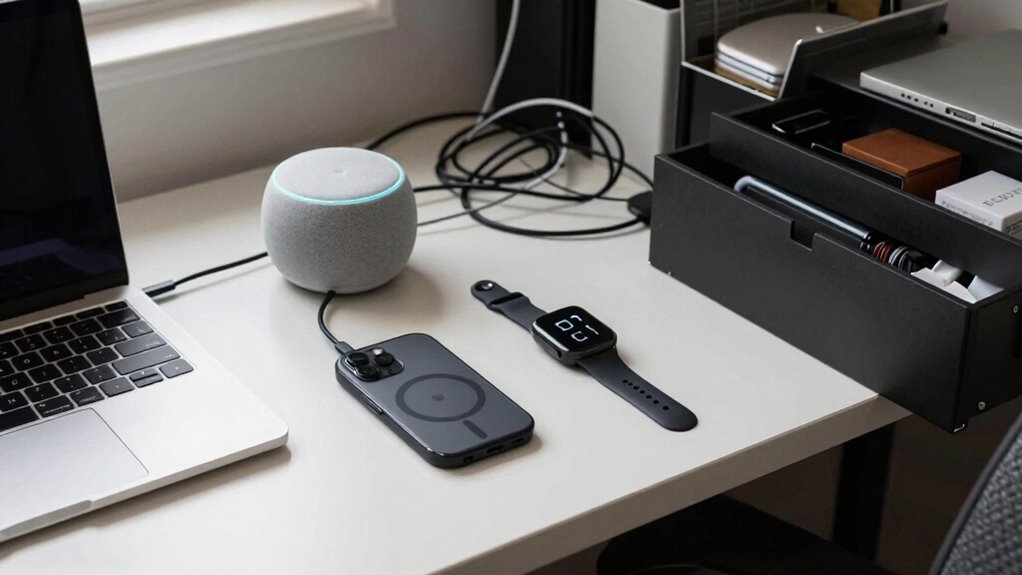

The key difference between useful smart tech and gadget clutter is intent and integration. Useful smart devices seamlessly fit into your routines and communicate well within an ecosystem, making life easier. Gadget clutter, however, consists of unused or disconnected devices that create chaos. To truly enhance your space, focus on technology that complements your needs without adding unnecessary clutter. If you keep exploring, you’ll discover how to build an efficient, cohesive smart home that works effortlessly for you.
Key Takeaways
- Useful smart tech integrates seamlessly into routines, while clutter consists of disconnected, unused devices.
- Automation enhances efficiency, making devices serve specific purposes rather than just adding gadgets.
- Ecosystem compatibility ensures devices communicate smoothly, preventing chaos and promoting a cohesive setup.
- Intentionality in device selection and placement maximizes benefits and minimizes unnecessary complexity.
- Proper planning and prioritization create a harmonious environment where technology simplifies life.

In a world flooded with new gadgets and smart devices, it’s easy to mistake clutter for useful technology. You might think that adding more devices will make your life easier, but in reality, it can do the opposite. The key to distinguishing useful smart tech from gadget clutter is understanding how these devices fit into your daily routines through personal automation and seamless tech integration. When your gadgets work together to simplify tasks, they become tools that enhance your life. If they’re just sitting around, unused or disconnected, they’re clutter, not convenience.
Personal automation plays a vital role here. It’s about setting up your devices to do specific tasks automatically—like having your smart lights turn on at sunset, your coffee maker start brewing when your alarm rings, or your thermostat adjust based on your schedule. When you invest in smart tech that can be programmed to work together, you’re creating a system that genuinely serves you. This integration saves you time, reduces manual effort, and prevents the frustration of managing multiple disconnected devices. The goal isn’t to have the latest gadgets but to have a cohesive setup that responds to your needs effortlessly. Recognizing ecosystem compatibility is essential for creating a truly efficient setup.
Tech integration is what makes personal automation possible. When your devices communicate smoothly, whether through a central hub or a compatible ecosystem, you avoid the chaos of incompatible gadgets vying for control. Instead, you get a streamlined experience where every device complements the others. For example, your smart security system can notify you if a door opens unexpectedly, while your smart lighting dims automatically to save energy. This integrated approach means you’re not overwhelmed by individual features but instead enjoy a harmonious environment designed around your routines. Recognizing the importance of ecosystem compatibility is essential for creating a truly efficient setup. Moreover, choosing devices with interoperability standards can greatly enhance your ability to build a unified smart home.
Additionally, understanding the role of automation can help you maximize your device efficiency and prevent unnecessary clutter. The difference between useful tech and gadget clutter rests on intentionality. Do you choose devices that serve a clear purpose, or do you keep adding gadgets just because they’re new? The smart choice is to focus on tech that can be integrated into your daily life via personal automation. When your devices are well connected, they act as a cohesive system rather than a jumble of standalone gadgets. This makes your smart tech genuinely useful, saving you time and mental energy. Clutter comes when devices sit unused or don’t communicate, creating more hassle than help. Proper planning and prioritization of your smart home setup can significantly enhance its efficiency and functionality. Prioritize tech that integrates seamlessly into your routines, and you’ll see the real power of smart technology unfold in your everyday life.

Amazon Echo Hub (newest model), 8” smart home control panel, Designed for Alexa+, Compatible with thousands of devices
Echo Hub — An easy-to-use Alexa-enabled control panel for your smart home devices—just ask Alexa or tap the…
As an affiliate, we earn on qualifying purchases.
As an affiliate, we earn on qualifying purchases.
Frequently Asked Questions
How Can I Identify Truly Useful Smart Tech From Gadgets?
You can identify truly useful smart tech by focusing on its benefits, like improving daily tasks or enhancing safety. Ask yourself if it solves a problem or adds value, rather than just filling space. Check the gadget’s lifespan—if it’s durable and regularly updated, it’s likely worthwhile. Useful smart tech offers long-term benefits, while gadgets tend to be short-lived and less impactful. Prioritize devices that genuinely make your life easier.
What Are Common Signs of Gadget Clutter in a Home?
Think of your home as a garden; gadget clutter is like weeds choking your space. Common signs include tech overload, where multiple devices serve the same purpose, and device redundancy, with unused gadgets piling up. If you find yourself overwhelmed by gadgets you rarely use or struggling to find space, it’s time to trim the excess. Simplifying helps you focus on useful smart tech that genuinely enhances your daily life.
How Often Should I Evaluate My Smart Device Collection?
You should evaluate your smart device collection every six months to guarantee smart tech integration remains efficient and relevant. During this review, check gadget durability, replacing or upgrading items that no longer perform well. Regular assessments help prevent clutter, optimize your smart home, and ensure each device still adds value. Staying proactive keeps your collection streamlined, functional, and aligned with your evolving needs.
Are There Eco-Friendly Smart Tech Options Available?
Yes, eco-friendly smart tech options are available, and they’re worth exploring. You can find sustainable smart devices made from recycled materials or designed with energy efficiency in mind. These eco-friendly alternatives not only reduce your carbon footprint but also help you stay connected responsibly. As you seek smarter solutions, don’t overlook these sustainable smart devices—they might just revolutionize your tech collection while protecting the environment.
What Are Tips for Organizing Multiple Smart Devices?
To organize multiple smart devices, start with smart device customization by assigning specific functions and labels for easy identification. Use device integration strategies, like centralized hubs or apps, to streamline control. Keep cords tidy with cable organizers, and group devices by location. Regularly review and delete unused apps or devices. This approach keeps your space clutter-free, enhances efficiency, and guarantees you get the most out of your smart tech ecosystem.

Kasa Smart Plug, Matter Compatible, Energy Monitoring, Compact Design, 15A/1800W Max, Super Easy Setup, Works with Apple Home, Alexa & Google Home, UL Certified, 2.4G Wi-Fi Only, White, KP125M(2-Pack)
【Matter-Compatible Smart Home Integration】Works with Matter-certified platforms such as Apple Home, Amazon Alexa, Google Home, and Samsung SmartThings….
As an affiliate, we earn on qualifying purchases.
As an affiliate, we earn on qualifying purchases.
Conclusion
By focusing on smart tech that truly enhances your daily life, you avoid clutter and frustration. Imagine upgrading your outdated thermostat to a smart version that learns your schedule—saving energy and money without adding chaos. When you choose quality over quantity, your space stays organized, and your tech works for you, not against you. Remember, it’s about making your life easier, not more complicated. Keep your smart tech smart—use it wisely.

Seeed Studio XIAO ESP32C6-2.4 GHz WiFi 6, Bluetooth 5.3, Zigbee, Thread (802.15.4), ESP Rain Maker, AWS IoT, Support Microsoft Azure, Smart Home
Enhanced Connectivity: Combines 2.4GHz Wi-Fi 6 (802.11ax), Bluetooth 5(LE), and IEEE 802.15.4 radio connectivity, allowing you to apply…
As an affiliate, we earn on qualifying purchases.
As an affiliate, we earn on qualifying purchases.

TP-Link Deco 7 Pro BE63 Tri-Band WiFi 7 BE10000 Whole Home Mesh System – 6-Stream 10 Gbps, 4×2.5G Ports Wired Backhaul, 4X Smart Internal Antennas, VPN, HomeShield, Free Expert Support (3-Pack)
𝐅𝐞𝐚𝐭𝐮𝐫𝐞-𝐑𝐢𝐜𝐡 𝐖𝐢-𝐅𝐢 𝐁𝐮𝐢𝐥𝐭 𝐭𝐨 𝐋𝐚𝐬𝐭: Get expansive whole-home coverage, fast Wi-Fi 7 speeds, and a future-ready 10G WAN/LAN…
As an affiliate, we earn on qualifying purchases.
As an affiliate, we earn on qualifying purchases.