
To avoid ruining your weekend painting project, steer clear of rushing color mixes, which can create dull or muddy shades. Choose the right brushes for different tasks and keep your workspace organized to stay efficient. Understand basic color theory to pick harmonious hues and prevent clashes. Be patient, take your time, and prepare your tools properly. If you continue exploring these tips, you’ll find ways to improve your skills and achieve better results.
Key Takeaways
- Rushing color mixing creates dull or muddy shades, ruining the overall look.
- Using inappropriate brushes leads to uneven strokes and poor detail.
- Neglecting workspace organization causes delays and accidental messes.
- Ignoring color theory results in clashing or unharmonious colors.
- Skipping proper preparation and patience can cause uneven coverage and mistakes.
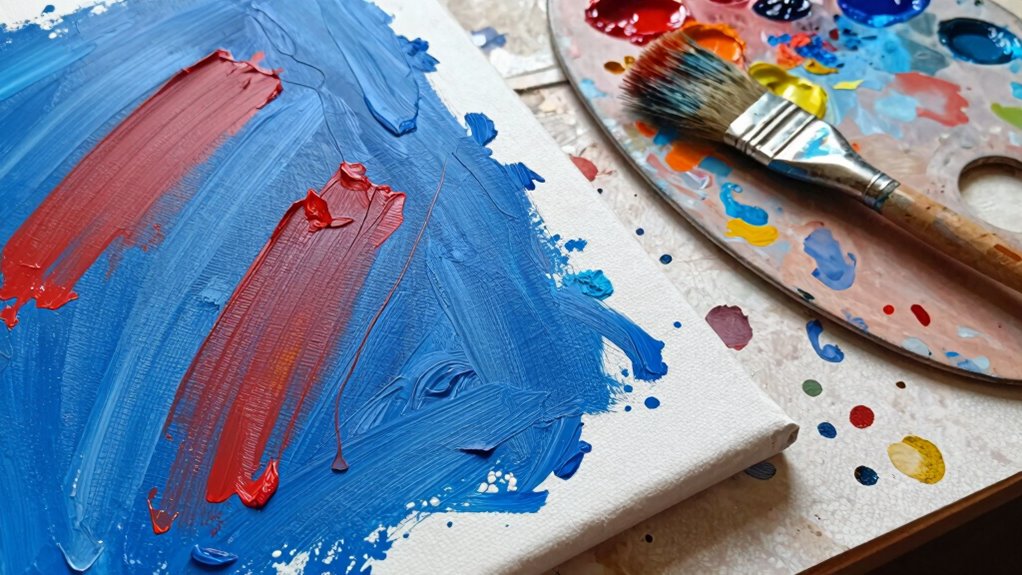
Starting with painting can be exciting, but beginners often stumble into common mistakes that hinder their progress. One of the most frequent errors involves poor color mixing. Instead of blending colors carefully, you might splash different hues together haphazardly, resulting in muddy or dull shades. To avoid this, take your time mixing colors on a palette, adding small amounts of paint gradually until you achieve the desired tone. Remember, mixing colors properly is essential to create vibrant and harmonious artworks. Don’t rush this step; patience here saves you from having to repaint or fix colors later. Also, be mindful of your color choices from the start. Planning your palette helps keep your project cohesive and prevents accidental color clashes.
Take your time mixing colors to achieve vibrant, harmonious results and avoid dull, muddy shades.
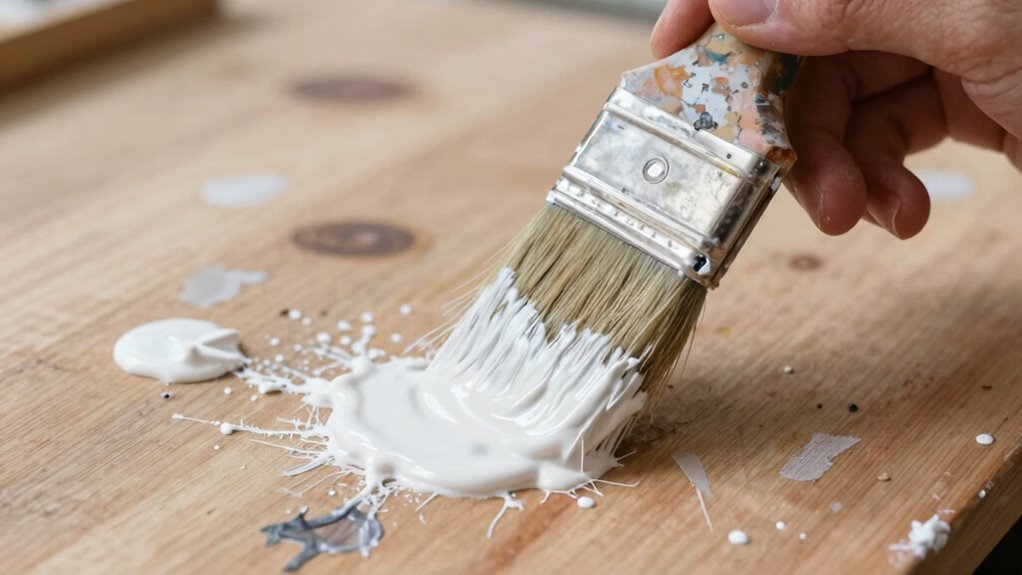
Another critical mistake that can ruin your weekend project is choosing the wrong brush. Brush selection impacts your control, paint application, and overall finish. Using a brush that’s too stiff, too soft, or the wrong size can frustrate you and lead to uneven strokes or paint streaks. Beginners often stick with a single type of brush, but different brushes serve different purposes. For detailed work, a fine-tipped brush offers precision, while larger flat brushes are better for covering broad areas efficiently. Invest in a variety of brushes suited to your project, and learn how each one behaves. Proper brush selection makes a noticeable difference in your painting quality and can boost your confidence. Additionally, understanding brush types can help you choose tools better suited for various techniques. Being aware of brush maintenance is equally important, as it prolongs the lifespan of your tools and ensures consistent results.
Additionally, many beginners underestimate the importance of preparing their workspace and tools. You might think the quality of your paints or brushes alone determines your success, but neglecting proper setup can cause unnecessary messes and setbacks. Keep your brushes clean and dry, and have all your supplies within reach. This reduces interruptions and keeps your workflow smooth. Also, don’t forget to work in a well-lit area. Good lighting helps you see true colors and details clearly, preventing mistakes caused by poor visibility. Creating an organized workspace also minimizes accidental spills or misplaced brushes, ensuring a more efficient painting process. When your workspace is optimized, your focus remains on the art rather than troubleshooting avoidable issues.
Furthermore, understanding color theory can significantly improve your ability to choose harmonious colors from the start.
In the end, avoiding these common pitfalls—such as rushing color mixing, selecting unsuitable brushes, and neglecting workspace preparation—can make a huge difference in completing a satisfying weekend project. The more you pay attention to these details early on, the more enjoyable and successful your painting experience will be. Remember, every mistake is a learning opportunity, so stay patient, experiment, and enjoy the process. With time, you’ll develop your skills and find your unique style, making each project more rewarding than the last.

Professional Artist Paint Brush Set of 12 – Painting Brushes Kit for Kids, Adults Fabulous for Canvas, Watercolor & Fabric – for Beginners and Professionals – Great for Water, Oil or Acrylic Painting
The “Goldilocks” Paint Brush Set – Professional-quality performance without luxury pricing. This paint brush set outperforms cheap sets…
As an affiliate, we earn on qualifying purchases.
As an affiliate, we earn on qualifying purchases.
Frequently Asked Questions
How Do I Choose the Right Paint for My Project?
To choose the right paint, start by considering your project’s purpose and surface. Think about color mixing to get the shade you want, and pick a finish suited for the area—like matte or gloss. Also, select high-quality paint for better coverage. Once you open it, store leftovers properly to avoid waste. This way, you’ll guarantee your project turns out great and stays easy to manage.
What Tools Are Essential for Beginner Painters?
Did you know that 85% of successful painters use quality brushes? As a beginner, essential tools include a variety of brushes for different techniques, like flat and round, to master brush techniques. A palette for color mixing is crucial for achieving the perfect shades. Also, keep a damp cloth nearby for quick corrections. These tools help you develop skills and avoid common beginner mistakes that can ruin your weekend project.
How Can I Prevent Drips and Streaks?
To prevent drips and streaks, focus on your brush technique and paint consistency. Use a high-quality brush and load it with just the right amount of paint—not too much. Apply paint in smooth, even strokes, and avoid overworking the surface. Keep your brush slightly angled, and work in manageable sections. Regularly check your work and wipe excess paint off your brush to maintain a consistent finish.
What’s the Best Way to Prepare Surfaces Before Painting?
To prepare surfaces before painting, start by choosing the right color palette and paint finish for your project. Clean the surface thoroughly to remove dirt and grease, then sand any rough spots for a smooth finish. Fill holes and cracks with primer or filler, and tape off areas you want to protect. Proper preparation guarantees your paint adheres well, giving you a professional look and preventing mistakes like streaks or uneven coverage.
How Long Should I Wait Between Coats?
You should wait at least 2-4 hours between coats, depending on humidity and paint type. For instance, if you’re mixing colors and experimenting with brush techniques, waiting makes sure each layer dries thoroughly, preventing smudging or uneven finishes. Rushing can ruin your project. Imagine applying a second coat too soon, only to see streaks or peeling later. Patience guarantees a smooth, professional-looking result.

Magic Palette Color Mixing Guide 11.5 Inch
Please__contact us to solve the problem w/ name: The Color Wheel 5324CW Magic Palette Personal Mixing Guide New…
As an affiliate, we earn on qualifying purchases.
As an affiliate, we earn on qualifying purchases.
Conclusion
Avoiding common beginner mistakes is like steering clear of potholes on a busy road—you might hit a bump, but your journey remains smooth. I once rushed a weekend project and ended up repainting a wall twice, wasting time and energy. Remember, patience and preparation are your best tools. With a little care, your first painting experience can be a smooth ride, turning a simple weekend project into a satisfying masterpiece you’ll be proud of.

SKYDUE 360 Rotating Plastic Desk Pen Organizer with 5 Slots, Dual-Purpose Art Supply Pencil Cup for Office, School, Home
Space-Saving: The design of 5 compartments provides enough storage capacity without taking up a lot of desktop space….
As an affiliate, we earn on qualifying purchases.
As an affiliate, we earn on qualifying purchases.

LED Floor Lamp, 18W/2000LM Bright Reading Floor Lamp for Office with Double Head, Adjustable Gooseneck Dimmable Modern Standing Light for Lash Extension Craft, Eye Caring Floor Lamps for Living Room
Unique Double Head Design: The LED floor lamp adopts a double head design, which can be expanded horizontally…
As an affiliate, we earn on qualifying purchases.
As an affiliate, we earn on qualifying purchases.