

Warm floors and radiant heat offer direct, comfortable warmth that can save energy and reduce drafts. They work best in well-insulated spaces like bathrooms, kitchens, or tiled areas, especially during colder months. While installation costs can be high upfront, long-term savings and comfort make it worthwhile—particularly during new construction or major renovations. To understand if radiant heat is right for your home and where it makes the most sense, keep exploring these benefits.
Key Takeaways
- Radiant heat efficiently warms objects and people directly, reducing energy use and increasing comfort.
- Ideal for tiled areas like bathrooms and kitchens, where even heat distribution is most effective.
- Installation costs can be high, especially during retrofits, but long-term savings and comfort justify the investment.
- Most effective in well-insulated homes, maximizing energy efficiency and minimizing drafts.
- Combining radiant heat with other climate control methods enhances overall home comfort and efficiency.
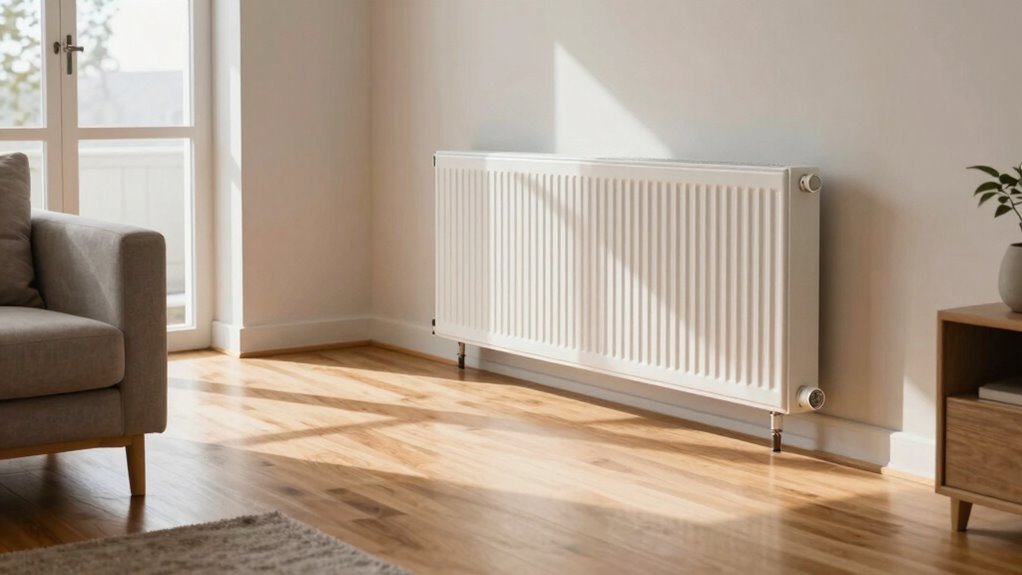
Have you ever stepped onto a cold floor and wished for instant warmth? That quick burst of comfort is exactly what radiant heat can deliver. Warm floors, especially those with radiant heating systems, provide a cozy feeling underfoot and can elevate the overall comfort of your home. But before jumping in, it’s important to understand how these systems impact your energy efficiency and what kind of installation costs you might face.
Radiant heat is often praised for its efficiency because it warms objects and people directly, rather than just heating the air. This targeted approach means you can often set your thermostat lower and still feel warm. Over time, this can lead to energy savings, especially if your current heating system relies on forced-air systems that heat the entire room unevenly and lose energy through ducts. However, the upfront investment varies widely. Installation costs for radiant heat can be significant, particularly if you’re retrofitting an existing home. Installing these systems beneath concrete slabs or within subflooring involves substantial labor and material expenses. While the initial price might seem steep, many homeowners find the long-term energy savings and increased comfort justify the investment.
Radiant heat warms objects directly, reducing energy use and increasing comfort, but installation costs can be significant, especially during retrofits.
Radiant heat systems are most effective in homes where the floors are insulated well and the space is designed to maximize heat retention. In newer constructions, integrating radiant heating during the build process can be more cost-effective and less disruptive. Conversely, adding radiant heat to an existing home often requires tearing up floors or making structural modifications, which can drive up installation costs considerably. But despite the upfront expense, many find that the reduced energy bills and enhanced comfort make it worthwhile. If you’re considering radiant heat, it’s worth comparing different types—electric versus hydronic systems—and evaluating their respective installation costs and energy efficiency benefits.
Where radiant heat truly makes sense is in spaces where comfort and efficiency are paramount, such as bathrooms, kitchens, or rooms with large, tiled floors. These areas benefit from the even warmth that radiant systems provide, eliminating cold spots and drafts. Proper insulation and efficient design are crucial for maximizing the benefits of radiant heating. Additionally, radiant heating can be especially effective when combined with other indoor climate control measures to further improve overall comfort and reduce energy consumption. Choosing the right system type and installation method can significantly impact overall cost and efficiency. When paired with proper insulation, radiant heating becomes even more effective at maintaining consistent warmth while reducing energy use. It’s also helpful to consider the long-term environmental impact of different systems, as some options may be more eco-friendly than others. While the initial investment might seem high, the comfort, energy savings, and potential increase in your home’s value can make radiant heat a smart choice—especially if you’re willing to prioritize long-term benefits over short-term costs.

LuxHeat 25 sqft Floor Heating System, WiFi Thermostat – 120V Heated Floor
- Coverage Area: 25 sq ft heating mat
- Voltage: 120V power supply
- Heating System: Electric radiant floor heating
As an affiliate, we earn on qualifying purchases.
As an affiliate, we earn on qualifying purchases.
Frequently Asked Questions
How Much Does Radiant Floor Heating Cost to Install?
Radiant floor heating typically costs between $6 and $20 per square foot to install, depending on the system type and your home’s specifics. You should expect a cost comparison to traditional heating methods, as radiant heat can be more expensive initially but saves money over time. The installation process involves removing flooring, laying tubing or mats, and then covering them, which can take a day or two, depending on the project size.
Can Radiant Heat Be Used in Outdoor Spaces?
Yes, radiant heat can be used in outdoor spaces, but you need proper outdoor insulation and weatherproofing techniques. Installing radiant heating beneath patios, walkways, or driveways requires durable, weather-resistant materials that withstand outdoor conditions. You should also guarantee the system is well insulated to prevent heat loss and protect it from moisture. When done correctly, outdoor radiant heating creates cozy, frost-free outdoor areas perfect for relaxing or entertaining.
Is Radiant Heat Suitable for All Types of Flooring Materials?
Think of radiant heat as a gentle sunbeam—some flooring materials welcome it, while others resist. It’s suitable for most flooring types like tile, stone, and concrete, thanks to their good thermal conductivity. However, for wood or laminate, you need to check flooring compatibility and insulation considerations, as improper setup can cause damage. Always verify if your chosen flooring material works with radiant heat before installation.
How Long Does It Take for Radiant Floors to Warm Up?
Radiant floors typically warm up within 15 to 30 minutes, depending on your home’s insulation and the system’s power. You’ll notice improved thermal comfort quickly, as radiant heat evenly distributes warmth from the ground up. This setup enhances energy efficiency by reducing heat loss and maintaining consistent temperatures, which helps you save on energy bills. To optimize comfort and efficiency, set your thermostat to a steady, comfortable level.
Are There Any Health Risks Associated With Radiant Floor Heating?
Radiant floor heating is generally safe, but some health concerns might arise, especially if you have allergies or respiratory issues. Dust mites and allergens can settle in floors, and the warm environment might exacerbate allergy risks for sensitive individuals. However, proper maintenance and cleaning considerably reduce these risks. Overall, radiant heat is safe for most people, but it’s wise to take into account personal health concerns and guarantee good indoor air quality.
Conclusion
In the end, warm floors and radiant heat can truly transform your home comfort—especially in colder climates. Did you know that radiant heating systems can save you up to 15% on energy bills compared to traditional forced-air systems? If you value consistent warmth and energy efficiency, investing in radiant heat makes a lot of sense. So, consider your space and needs; you might find that warm floors are the cozy upgrade you’ve been missing.





![Bukit Bintang Hicks Flat: DBKL Orders Cleanup After Viral Video Exposes Dirty Conditions [WATCH] - NST Online](https://charlottesfurniture.com/wp-content/uploads/2026/08/bukit-bintang-hicks-flat-dbkl-orders-cleanup-after-viral-video-exposes-dirty-con-featured-260x140.jpg)