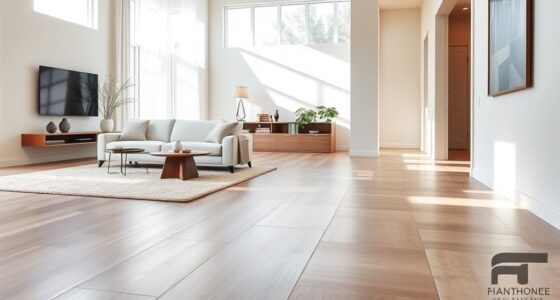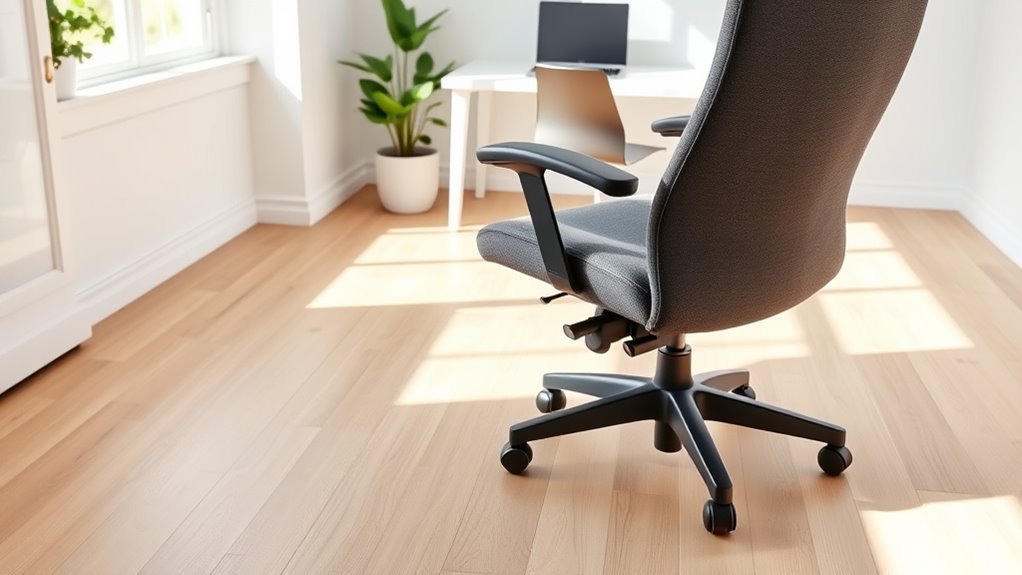

Among these home office flooring options, my best overall pick is the ProsourceFit Wood Grain Puzzle Mat, which pairs half-inch cushioning with a generous 48-square-foot set. For a more permanent-looking surface, snap-lock vinyl planks offer a plank format, while Mohawk carpet tiles suit buyers who prefer a softer, modular floor. The main tradeoff is between underfoot comfort and a firmer, more furniture-friendly surface; installation style and room coverage also change which option makes sense. Foam tiles cushion standing and chair-free work, while adhesive products call for careful floor preparation and may be less forgiving to reposition. Read on for the full breakdown, selection criteria, and guidance on matching a floor to your room and work habits.

Get furniture and decor delivered free with Prime
- Fast, free delivery on millions of items
- Prime Video, Amazon Music and more included
- Member-only deals all year
Complete the kit


Key Takeaways
- ProsourceFit earns the overall lead by combining the thickest listed foam construction in the lineup with 48 square feet of coverage, making it a stronger all-around comfort pick than smaller foam sets.
- Coverage varies sharply among foam options: the ProsourceFit set covers 48 square feet, while Sorbus‘s 16-tile set covers 16 square feet, so room size can matter as much as tile style.
- Installation method separates the hard-surface choices: peel-and-stick tiles and rolls rely on adhesive, while the 5mm snap-lock planks use a joinable plank format that avoids sticking each piece directly to the subfloor.
- Roll flooring favors fewer seams than tile layouts, but its long, narrow format can be harder to handle neatly; square peel-and-stick pieces are easier to arrange around a small workspace.
- No single surface suits every desk setup: foam favors comfort, vinyl and snap-lock products create a firmer rolling surface, and carpet tiles offer a softer modular alternative.


| home office flooring option | Material | Thickness | Coverage | Color |
|---|---|---|---|---|
| 3/8 Inch Thick Printed Foam Ti | EVA foam | 3/8 inch | 100 sq ft | — |
| Sorbus Wood Grain Foam Floor T | Foam | 0.35 inches (listed as 3/8 inch) | 16 sq ft | Carbon |
| ProsourceFit Wood Grain Puzzle | EVA foam | 1/2 inch | 48 sq ft | Light oak |
| Nexus Peel & Stick Vinyl Floor | Vinyl | 1.2 mm | 20 sq ft | Grey |
| Art3d 30-Pack Peel and Stick V | Vinyl | 1.6 mm | 30 sq ft | — |
| Peel and Stick Vinyl Floor Til | PVC | 0.025 inches | Approximately 48.4 sq. ft. | Grey |
| Sorbus Interlocking Wood Grain | EVA foam | 0.38 inches | — | Pine |
| Interlocking Vinyl Flooring Pl | — | 5 mm (approximately 3/16 inch) | — | — |
| Mohawk 24×24 Stone Walk Brown | PET fiber | — | — | — |
| Woodgrain Vinyl Floor Roll | Vinyl | 0.02 inches | — | Grey |
More Details on Our Top Picks
3/8 Inch Thick Printed Foam Tiles Interlocking Foam Mat, Dark Wood Oak Grain Style – 100 Sq. Ft, 25 pcs
For a home office that needs a large, cushioned work zone, these 25 two-foot tiles cover 100 square feet—far more area than the Sorbus 16-tile set, which covers just 16 square feet. The dark oak print gives the foam a more floor-like appearance, while the interlocking edges make it possible to remove or rearrange the surface without adhesive. At 3/8 inch thick, it adds some relief underfoot and can soften chair and footfall noise, though it is not a rigid flooring replacement. The tradeoff is typical of foam: heavy furniture can leave indentations, and sharp chair casters may damage it. It is also intended for indoor use, so damp rooms are a poor fit. I’d choose it for broad, low-impact coverage, not for a hard-wearing chair track.
Pros:- Covers 100 square feet with 25 large, 24-by-24-inch tiles.
- Interlocking design installs and removes without adhesive.
- Wood-grain print looks less utilitarian than plain foam.
- Water-resistant surface is easy to clean and the foam is BPA- and phthalate-free.
Cons:- Heavy furniture and sharp objects can dent or damage the foam.
- Indoor-only use makes it unsuitable for high-moisture spaces.
- Shade may vary between tiles.
Best for: Remote workers who want cushioned coverage across a large, dry office area and can use a chair mat or furniture pads.
Not ideal for: People using heavy rolling chairs directly on the floor, or anyone outfitting a damp basement or other high-moisture room.
- Material:EVA foam
- Tile dimensions:24 x 24 inches
- Thickness:3/8 inch
- Pieces:25
- Coverage:100 sq ft
- Color and pattern:Dark oak wood grain
- Weight:16 pounds
- Intended use:Indoor
Our verdict“Choose this set for extensive cushioned coverage in a dry home office, but protect it from chair casters and heavy loads.”
Sorbus Wood Grain Foam Floor Tiles (16 Tiles, 16 Sq Ft, Carbon)
The Sorbus set makes sense when the goal is to cushion a defined spot—such as a standing-desk area—rather than cover an entire room. Its 16 square feet of carbon wood-grain tiles are much easier to size for a compact office than the 100-square-foot B08F824YSC set, but the 12-inch pieces mean more seams and more assembly. The 3/8-inch foam offers a softer surface for standing than thin peel-and-stick vinyl such as the Nexus tiles, though it is less suited to a rolling chair that needs a smooth, firm path. The lightweight, waterproof tiles are simple to move and clean. The main compromises are limited coverage and a single listed color, so I would skip this if you want a continuous, room-wide floor.
Pros:- Cushioned foam can make standing at a desk more comfortable than thin vinyl tiles.
- Small set is manageable for a defined workstation or desk-side zone.
- Puzzle-style edges install without adhesive.
- Lightweight, waterproof tiles are easy to clean and reposition.
Cons:- Sixteen square feet is limited for covering a full home office.
- The 12-by-12-inch tile format requires many seams and pieces.
- Only carbon is listed as a color option.
Best for: Workers with a compact standing-desk station who want a removable, cushioned mat area rather than full-room flooring.
Not ideal for: Buyers covering a large office or relying on a rolling chair to travel smoothly across the floor.
- Brand:Sorbus
- Material:Foam
- Tile dimensions:12 x 12 inches
- Thickness:0.35 inches (listed as 3/8 inch)
- Number of tiles:16
- Coverage:16 sq ft
- Color:Carbon
- Set weight:1.5 pounds
Our verdict“Pick Sorbus for a small, cushioned standing-desk zone, not as a room-wide solution or a smooth rolling-chair surface.”
ProsourceFit Wood Grain Puzzle Mat 1/2-inch, 12 EVA Foam Interlocking Floor Tiles (48 SQ FT) for Indoor Gym, Office, Living Room, and Play Areas, Light Oak
Among these options, the ProsourceFit mat offers the thickest listed foam layer at 1/2 inch, giving a home office more cushioning than either 3/8-inch foam set from Sorbus or B08F824YSC. Its 12 tiles cover 48 square feet, a useful middle ground: more room than the Sorbus set, but less commitment than the 100-square-foot B08F824YSC pack. The light oak print and impact-absorbing surface suit a workspace where standing, stretching, or protecting a floor matters more than a rigid feel. That softness is also its limitation. Foam can compress under heavy equipment, and a rolling chair may not glide reliably over the seams. I’d favor it for a mixed-use office or standing workstation, but pair it with a firm chair mat if the desk chair rolls often.
Pros:- At 1/2 inch, it is thicker than the two 3/8-inch foam alternatives in this group.
- 48 square feet balances useful coverage with a moderate tile count.
- Interlocking tiles can be assembled or taken apart without permanent installation.
- Light oak wood-grain finish is suited to indoor living spaces.
Cons:- Soft foam and tile seams can impede smooth rolling-chair movement.
- The product data cautions against use under heavy gym equipment.
- Limited listed color options may not suit every office.
Best for: Home workers who alternate between sitting and standing, or use their office for light exercise and want more cushioning underfoot.
Not ideal for: People who need a firm, uninterrupted surface for a rolling chair or plan to place heavy gym equipment on the tiles.
- Material:EVA foam
- Thickness:1/2 inch
- Tile dimensions:24 x 24 inches
- Number of tiles:12
- Coverage:48 sq ft
- Color:Light oak
- Features:Impact absorption, noise reduction, easy assembly
- Intended use:Indoor
Our verdict“Choose ProsourceFit when cushioning is the priority and use a separate firm mat wherever your office chair rolls.”
Nexus Peel & Stick Vinyl Floor Tiles, 20-Pack, 12 x 12 in, Grey
Nexus is the firm-surface alternative to the foam mats in this roundup. Its 1.2 mm vinyl tiles add little height, which can help when a doorway or existing trim leaves limited clearance; unlike the 3/8-inch Sorbus foam, they will not create a notably cushioned standing area. The 20-tile pack covers 20 square feet, so it suits a small office or a specific floor section rather than a large room. Installation is described as peel-and-stick, but the product data also says no glue or adhesives are required, so I would verify the installation directions before preparing the floor. Either way, the stated limitation is clear: the surface must be flat and dry, and adhesion may weaken over time. This is a modest cosmetic update, not a heavy-duty chair-floor solution.
Pros:- Thin 1.2 mm profile adds little height to the floor.
- Twenty tiles cover a defined 20-square-foot area.
- Grey finish offers a different look from the wood-grain foam options.
- Designed for a DIY installation.
Cons:- May not hold up well in high-traffic areas.
- Adhesion may weaken over time, according to the product information.
- Requires a flat, dry surface and provides little cushioning.
Best for: Renters or homeowners refreshing a small, flat, dry office floor where low profile matters more than cushioning.
Not ideal for: People with uneven or damp floors, high-traffic workspaces, or rolling chairs that will put repeated stress on tile edges.
- Material:Vinyl
- Tile dimensions:12 x 12 inches
- Thickness:1.2 mm
- Number of tiles:20
- Coverage:20 sq ft
- Weight:9 pounds
- Color:Grey
- Installation:Peel-and-stick; product description also states no glue or adhesives are required
Our verdict“Use Nexus for a small, low-profile visual update on a flat, dry floor, not for comfort or demanding chair traffic.”
Art3d 30-Pack Peel and Stick Vinyl Floor Planks, 12 x 12 in, Taupe Ash
Art3d is the vinyl pick for a home office where easy cleaning and moisture resistance matter more than a soft feel. The 30 tiles cover 30 square feet, giving it more area than the Nexus 20-pack, while its listed 1.6 mm thickness is slightly greater than Nexus’s 1.2 mm. That difference does not make it a cushioned floor like the ProsourceFit foam mat; it remains a thin, firm vinyl surface. The taupe ash wood grain brings warmth without using a loose interlocking foam system, and the product is described as waterproof and scratch-resistant. Still, peel-and-stick performance depends on preparation: the product data calls for a suitable surface for adhesion, and it is intended for indoor use. I’d choose it for a tidy, easy-clean office, but not for high-moisture rooms or a floor with poor adhesion conditions.
Pros:- Waterproof and scratch-resistant properties suit routine office cleanup.
- Thirty square feet of coverage exceeds the Nexus 20-pack.
- Taupe ash wood-grain finish provides a warmer look than Nexus grey.
- Peel-and-stick installation avoids a separate tile-locking system.
Cons:- Thin vinyl does not provide the cushioning of the foam options.
- Surface preparation may be needed for reliable adhesion.
- Listed for indoor use and not recommended for high-moisture areas.
Best for: Home office owners who want a thin, wood-look vinyl surface that is easy to wipe clean and covers a modest room area.
Not ideal for: Workers seeking cushioned standing comfort, or anyone installing in a high-moisture room or on a poorly prepared floor.
- Material:Vinyl
- Tile dimensions:12 x 12 inches
- Thickness:1.6 mm
- Number of tiles:30
- Coverage:30 sq ft
- Color and pattern:Taupe ash wood grain
- Water resistance:Waterproof
- Installation:Peel and stick
- Item weight:0.22 kg
Our verdict“Choose Art3d for a modest-size office that needs an easy-clean, water-resistant vinyl finish, provided the floor is prepared for adhesive tiles.”
Peel and Stick Vinyl Floor Tile Roll – 11.8” x 590”, 48.4 Sq.Ft., Waterproof, Scratch-Resistant, DIY Self-Adhesive PVC Wood Flooring, Grey
For a home office with a wide, smooth floor area, this 48.4-square-foot roll can cover more ground with fewer joins than the shorter Woodgrain Vinyl Floor Roll. Its waterproof PVC surface and scratch resistance suit spaces where spills or rolling-chair scuffs are a concern, though neither feature makes the thin material a cushion for long work sessions. At just 0.025 inches thick, it follows the feel of the underlying floor rather than hiding bumps or adding comfort. The peel-and-stick format avoids a separate locking system, but the adhesive depends on a clean, smooth, dust-free surface. I’d choose this over the smaller roll for a larger room, while skipping it if the floor needs padding or has uneven spots.
Pros:- 48.4 square feet per roll can reduce seams across a larger office area.
- Waterproof, scratch-resistant PVC suits spill-prone rooms and everyday surface wear.
- Peel-and-stick backing avoids separate flooring tools or a snap-lock installation.
- Wood-grain texture offers a more floor-like appearance than plain foam tiles.
Cons:- At 0.025 inches thick, it adds little cushioning or ability to mask imperfections.
- Reliable adhesion depends on a smooth, clean, dust-free surface.
- The reinforced surface may take scissors and careful measuring to cut.
Best for: Home-office owners covering a larger, smooth floor who want a waterproof grey finish with fewer seams and can prepare the surface carefully.
Not ideal for: People seeking cushioning under a standing desk or chair, or anyone covering textured, dusty, or uneven flooring where adhesive may not hold well.
- Dimensions:11.8 inches x 590 inches
- Coverage:Approximately 48.4 sq. ft.
- Thickness:0.025 inches
- Material:PVC
- Color:Grey
- Installation:Self-adhesive peel-and-stick
- Waterproof:Yes
- Surface applications:Flooring, walls, cabinets, and furniture
Our verdict“Choose this roll for broad coverage on a well-prepared, smooth office floor, but not for comfort underfoot.”
Sorbus Interlocking Wood Grain Foam Floor Tiles (36 Pack, Pine)
This Sorbus set takes a different approach from the vinyl options: its 0.38-inch EVA foam adds a cushioned layer, which can make standing tasks more comfortable than the thin Peel and Stick Vinyl Floor Tile Roll. The tradeoff is a softer surface that may be less suited to a desk chair rolling over it all day, and the product data cautions that long-term heavy use may wear it down. Its 36 interlocking tiles cover 144 square feet, so it can define a generous work area without adhesive or a permanent installation. The waterproof finish is easy to clean, but the puzzle edges may need adjusting for a neat perimeter. I’d pick it for a standing desk or mixed-use office, not a high-traffic chair-based setup.
Pros:- 0.38-inch EVA foam offers more cushioning than the vinyl rolls and planks.
- Interlocking installation requires no adhesive and allows the layout to expand.
- Waterproof tiles are straightforward to clean.
- A 36-tile set covers 144 square feet.
Cons:- Foam may be less durable under prolonged heavy use.
- The cushioned surface may not suit continuous rolling-chair use.
- Edge pieces may need adjustment for a tidy fit.
Best for: People creating a standing-desk zone or a flexible home office where underfoot cushioning and removable installation matter more than a rigid floor.
Not ideal for: Home workers using a rolling office chair throughout the day or expecting a firm, long-wearing surface under heavy furniture.
- Material:EVA foam
- Thickness:0.38 inches
- Tile size:24 x 24 inches
- Number of tiles:36
- Total coverage:144 sq. ft.
- Color:Pine
- Installation:Interlocking; no adhesive needed
- Waterproof:Yes
Our verdict“Choose these tiles for a spacious, cushioned standing-work area, but favor rigid vinyl for a desk chair that rolls often.”
Interlocking Vinyl Flooring Planks 36″ x 6″, 14 Planks, 21 sq ft per Box, Brown or Grey, 5mm Thick DIY Snap‑Lock Oak Wood Grain Luxury Vinyl Flooring
For a home office that needs a firm, wood-look surface, these 5 mm snap-lock planks are a more substantial choice than either peel-and-stick roll. The 12 mil wear layer and waterproof construction are geared toward a harder-wearing finish, while attached IXPE underlayment may help soften footfall noise compared with bare vinyl. That construction also means more assembly than simply sticking down the Peel and Stick Vinyl Floor Tile Roll, and each box covers only 21 square feet, so larger rooms require careful planning around box coverage. The interlocking profile may not connect with other brands, limiting patchwork repairs. I’d choose these for a tidy, durable office floor; I’d skip them if the project depends on mixing leftover planks from another system.
Pros:- A 12 mil wear layer provides a defined protective surface for regular office use.
- Snap-lock installation avoids applying adhesive across the floor.
- Pre-attached IXPE underlayment can reduce sound compared with bare vinyl.
- Waterproof construction and wood-grain print suit a practical office finish.
Cons:- Each box covers 21 square feet, so larger rooms need multiple boxes and layout planning.
- Snap-lock joints may not be compatible with other flooring brands.
- Rigid planks take more fitting and assembly than a peel-and-stick roll.
Best for: Home-office owners who want a firm, waterproof wood-look floor with a wear layer and some sound absorption built into the planks.
Not ideal for: DIYers needing a very simple cut-and-stick job, or anyone planning to join these planks to another brand’s flooring system.
- Plank size:36 x 6 inches
- Thickness:5 mm (approximately 3/16 inch)
- Wear layer:12 mil
- Coverage per box:21 sq. ft.
- Planks per box:14
- Color options:Brown or grey
- Underlayment:Pre-attached IXPE foam
- Installation:Snap-lock interlocking
- Waterproof:Yes
Our verdict“Pick these planks for a firm, more finished office floor with built-in underlayment, provided their locking system suits the whole project.”
Mohawk 24×24 Stone Walk Brown Carpet Tile – 96 sqft, Glue Down or Floating Installation
Unlike the hard, wipe-clean vinyl picks, these PET carpet tiles bring a textured surface that may make a home office feel less echo-prone and more comfortable underfoot. The 24-inch squares offer two installation paths: glue-down for a fixed layout, or floating installation with FlexLok tabs, which are sold separately. That added setup cost and effort makes this less straightforward than the foam Sorbus tiles, which click together without separate tabs. The carton covers 96 square feet, useful for a larger office, and the product lists moisture and stain resistance plus a 10-year limited warranty for specified protections. Carpet is still a less convenient match for frequent spills or rolling-chair movement than the waterproof vinyl planks. I’d choose it for a quieter, furnished workroom, not a spill-heavy or chair-intensive one.
Pros:- Textured PET carpet offers a softer alternative to hard vinyl flooring.
- 24 x 24-inch tiles can be installed with adhesive or as a floating floor.
- Product data lists moisture and stain resistance.
- A carton covers 96 square feet, suitable for a larger office area.
Cons:- Adhesive and FlexLok tabs are sold separately.
- Carpet is less convenient than waterproof vinyl for frequent spills and chair movement.
- The listed warranty is limited to specified protections, and color may vary from screen images.
Best for: Home workers furnishing a larger office who prefer a carpeted feel and want a textured surface rather than hard vinyl.
Not ideal for: People who roll an office chair constantly, need fast spill cleanup, or want a floating installation without buying separate tabs.
- Tile size:24 x 24 inches
- Coverage per carton:96 sq. ft.
- Case weight:41 lbs
- Material:PET fiber
- Installation options:Glue down or floating with FlexLok tabs
- Warranty:10-year limited static protection, wear, colorfastness, and stain resistance
- Pattern and color:Textured multi-colored loop; taupe
- Origin:Made in the USA
Our verdict“Choose these tiles for a spacious, softer-feeling office, but favor rigid vinyl if easy rolling and spill cleanup are priorities.”
Woodgrain Vinyl Floor Roll, 11.8″ x 118″, Peel & Stick
This shorter roll makes the most sense for a small office nook or a limited refresh, rather than a whole-room installation. Its 11.8-by-118-inch format is easier to plan around than the much longer Peel and Stick Vinyl Floor Tile Roll, but it covers less area and may leave more seams in a larger room. The 0.02-inch vinyl surface is thin and residential-grade, so it contributes little cushioning or help disguising floor flaws. Peel-and-stick installation keeps the project simple, and the waterproof, non-slip textured finish suits everyday home use. The product data also notes possible adhesion issues over time, making surface preparation and expectations about permanence important. I’d select it for a compact, smooth area; for broader coverage, the longer roll is the more practical match.
Pros:- Short roll format suits a small project without requiring a large roll.
- Peel-and-stick application avoids a separate locking system.
- Waterproof, textured vinyl is designed for residential use.
- Woodgrain finish gives the floor a warmer appearance than plain foam.
Cons:- Limited roll length means less coverage and potentially more seams in a full room.
- At 0.02 inches thick, it adds almost no cushioning or floor correction.
- Adhesion may weaken over time, according to the product information.
Best for: Renters or DIYers covering a small, smooth home-office nook who want a short peel-and-stick roll rather than interlocking planks.
Not ideal for: Anyone flooring a large room, covering uneven surfaces, or needing a highly secure long-term installation for heavy furniture and frequent chair use.
- Dimensions:11.8 x 118 inches
- Thickness:0.02 inches
- Material:Vinyl
- Shape:Roll
- Color:Grey
- Grade:Residential
- Installation:Peel-and-stick
- Surface texture:Soft, non-slip texture
Our verdict“Choose this roll for a compact, smooth office nook and look to the longer vinyl roll for more continuous room coverage.”

How We Picked
I compared these options through the needs of a home office: underfoot comfort, floor coverage, installation demands, surface format, and likely fit with desk furniture. Product details such as foam thickness, tile or plank dimensions, stated coverage, adhesive or snap-lock installation, and whether a set is designed for floating or glue-down placement helped distinguish products without assuming performance details that were not provided.
The ranking favors versatility for a typical home workspace, then separates picks by their clearest strengths. The ProsourceFit foam set ranks first for its 1/2-inch thickness and 48-square-foot coverage; smaller foam sets rank lower when their stated area limits how much of a room they cover. Hard-surface choices rise for buyers who prioritize a firmer floor or plank appearance, while adhesive rolls and tiles are ranked with their preparation and placement constraints in mind. These are role-based recommendations: the best choice depends on whether comfort, a smooth chair area, broad coverage, or a particular installation method matters most to you.
| home office flooring option | Material | Color | Installation |
|---|---|---|---|
| 3/8 Inch Thick Printed Foam Ti | EVA foam | — | — |
| Sorbus Wood Grain Foam Floor T | Foam | Carbon | — |
| ProsourceFit Wood Grain Puzzle | EVA foam | Light oak | — |
| Nexus Peel & Stick Vinyl Floor | Vinyl | Grey | Peel-and-stick; product description also states no glue or adhesives are required |
| Art3d 30-Pack Peel and Stick V | Vinyl | — | Peel and stick |
| Peel and Stick Vinyl Floor Til | PVC | Grey | Self-adhesive peel-and-stick |
| Sorbus Interlocking Wood Grain | EVA foam | Pine | Interlocking; no adhesive needed |
| Interlocking Vinyl Flooring Pl | — | — | Snap-lock interlocking |
| Mohawk 24×24 Stone Walk Brown | PET fiber | — | — |
| Woodgrain Vinyl Floor Roll | Vinyl | Grey | Peel-and-stick |
Factors to Consider When Choosing Home Office Flooring Options
Choosing a floor for a workspace is less about picking a wood-look pattern and more about matching the surface to your chair, desk routine, subfloor, and room layout. I would settle those practical details before choosing between foam, adhesive vinyl, snap-lock planks, and carpet tiles.
Match the surface to how you work
Start with the way you spend a workday: do you sit for long stretches, alternate between sitting and standing, or move around a lot? Cushioned flooring can soften standing and reduce the feel of a hard subfloor, but that does not automatically make it a good match for every office chair. A firmer vinyl surface may feel more predictable under a rolling chair, while carpet tiles provide a softer texture without the foam-tile feel. If you use both a chair and a standing mat, map out where each will sit before selecting a material. A common mistake is choosing by appearance alone and discovering that the surface does not suit daily movement.
Check chair movement and desk stability
Rolling chairs create a different demand from foot traffic, so think about the chair’s casters and how often you move across the floor. Soft foam may compress beneath a chair or desk legs, while a harder surface can make rolling easier but may need a chair mat to protect the floor. Heavy desks can also make it difficult to lift or adjust tiles later, so plan the layout before assembling furniture. Check product instructions for furniture compatibility rather than assuming that a wood-look finish means a rigid floor. If the desk sits on a separate, stable surface, you can prioritize comfort in the rest of the room.
Measure the work zone, not just the room
Measure the desk area, chair travel path, and any standing zone, then add allowance for cuts and layout adjustments. Coverage figures describe the amount included, but the shape of a set affects how efficiently it fits a room with corners, closets, or doorways. Square tiles can be easier to distribute around a compact work zone; long rolls and planks may produce fewer visible joints but can require more precise trimming. Avoid buying only enough for the desk footprint if you want a consistent floor beyond it. A simple paper layout can expose awkward gaps before the material is opened.
Treat installation as a subfloor decision
Adhesive flooring needs a clean, smooth, dry surface so bumps and dust do not interfere with placement. Before committing to peel-and-stick products, check the flooring maker’s directions and whether the existing surface is suitable; some surfaces may need preparation or may not accept adhesive well. Interlocking foam and snap-lock planks avoid applying adhesive piece by piece, but they still need a reasonably even area and careful edge planning. If you rent or may change the room later, ask how the chosen installation method affects removal and the underlying floor. Skipping this check can turn a straightforward DIY project into extra surface repair.
Choose between comfort, seams, and cleanup
More seams can make a floor easier to arrange in small sections, though they also create more edges to align and keep clean. A roll can cover a broad strip with fewer joins, but handling and cutting a long piece may be awkward in a furnished room. Foam prioritizes cushioning, while vinyl formats generally make more sense when you want a firmer, wipeable-looking work surface; verify cleaning instructions for the exact product. Carpet tiles bring a textile surface that may be more comfortable underfoot, but spills and dust call for a different care routine than a smooth floor. Choose the maintenance pattern you can keep up with, not just the installation that looks simplest on day one.
Pay for the feature your room actually needs
A larger set or thicker cushion is useful only if the extra coverage or padding solves a real problem in your workspace. If you need a small defined area, a compact tile set may avoid unused material; if the office spans a larger room, more coverage can reduce patchwork and repeated purchases. A plank system can be a better fit when the visual direction and a firmer surface matter more than softness, while carpet tiles make sense when modular textile flooring is your priority. Do not treat a premium appearance as proof of durability or sound control unless the product details support that claim. Spend more only when a specific need—such as coverage, thickness, or installation format—justifies it.
Frequently Asked Questions
Which flooring option is most suitable for a rolling office chair?
A firmer surface is generally a more practical starting point than cushioned foam when a chair rolls across the floor every day. The snap-lock vinyl planks and peel-and-stick vinyl formats in this lineup offer hard-surface alternatives, but the listed product details do not establish how each performs under repeated caster use. Check the manufacturer’s guidance for chair compatibility, and consider a chair mat if protection or smoother rolling is needed. If you prefer foam for comfort, keeping the chair on a separate mat can help separate the rolling zone from the cushioned area.
Can peel-and-stick flooring go over my existing floor?
It depends on the condition and material of the existing floor, along with the adhesive product’s installation instructions. Smooth, clean, dry preparation matters because debris or unevenness can show through or interfere with adhesion. Check compatibility before buying, especially if the current surface is textured, damaged, or difficult to clean. Renters should also find out whether removal could affect the underlying floor. If the surface is unsuitable, a floating or interlocking option may be a better route.
Should I cover the whole room or only the area around my desk?
Cover the full room when you want one consistent finish or when furniture and chair movement extend well beyond the desk. A defined work-zone floor can use less material and make sense for a small office, but its boundary may be visible and can leave chair casters crossing between surfaces. Measure the full chair path as well as the desk footprint before deciding. Compare that area with each set’s stated coverage, then allow for trimming and layout waste. The 48-square-foot ProsourceFit set offers more coverage than the 16-square-foot Sorbus set, but the right amount depends on your layout.
Are foam tiles a good choice if I stand at my desk?
Foam tiles are the most comfort-focused format in this lineup, and the 1/2-inch ProsourceFit set provides more listed thickness than the 3/8-inch printed foam option. That cushioning can appeal if you stand for part of the day, but it may not suit a rolling chair or heavy furniture as well as a firmer floor. Check whether your desk legs and chair are stable on the foam before covering the entire workspace. You might also use cushioning only in the standing zone and keep the chair area on a firmer surface. Follow the product’s care and placement guidance for your specific setup.
What should I pick if I want a wood look but do not want to glue down each piece?
The snap-lock vinyl planks are the clearest match among these products because their listed installation joins planks rather than sticking each tile directly to the floor. Interlocking wood-grain foam tiles also avoid individual adhesive placement, though they create a softer surface and a different look and feel. Decide whether you want a firmer plank-style floor or a cushioned tile surface before choosing between them. Either way, plan the layout and check the subfloor guidance; a non-adhesive installation still depends on a suitable base. If removal or room changes matter, confirm how the system is meant to be installed and taken apart.
Conclusion
For a balanced home office setup, I recommend the ProsourceFit Wood Grain Puzzle Mat as best overall, especially when comfort and broad foam coverage matter. The best value by coverage is also ProsourceFit among the listed foam sets: its 48 square feet substantially exceeds the compact 16-square-foot Sorbus set, though value here is based on coverage and features rather than price. For a best premium-style pick, choose the Mohawk carpet tiles if you want a modular textile floor and are comfortable following glue-down or floating installation directions; the best for beginners is the Nexus peel-and-stick tile format for a small, straightforward square layout, provided your subfloor suits adhesive. For a specific need, select snap-lock vinyl planks for a firmer plank surface, a vinyl roll when fewer seams are the priority, or a smaller foam set when you only need a defined cushioned zone. Match the product to your chair and room measurements before settling on a finish.