
TL;DR
An Ideal Home report gathers advice from interior professionals on six ways to make an open-plan living room feel cosier: darker or zoned colour, warm layered lighting, corner seating, tactile furnishings and a plush rug. The recommendations are design guidance, not a guarantee that every approach will suit every room.
Interior experts have outlined six ways to make an open-plan living room feel cosier, in advice published by Ideal Home. Their suggestions focus on using colour, lighting, furniture and textiles to give the living area a warmer atmosphere and a clearer identity without adding walls.

Get furniture and decor delivered free with Prime
- Fast, free delivery on millions of items
- Prime Video, Amazon Music and more included
- Member-only deals all year
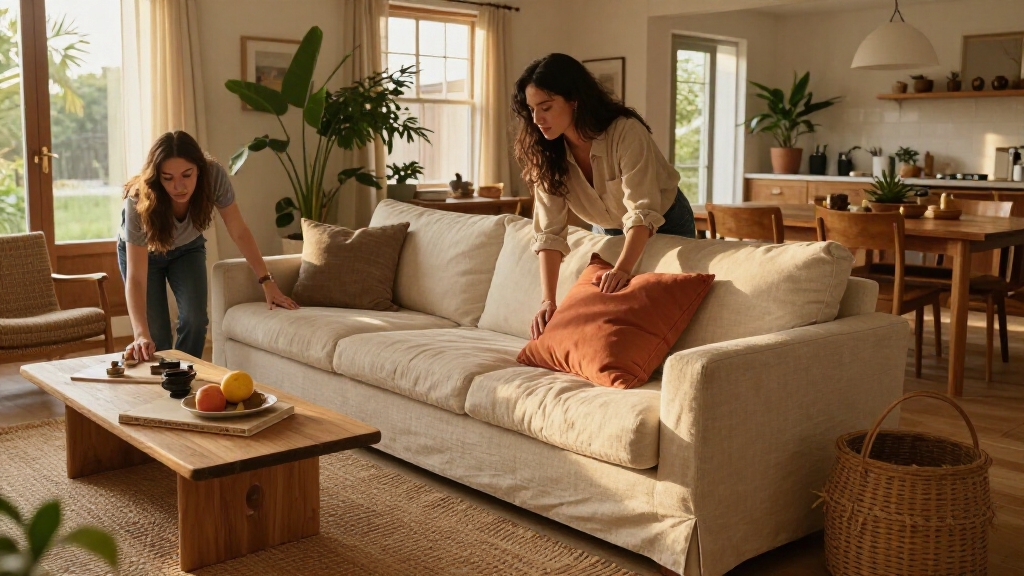
The recommendations address a common design challenge: an open layout can feel airy and sociable, but the lack of boundaries may leave the lounge area feeling exposed or visually disconnected, as illustrated by this open-plan living room zoning example. Monika Puccio, director of buying at Sofa Club, said furniture in an open-plan room can seem to be “floating within a much larger space,” and described a lack of definition as a frequent issue.
The six approaches are to paint walls a darker shade, use warm low-level lighting, colour-zone the living area, add a corner sofa, layer cushions and throws, and place a plush rug beneath the seating area. The colour advice offers two options: use a richer shade across the space or apply a warmer or deeper colour to the lounge zone alone.
For lighting, the experts recommend combining table and floor lamps with warm-toned bulbs rather than relying only on bright overhead light. Furniture can also mark the seating area: a corner sofa may create a more enclosed arrangement, while angled armchairs can form a smaller nook and help avoid a living room that looks empty. Cushions, blankets and soft upholstery add texture; a rug can both anchor the furniture and distinguish the lounge from nearby kitchen or dining areas.
How Design Can Define Open Spaces
The advice speaks to a practical trade-off in open-plan layouts: removing partitions can make a home feel more connected, while also making it harder to signal where one activity ends and another begins. These suggestions aim to create a sense of enclosure through visual cues rather than structural changes.
That may be useful for readers who want a living area to feel more restful without giving up the openness of a shared kitchen, dining and lounge space. Colour, lighting and movable furnishings can be adjusted more readily than walls, though the source does not provide cost estimates or evidence comparing the effectiveness of the six ideas.
Products Worth Considering

Philips Hue Play Gradient Light Tube, Large, Black

Philips Hue Bridge Pro Smart Lighting Hub, 1-Pack

LG OLED evo C4 55-Inch 4K Smart OLED TV (OLED55C4PUA) with 144Hz Refresh Rate, HDMI Cable, 24-Month Protection Plan, and Streaming Bundle
As an affiliate, we earn on qualifying purchases.
The Six Suggested Cosiness Cues
The report draws on comments from seven interior experts, including designers and representatives of furniture, lighting and homeware businesses. Their advice is presented as practical design guidance rather than the findings of a formal study. The article frames the ideas around the move into autumn, when people may want their homes to feel warmer and more cocooning.
Several suggestions work together: a defined seating arrangement can be reinforced by a rug, while warm lamps and tactile fabrics can make that zone feel different from more functional areas. Experts also point out that the whole open-plan room does not need a separate colour scheme; a deeper or warmer shade in the lounge may be enough to give it a distinct visual identity.
““The biggest issue is often a lack of definition.””
— Monika Puccio, director of buying at Sofa Club
What the Advice Does Not Establish
The report offers expert recommendations, but it does not test them or establish that each idea will work in every home. Results may depend on the room’s dimensions, natural light, existing furnishings and the household’s preferences. A dark paint colour, for example, may produce a different effect in a small or poorly lit area than in the larger spaces discussed by the experts.
The source also gives no budget ranges, product comparisons or measurements for choosing a rug, sofa or lighting scheme. It does not say that the six ideas must be used together; readers can treat them as separate options. No follow-up study or additional reporting is specified.
Choosing Changes for Your Room
Readers can use the six suggestions as a starting point, considering the room’s layout and light before making changes. A lower-cost first step could be adding a warm table lamp, rearranging existing seating or introducing cushions and a throw. Colour changes and larger furniture purchases call for more planning, particularly where a shared area serves several purposes.
The Ideal Home report does not announce a product launch, event or further editorial milestone. What happens next is left to individual homeowners: the advice can be adapted to their space, and its effect will depend on the room and the choices made.
Key Questions
What are the six ways experts recommend making an open-plan living room cosier?
The report recommends darker wall colour, warm low-level lighting, colour zoning, a corner sofa, layered soft furnishings and a plush rug.
Do you need to paint the whole open-plan room a dark colour?
No. The experts also suggest using a deeper or warmer colour just in the living area to distinguish it from the kitchen or dining zone.
How can lighting make an open-plan lounge feel warmer?
The advice is to use warm-toned bulbs and layered light, including table and floor lamps, instead of depending entirely on overhead lighting.
Why does the report recommend a corner sofa and rug?
A corner sofa can help enclose the seating arrangement, while a rug can anchor the lounge area and add a soft texture. The report presents both as ways to define a living zone without building walls.
Source: rss