
TL;DR

Get furniture and decor delivered free with Prime
- Fast, free delivery on millions of items
- Prime Video, Amazon Music and more included
- Member-only deals all year
Hunker has shared a DIY idea for reusing small plastic nursery pots by attaching them to a wreath form and decorating them with faux plants or other materials. The project offers an alternative use for pots that may not be accepted by local recycling programs; the report does not provide testing, cost estimates or environmental impact data.
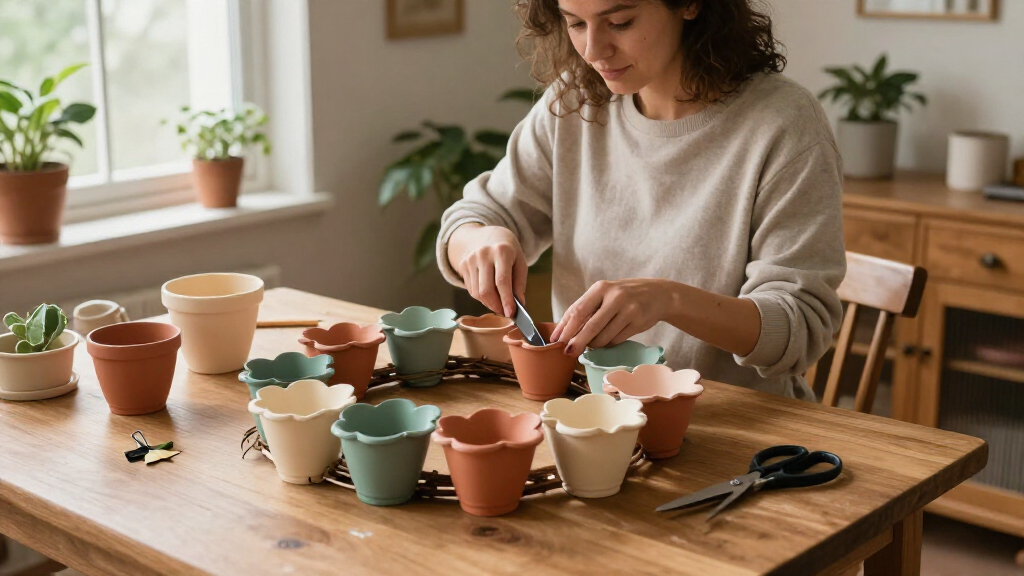
Hunker has outlined a DIY wreath project that reuses small plastic nursery pots left over after repotting plants. The idea is to wire the cleaned containers onto a wreath form, then decorate them with faux greenery, flowers or other craft materials—an alternative for pots that may not be accepted in local recycling programs.
The project calls for several small nursery pots, a wreath form, wire, hot glue and decorations. The report says the exact number of pots depends on their size and the wreath design. Grapevine, wood and metal are all presented as possible wreath-form materials, and plastic containers are described as lighter and less breakable than terracotta pots.
Before assembly, the pots should be scrubbed in soapy water and allowed to dry. To attach them, the instructions suggest threading wire through the containers’ drainage holes, wrapping it around the wreath form and securing it. The process is repeated until the pots are firmly in place. On a vine-based form, the pots can cover only part of the circle; a form intended to be fully covered can be arranged with containers all the way around.
For finishing, the containers can hold faux succulents, flowers or greenery, secured with hot glue or floral foam. Other options in the report include painting the pots, adding stencils or decorative tape, attaching small garden tools, or adding a bow. Artificial moss or greenery can fill visible gaps, while fabric wrapped around the form before assembly can provide a backdrop.
A Second Use for Nursery Pots
The idea gives gardeners a household craft option for pots that might otherwise be discarded, particularly where local recycling services do not accept them. It also makes the project adaptable: containers can be arranged in different directions or patterns, and the decorations can be changed to suit a porch, door or window.
That is a practical reuse suggestion, not evidence that the wreath reduces waste by a measured amount. The source supplies no estimate of how many pots a typical project uses, how long the finished wreath lasts, or whether the materials can be recycled after the craft is taken apart. Readers should treat the proposal as a creative reuse option rather than a substitute for checking local recycling guidance.
Products Worth Considering

Samsung 85-Inch M70H Series Mini LED 4K Smart TV (2026)

Bose SoundLink Flex Bluetooth Speaker (2nd Gen), Portable Waterproof Speaker, Black

Dyson V8 Cyclone Cordless Vacuum
As an affiliate, we earn on qualifying purchases.
From Repotting to Wreath-Making
Plastic pots often remain after a plant is moved into a larger container or planted elsewhere. The Hunker report notes that recycling availability differs by area and says some pots can end up in regular trash. It presents the wreath as one way to use the containers at home instead.
The instructions also allow for terracotta containers, while pointing out that plastic is lighter and less likely to break. The choice of material and wreath form affects how the project is assembled: wire can pass through nursery-pot drainage holes, and a more open grapevine form can remain visible between containers. The report does not set a fixed design or provide a required pot count.
““DIYers have been turning their pots into really charming wreaths, perfect for any plant lover.””
— Hunker report
Design Choices and Practical Limits
The report does not specify a standard wreath size, a precise number of pots, a project cost or how long assembly takes. It also does not test how securely different pot shapes attach, how the finished wreath holds up outdoors, or whether particular paints and glues are suitable for prolonged exposure to weather.
It is also unclear which local recycling programs accept nursery pots; rules vary by location. The article does not claim that making a wreath is environmentally better than every other disposal or reuse option. Anyone considering the project should check local recycling instructions and choose a hanging location suited to the materials and weather exposure.
Choose a Form and Build
There is no announced follow-up or wider rollout described in the source. For people trying the project, the next steps are to clean and dry the pots, test an arrangement on the chosen wreath form, and secure the containers with wire before adding decorations. Checking the form’s stability and the intended hanging spot can help guide the design.
After assembly, the wreath can be displayed on a porch, exterior door or above a window, as the report suggests. The source gives no guidance on outdoor durability, so whether the finished piece should be sheltered or brought indoors in poor weather remains a matter for the maker.
Key Questions
What materials are needed for the nursery-pot wreath?
The project uses small plastic nursery pots, a wreath form, wire and decorations. Hot glue may be used for finishing, and floral foam or artificial moss can help secure or fill decorative elements.
How do you attach the pots to the wreath form?
Hunker’s instructions suggest threading wire through each pot’s drainage holes, wrapping the wire around the form and securing it. Repeat for each pot, checking that the containers sit firmly before adding decorations.
Can the wreath be used outdoors?
The report suggests hanging it on a porch or exterior door, but it does not test weather resistance or recommend specific outdoor-rated materials. Durability will depend on the pots, decorations, paint, glue and exposure to the elements.
How many pots should I collect?
There is no fixed number. The amount depends on the size of the pots and wreath form, and on whether you want containers around the full circle or concentrated on one section.
Should I recycle the pots instead of making a wreath?
Check your local recycling rules first, since the report says not every area accepts plastic nursery pots. The wreath is presented as a reuse idea, not as a replacement for local recycling guidance.
Source: rss