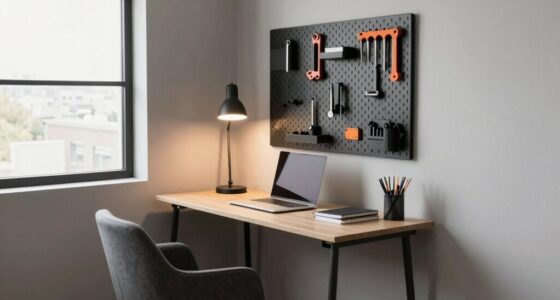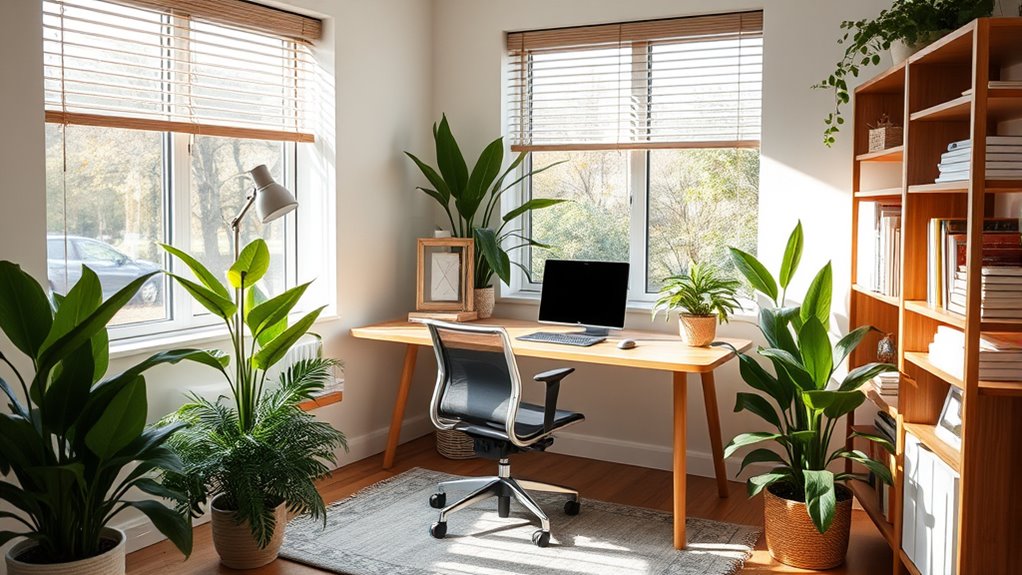

To create a focus-friendly home study space, start by maximizing natural light near a window and add layered, adjustable lighting for darker times. Choose ergonomic furniture that promotes good posture, like an adjustable chair and a proper desk height. Keep your space organized with storage solutions, reducing clutter that distracts you. Add personal touches like plants or artwork to boost mood, and maintain the area regularly to keep it inviting. Explore these tips further to transform your space effectively.

Get furniture and decor delivered free with Prime
- Fast, free delivery on millions of items
- Prime Video, Amazon Music and more included
- Member-only deals all year
Key Takeaways
- Maximize natural light by positioning your desk near a window to boost alertness and reduce eye strain.
- Choose ergonomic furniture with adjustable features to support proper posture and long-term comfort.
- Keep your workspace organized with storage solutions to minimize clutter and distractions.
- Use layered, soft lighting options to create a calming environment and prevent fatigue.
- Add personal touches like plants or artwork sparingly to motivate and enhance your mood.
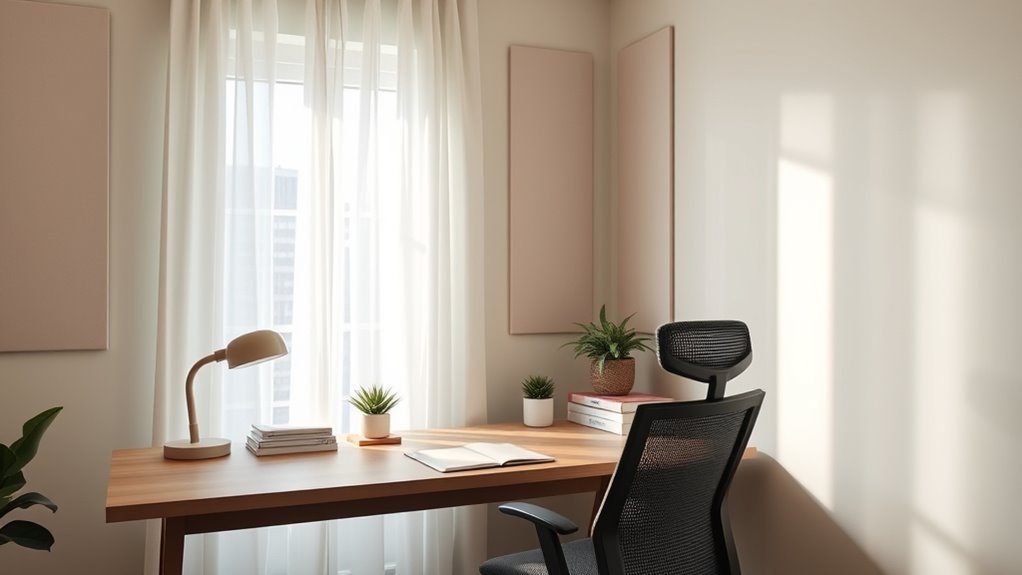
A well-designed home study space can dramatically boost your focus and productivity, especially when distractions are just a glance away. The key lies in creating an environment that minimizes interruptions and maximizes comfort. To achieve this, start with lighting solutions that support your eyes and mood. Natural light is ideal, so position your desk near a window if possible. During darker hours or cloudy days, supplement with layered lighting—use a bright, adjustable desk lamp that provides ample illumination without harsh glare. Avoid harsh overhead lighting that can cause eye strain or headaches. Soft, warm tones in your lighting can help you stay alert while creating a calming atmosphere, reducing fatigue and keeping your mind sharp.
Equally important is choosing ergonomic furniture that promotes good posture and comfort during long work sessions. A supportive chair with adjustable height, lumbar support, and armrests allows you to sit correctly, preventing back and neck pain. Your desk should be at a height that keeps your elbows at a 90-degree angle and your feet flat on the floor. Invest in a sturdy, spacious desk that provides enough room for your materials and tech devices without feeling cluttered. When your furniture fits your body and work habits, you’re less prone to discomfort, which can distract you from your tasks and reduce your efficiency.
Choose ergonomic furniture to stay comfortable and focused during long study sessions.
Organize your study space to reduce visual clutter. Use storage solutions like shelves, drawers, and cable organizers to keep everything tidy. When your surroundings are orderly, your mind can focus more easily on the task at hand rather than being distracted by chaos. Keep only essential items on your desk—papers, writing tools, and your computer—so you’re not overwhelmed by unnecessary clutter. Creating designated zones within your study space can also help. For example, reserve a specific corner for reading and another for computer work, so your brain associates each area with a particular activity, making it easier to switch gears and stay on task.
Finally, add personal touches that motivate you without overwhelming the space. A few well-chosen decorations, such as a plant or inspiring artwork, can improve your mood and boost concentration. Just remember to keep these elements subtle so they don’t compete with your focus. Consistency in maintaining your organized, well-lit, and ergonomic study environment will help you stay productive and make your home study space a place where you genuinely want to work.
ergonomic adjustable office chair
As an affiliate, we earn on qualifying purchases.
As an affiliate, we earn on qualifying purchases.
Frequently Asked Questions
How Can I Reduce Distractions in My Home Study Area?
To reduce distractions in your home study area, start by minimizing noise through noise reduction techniques like using headphones or adding soft furnishings. Manage scents by keeping the space fresh with subtle, calming aromas or avoiding strong fragrances that can distract you. Keep your workspace tidy, limit interruptions, and set clear boundaries with others. These steps help you stay focused and create an environment conducive to concentration.
What Are the Best Lighting Options for Focus?
Did you know that proper lighting can boost focus by up to 50%? For your home study space, natural light is best—position your desk near windows to maximize daylight. Complement it with adjustable lamps to tailor brightness during evening hours or cloudy days. This combination reduces eye strain and keeps you alert. So, invest in quality natural light and versatile lamps to create a well-lit, distraction-free environment that enhances your concentration.
How Do I Organize Study Materials Efficiently?
To organize your study materials efficiently, start with smart storage solutions like bins, shelves, and drawer organizers to keep everything accessible. Use a consistent color scheme for labels and folders to quickly identify subjects or topics. Regularly declutter your space, and create designated zones for different materials. This approach helps you maintain focus, reduces stress, and makes it easier to find what you need, boosting your productivity.
What Ergonomic Furniture Promotes Concentration?
You should prioritize ergonomic furniture to boost concentration. Invest in ergonomic chairs that support your back and promote good posture, helping you stay focused longer. Pair these with adjustable desks that let you switch between sitting and standing, reducing fatigue. This setup minimizes discomfort and distractions, allowing you to stay engaged with your work. Creating a comfortable, health-conscious environment is key to maintaining concentration during study sessions.
How Can I Personalize My Study Space Without Clutter?
To personalize your study space without clutter, choose a calming color scheme that promotes focus, like soft blues or greens. Add decorative accessories such as a small plant, a photo frame, or inspiring artwork to make it feel inviting. Keep surfaces clear by storing items out of sight and select a few meaningful pieces. This way, your space reflects your personality while maintaining a tidy, distraction-free environment.
Conclusion
Ready to transform your home study into a focus-friendly zone? By organizing your space, minimizing distractions, and adding personal touches, you’ll boost your productivity and make studying more enjoyable. Remember, your environment plays a huge role in your success—so why settle for anything less? With these simple changes, you’ll find it easier to stay on track and achieve your goals. Are you excited to create a space that truly works for you?
Fall Picks
fall essentials
As an affiliate, we earn on qualifying purchases.