To set up an efficient home office in a tiny corner, focus on maximizing space with multi-functional accessories like fold-away desks and wall-mounted organizers. Choose ergonomic furniture that fits your body and reduces strain, and optimize lighting with natural light or adjustable lamps to prevent eye fatigue. Keep your space clutter-free using vertical storage and personal touches like plants for motivation. If you want to discover more tips, continue exploring ways to transform your small nook into a productive workspace.
Key Takeaways
- Maximize space with vertical storage and multi-functional accessories to keep essentials within reach.
- Use adjustable lighting and natural light to reduce eye strain and create a focused environment.
- Choose ergonomic furniture like supportive chairs and height-adjustable desks tailored to your needs.
- Keep the area clutter-free with organization tools like cork boards, magnetic strips, and wall-mounted shelves.
- Opt for light, neutral colors and personal decor to make the tiny nook inviting and minimize distractions.
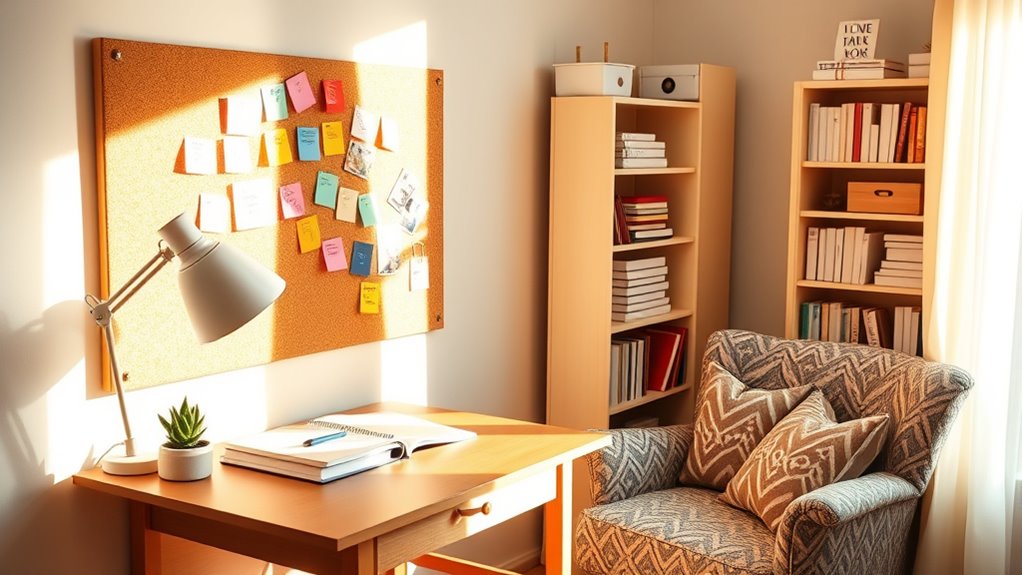
Ever wonder what makes some study nooks so effective while others fall flat? It all comes down to thoughtful design and how you optimize your small space. Even in a tiny corner, you can create a dedicated spot that keeps you focused and comfortable. The key is to start with the right setup, beginning with ergonomic accessories. These are essential because they promote good posture, reduce fatigue, and help you stay productive for longer periods. Invest in a supportive chair that fits your body’s needs and a desk that isn’t too high or low. If you can, choose a desk with adjustable height to match your comfort. Small details like a wrist rest or foot support can make a significant difference, especially if you’re spending hours studying or working. Additionally, attention to attention in creative practice can improve your focus and efficiency in your study nook.
Lighting solutions are equally critical in transforming a cramped corner into an inviting workspace. Natural light is ideal, so position your nook near a window if possible. If natural light isn’t an option, incorporate layered lighting to reduce eye strain. Use a bright, adjustable task lamp directly on your workspace to illuminate your materials clearly. Complement this with softer ambient lighting to create a balanced environment that’s not too harsh or dim. Proper lighting not only enhances focus but also prevents headaches and fatigue, making your study sessions more effective.
In a small nook, organization is your best friend. Use vertical storage options like shelves or wall-mounted organizers to keep your desk clutter-free. Magnetic strips or cork boards can hold important notes or reminders within easy reach without taking up desk space. When choosing ergonomic accessories, consider multi-functional items that save space, like fold-away or compact accessories. Keep your essentials close but organized, so your workspace feels open and uncluttered, which helps maintain mental clarity.
Color and decor also play a role in your nook’s effectiveness. Light, neutral tones can make the space feel larger and more calming, while a few personal touches—like a plant or inspiring poster—add motivation without overwhelming the area. Remember, the goal is to create a dedicated environment that minimizes distractions and maximizes focus. By combining ergonomic accessories, smart lighting solutions, and clever organization, you’ll turn even a tiny corner into a powerful study zone. With a little planning, your compact nook can become your favorite spot to learn, work, or create—proof that good things come in small packages.

ErGear 48 X 24 Inch Height Adjustable Electric Standing Desk, Black
- Electric Height Adjustable Standing Desk for Comfortable Work…
- Powerful Motor with Memory Presets – Equipped with…
- Exceptional Stability Steel Frame – Built with a…
As an affiliate, we earn on qualifying purchases.
As an affiliate, we earn on qualifying purchases.
Frequently Asked Questions
How Can I Maximize Storage in a Small Study Nook?
To maximize storage in your small study nook, start by using vertical shelving to take advantage of every inch of wall space. Incorporate multi-functional furniture, like a desk with built-in drawers or a fold-out bed, to save space and add storage. Keep clutter at bay by using baskets or bins on shelves, and choose compact, efficient pieces that serve multiple purposes. This way, your nook stays organized and functional.
What Lighting Options Are Best for Compact Home Offices?
Think of your workspace as a stage—lighting sets the tone. You should maximize natural light with sheer curtains or placement near windows. Add task lighting, like adjustable desk lamps or wall-mounted fixtures, to brighten your tasks without clutter. Use LED bulbs for energy efficiency. Combining natural light with task lighting creates a balanced, inviting space that keeps you focused and energized throughout your workday.
How Do I Choose Ergonomic Furniture for Tiny Spaces?
When choosing ergonomic furniture for tiny spaces, prioritize a space-saving desk that fits your area without crowding. Look for an ergonomic chair with adjustable features to support comfort during long work sessions. Consider multi-functional furniture that maximizes storage and utility while maintaining a small footprint. This way, you create a cozy, efficient home office that promotes productivity and health without sacrificing space or style.
What Are Budget-Friendly Ideas for Decorating a Small Study Area?
Budget-friendly ideas brighten your small study space effortlessly. Start with DIY decor to personalize your nook without overspending. Choose cheerful color schemes that create a cozy, inviting atmosphere. Incorporate simple storage solutions like stacked books or wall-mounted shelves to maximize space. Adding lightweight, low-cost accessories like colorful cushions or plants boosts beauty and function. With clever creativity, you’ll craft a charming, cost-conscious corner that’s perfect for productivity and peace.
How Can I Reduce Noise in a Compact Home Office?
To reduce noise in your compact home office, try using soundproofing techniques like adding weatherstripping to doors and sealing gaps around windows. Incorporate noise-canceling devices such as headphones or white noise machines to block out distractions. You can also hang soft materials like rugs or fabric wall panels to absorb sound. These strategies help create a quieter environment, boosting your focus and productivity in your small workspace.
Conclusion
Now that you know how to transform even the tiniest corner into a functional study nook, it’s time to get started. Did you know that a well-organized home office can boost productivity by up to 25%? With smart storage and personalized touches, your small space can become your favorite spot for focus and creativity. So, don’t wait—create your perfect study nook today and enjoy a more efficient, inspiring work environment right at home.