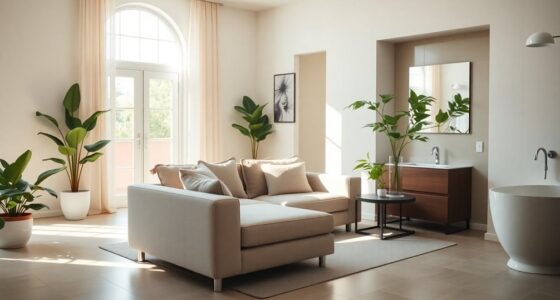

You can make your home safer and more comfortable for seniors by adding simple, strategic updates. Use smart technology like voice assistants and security cameras to improve safety and convenience. Adapt furniture with grab bars, adjustable beds, and chairs with armrests for easier mobility. Improve lighting in key areas and remove tripping hazards like loose rugs. Small changes like these can make a big difference in independence and safety—discover more ways to create a senior-friendly home below.

Get furniture and decor delivered free — and shop member deals
- Fast, free delivery on millions of items
- Access to Prime Big Deal Days deals on October 6–7
- Prime Video, Amazon Music and more included
Key Takeaways
- Implement smart technology like voice assistants and security cameras for safety and convenience without major renovations.
- Use adaptable, ergonomic furniture with non-slip surfaces to support mobility and comfort.
- Secure or remove rugs and improve lighting in key areas to prevent falls and enhance visibility.
- Add grab bars and reconfigure furniture to create open, navigable pathways in existing spaces.
- Make small, strategic updates focused on safety and comfort to maintain independence without starting over.
Have you ever considered how small changes can make your home safer and more comfortable for seniors? You don’t need to overhaul everything to create a space that’s more accommodating. Simple updates can considerably improve safety, independence, and peace of mind for your loved ones. One effective approach is incorporating smart technology. Modern devices can automate routine tasks, monitor safety, and provide quick communication options. For example, smart lighting can prevent falls by automatically illuminating pathways at night, while voice-activated assistants allow seniors to control appliances, check the weather, or call for help without needing to move around too much. Security cameras and alert systems can also keep an eye on loved ones, offering reassurance without intruding on their privacy. These innovations are designed to blend seamlessly into existing homes, making safety upgrades feel natural rather than intrusive. Additionally, understanding smart home technology can help you choose the most effective devices for your needs.
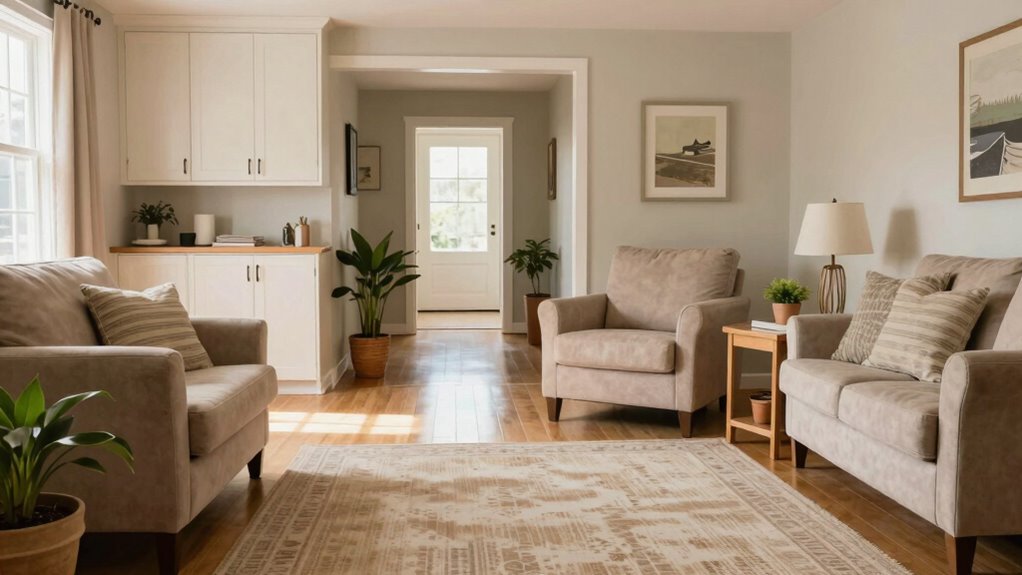
Alongside smart technology, adaptable furniture plays a vital role in creating a senior-friendly environment. You can replace or modify existing pieces with items that support mobility and comfort. Think of adjustable beds that make getting in and out easier, or furniture with high, supportive cushions that reduce strain. Consider adding chairs with armrests that help seniors sit and stand with less effort. Modular furniture offers flexibility—you can reconfigure it based on changing needs. For example, a sectional sofa with easy-to-reach controls or storage can minimize clutter and reduce tripping hazards. When shopping for adaptable furniture, prioritize options that combine comfort with practicality, ensuring they serve multiple purposes and can be easily adjusted as mobility or health needs evolve. Incorporating safety-focused design principles when selecting furniture can further enhance your home’s safety features. Moreover, choosing furniture with non-slip surfaces can help prevent accidents, especially in areas prone to moisture or spills. Small details like slip-resistant materials are a simple but effective safety enhancement supported by safety considerations in home design. Also, ensuring that furniture is appropriately sized and positioned can significantly improve ergonomic support and reduce strain for seniors.
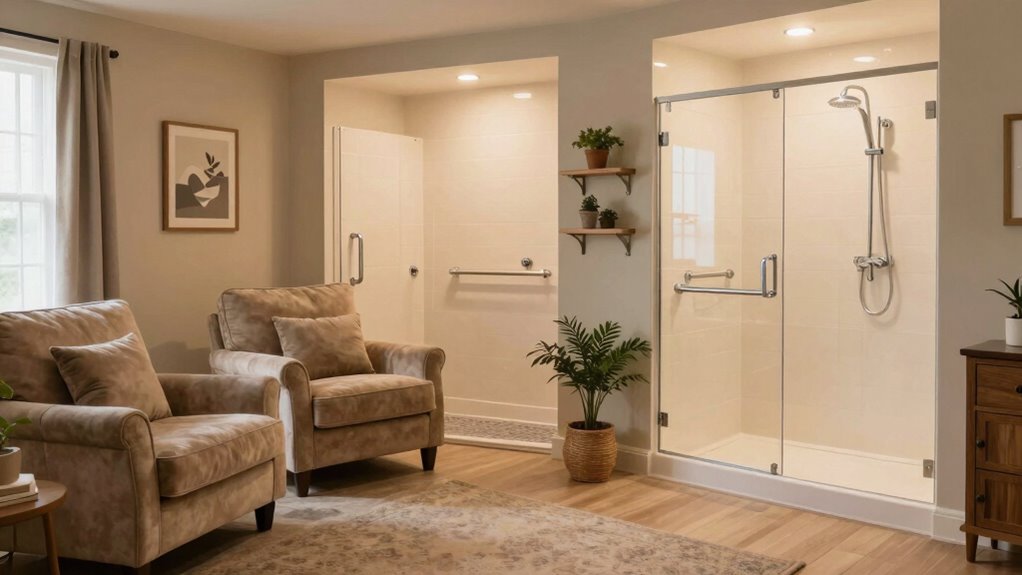
You can also make your home more senior-friendly without major renovations by focusing on key areas. Remove rugs or secure them firmly to the floor, reducing the risk of slips. Install grab bars in bathrooms and on stairways, which provide extra support during movement. Brighten up spaces with better lighting, especially in hallways and bathrooms, so seniors can see clearly. You might also consider rearranging furniture to create open pathways, making navigation easier and safer. Small adjustments like these are often overlooked but can significantly improve safety and ease of movement.
The goal isn’t to make your home unrecognizable but to adapt it thoughtfully. Small, strategic updates—like smart technology, adaptable furniture, and safety enhancements—can make a big difference. They help your loved ones maintain independence longer, reduce accidents, and feel more at ease in their environment. You don’t have to start from scratch; instead, focus on incremental changes that fit your home and your budget. With these simple adjustments, you create a space that’s both safer and more supportive, allowing seniors to thrive comfortably in their familiar surroundings.
smart home voice assistant for seniors
As an affiliate, we earn on qualifying purchases.
As an affiliate, we earn on qualifying purchases.
Frequently Asked Questions
How Can I Make My Home More Accessible for Mobility Aids?
You can make your home more accessible for mobility aids by adding assistive devices like grab bars, stair lifts, and ramps. Focus on ergonomic design by ensuring pathways are wide, furniture is easy to get in and out of, and switches or controls are within reach. Remove clutter and rugs that could cause tripping hazards. These simple adjustments create a safer, more comfortable environment for mobility aid users.
What Are Cost-Effective Modifications for Senior Safety?
To enhance senior safety cost-effectively, consider installing grab bars and non-slip mats, which are affordable yet impactful. Use assistive technology like voice-activated devices and motion sensors to improve independence. Keep emergency preparedness supplies accessible and update fire alarms regularly. These simple modifications boost safety without major renovations, helping seniors stay secure and confident at home.
How Do I Choose the Best Lighting for Aging Eyes?
Ever wondered how to pick lighting that truly helps aging eyes? You should opt for lighting options that are bright but gentle on your eyes, such as eye-friendly bulbs with a higher color rendering index. Choose fixtures with adjustable brightness and avoid harsh glare. Soft, warm-toned lights can reduce eye strain and improve visibility. Isn’t it worth making your home safer and more comfortable with the right lighting choices?
Are There Specific Furniture Styles Recommended for Seniors?
You should opt for ergonomic furniture with supportive, easy-to-get-in designs that reduce strain and improve comfort. Choose styles with rounded edges and sturdy frames to prevent accidents. Additionally, incorporate slip-resistant flooring to enhance safety, especially around furniture. Stick to simple, functional furniture that minimizes clutter and allows easy movement. This combination helps create a space that’s both stylish and safe for seniors, promoting independence and reducing fall risks.
How Can I Prevent Falls Without Extensive Renovations?
To prevent falls, focus on improving safety without big renovations. Keep pathways clear, add non-slip rugs, and install grab bars in bathrooms. Enhance garden safety by trimming uneven plants and removing trip hazards. Prepare for emergencies by keeping a first aid kit accessible and having a plan in place. Regularly check lighting to avoid shadows and guarantee all areas are well-lit, reducing the risk of accidents.
Conclusion
Creating a senior-friendly home doesn’t mean sacrificing style for safety—think of it as blending comfort with convenience. Just as a cozy armchair invites relaxation, simple modifications can invite independence. With small changes, you’ll enjoy a space that’s both secure and inviting, proving that aging gracefully isn’t about starting over but about adapting what you already love. Embrace these tweaks, and watch your home become a sanctuary where safety and elegance coexist effortlessly.
Fall Picks
fall essentials
As an affiliate, we earn on qualifying purchases.