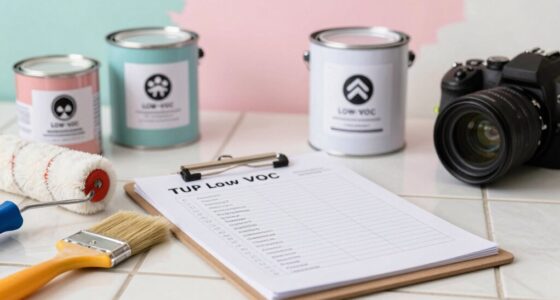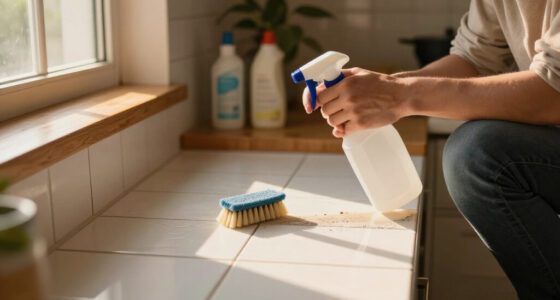
Transforming old furniture from trash to treasure is easier than you think. Start with proper surface prep, then choose eco-friendly paints like water-based or natural options. Use creative techniques such as dry brushing, stenciling, or geometric patterns with painter’s tape to add personality. Finishing with a protective seal guarantees durability. By combining these DIY methods with sustainable paints, you’ll create a unique piece while helping the environment. Keep going to discover how each step brings your vision to life.

Get furniture and decor delivered free — and shop member deals
- Fast, free delivery on millions of items
- Access to Prime Big Deal Days deals on October 6–7
- Prime Video, Amazon Music and more included
Key Takeaways
- Start by cleaning and sanding the furniture for a smooth surface before applying paint.
- Use eco friendly, low VOC or water-based paints for a sustainable, vibrant finish.
- Incorporate techniques like dry brushing, stenciling, or layering to add character and style.
- Apply thin, even coats and seal with a protective eco friendly clear coat for durability.
- Finalize with creative details to transform old pieces into unique, personalized decor.
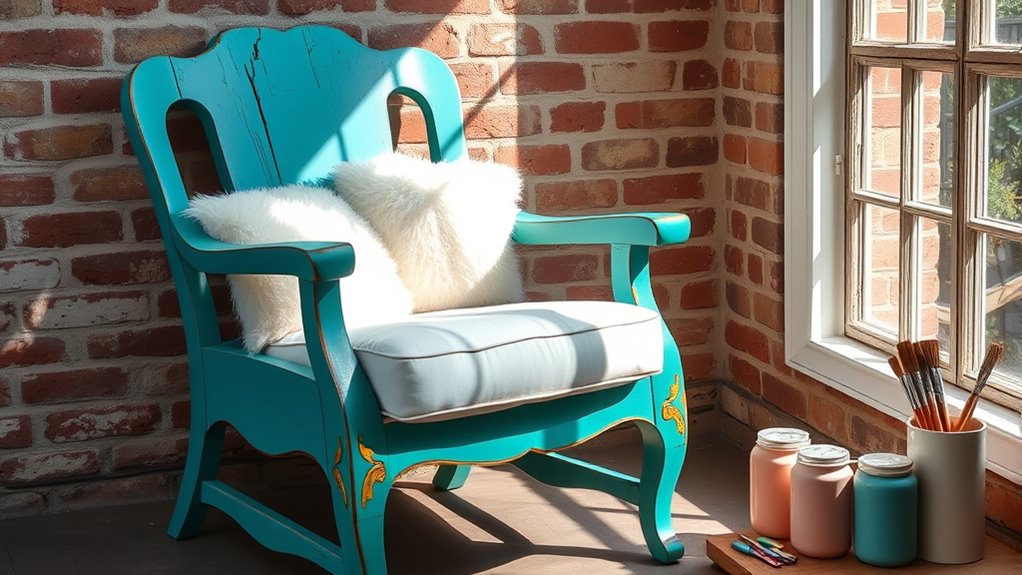
Upcycling old furniture is a rewarding way to refresh your space while reducing waste. When you decide to breathe new life into a piece, your first step is often applying a fresh coat of paint. Not only does this transform the look, but it also provides an opportunity to get creative with DIY painting techniques. Whether you want a distressed vintage look or a sleek modern finish, mastering these techniques allows you to customize furniture exactly to your style. For example, dry brushing can give your piece a shabby-chic vibe, while stenciling adds intricate patterns that make it stand out. Using painter’s tape helps create clean lines for geometric designs, and layering different colors can add depth and personality. These DIY painting techniques are simple to learn but highly effective, giving you full control over the final appearance.
Discover creative DIY painting techniques to transform and personalize your upcycled furniture.
As you plan your project, it’s essential to contemplate eco friendly paint options. Traditional paints often contain volatile organic compounds (VOCs), which can harm both indoor air quality and the environment. Luckily, many brands now offer eco friendly paints that are low in or free from these harmful chemicals. These paints are just as durable and vibrant as conventional options, but they’re better for your health and the planet. Look for labels that specify low VOC or natural ingredients, and choose water-based paints for easier cleanup and reduced fumes. Applying eco friendly paints not only aligns with sustainable practices but also ensures your furniture refresh is truly green from start to finish.
Before painting, prep your furniture thoroughly. Sand down any rough patches and clean the surface to remove dust and grease. Applying a primer can improve paint adhesion and longevity, especially on older or stained pieces. When you’re ready to paint, use quality brushes or rollers suited for your chosen paint type, and apply thin, even coats. Patience is key—let each layer dry completely before adding the next. This process ensures a smooth, professional-looking finish that lasts.
Once you finish, consider sealing your work with an eco friendly clear coat. This protects your paint job from scratches and everyday wear, extending the life of your upcycled furniture. The result is a unique, customized piece that reflects your creativity and commitment to sustainability. By combining DIY painting techniques with eco friendly paint options, you turn discarded furniture into treasured decor. Not only do you save money, but you also contribute to reducing waste and promoting environmentally conscious habits. Upcycling with paint is a simple, impactful way to make your home more beautiful and eco-friendly, one piece at a time.
As an affiliate, we earn on qualifying purchases.
Frequently Asked Questions
What Types of Furniture Are Best for Upcycling Projects?
When choosing furniture for upcycling projects, you should look for pieces with good structure and minimal damage, making recycling techniques easier. Solid wood furniture, like dressers and tables, are ideal because they’re durable and respond well to paint and refinishing. Avoid heavily damaged or warped items, as they’re harder to preserve. Upcycling allows you to breathe new life into old furniture, combining creativity with furniture preservation for a unique, eco-friendly upgrade.
How Do I Choose the Right Paint Finish for Furniture?
When choosing the right paint finish for furniture, consider paint durability and finish sheen options. If you want a surface that lasts and resists scratches, opt for a semi-gloss or satin finish. For a more matte, muted look, choose flat or matte finishes. Think about how much shine you prefer and how the furniture will be used, then select a finish that balances durability with your style preference.
Are There Eco-Friendly Paint Options Suitable for Furniture Upcycling?
You might find it’s no coincidence that eco-friendly paint options are gaining popularity. For your furniture project, look for environmentally friendly primers and natural paint alternatives, which reduce harmful fumes and are safer for your family. These options come in a variety of finishes, so you can upcycle with confidence, knowing you’re making a sustainable choice. Eco-conscious paints help you transform furniture beautifully while caring for the planet.
How Long Does Upcycled Furniture Typically Last?
When considering how long upcycled furniture lasts, your furniture durability depends on proper preparation, quality paints, and finishing techniques. Generally, with good care, your upcycled pieces can last several years. Paint longevity plays a key role, so using eco-friendly, durable paint guarantees your furniture remains attractive and protected over time. Regular maintenance, like touch-ups and cleaning, extends the life of your upcycled furniture, making your transformation a lasting investment.
Can Upcycled Furniture Be Customized Further After Painting?
Think of your upcycled furniture as a blank canvas waiting for your personal touch. Yes, you can definitely customize it further after painting, exploring endless personalization options. DIY embellishments like stencils, hardware updates, or decoupage can transform your piece into something uniquely yours. Feel free to get creative, layer in textures, or add intricate details—your furniture can evolve just as much as your style does.
Conclusion
So, next time you stumble upon that battered old dresser or worn-out chair, remember—you’re not just rescuing furniture; you’re transforming trash into treasure. With a splash of paint and a bit of effort, you could end up with a stunning piece that outshines even the brand new stuff. Who knew that a little upcycling could turn junk into your home’s highlight? Guess it’s true—sometimes, the old really is gold, if you’re willing to give it a second chance.
Evergreen bestsellers Picks
bestsellers
As an affiliate, we earn on qualifying purchases.