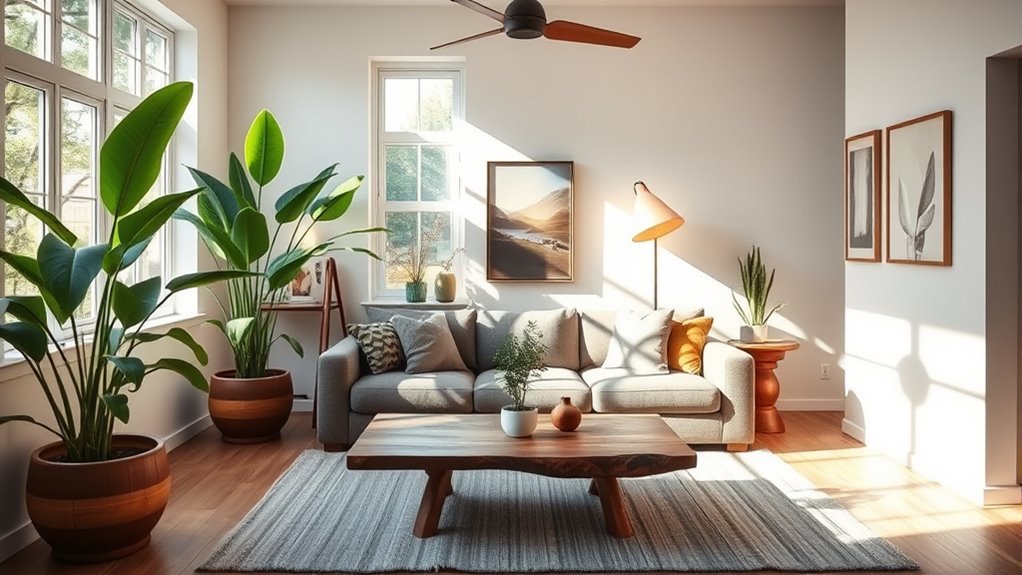

To save money and help the planet, consider budget-friendly upgrades like solar panels and composting toilets. Solar panels harness sunlight to cut your energy bills, and many affordable options make installation easy, especially with incentives. Composting toilets reduce water use and convert waste into compost, lowering costs and environmental impact. These simple changes can lead to significant savings and sustainability. Keep exploring ways to make your home greener and more cost-effective.
Key Takeaways
- Implement solar panels to reduce energy bills and harness renewable power affordably.
- Use composting toilets to save water and convert waste into useful compost.
- Make small, sustainable upgrades that lower long-term costs and environmental impact.
- Take advantage of incentives and rebates to offset the initial costs of green improvements.
- Focus on practical, easy-to-install solutions that promote energy independence and eco-conscious living.
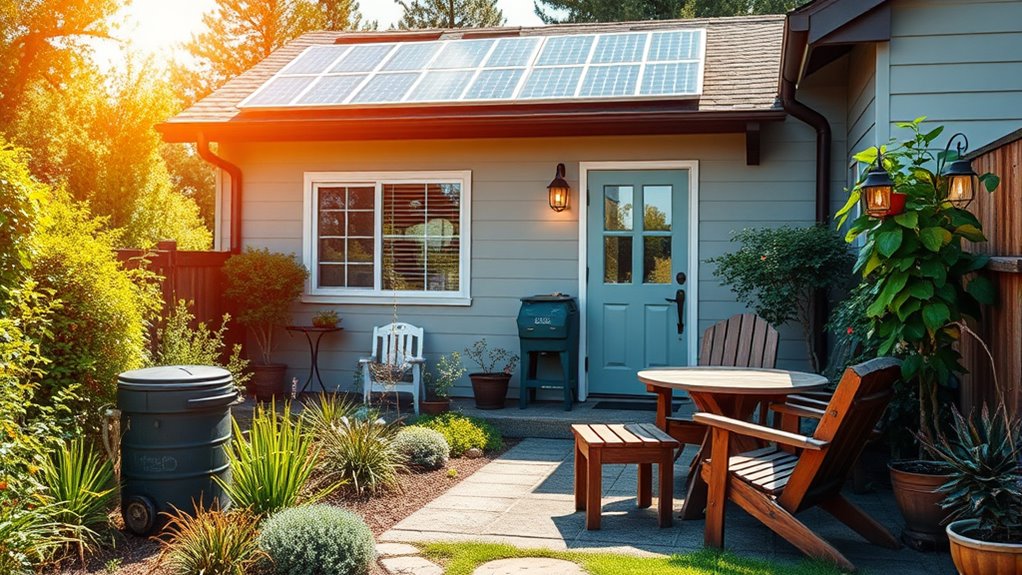
Making green upgrades to your home is one of the most effective ways to reduce your environmental impact and lower your energy bills. Small changes can make a big difference, especially when you focus on cost-effective solutions like installing solar panels or adopting composting toilets. Solar panels harness sunlight to generate electricity, which means you can cut down on your utility bills while producing clean energy. Today’s affordable solar options make it easier than ever to install a system suited for your budget. You don’t need a massive array; even a modest setup can markedly offset your electricity costs over time. Plus, many states offer incentives or rebates that help reduce the upfront investment, making solar a smart, budget-friendly upgrade.
Green home upgrades like solar panels and composting toilets save money and reduce environmental impact.
Alongside solar panels, composting toilets are a simple yet impactful addition to your home’s eco-friendliness. They eliminate the need for water-based flush systems, saving gallons of water each day. Composting toilets are especially advantageous if you’re looking to reduce your water footprint or live in an off-grid location. They turn waste into compost that can be safely used for plants, closing the loop on your waste management and lowering your reliance on traditional sewage systems. Installing a composting toilet requires minimal plumbing work and costs less than a traditional bathroom upgrade, making it an accessible choice for those on a budget. Plus, they promote sustainable living by transforming waste into a resource rather than a burden.
Additionally, choosing the right tire pressure for your gravel bike can improve your cycling experience, reduce wear on your tires, and help you adapt to different terrains efficiently. Both solar panels and composting toilets are straightforward upgrades that don’t demand a complete overhaul of your home. They’re practical, affordable, and easy to implement, especially when you consider the long-term savings and environmental benefits. By investing in these technologies, you’re taking active steps towards energy independence and reducing your carbon footprint. It’s not just about saving money now; it’s about creating a more sustainable future while enjoying the financial perks. If you’re worried about upfront costs, research available grants or tax credits, which can considerably reduce your initial expenditure. Over time, the energy savings and reduced water bills will quickly offset your investment, making these upgrades truly budget-friendly.
Incorporating solar panels and composting toilets into your home isn’t just about cutting costs—it’s about making smarter, greener choices that benefit both your wallet and the planet. These upgrades demonstrate that sustainability doesn’t have to be complicated or expensive; it’s about making small, intentional changes that add up. With a little planning, you can create a home that’s more efficient, environmentally responsible, and budget-conscious. The future of green living is accessible to everyone, and these upgrades are perfect starting points to begin your journey toward a more sustainable lifestyle.

ECO WORTHY 10000W Output Complete Off-Grid Solar Panel Kit for Home| 10KW 120V/240V Output Split Phase Inverter| 48V 314Ah16.1kWh High Capacity Energy Storage| 2950W Solar Panel PV| Whole House System
- Power Output: 10kW with split-phase support
- Solar Panels: 5 × 590W panels, 2950W capacity
- Energy Storage: 48V 314Ah LiFePO₄ battery
As an affiliate, we earn on qualifying purchases.
As an affiliate, we earn on qualifying purchases.
Frequently Asked Questions
How Long Do Green Home Upgrades Typically Last?
Green home upgrades vary in lifespan depending on the type and quality, but generally, they last between 10 to 25 years. You should consider lifecycle expectations and maintenance needs for each upgrade. For example, solar panels often last around 25 years with minimal upkeep, while weatherproofing might need reapplication every 5-10 years. Regular maintenance helps extend the lifespan, ensuring your investment remains effective and eco-friendly over time.
Are There Government Incentives for Eco-Friendly Home Improvements?
You’ll be pleased to know that many government rebates and tax incentives are available for eco-friendly home improvements. These programs aim to make green upgrades more affordable, often providing financial assistance for installing solar panels, energy-efficient windows, or insulation. By taking advantage of these incentives, you can reduce upfront costs and save money over time. Be sure to check local and national programs to maximize your benefits and make your home greener.
Can DIY Green Upgrades Save More Money?
You can definitely save more money with DIY green upgrades because they reduce labor costs and allow you to control expenses. Your DIY savings come from using affordable, eco-friendly materials and learning new skills, making your green investment even more cost-effective. Plus, completing projects yourself boosts your knowledge and pride. So, tackling these upgrades on your own not only saves money but also maximizes your green investment’s value over time.
What Are the Most Cost-Effective Green Upgrades?
Did you know that simple upgrades can cut your energy bills by up to 30%? When considering the most cost-effective options, solar panels stand out, especially with decreasing installation costs. Rainwater harvesting systems are also affordable and reduce water bills. These upgrades are budget-friendly, eco-conscious choices that save money over time while benefiting the environment. You’ll see savings quickly and make a positive impact with minimal upfront investment.
Do Green Upgrades Increase Home Resale Value?
Green upgrades can boost your home’s resale value, especially when you invest in solar panels and rainwater harvesting systems. Buyers increasingly value eco-friendly features, so these upgrades make your home more attractive and competitive in the market. Plus, they demonstrate your commitment to sustainability, which can lead to higher offers. Incorporating affordable green options not only benefits the environment but also enhances your property’s appeal and value when it’s time to sell.
Conclusion
By making budget-friendly green upgrades, you not only save money but also help protect the planet. Did you know that energy-efficient homes can reduce greenhouse gas emissions by up to 30%? Imagine cutting your energy bills while shrinking your carbon footprint—it’s a win-win. Every small change, from sealing leaks to switching to LED bulbs, makes a difference. Start today, and watch both your savings and the environment thrive.