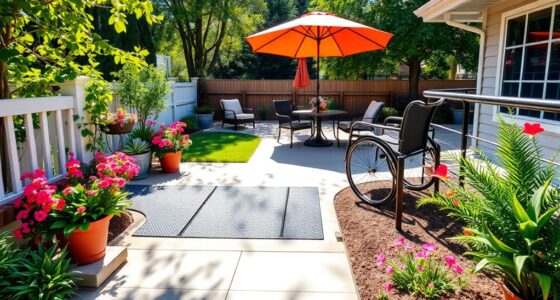

To make your home more accessible without a clinical look, focus on small, intentional design choices. Widen doorways, install ramps, and use lever handles on doors and cabinets for easier operation. Incorporate non-slip flooring and grab bars seamlessly into the decor. Opt for open floor plans and pull-out shelves to improve maneuverability. Prioritize simple, functional features that balance style and safety. Keep exploring to discover how these tweaks create a welcoming, inclusive space everyone can enjoy.

Get furniture and decor delivered free — and shop member deals
- Fast, free delivery on millions of items
- Access to Prime Big Deal Days deals on October 6–7
- Prime Video, Amazon Music and more included
Key Takeaways
- Incorporate small, purposeful modifications like lever handles and contrasting colors for improved accessibility without sacrificing style.
- Use open floor plans and wider doorways to enhance movement and create an inviting, inclusive environment.
- Opt for universally designed remote controls and voice-activated features for easier use and minimal clutter.
- Add subtle safety features like grab bars and non-slip flooring that blend seamlessly with home decor.
- Prioritize simplicity in design to ensure spaces are functional, safe, and welcoming for everyone.

Have you ever wondered how to create spaces that everyone can use comfortably? Universal design focuses on making your home accessible and functional for all people, regardless of age, ability, or mobility. One of the most effective ways to achieve this is by paying attention to everyday elements like remote controls and kitchen ergonomics. Small adjustments in these areas can make a significant difference, ensuring that your home feels welcoming and practical for everyone.
Universal design creates accessible, welcoming spaces through small but impactful everyday adjustments.
When it comes to remote controls, simplicity and ease of use are key. Consider choosing models with large, clearly labeled buttons, or those with voice-activated features. Position remote controls within easy reach—preferably on side tables or mounted on wall brackets—so users don’t have to stretch or bend awkwardly. Using universal remote controls can also reduce clutter and confusion, especially if multiple devices are involved. This not only enhances accessibility but also minimizes frustration, making entertainment more enjoyable for everyone in your household.
Kitchen ergonomics plays a crucial role in creating an inclusive home environment. Think about the height of countertops and cabinets—adjusting them to be accessible for people of different heights or those using mobility aids. Incorporate pull-out shelves and drawers that are reachable without excessive bending or stretching. Installing lever-style handles on cabinets and faucets reduces the effort needed to operate them, which is especially helpful for individuals with limited hand strength. Well-placed lighting and contrasting colors help those with visual impairments navigate the space safely. Additionally, ensuring there’s enough clearance around appliances and work areas allows for easy movement, whether someone is using a wheelchair or a walker.
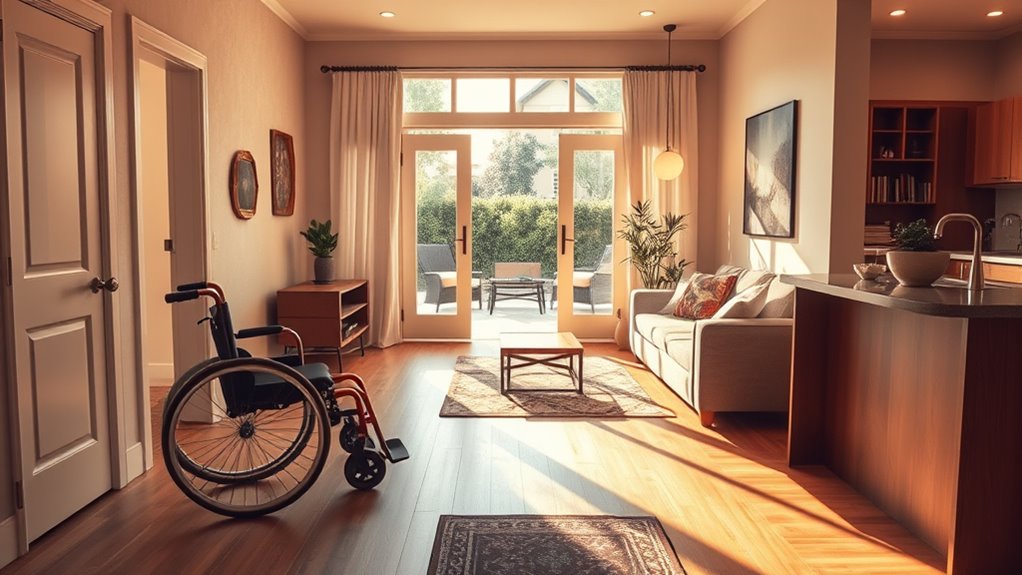
Beyond the kitchen, universal design benefits other parts of your home as well. Widening doorways, installing ramps, and choosing open floor plans create a more fluid environment. Think about incorporating lever handles on doors instead of knobs, as they’re easier to operate for everyone. Non-slip flooring and well-placed grab bars can enhance safety without creating a clinical look. The goal is to blend these features seamlessly into your home’s aesthetic, so they feel natural rather than institutional. Recognizing the importance of home modification can help you identify the most effective changes to improve accessibility.
Ultimately, making your home more accessible doesn’t mean sacrificing style. With thoughtful choices—like ergonomic kitchen tools, accessible controls, and subtle modifications—you can create a space that’s welcoming, functional, and beautiful. It’s about designing with intention, so everyone who enters feels comfortable and independent. Small changes, when done thoughtfully, can transform your home into a truly inclusive environment that respects and accommodates every visitor and resident alike.
widened doorways for wheelchair accessibility
As an affiliate, we earn on qualifying purchases.
As an affiliate, we earn on qualifying purchases.
Frequently Asked Questions
How Can I Incorporate Universal Design Without Sacrificing Style?
You can incorporate universal design without sacrificing style by blending aesthetic enhancements with current design trends. Choose sleek, modern fixtures and furniture that are both functional and visually appealing. Use subtle ramps, wider doorways, or lever handles that complement your decor. Focus on cohesive color schemes and textures, so accessibility features seamlessly integrate. This way, your home remains stylish while being more accessible and user-friendly for everyone.
What Are Cost-Effective Ways to Improve Home Accessibility?
Worried about high costs? You can make your home more accessible with simple, budget modifications and DIY adjustments. Start by installing grab bars in bathrooms or adding ramps to entryways, which are affordable and easy to do yourself. Small changes like wider doorways or lever handles can also improve mobility without breaking the bank. These cost-effective solutions boost safety and comfort while keeping your home stylish and functional.
Which Materials Are Best for Durable, Accessible Surfaces?
When choosing materials for durable, accessible surfaces, opt for non-slip coatings and slip-resistant tiles to guarantee safety. These materials provide reliable traction, reducing fall risks, especially in high-moisture areas like bathrooms and kitchens. You’ll find them easy to maintain and cost-effective, making your home safer without sacrificing style. Prioritize these options to create a more accessible space that feels natural and welcoming while meeting safety needs.
How Do I Ensure Universal Design Is Safe for Children?
To guarantee universal design is safe for children, start with childproofing tips like securing furniture, covering outlets, and installing safety gates. Opt for toddler-safe fixtures such as rounded edges, non-slip mats, and easy-to-reach storage. Regularly check for hazards and keep small objects out of reach. By combining these safety measures, you create a space that’s both accessible and secure, allowing your kids to explore freely while minimizing risks.
Can Universal Design Be Adapted for Pets?
Yes, you can adapt universal design for pets by incorporating pet-friendly modifications and creating adaptable pet spaces. You might add low, non-slip ramps for easier access to furniture or beds, and install wide doorways for smooth passage. Using durable, non-toxic materials guarantees safety. These modifications blend seamlessly into your home, making it more accessible and comfortable for your pets without compromising style or functionality.
Conclusion
By embracing these basic principles, you can create a home that’s welcoming, workable, and wonderfully inclusive. Remember, small adjustments can make a significant difference, making your space safe and stylish for everyone. With a little thought and effort, you’ll foster a future-focused, functional, and fabulous home where everyone feels comfortable and cared for. So, step up, simplify, and start shaping a space that’s as accessible as it is amazing!
Fall Picks
fall essentials
As an affiliate, we earn on qualifying purchases.