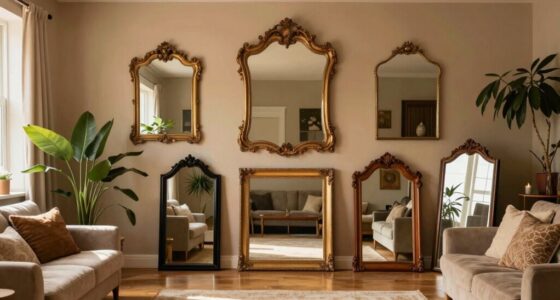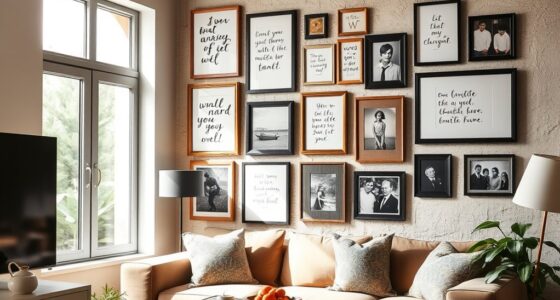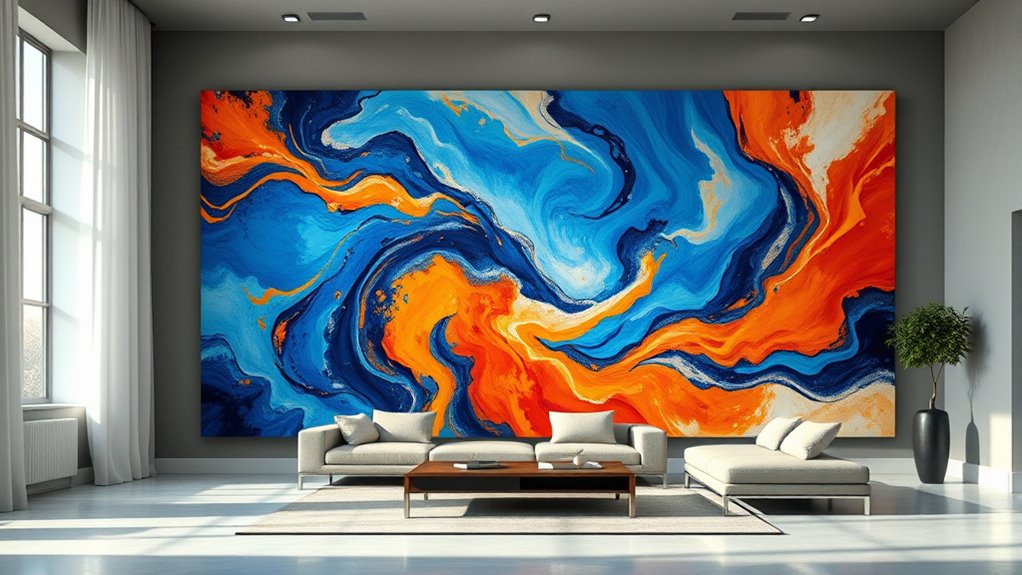

Using large-scale artwork can instantly transform your space into a striking focal point that reflects your personality. By carefully choosing pieces that match your wall size and furniture, you guarantee visual balance and harmony. Placement is key—positioning artwork to complement other design elements creates a cohesive look. Bold art energizes neutral spaces, while subdued pieces add calm. Keep these tips in mind to craft a powerful, stylish environment, and explore further to master the art of oversized impact.
Key Takeaways
- Choose artwork proportionate to wall size to create a balanced, impactful focal point.
- Use large artwork to set the tone and add personality to neutral or minimalist spaces.
- Properly position artwork to serve as a central visual anchor without overwhelming the room.
- Complement large pieces with matching furniture and lighting for cohesive integration.
- Consider style and mood to ensure the artwork enhances the overall decor and atmosphere.
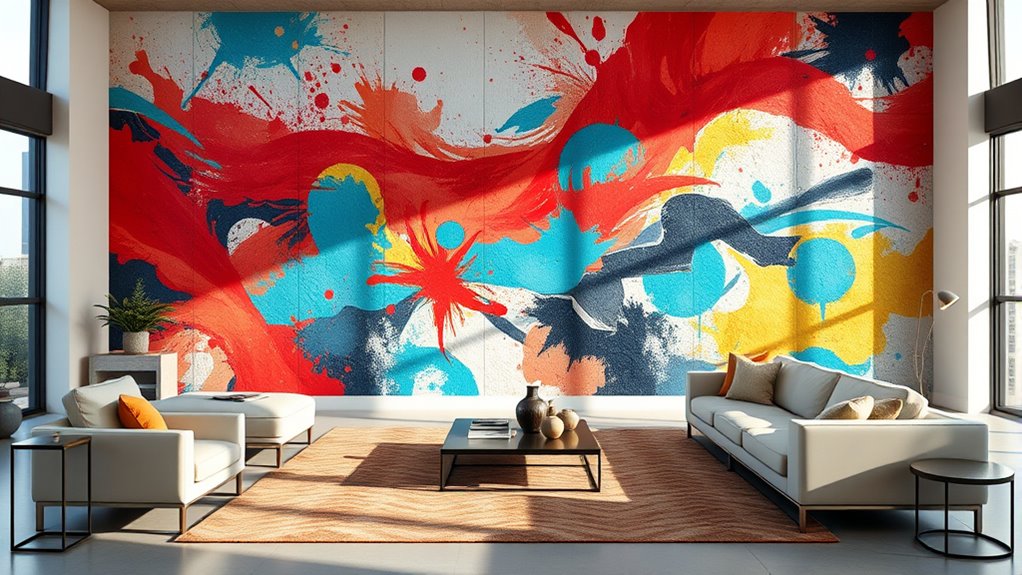
Large-scale artwork can transform a plain space into a stunning focal point, instantly adding personality and depth to any room. When you choose a large piece, you’re creating a visual anchor that draws the eye and sets the tone for the entire space. To make this work effectively, you need to consider visual balance. A massive artwork can overpower a small room or look out of place if it’s not proportionate to your wall and furnishings. Think about the size of the wall and the furniture around it; the artwork should complement these elements without overwhelming them. When correctly scaled, it provides a sense of harmony that makes the entire room feel cohesive.
Large artwork adds personality and harmony when proportioned to your space and furnishings.
Your goal is to establish a focal point that captures attention without disrupting the flow of the space. Large artwork naturally becomes the center of interest, but it’s essential to weigh the options around it thoughtfully. Mirrors, lighting, and furniture placement should enhance the artwork rather than compete with it. For example, positioning a sofa directly beneath a large painting can create a balanced visual weight, making the artwork feel integrated into the room rather than just an afterthought. The key is to ensure the artwork commands attention but doesn’t dominate to the point where other design elements get lost.
When selecting your piece, keep in mind the mood or style you want to convey. Bold, colorful artwork can energize a neutral room, while more subdued pieces add elegance and calm. The size of the artwork should also align with your overall decor style, whether modern, eclectic, or traditional. Once hung, step back and assess the visual balance. If the piece feels too heavy on one side, consider balancing it with other decorative elements, like smaller artworks, plants, or shelves. This approach makes your large-scale artwork feel intentional and well-integrated.
Ultimately, oversized artwork isn’t just about filling space; it’s about creating a visual statement that anchors your room. When you carefully weigh its placement, size, and relationship with other elements, it transforms the entire environment. Your large artwork becomes more than just decoration — it becomes a defining feature that reflects your personality and style. With thoughtful planning, you’ll enjoy the dramatic impact of large-scale art, making your space more inviting, dynamic, and memorable.
Additionally, understanding visual balance and proportion can help you select artwork that enhances your space without overwhelming it.
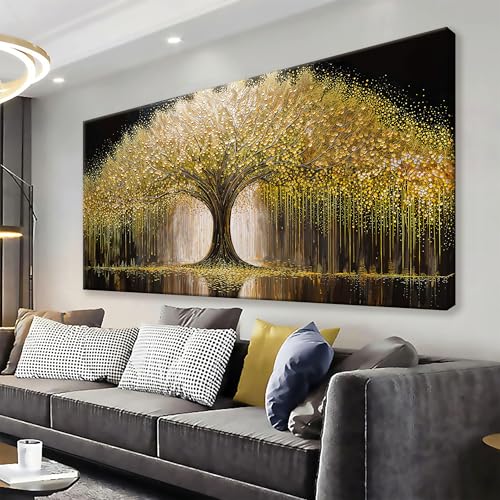
Large Golden Tree Of Life Wall Art Decor Modern Ready To Hang Room Wall Decor Large Wall Art For Living Room Kitchen Office Bedroom Canvas Prints Decor 29×58 Inch
- Size: 29×58 inches (73cm x 147cm)
- Material: Premium canvas for wall art
- Design: Golden Tree of Life motif
As an affiliate, we earn on qualifying purchases.
As an affiliate, we earn on qualifying purchases.
Frequently Asked Questions
How Do I Choose the Right Wall for Oversized Artwork?
You should pick a wall with smooth texture and neutral color to make your oversized artwork stand out. Avoid busy patterns or textured surfaces that can distract from the piece. Choose a wall that provides enough space without clutter, so it remains the focal point. make certain the wall’s color coordinates with your artwork’s palette, creating harmony and emphasizing the artwork’s size and impact in your room.
What Framing Options Work Best for Large-Scale Pieces?
For large-scale artwork, floating frames work best because they give a sleek, modern look that highlights the piece’s size. Gallery ledges are also excellent, as they let you easily swap out or layer art without additional framing. Both options keep the focus on your artwork, offering a clean, sophisticated presentation. Choose floating frames for a polished finish, or use gallery ledges for versatility and easy updates.
How Can I Prevent Oversized Art From Overwhelming a Space?
To prevent oversized art from overwhelming a space, focus on maintaining proper scale proportion and visual balance. Place the artwork where it complements surrounding furniture and architectural features, avoiding clutter. Use a neutral or simple background to let the piece stand out without dominating. Adjust the artwork’s placement and framing to create harmony, ensuring it enhances rather than overpowers your room’s overall aesthetic.
What Lighting Techniques Highlight Large Artwork Effectively?
To highlight large artwork effectively, use accent lighting to draw attention without overpowering the piece. Spotlight techniques work well by focusing a beam directly on the artwork, creating contrast and emphasizing details. Position adjustable spotlights at a 30-degree angle for even illumination, and avoid harsh shadows. Combining these techniques guarantees your art stands out while maintaining a balanced, inviting atmosphere in your space.
How Do I Transport and Hang Large-Scale Artwork Safely?
To transport and hang large-scale artwork safely, you should practice proper art handling by wearing gloves and using protective materials. Always use safety measures like sturdy ladders, wall anchors, and level tools to secure the piece properly. Enlist help from others to prevent accidents, and take your time during installation. Carefully plan your route and workspace to avoid damage, ensuring your artwork stays pristine and safely displayed.
Conclusion
Embrace the idea that large-scale artwork isn’t just about making a bold statement; it’s about creating a sense of balance and harmony in your space. When you choose pieces that resonate with your personality, you tap into a deeper truth—that your environment reflects who you are. So, trust your instincts, take risks, and remember that sometimes, bigger truly is better. Your art becomes a powerful mirror of your unique story.