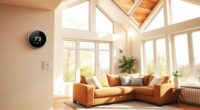
Creating a home that’s both pet-friendly and age-friendly means removing hazards like cords and small objects, using non-slip mats, and installing safety gadgets such as motion-activated lights and door alarms. Design cozy, easily accessible spaces and add ramps or orthopedic beds for comfort. Regularly update safety measures to suit changing needs. With these steps, you can guarantee a safe, calm environment where both seniors and pets thrive—discover more ways to perfect your home.

Get furniture and decor delivered free — and shop member deals
- Fast, free delivery on millions of items
- Access to Prime Big Deal Days deals on October 6–7
- Prime Video, Amazon Music and more included
Key Takeaways
- Implement pet-proofing strategies like securing cords and using barriers to prevent hazards for both seniors and pets.
- Install safety gadgets such as motion-activated lights and door alarms to enhance nighttime visibility and monitoring.
- Design accessible spaces with ramps, orthopedic beds, and clutter-free pathways to accommodate aging pets comfortably.
- Regularly maintain and update safety measures to adapt to pets’ changing needs and aging-related mobility issues.
- Create a calm, organized environment with cozy spots, easy access to water, and supportive furniture for a safe, harmonious home.

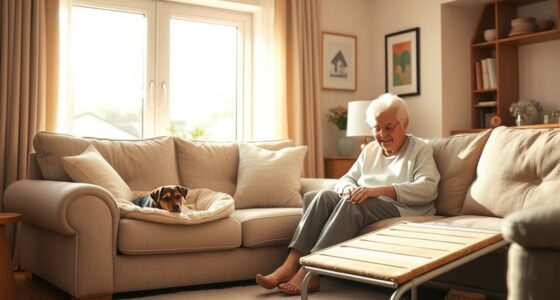
Creating a pet-friendly home for seniors benefits both you and your pets by fostering companionship, reducing loneliness, and promoting physical activity. When designing a space that’s safe and welcoming for your pets, especially your dog, it’s essential to focus on dog proofing tips that minimize hazards and ensure safety. Start by removing or securing items that could be harmful if chewed or swallowed, such as electrical cords, small objects, or toxic plants. Installing baby gates or pet barriers helps keep your dog out of unsafe areas, like stairs or kitchens, where accidents are more likely. Consider using non-slip rugs or mats to prevent slips and falls, which are common among seniors.
Pet-proofing safeguards your home, keeping seniors and pets safe from hazards and accidents.
In addition to physical adjustments, integrating senior safety gadgets can make a significant difference. Motion-activated lights are invaluable at night, helping you and your pet navigate the home with ease and reducing the risk of trips or falls. Door alarms or sensors can alert you when your dog moves between rooms, giving you peace of mind and helping you monitor their activity. Microchip or GPS trackers are excellent safety gadgets that ensure you can locate your pet quickly if they wander outdoors or get lost around the house.
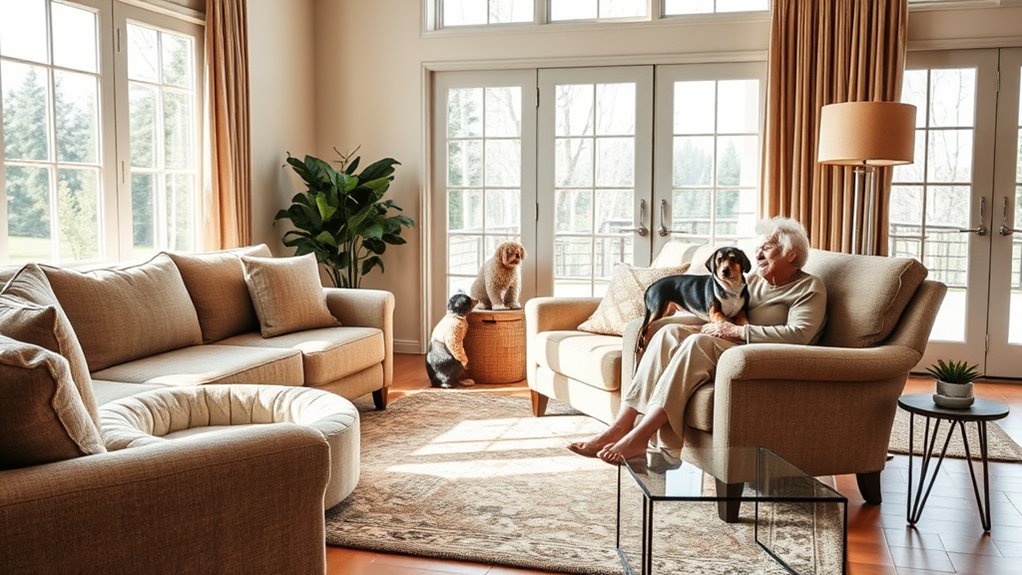
Creating a comfortable environment also means paying attention to your pet’s needs. Designate a cozy spot with soft bedding in a quiet corner where your dog can relax without disturbance. Make sure there’s easy access to fresh water and regular feeding areas to foster routine and stability. For seniors, maintaining an organized and clutter-free space reduces tripping hazards and makes cleaning easier, which benefits both your safety and your pet’s comfort.
Regularly inspect your home for potential dangers, replacing worn-out safety gadgets or updating dog proofing measures as your pet grows or age. For example, as your dog gets older, you might need ramps instead of stairs or orthopedic beds to support joint health. Always stay proactive by researching new safety gadgets designed specifically for senior households, like automatic feeders or smart pet cameras that allow you to check in and communicate remotely.
pet-proofing home safety gadgets
As an affiliate, we earn on qualifying purchases.
As an affiliate, we earn on qualifying purchases.
Frequently Asked Questions
How Can I Ensure My Pet’s Safety During Emergencies in an Age-Friendly Home?
You can guarantee your pet’s safety during emergencies by incorporating emergency preparedness into your home. Keep pet-specific emergency kits with food, water, and medications accessible. Create a designated safe space for your pet, and include familiar items to reduce stress. Practice emergency drills with your pet to ensure they stay calm. Regularly review and update safety plans, and make sure all family members know how to handle pet safety during emergencies.
Are There Specific Materials Recommended for Pet-Friendly and Senior-Safe Flooring?
Did you know that hypoallergenic materials and non-slip surfaces are recommended for pet-friendly, senior-safe flooring? Opt for options like cork, vinyl, or rubber, which provide cushioning and reduce slips. These materials are gentle on joints, easy to clean, and resistant to allergens. By choosing these, you create a safer environment that supports both your pet’s mobility and your loved one’s comfort, minimizing fall risks and allergy triggers.
What Are the Best Ways to Prevent Pets From Causing Senior Falls?
To prevent pets from causing senior falls, you should implement pet proofing strategies like securing cords, removing clutter, and using non-slip rugs. Keep walkways clear and make certain floors are slip-resistant. Regularly trim your pet’s nails and train them to avoid high-traffic areas. Prioritizing senior pet safety involves creating a safe environment where both you and your pets can move comfortably, reducing the risk of accidents and falls.
How Can I Modify Outdoor Spaces to Accommodate Both Seniors and Pets?
You can modify your outdoor space by designing a safe, accessible garden with wide, even pathways to prevent trips. Incorporate outdoor lighting along walkways and key areas to improve visibility at night, reducing fall risks. Use slip-resistant surfaces and choose pet-friendly plants to keep everyone safe. Creating shaded spots and cozy seating also helps both seniors and pets relax comfortably, making your outdoor space welcoming and secure.
What Are Common Challenges in Maintaining a Pet-Friendly, Age-Safe Home?
Balancing pet access and noise control can be challenging, especially when maintaining an age-safe environment. You might struggle to create spaces where pets can freely move without disturbing seniors, and vice versa. Managing pet noise, preventing accidental injuries, and ensuring safe access become ongoing priorities. You’ll need to implement thoughtful solutions like designated pet zones, soundproofing, and secure barriers to keep everyone safe and content.
Conclusion
Imagine your home as a cozy haven, much like a trusted garden where both roses and daisies thrive side by side. By creating a safe, welcoming space for your seniors and pets, you’re nurturing a bond that blossoms with love and care. Just like a well-tended tree offers shelter and shade, your thoughtfully designed home becomes a sanctuary where both generations flourish together, fostering warmth, safety, and endless companionship.
Fall Picks
fall essentials
As an affiliate, we earn on qualifying purchases.