
To make nighttime bathroom trips safer, arrange your bedroom so the path to the bathroom is clear of clutter and obstacles. Keep essentials like a flashlight, water, and phone within reach, and install nightlights or motion-activated lighting along your route. Secure cords away from walking areas and add bedside rails for support. Regularly check your space for hazards and adjust lighting to prevent shadows. Continue exploring these tips to create a safer, more accessible sleeping environment.

Get furniture and decor delivered free — and shop member deals
- Fast, free delivery on millions of items
- Access to Prime Big Deal Days deals on October 6–7
- Prime Video, Amazon Music and more included
Key Takeaways
- Arrange furniture to ensure clear, obstacle-free pathways between the bed and bathroom for easy access.
- Use strategic, soft nightlights along pathways to improve visibility without disturbing sleep.
- Keep essential items like water, phone, and flashlight within reach to minimize movement during nighttime trips.
- Install slip-resistant rugs and mats at key areas to prevent slips and falls in the bedroom and bathroom.
- Regularly review and tidy the room, removing clutter and managing cords to reduce tripping hazards.
As an affiliate, we earn on qualifying purchases.
Evaluate Your Bedroom Layout for Safe Nighttime Navigation

To guarantee safe navigation at night, you need to assess your bedroom layout carefully. Start by examining how your bedroom decor affects your movement. Ensure furniture placement leaves clear pathways, reducing the risk of tripping over bedside tables or chairs. Prioritize a layout that promotes sleep comfort, avoiding clutter near the bed that could cause accidents. Keep essential items within easy reach to minimize unnecessary movement during nighttime trips. Consider the lighting as well—install soft, accessible lights to guide your steps without disrupting your sleep. A well-organized, thoughtfully arranged bedroom enhances safety and makes nighttime navigation smoother. Incorporating bedroom organization tips can further optimize your space for safety and convenience. Additionally, evaluating your lighting placement can significantly improve nighttime safety and ease of movement. Paying attention to safety features, such as nightlights and accessible switches, can also reduce the chances of mishaps during late-night trips. Proper placement of lighting controls is essential for quick access in low-light conditions, and choosing easy-to-use switches can make a big difference when quick lighting is needed.
Clear Clutter and Remove Obstacles From Pathways

Clearing clutter and removing obstacles from your pathways is essential for safe nighttime navigation. Keep your bedside storage organized so you can find essentials easily without rummaging through clutter. Make sure clothing is properly stored—avoid leaving clothes on the floor or draping over furniture—so you don’t trip over them in the dark. Remove any unnecessary items from hallways and around your bed that could cause falls or slow your movement. Keep pathways clear of cords, shoes, or other objects that could be hazards. A tidy bedroom not only reduces trip risks but also helps you move more confidently at night. Regularly check your space and tidy up to maintain a safe environment for those late-night trips. Incorporating home safety tips can further enhance your auditory processing and nighttime security. Additionally, performing seasonal maintenance such as checking for loose rugs or inadequate lighting can prevent accidents and improve overall safety. Paying attention to lighting quality can make a significant difference in visibility during nighttime hours. Ensuring proper home organization can further reduce clutter and create a more secure environment.
Position Your Bed and Bathroom Door for Easy Access

Positioning your bed and bathroom door strategically can make nighttime trips safer and more convenient. Place your bed so that you can get out without crossing the room’s center or stepping over furniture. Ideally, position the bed close enough to the bathroom door for quick access, but not directly in front of it, to avoid blocking entry. Keep the bed’s side facing the door, reducing the distance you need to walk and lowering the risk of tripping. Ensure there’s a clear, obstacle-free path between your bed and bathroom access point. Room layout considerations in room layout help you plan for safer nighttime navigation. By arranging your bed and bathroom door thoughtfully, you minimize hazards and make nighttime trips faster and safer, especially if you’re groggy or need to move quietly. Proper bed positioning can greatly reduce your risk of falls. Staying aware of your surroundings at night can help you identify potential hazards before they cause accidents. Incorporating reliable lighting in your pathway can enhance visibility and further reduce trip hazards during late-night visits. Additionally, understanding risk factors associated with nighttime mobility can help you make more informed adjustments to your room setup.
Choose and Install Lighting to Prevent Nighttime Trips

Proper lighting placement is key to avoiding trips in the dark, so consider installing lights along your path to the bathroom. Soft nightlights work well because they provide enough illumination without disturbing your sleep. By choosing the right spots and types of lighting, you can move safely through your bedroom at night. Incorporating energy-efficient European cloud servers into your smart lighting system can enhance reliability and sustainability. Additionally, selecting appropriate lighting fixtures can ensure even light distribution and reduce shadows that might cause missteps. Understanding home energy considerations, such as load balancing and efficient usage, can also help optimize your lighting setup for safety and energy savings. Being aware of lighting controls, like dimmers and timers, can further improve nighttime safety and convenience.
Optimal Light Placement
Choosing the right locations for your lights is essential to prevent nighttime trips to the bathroom. Smart light placement guarantees you have enough illumination without overdoing it, helping you see clearly without harsh glare. Position lights along pathways and near doorways to reduce shadows that can cause trips or stumbles. Avoid placing lights directly in your line of sight, which can cause discomfort or temporary blindness. Instead, aim for even, diffused lighting that minimizes shadow reduction, making navigation safer. Consider installing adjustable fixtures so you can customize brightness levels as needed. Proper placement guides your steps smoothly, reducing the risk of missteps. Strategic light placement ensures optimal safety and comfort during nighttime bathroom trips. Additionally, understanding home lighting principles can help you design a lighting layout that enhances safety and energy efficiency, including lighting zones tailored for different areas of your home. Incorporating layered lighting techniques can further improve visibility and reduce hazards in your space.
Use Soft Nightlights
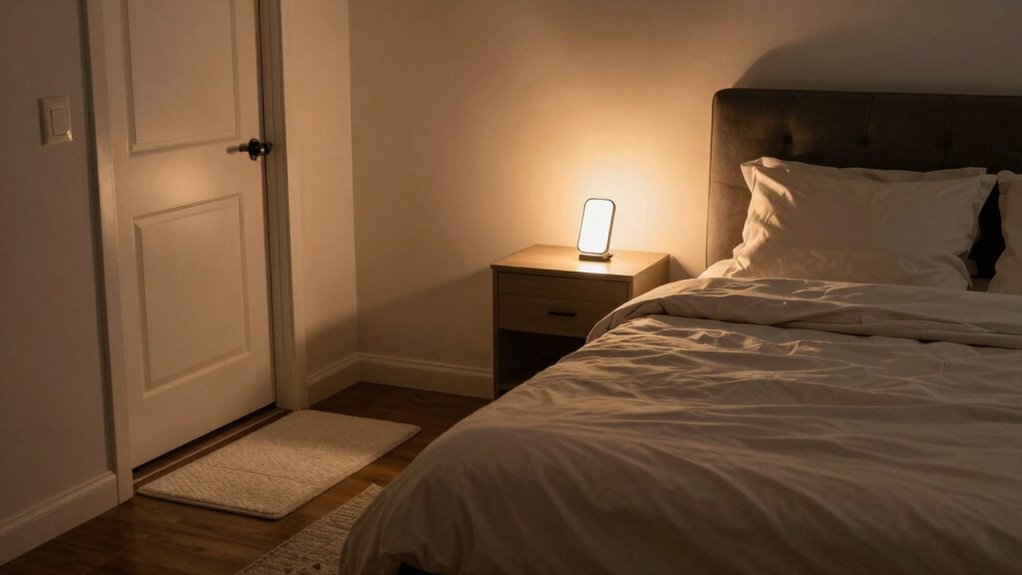
Soft nightlights create a gentle glow that helps you see your surroundings without causing glare or disrupting your sleep. By choosing the right nightlights, you can navigate your bedroom safely, reducing the risk of trips and falls. Opt for dim, warm lighting that aligns with your sleep environment, promoting relaxation and comfort. Incorporate bedroom aromatherapy near your nightlights to enhance your sleep environment, creating a calming atmosphere that encourages restful sleep. Position nightlights along your path to the bathroom, ensuring you can see key areas without disturbing your sleep cycle. Using appropriate lighting can also help improve indoor air quality by minimizing the need for brighter, more disruptive lights during the night. These subtle lights not only improve safety but also contribute to a serene bedroom setup, making nighttime trips less risky and more comfortable.
Keep Essential Items Within Reach of the Bed

Keeping essential items within reach of your bed can make nighttime visits more efficient and less disruptive. By using bedside storage, you minimize movement and reduce the risk of slips or falls. Keep items like your cellphone, a glass of water, a flashlight, and a remote control nearby. This way, you won’t have to fumble around in the dark or get out of bed unnecessarily. Additionally, consider alarm systems or alert devices that can be activated easily if needed. Placing these items strategically guarantees quick access and enhances safety. Proper organization helps you stay prepared for any urgent needs, making your bedroom a safer space for nighttime trips. Remember, convenience and accessibility are key to reducing risks and maintaining peace of mind.
Use Non-Slip Rugs and Floor Mats for Better Stability

To prevent slips and falls during nighttime trips, incorporating non-slip rugs and floor mats is essential. Slip resistant flooring options, like safety enhanced carpets, provide extra grip, reducing the risk of accidents. Place these rugs in high-traffic areas, especially near your bed and bathroom entrance. Look for mats with textured surfaces or rubber backing to guarantee they stay put on smooth floors. Regularly check and clean these rugs to maintain their grip and effectiveness. By upgrading to slip resistant flooring or adding safety enhanced carpets, you create a more stable surface that minimizes slipping hazards. This simple change boosts your confidence and safety during those late-night trips, helping you move around more securely and peacefully.
Install Nightlights or Motion-Activated Lights for Safety

Installing nightlights or motion-activated lights can considerably improve safety during nighttime trips by providing immediate illumination where you need it most. Choosing the right nightlight types, such as plug-in, battery-operated, or adhesive models, ensures flexibility and convenience. Motion sensor technology automatically lights up the area when you enter, reducing the need to fumble for switches in the dark. To maximize safety, consider these options:
- Select nightlights with adjustable brightness for comfort.
- Use motion-activated lights near the bed and bathroom entrance.
- Opt for LED options for energy efficiency and durability.
- Place lights at ankle level to prevent accidental bumps or trips.
With the right combination of nightlight types and motion sensor technology, you’ll navigate your space safely and confidently at night.
Secure Cords and Wires to Prevent Tripping Hazards

Cords and wires often pose tripping hazards in bedrooms, especially at night when visibility is low. To minimize risks, focus on effective cord management by organizing and securing loose cords along walls or under rugs. Use cord clips or sleeves to keep wires neatly bundled and out of walkways. Wire concealment is also essential; consider running cords behind furniture or inside cable conduits to keep them hidden from view. Regularly check for any frayed or damaged wires, replacing them immediately. By actively managing cords and concealing wires, you reduce clutter and prevent accidental trips. This simple step creates a safer environment, giving you peace of mind during nighttime bathroom trips. Effective cord management is a key element in bedroom safety.
Add Bedside Safety Devices for Extra Support

Adding bedside safety devices can provide extra support and stability during nighttime bathroom trips. These devices help prevent falls and make it easier to get in and out of bed. Consider installing bedside rails, which offer a sturdy grip and help you pull yourself up safely. Keep an accessible emergency call within reach in case you need immediate assistance. You might also add a motion-activated light to illuminate your path, reducing the risk of missteps. Ultimately, choose a bedside alarm or alert system that notifies someone if you fall or need help. These safety devices create a safer environment, giving you confidence and reducing the risk of injury during late-night trips to the bathroom.
Regularly Review and Adjust Your Bedroom Setup to Maintain Safety

To guarantee your bedroom remains a safe environment, it’s important to review and adjust your bedroom furniture and sleep environment regularly. Over time, furniture placement may shift or become cluttered, increasing the risk of trips or falls. Check that your pathway from the bed to the bathroom is clear and well-lit. Consider whether your current furniture setup supports safe movement, especially if you’ve acquired new pieces or changed your layout. Adjust lighting or add nightlights if necessary to improve visibility at night. Regularly evaluating your sleep environment helps identify hazards like loose rugs or obstructed pathways. By staying proactive and making small adjustments, you reduce the risk of nighttime accidents and create a safer, more comfortable bedroom.
Frequently Asked Questions
How Can I Make My Bathroom Entrance Safer at Night?
To make your bathroom entrance safer at night, install a nightlight in the hallway and near the bathroom door. Keep the pathway clear of clutter to avoid tripping. Use a secure lock on your bedroom door for added security, and consider a glow-in-the-dark sign or tape on the door handle. These steps improve nighttime hallway visibility and bedroom door security, reducing the risk of falls or accidents during late-night trips.
What Are the Best Types of Lighting for Nighttime Safety?
The best lighting for nighttime safety includes motion sensors and nightlights. Motion sensor lights automatically turn on when you get up, giving you clear visibility without fumbling for switches. Nightlights provide a soft glow, guiding your way safely. Use both strategically—place motion sensors near the bathroom entrance and install nightlights along the path—so you’re always illuminated without disturbing your sleep or risking trips.
How Do I Choose the Safest Flooring Options for My Bedroom?
To choose the safest flooring for your bedroom, focus on non-slip surfaces and moisture-resistant options. Look for flooring with textured finishes that prevent slips, especially if your floors might get wet. Opt for materials like vinyl, rubber, or sealed hardwood that resist moisture and reduce fall risks. confirm the flooring is even and secure, avoiding loose or uneven surfaces that could cause trips or falls during nighttime visits.
Are There Specific Colors or Designs That Improve Visibility at Night?
You notice how a soft, light-colored bedroom scheme, like warm neutrals or pastels, can subtly improve visibility at night. Pair this with strategic nighttime lighting, such as low-wattage lamps or motion-activated LEDs, to prevent accidents. Bright, contrasting colors or simple patterns on floors and walls also help your eyes adjust quickly, making nighttime trips safer and less stressful. This thoughtful setup brings peace of mind when you need it most.
How Can I Prevent Slips and Falls in the Bathroom During Nighttime Visits?
To prevent slips and falls during nighttime bathroom visits, you should organize your bathroom for safety. Keep the floor clear of clutter, and add non-slip rugs or mats near the toilet and sink. Use nightlights to improve visibility and make your nighttime routines easier. Installing grab bars or handrails in key areas can also provide extra support. Staying organized and well-lit helps you move safely and confidently during late-night trips.
Conclusion
By making small adjustments in your bedroom, you create a safer path through the darkness—like lighting a candle in a storm to guide your way. Imagine stumbling in the night and knocking over a glass of water; a simple change, like adding a nightlight, can prevent that fall. Your bedroom should be a sanctuary, not a hazard. Regularly review your setup to keep your nighttime journeys safe and smooth, turning obstacles into opportunities for peace of mind.
Evergreen bestsellers Picks
bestsellers
As an affiliate, we earn on qualifying purchases.