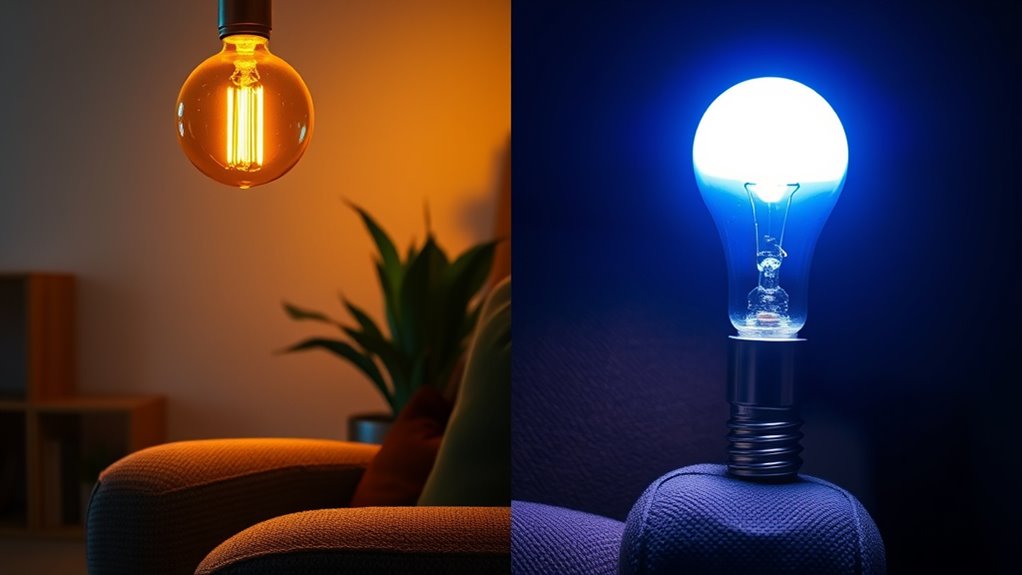

To set the right mood, choose warm light bulbs with a lower color temperature (2700K–3000K) for cozy, relaxing spaces like bedrooms and living rooms. For a brighter, more energetic vibe, go for cool bulbs with higher temperatures (4000K–5000K), ideal for work areas or kitchens. Mixing these options can balance atmosphere and functionality. Keep exploring to discover how selecting the perfect lighting can transform your space and mood.
Key Takeaways
- Warm light bulbs (2700K-3000K) create a cozy, relaxing atmosphere ideal for bedrooms and living areas.
- Cool light bulbs (4000K-5000K) produce bright, energetic illumination suited for workspaces and kitchens.
- Selecting warm lighting enhances comfort and natural textures, while cool lighting improves visibility and focus.
- Mixing warm and cool bulbs strategically can balance ambiance and functionality throughout your home.
- Consider room purpose and mood when choosing between warm and cool lighting for optimal effect.

When selecting light bulbs for your space, understanding the difference between warm and cool lighting can make a big impact on the atmosphere. The key factor here is color temperature, which influences how the room feels and how well you see your surroundings. Warm light bulbs typically have a lower color temperature, around 2700K to 3000K, creating a cozy, inviting glow. This type of lighting enhances the room ambiance by making spaces feel comfortable and relaxing, perfect for bedrooms, living rooms, or areas where you want a sense of intimacy. On the other hand, cool light bulbs tend to have a higher color temperature, usually between 4000K and 5000K, producing a brighter, more energetic light. This cooler hue can make your space feel more alert and focused, making it suitable for workspaces, kitchens, or bathrooms where clarity and visibility are priorities.
Choosing the right type of light bulb depends on the mood you want to establish. If you prefer a calming environment that encourages unwinding after a long day, warm lighting is your best option. It complements warm-colored decor and enhances textures and natural materials, giving your room a welcoming feel. Conversely, if your goal is to foster productivity or to illuminate a space where detail matters, cool lighting can be more effective. It provides a crisp, clean light that reduces shadows and minimizes eye strain, which is essential for tasks like reading or cooking. Remember, the room ambiance is greatly affected by the color temperature of your bulbs, so selecting the proper lighting can transform your space from dull to dynamic.
Additionally, understanding light bulb technology can help you choose energy-efficient options that also match your desired ambiance. It’s also worth considering the function of each room. Warm lighting works well in areas designed for relaxation and socializing, while cool lighting is better for work areas or places where you need to see clearly. Mixing different types of bulbs throughout your home can help achieve a balanced atmosphere; for example, warm lights in the bedroom and cool lights in the home office. Keep in mind that the appearance of color temperature can vary depending on the bulb’s quality, so it’s wise to test different options before making a final decision. Understanding how color temperature influences room ambiance allows you to tailor your lighting to enhance comfort, functionality, and style, making your space truly reflect the mood you want to create.

TJOY 6 Pack A19 LED Light Bulbs, Soft Warm White 2700K, 60 Watt Eq,E26 Base
- Energy Efficient Replacement: Replace 60W with 9W, save 85%
- Long-lasting Durability: Lasts up to 13.7 years
- Comfortable Soft White Light: 2700K non-flickering, eye-care
As an affiliate, we earn on qualifying purchases.
As an affiliate, we earn on qualifying purchases.
Frequently Asked Questions
Can Warm and Cool Bulbs Be Used Together in the Same Room?
Yes, you can use warm and cool bulbs together in the same room. To maintain color harmony, mix them thoughtfully, perhaps using warm light for cozy areas and cool light for task zones. Decorating tips include balancing the different tones with complementary decor and avoiding jarring contrasts. This approach creates visual interest while ensuring the space feels cohesive and inviting, making your room both functional and stylish.
How Do Light Bulbs Affect Mood and Productivity?
Did you know that color temperature can influence your mood and productivity? Warm light (around 2700K) creates a cozy, relaxing feel, helping you unwind after a busy day. In contrast, cool light (around 5000K) boosts alertness and concentration, making it ideal for work. Your choice of light bulbs affects psychological effects; selecting the right color temperature can enhance focus or promote relaxation, depending on your needs.
Are There Energy Differences Between Warm and Cool Light Bulbs?
Warm and cool light bulbs have similar energy efficiency, but their color temperature impacts their performance. Cooler bulbs (higher Kelvin) often use slightly more energy because they emit brighter, bluish light, which can require more power for the same brightness. Warm bulbs (lower Kelvin) tend to be more energy-efficient for creating cozy atmospheres. Overall, choose based on your mood preferences, but both options offer comparable energy consumption.
Which Light Color Is Better for Reading or Working?
For reading or working, cool light with a higher color temperature is better because it enhances focus and reduces eye strain. You’ll find that cool light, around 4000K to 5000K, offers better eye comfort during tasks requiring concentration. Warm light may feel cozy but can cause fatigue over long periods. So, opt for cooler bulbs to boost productivity and keep your eyes comfortable during work or reading sessions.
How Long Do Warm and Cool Light Bulbs Typically Last?
Warm light bulbs typically last around 1,000 to 2,000 hours, while cool light bulbs often last slightly longer, about 1,500 to 2,500 hours, depending on the bulb type. The color temperature influences bulb lifespan, but generally, LED bulbs have the longest lifespan regardless of whether they emit warm or cool light. You can expect LED bulbs to last up to 25,000 hours, making them a durable and energy-efficient choice.
Conclusion
Ultimately, selecting between warm and cool light bulbs shapes your space’s vibe, much like Apollo’s golden rays or Artemis’s icy glow. Trust your instinct, and remember that lighting sets the mood just as the sun influences our day. Whether you seek comfort or clarity, your choice will illuminate your surroundings and your mood. So, embrace the power of light—your personal muse— and create an ambiance that feels just right.