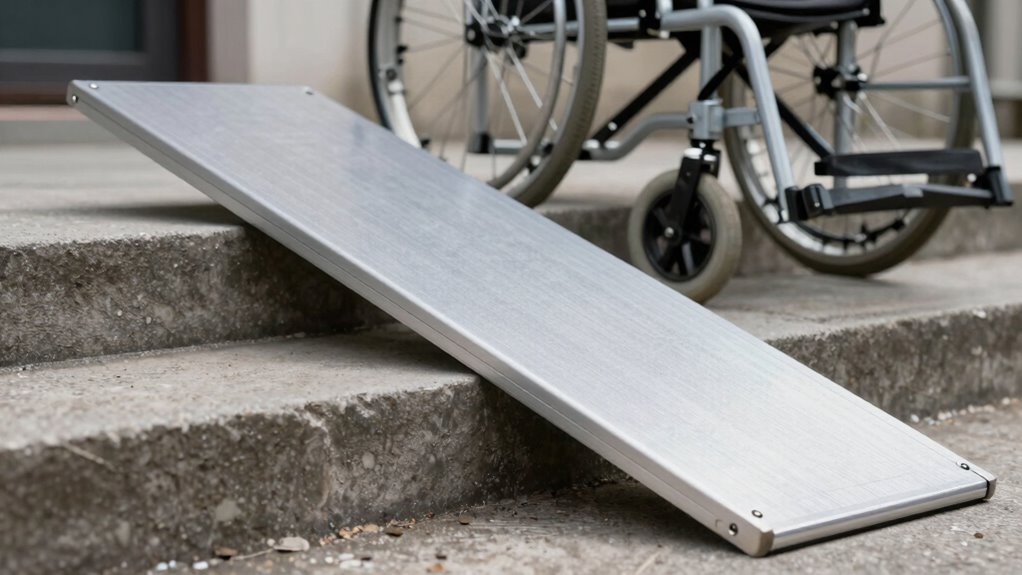

When choosing a portable ramp, it’s not enough to focus only on the right length. You also need to evaluate surface traction, weight capacity, and material durability to guarantee safety and stability. A ramp that’s long enough but slippery or weak can cause accidents or break under load. By paying attention to all these features, you can choose a ramp that’s truly safe and reliable. Keep exploring to discover what else makes a ramp trustworthy and effective.
Key Takeaways
- Proper length ensures smooth transitions but must be balanced with stability and safety features.
- Surface traction is critical to prevent slips, especially in wet or icy conditions.
- Adequate weight capacity is essential to avoid ramp failure and support all devices and users safely.
- Material durability and eco-friendliness influence ramp longevity and environmental impact.
- Overall safety depends on integrating features like traction, capacity, and stability, not just length.
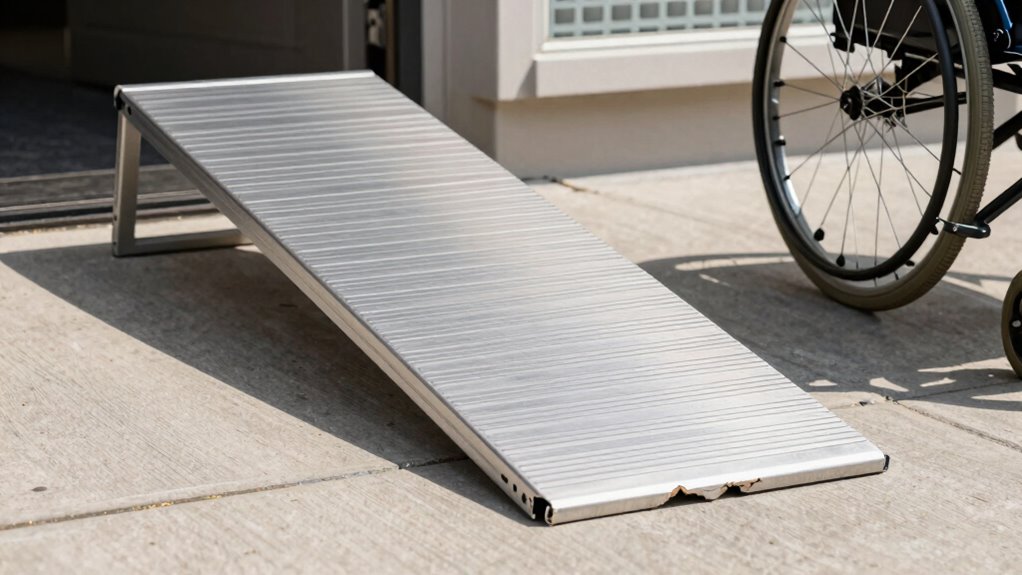
When choosing a portable ramp, it’s tempting to focus solely on getting the right length to match your needs. While length is crucial for ensuring smooth transitions, it’s only one piece of the puzzle. You also need to consider factors like surface traction and weight capacity to guarantee safety and functionality. These aspects can make or break your experience, especially if the ramp will be used frequently or in varied environments. Additionally, selecting a ramp made from durable, eco-friendly materials can contribute to sustainability and environmental conservation. Surface traction is vital because it directly impacts safety. Even if your ramp has the perfect length, a slick or uneven surface can cause slips and falls. Look for ramps with textured surfaces or non-slip coatings to improve grip, particularly in wet or icy conditions. The last thing you want is to worry about losing footing when you’re trying to navigate a wheelchair, scooter, or other mobility device. Adequate surface traction ensures confidence with every step or roll, reducing the risk of accidents and providing peace of mind. Choosing a ramp with appropriate features can also help ensure safety in various environments.
In addition, considering the environmental impact of your choice can help promote more sustainable living practices. Weight capacity is equally important. Every ramp is rated for a maximum load, and exceeding this limit can compromise its integrity. If you’re supporting a wheelchair, scooter, or other heavy equipment, you need a ramp designed to handle that weight comfortably. Ignoring weight capacity risks damaging the ramp or, worse, causing a dangerous failure during use. Always verify that the ramp can support your total weight, including your mobility device and any additional items you might carry. This prevents unexpected breakdowns and ensures longevity, saving you money and hassle over time. Remember, choosing a ramp with biodiversity-friendly features can also help reduce environmental impact. Ensuring the ramp is made from eco-friendly materials also contributes to sustainability efforts.
Beyond length, surface traction and weight capacity are essential for making your ramp both safe and reliable. Remember, a longer ramp isn’t always better if it compromises stability or safety. A shorter, well-made ramp with an anti-slip surface and sufficient weight capacity can serve you better than a longer but unsafe alternative. When shopping, prioritize these features alongside length to get a ramp that truly meets your needs. Being mindful of these factors helps you avoid potential accidents, reduces wear and tear, and ensures you can use your ramp confidently in different settings.
In the end, choosing a portable ramp isn’t just about fitting a specific space; it’s about ensuring safety, durability, and ease of use. By paying close attention to surface traction and weight capacity, you’re investing in a device that offers reliable support and peace of mind. It’s your best way to make sure that, wherever you go, your ramp stands up to the task and keeps you moving safely.

FACHNUO 2 Feet Portable Wheelchair Ramp, Non-Skid Aluminum Handicap Ramps with Handle, Folding Threshold Wheel Chair Ramp for Home Steps, Stairs, Entry, Doorways, Applicable Height 2-6 inches
- Length and Size: 2-foot portable, foldable design
- Weight Capacity: Supports up to 800 lbs
- Adjustable Height: Suitable for 2-6 inch steps
As an affiliate, we earn on qualifying purchases.
As an affiliate, we earn on qualifying purchases.
Frequently Asked Questions
What Materials Are Best for Portable Ramps?
You should choose materials like aluminum or steel for portable ramps because of their durability and lightweight nature. Aluminum offers excellent material durability and is easier to carry, but it may cost more upfront. Steel is highly durable and more affordable but heavier. Consider your cost considerations and how often you’ll use the ramp; lighter materials might cost more initially but save you effort and money long-term.
How Do Weight Limits Vary Between Ramp Types?
Imagine stepping onto a sturdy ramp, confident it’ll hold your weight. Weight capacity varies between ramp types—lighter aluminum ramps often support up to 600 pounds, while heavy-duty steel models can handle over 1,000 pounds. Load restrictions are essential to take into account, ensuring the ramp’s weight capacity matches your needs. Always check the manufacturer’s specifications to prevent overloads, keeping each step safe and secure.
Are Portable Ramps Suitable for Outdoor Use?
Yes, portable ramps can be suitable for outdoor use if they meet accessibility standards and are built for environmental durability. You should look for ramps made from weather-resistant materials like aluminum or heavy-duty plastic, which resist rust and corrosion. Make certain they have a stable base and non-slip surface for safety. When choosing a portable ramp for outdoor use, prioritize durability and compliance to guarantee reliable, long-lasting accessibility in varying weather conditions.
What Safety Features Should I Look For?
You should look for safety lock mechanisms to keep the ramp securely in place, preventing slips or accidents. A non-slip surface is essential to guarantee stability when walking or moving a wheelchair. Check that the ramp has sturdy, reliable locking features and a textured, slip-resistant surface. These safety features protect you from falls and provide peace of mind, especially on uneven or outdoor surfaces.
How Do I Properly Store and Transport Portable Ramps?
Think of storing and transporting your portable ramp as packing a delicate treasure. Use sturdy storage solutions like rugged cases or secure straps to keep it safe. When transporting, fold or disassemble the ramp if possible, and employ proper transport techniques such as placing it flat or upright in your vehicle. Make certain it’s secured tightly to prevent shifting. With careful handling, your ramp remains ready for action whenever you need it.
Conclusion
Just like a key needs the right lock to open a door, a portable ramp requires more than just the right length to do its job. It’s about finding the perfect fit for your needs—considering weight capacity, surface grip, and stability. Don’t settle for a one-size-fits-all solution. When you choose a ramp that ticks all the boxes, you’re revealing doors to independence and freedom, turning obstacles into stepping stones on your journey.